China Coal Mine Blast Kills 82, Safety Lapses Probed as Nation Mourns
A catastrophic gas explosion at the Liushenyu coal mine in China's northern Shanxi province has tragically resulted in the deaths of at least 82 workers, casting a pall of grief over the nation and prompting an immediate, rigorous investigation into potential safety lapses. This devastating China Coal Mine Blast Kills 82, Safety Lapses Probed has highlighted the persistent challenges in an industry crucial to the country's energy supply, even as safety standards have ostensibly improved over the past two decades. President Xi Jinping has called for an "all-out effort" in rescue and treatment, alongside a thorough inquiry into the incident, demanding strict accountability for those found responsible for the tragedy that has left many families mourning. The blast, which occurred late Friday evening at approximately 7:29 p.m. local time, underscores the critical need for unyielding vigilance in industrial safety.
- The Liushenyu Disaster: A Timeline of Tragedy and Response
- Government Pledges "Uncompromising" Investigation into Safety Lapses
- Understanding Coal Mine Safety in China
- China's Evolving Mine Safety Regulations
- The Human and Economic Impact of Mining Disasters
- Moving Forward: Lessons from Tragedy
- Frequently Asked Questions
- Further Reading & Resources
The Liushenyu Disaster: A Timeline of Tragedy and Response
The gas explosion ripped through the underground workings of the Liushenyu coal mine in Qinyuan County, Changzhi City, on Friday, May 22, 2026. At the time of the blast, 247 workers were on duty deep within the mine shafts. Initial reports confirmed eight fatalities with many more trapped, but as rescue operations progressed through Saturday, the death toll steadily climbed. By late Saturday, local emergency management authorities confirmed 82 deaths, with nine workers still reported missing and over 120 injured individuals hospitalized. The scene at the mine was described as "chaotic" immediately following the incident, with rescuers facing significant challenges, including toxic levels of carbon monoxide that exceeded safety limits.
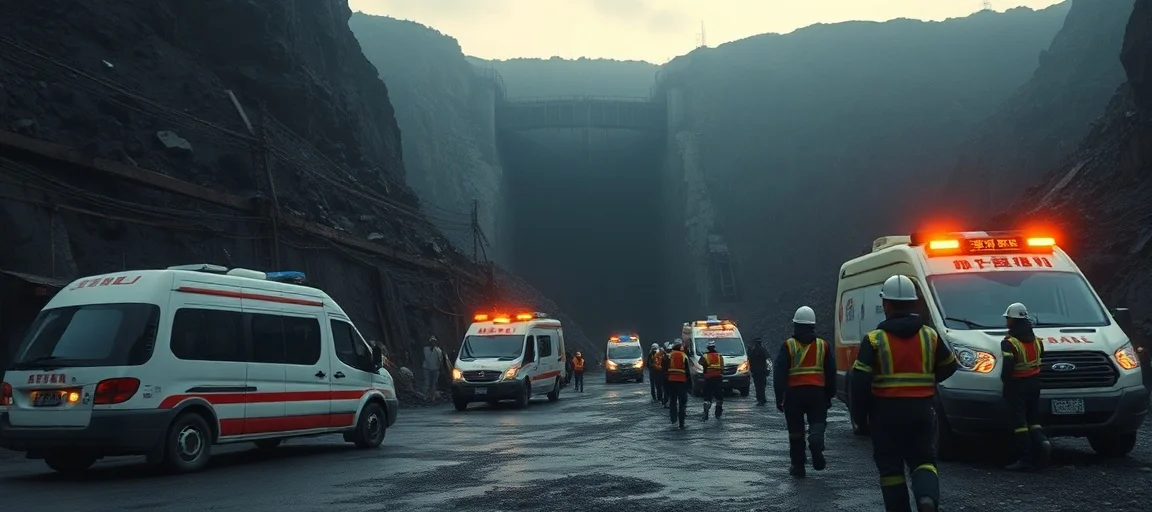
Hundreds of emergency and medical personnel were swiftly dispatched to the site, working tirelessly to locate survivors and provide urgent medical care. State media broadcast footage depicting rescue teams equipped with helmets and stretchers navigating the mine complex, supported by a fleet of ambulances on standby above ground. This incident marks one of the deadliest mining accidents in China in recent years, drawing comparisons to a 2009 explosion in Heilongjiang province that claimed 108 lives and a 2023 open-pit mine collapse in Inner Mongolia which killed 53.
Government Pledges "Uncompromising" Investigation into Safety Lapses
In the wake of the devastating Liushenyu coal mine blast, Chinese leadership has moved quickly to address the crisis and assure the public of a comprehensive response. President Xi Jinping issued urgent instructions, emphasizing the paramount importance of sparing no effort in search and rescue operations, treating the injured, and conducting a "thorough investigation" into the cause of the accident. He further called for strict accountability for those found responsible, in accordance with the law. Premier Li Qiang echoed these directives, urging for timely and accurate information dissemination and rigorous accountability.
Vice Premier Zhang Guoqing led a State Council investigation team to the blast site to oversee emergency response efforts and ensure the thoroughness of the inquiry. This high-level intervention signals the government's commitment to addressing the systemic issues that may have contributed to the disaster. The investigation team has been tasked with identifying the cause of the accident, determining responsibilities across local authorities, industry regulators, and the involved enterprise, and imposing severe penalties as mandated by laws and regulations. Authorities have already "placed under control" a person identified as responsible for the company operating the mine, indicating swift action towards accountability.
Furthermore, the Office of the State Council Work Safety Committee and local authorities have been ordered to immediately arrange for comprehensive safety hazard inspections and rectifications across key industrial sectors, particularly coal mines and hazardous chemicals. This includes strengthening the implementation of workplace safety responsibilities, improving the effectiveness of hazard checks, and strictly enforcing regulations. A nationwide crackdown on illegal mining activities has also been ordered, targeting practices such as the falsification of safety data, unclear headcounts of underground workers, and illegal subcontracting and subleasing.
Understanding Coal Mine Safety in China
China, the world's leading consumer and producer of coal, relies heavily on the fossil fuel for its energy needs, despite significant investments in renewable energy infrastructure. Shanxi province, where the Liushenyu mine is located, is often referred to as China's coal-mining capital, playing a critical role in the national energy landscape. While mine safety in China has seen notable improvements over the past two decades, leading to a reduction in fatalities from thousands annually in the early 2000s, accidents continue to occur with concerning frequency.
Historically, Chinese coal mines have been among the deadliest globally. In 2002, nearly 7,000 miners died, and even by 2009, over 2,600 fatalities were officially reported. Although these numbers have decreased significantly due to more stringent regulations and safer practices, the Liushenyu incident serves as a stark reminder that inherent risks persist. Many accidents, particularly in smaller or illegally operated mines, are attributed to failures in adhering to safety regulations, inadequate ventilation, and insufficient fire control equipment.
Common Causes of Coal Mine Blasts
Gas explosions are a prevalent and devastating type of accident in coal mines. Research into numerous large-scale coal mine gas explosion (CMGE) accidents in China from 2000 to 2021 has identified several key causal factors. These include:
- Gas Accumulation: This is primarily caused by fan failure, airflow short circuits, and damage to local ventilation fans. Proper ventilation systems are crucial for diluting and removing methane and other explosive gases that naturally occur in coal seams.
- Ignition Sources: Electrical equipment failure, cable short circuits, mine lamp misfires, hot-line work, and blasting sparks are common ignition sources for accumulated gas. Static sparks and friction impact sparks also contribute to ignition.
- Management Lapses: Beyond technical failures, human and management factors play a significant role. Illegal operations by mining enterprises, a lack of sound management culture leading to habitual violations by personnel, and decision-making errors are critical underlying causes. Issues such as inadequate implementation of outburst prevention measures and insufficient gas extraction times have also been identified.
Studies have highlighted specific "risk-coupling paths," such as "static spark-fan failure" and "blasting spark-airflow short circuit," as dominant mechanisms for gas explosions. These findings underscore the complex interplay of technical malfunctions and human error in catastrophic mine disasters.
China's Evolving Mine Safety Regulations
China has established a comprehensive legal framework for mining safety, including the Mineral Resources Law, the Coal Law of the People's Republic of China, and the Law of the People's Republic of China on Safety in Mines. These laws aim to ensure safety in production, prevent accidents, and protect the personal safety of workers. The State Council, China's cabinet, plays a central role in overseeing mineral resources and industrial health and safety.
The State Administration of Work Safety (SAWS), established in 2001, is responsible for industrial health and safety policy and enforcement, reporting directly to the State Council. Within SAWS, the State Administration of Coal Mine Safety (SACMS) is specifically dedicated to crafting and enforcing safety regulations for the country's coal mines, recognizing their inherently high-risk nature. This agency is unique for being the only industry-specific body of its kind within SAWS.
Despite the existence of sophisticated laws and dedicated regulatory bodies, challenges in effective implementation persist. Arguments for this "safety gap" include a lack of judicial review of agency actions, an absence of meaningful trade unions, government corruption, and the logistical difficulties of controlling numerous rural mines from a central government. In response to severe accidents, the Chinese government often issues administrative decrees and strengthens supervision, indicating a reactive rather than consistently proactive approach in some instances. For example, a special administrative regulation aimed at strengthening coal mine safety was promulgated in 2005 following a series of serious accidents. The ongoing investigation into the Liushenyu mine blast and the directive for a nationwide crackdown underscore the government's continued struggle to ensure universal compliance and eliminate hazardous practices across the vast mining sector.
The Human and Economic Impact of Mining Disasters
The Liushenyu coal mine disaster, like all such tragedies, carries a profound human cost. The loss of 82 lives creates an immense void for families and communities, leaving behind deep emotional scars and often economic hardship. The more than 120 injured workers will require extensive medical care, and many may face long-term health consequences, ranging from respiratory issues due to toxic gas exposure to physical disabilities. The psychological impact on survivors and the wider mining community cannot be understated, as they grapple with the trauma of the event and the constant risks associated with their profession.
Beyond the immediate human toll, these incidents have broader societal and economic repercussions. Mining disasters can disrupt coal production, affecting local economies and potentially the national energy supply. The extensive rescue operations, medical treatments, and subsequent investigations incur significant costs. More importantly, they erode public trust and highlight the need for greater transparency and accountability in a sector that continues to be vital for China's development. While China has made strides in recent years to improve its mining safety record, tragic events such as the Liushenyu explosion serve as powerful reminders that much work remains to be done to ensure the well-being of its miners.
Moving Forward: Lessons from Tragedy
The devastating China Coal Mine Blast Kills 82, Safety Lapses Probed is a somber reminder of the inherent dangers in coal mining and the critical importance of rigorous safety enforcement. The swift and decisive response from the Chinese leadership, including President Xi Jinping's call for thorough investigations and strict accountability, reflects the gravity with which the incident is being treated.
For China, the path forward involves not just reactive measures following disasters but a sustained, proactive commitment to implementing and enforcing existing safety regulations without compromise. This includes addressing issues of corruption, enhancing oversight in remote mining areas, and fostering a culture of safety that prioritizes human life above all else. Learning from the identified causes of past gas explosions, such as improving ventilation systems, ensuring the reliability of electrical equipment, and eradicating illegal mining practices, will be paramount. The global community watches as China grapples with this latest tragedy, hoping that the lessons learned from the Liushenyu mine will lead to enduring changes that safeguard the lives of its coal miners.
Frequently Asked Questions
Q: What caused the Liushenyu coal mine blast?
A: The blast was a gas explosion, likely caused by gas accumulation due to ventilation failures and an ignition source like electrical faults or blasting sparks. Management lapses and illegal operations also played a significant role in the catastrophe.
Q: What is the Chinese government's response to the disaster?
A: President Xi Jinping ordered an all-out rescue effort, thorough investigation, and strict accountability for those responsible. A high-level State Council team is overseeing the probe, and a nationwide crackdown on unsafe mining practices has been launched.
Q: How has China's coal mine safety record evolved?
A: China has significantly improved mine safety over the past two decades, drastically reducing annual fatalities. However, incidents like the Liushenyu blast highlight persistent challenges, particularly concerning the enforcement of regulations and the prevalence of illegal operations.