US-India Trade Deal Talks Advance Amid Strained Ties: A New Dawn?
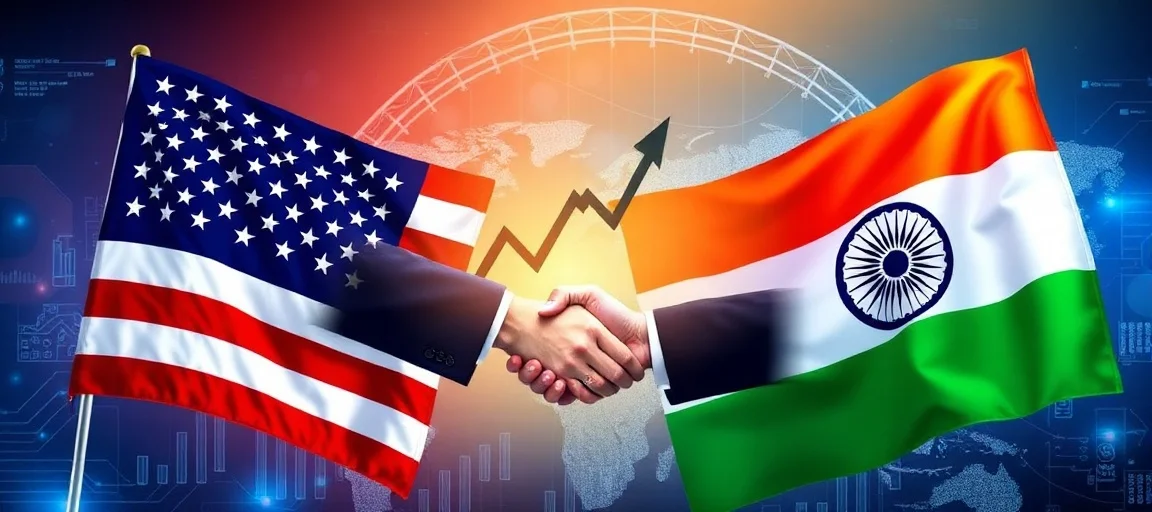
The diplomatic landscape between the United States and India is currently marked by a fascinating duality: robust strategic alignment coupled with persistent trade frictions. Against this backdrop, the ongoing dialogue regarding a potential US-India Trade Deal Talks Advance Amid Strained Ties, signaling a critical juncture in their evolving strategic and economic partnership. Recent statements from top officials suggest that both nations are on the cusp of formalizing a significant trade agreement, potentially ushering in a new dawn for their bilateral economic relationship, even as underlying geopolitical complexities continue to test the strength of their bond.
- Background Context: A Shifting Global Order
- Navigating Complexities: US-India Trade Deal Talks Advance Amid Strained Ties
- Geopolitical Ramifications and Strategic Imperatives
- Expert Perspectives on Bilateral Trade Dynamics
- Potential Impact and Future Outlook
- Conclusion
- Frequently Asked Questions
- Further Reading & Resources
Background Context: A Shifting Global Order
The relationship between the United States and India has transformed dramatically over the past few decades, moving from a Cold War-era distance to a comprehensive strategic partnership. This evolution is driven by shared democratic values, converging security interests in the Indo-Pacific, and a mutual recognition of each other's growing global influence. Economically, both nations represent massive markets and innovation hubs, making deeper trade ties a logical, albeit often complicated, progression.
However, this partnership has not been without its challenges. Trade relations have frequently been characterized by disputes over tariffs, market access, and regulatory hurdles. These issues, while common in any large bilateral trade relationship, have sometimes cast a shadow over the broader strategic alignment, creating moments of tension and requiring extensive diplomatic engagement to resolve. The dynamic interplay between cooperation and competition defines much of their economic interaction, setting the stage for the current push toward a comprehensive trade agreement.
Evolution of US-India Economic Relations
For years, the economic relationship between the United States and India has shown remarkable growth, with bilateral goods trade reaching approximately 129.2 billion in 2024, positioning the U.S. as India's largest trading partner. When services trade is included, the total figure can exceed $200 billion annually. This growth underscores the inherent potential for greater integration. Key Indian exports to the U.S. include engineering goods, electronic goods, gems and jewelry, and pharmaceutical products, while the U.S. exports energy, information and communication technology, and other products to India.
Despite this upward trajectory, the path has been fraught with disagreements. The U.S. has consistently highlighted its trade deficit with India, which stood at $45.7 billion in 2024. India's average applied tariff rates, particularly on agricultural products, have been a significant point of contention, with India's average tariff at 17% compared to the U.S.'s 3.3%. In retaliation for U.S. Section 232 national security measures on steel and aluminum in 2018, India imposed additional tariffs on 28 U.S. products in 2019, including chickpeas, lentils, and apples. These retaliatory tariffs were a clear manifestation of the underlying trade strains.
A significant breakthrough, however, occurred in 2023 when both countries announced the resolution of all six (or seven, depending on the source) outstanding trade disputes at the World Trade Organization (WTO). This "historic" development saw India remove the retaliatory tariffs on certain U.S. agricultural products, signaling a renewed commitment to de-escalate trade tensions and foster a more amicable environment for future negotiations. This resolution set a positive precedent for the deeper trade discussions that followed.
Navigating Complexities: US-India Trade Deal Talks Advance Amid Strained Ties
Recent weeks have seen intensified diplomatic activity, culminating in strong signals that a comprehensive trade agreement between the U.S. and India is "on the verge" of being finalized. US Secretary of State Marco Rubio, during his visit to New Delhi on May 24, 2026, expressed immense confidence, stating that both sides have made "tremendous progress" and are set to achieve an "enduring, beneficial, and sustainable" trade agreement. This optimism, however, comes alongside an acknowledgment that his visit was partly aimed at "repair[ing] bilateral relations that came under severe strain in the last one year over Washington's trade and tariff policies."
The discussions underscore a delicate balancing act. While the prospect of a trade deal generates enthusiasm, the backdrop of "strained ties" — stemming from previous tariff actions and broader geopolitical divergences — cannot be overlooked. The administration's focus on recalibrating global trade balances has sometimes created friction even with strategic partners, including India. Rubio emphasized that these policies are part of a global rebalancing effort, not specifically targeting India, but aimed at addressing perceived "imbalances" in the U.S. economy.
Key Areas of Discussion
The ongoing negotiations encompass a broad spectrum of economic sectors, reflecting the diverse nature of the bilateral trade relationship. Several key areas have emerged as central to the prospective agreement:
-
Critical Minerals: Cooperation on critical minerals is a pivotal aspect of the evolving partnership. Both nations are working towards securing supply chains for essential minerals like lithium, cobalt, and rare earths, which are vital for advanced electronics, semiconductors, defense platforms, renewable energy, and electric vehicles. An initial pact or Memorandum of Understanding (MoU) on critical minerals cooperation is anticipated, leveraging India's geological resources and refining capacity to build resilient supply chains, reducing dependence on dominant players like China. India has also joined the U.S.-led Minerals Security Partnership (MSP), further solidifying this collaboration.
-
Technology and Digital Trade: This sector represents a high-growth area for both countries. Discussions include establishing robust bilateral digital trade rules to address discriminatory practices and other barriers, promoting joint innovation, and enhancing supply chain resilience in critical technologies. U.S. tech giants are significantly investing in India's digital economy, and there's a push to increase trade in technology products, including Graphics Processing Units (GPUs) and other data center components. Areas like Artificial Intelligence (AI), quantum computing, and biotechnology are seeing increased collaboration.
-
Agriculture and Industrial Goods: While historically contentious, these sectors are seeing renewed efforts toward market access. India has committed to reducing or eliminating tariffs on a wide range of U.S. industrial goods and agricultural products, including dried distillers' grains, sorghum, tree nuts, fruits, soybean oil, wine, and spirits. In return, the U.S. aims to adjust reciprocal tariffs on Indian goods like textiles, apparel, leather, footwear, and pharmaceuticals. Resolving long-standing issues in these areas is crucial for a truly comprehensive deal.
-
Defense and Energy: Beyond traditional trade, defense cooperation and energy security form critical pillars of the strategic partnership. The nations are deepening ties in defense trade and exploring collaborations in clean energy solutions, including solar, wind, and hydrogen energy. India's commitment to purchase $500 billion worth of U.S. goods over the next five years, with a focus on energy, agriculture, and technology, highlights the strategic nature of these economic engagements.
Points of Contention and Progress
Despite the positive momentum, several points of contention continue to shape the contours of the trade agreement. One of the primary areas of friction has been the issue of tariffs. The Trump administration's policy of imposing tariffs, which included a 25% tariff on Indian imports, later doubled in some instances, has been a significant source of strain. These actions, justified by concerns over India's trade deficit and its alignment with Russia, led to India's foreign ministry calling them "unfair, unjustified and unreasonable."
Moreover, India's continued energy purchases and defense ties with Russia post-Ukraine conflict have been a recurring irritant for Washington. Visa policies have also emerged as a point of friction, with External Affairs Minister S. Jaishankar raising concerns about difficulties faced by legitimate Indian travelers seeking entry into the U.S. These issues reflect the broader geopolitical complexities that inevitably spill over into economic relations.
However, significant progress has been made to overcome these hurdles. The resolution of all outstanding WTO disputes in 2023 demonstrated a mutual willingness to address long-standing grievances and pave the way for a more constructive dialogue. The announcement of a "framework for an Interim Agreement" in February 2026, which followed earlier negotiations initiated in February 2025, indicates a concrete roadmap towards a comprehensive Bilateral Trade Agreement (BTA). This framework aims to increase market access, reduce both tariff and non-tariff barriers, and build more resilient supply chains.
Geopolitical Ramifications and Strategic Imperatives
The advancement of US-India trade talks holds significant geopolitical weight, extending beyond mere economic figures. Both nations view their partnership as a crucial anchor for stability and prosperity in the Indo-Pacific region, particularly in the context of a rising China. Strengthening economic ties is seen as a strategic imperative to build alternative supply chains and foster democratic resilience in global commerce.
The China Factor
China's growing economic and military assertiveness in the Indo-Pacific has undeniably played a role in accelerating the US-India strategic alignment. For Washington, India offers a critical partner with the scale, talent, and market potential to counterbalance China's influence and diversify global supply chains away from over-reliance on Beijing. The cooperation on critical minerals, for instance, is explicitly aimed at countering China's dominance in this vital sector.
For New Delhi, partnering with the U.S. allows it to enhance its technological capabilities, gain access to frontier research and development, and integrate its emerging industries into resilient global supply chains, thereby reducing its own vulnerabilities. The Quad grouping, involving the U.S., India, Japan, and Australia, also serves as a platform for coordinating efforts on critical minerals and broader strategic cooperation, further intertwining their economic and security interests.
Domestic Pressures and Economic Realities
Both the U.S. and Indian governments face domestic pressures that influence their trade policies. In the U.S., concerns about trade deficits and the protection of domestic industries and jobs are significant. The "America First" trade policy under President Trump, which emphasizes reciprocal trade and addressing trade imbalances, has been a key driver of current negotiations.
In India, safeguarding the interests of its vast agricultural sector and nascent industries is paramount. India has historically been cautious about reducing inbound tariffs on agriculture and other key sectors due to concerns about food security and supporting local farmers. Balancing these domestic imperatives with the desire for greater international trade integration is a constant challenge for Indian policymakers. The trade deal must, therefore, be crafted in a way that addresses these domestic sensitivities while still delivering mutual economic benefits.
Expert Perspectives on Bilateral Trade Dynamics
The ongoing trade discussions have garnered considerable attention from trade experts and geopolitical analysts, who offer varied perspectives on the potential outcomes and long-term implications. Many agree that while the current momentum is positive, the inherent complexities require a pragmatic approach.
Views from Washington
Analysts in Washington largely view a robust trade relationship with India as crucial for the U.S.'s broader Indo-Pacific strategy. They emphasize the need to deepen economic ties with democratic partners to create alternatives to Chinese supply chains and promote a rules-based international order. Many welcome the resolution of WTO disputes and India's commitment to purchase U.S. goods as signs of a maturing partnership.
However, some experts also highlight the persistent challenges posed by India's high tariffs and regulatory barriers, particularly in agriculture. They argue that for the trade deal to be truly transformative, India will need to undertake further market liberalization. Concerns about India's close ties with Russia also continue to feature in analyses of the bilateral relationship, with some fearing that U.S. tariffs could inadvertently push India closer to Beijing and Moscow.
Perspectives from New Delhi
From India's perspective, a trade deal with the U.S. is seen as a crucial step in its journey towards becoming a global economic power. It offers opportunities for technology transfer, investment, and diversification of its export markets. Indian analysts appreciate the U.S.'s recognition of India's strategic importance and its role in the Indo-Pacific. They also highlight India's efforts to address trade concerns, such as the removal of retaliatory tariffs, as a testament to its commitment to the partnership.
However, New Delhi remains firm on protecting its national interests, particularly regarding its agricultural sector and strategic autonomy in foreign policy. Indian experts often point out that the U.S.'s "unpredictable tariff policy" creates uncertainty and can undermine trust. They advocate for a trade agreement that is genuinely reciprocal and respectful of India's developmental needs and policy space, ensuring it benefits both sides equally rather than merely addressing the U.S. trade deficit.
Potential Impact and Future Outlook
The successful conclusion of a comprehensive trade agreement between the U.S. and India could unlock significant opportunities and reshape global trade dynamics. The stated goal of increasing bilateral trade to 300 billion by 2026-27, underscores the immense potential that both nations envision for their economic partnership.
Economic Benefits for Both Nations
For the United States, a trade deal with India would mean expanded market access for its industrial goods, agricultural products, and services in one of the world's largest and fastest-growing economies. It could help reduce the trade deficit and create new opportunities for American businesses and farmers. Increased cooperation in critical minerals and technology would also bolster U.S. supply chain resilience and technological leadership.
For India, the agreement promises increased foreign investment, access to advanced U.S. technology, and diversification of its export base. Reduced tariffs on Indian goods entering the U.S. market would boost key sectors like textiles, pharmaceuticals, and IT services. The focus on digital trade rules and joint innovation funds could also propel India's digital economy and startup ecosystem further. Both countries could see substantial growth in high-tech manufacturing, defense co-production, and green energy initiatives, fostering job creation and enhancing technological prowess across various industries.
Strengthening Strategic Partnership
Beyond economics, a robust trade deal would reinforce the broader strategic partnership between the two democracies. It would send a strong signal of shared commitment to an open, free, and resilient global economic order, particularly important in an era of increasing geopolitical fragmentation. Enhanced economic integration can strengthen diplomatic ties, facilitate greater cooperation on regional security issues, and reinforce their collective efforts in multilateral forums. This deeper partnership will also project a unified front against non-democratic influences, promoting stability and prosperity in the Indo-Pacific and beyond.
However, sustaining this momentum will require continuous diplomatic agility and a willingness to address emerging challenges. Issues such as visa policies, data governance, aligning regulatory standards, and navigating potential disagreements over intellectual property rights will need ongoing attention. The successful navigation of these complexities will ultimately determine the enduring nature and true impact of this crucial bilateral relationship, cementing a partnership that is robust and resilient enough to withstand future global shifts.
Conclusion
The recent declarations of significant progress in the US-India Trade Deal Talks Advance Amid Strained Ties mark a pivotal moment in the trajectory of this critical bilateral relationship. Despite a history of trade frictions and ongoing geopolitical complexities, both Washington and New Delhi are demonstrating a resolute commitment to forging a more integrated and mutually beneficial economic partnership. The resolution of WTO disputes, the focus on critical minerals and technology, and India's substantial purchasing commitments underscore a strategic vision that transcends immediate disagreements. The path forward will require continued diplomatic agility, a pragmatic approach to persistent challenges, and a shared understanding that a strong economic bond is fundamental to their converging strategic interests in a rapidly evolving global landscape. The anticipated agreement has the potential to not only redefine their economic ties but also to bolster their collective influence on the world stage, contributing to a more balanced and resilient international order.
Frequently Asked Questions
Q: What are the main drivers for the US-India trade talks?
A: The trade talks are primarily driven by shared democratic values, converging security interests in the Indo-Pacific region, and a mutual recognition of each other's growing global influence and significant economic potential. Both nations seek to strengthen their economies and strategic alignment.
Q: What key areas are being discussed in the trade deal?
A: Negotiations encompass a broad range of sectors including cooperation on critical minerals, establishing rules for technology and digital trade, improving market access for agricultural and industrial goods, and deepening collaboration in defense and energy. The goal is to reduce barriers and build resilient supply chains.
Q: How do geopolitical tensions impact the US-India trade relationship?
A: Geopolitical tensions, such as past tariff disputes, India's continued defense and energy ties with Russia, and visa policy disagreements, have occasionally strained the bilateral relationship. However, both nations prioritize managing these tensions to advance their strategic partnership and shared economic objectives.