US-Cuba Military Talks Amid Rising Trump Pressure: A Critical Juncture
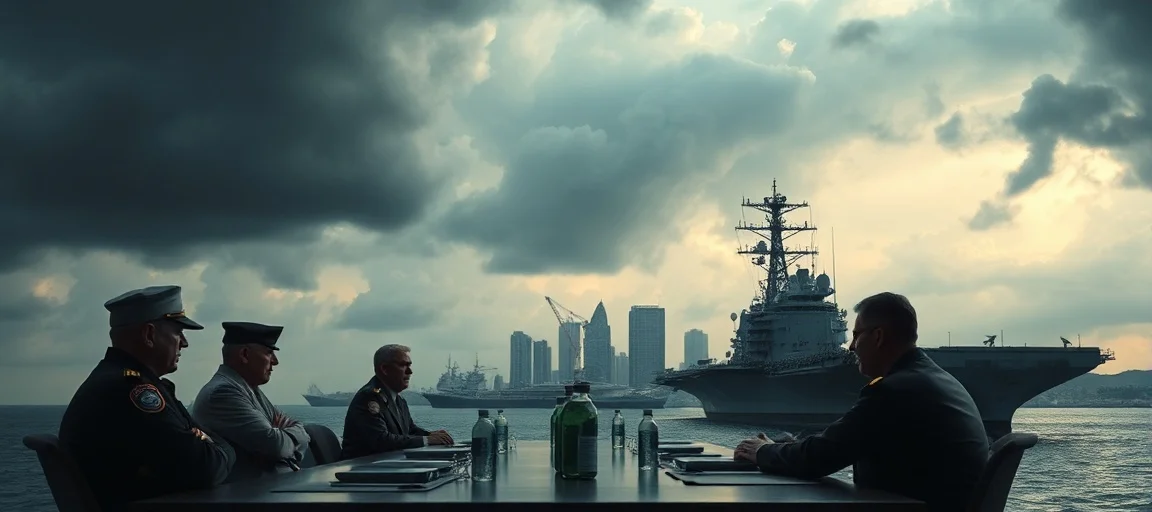
Recent developments have thrust the intricate relationship between the United States and Cuba into a critical juncture, with high-level US-Cuba Military Talks Amid Rising Trump Pressure dominating headlines. On May 29, 2026, a rare meeting occurred near the U.S. Navy base in Guantanamo Bay, where General Francis Donovan, head of U.S. Southern Command, engaged in a "brief exchange on operational security matters" with senior Cuban military leaders. This dialogue unfolds amidst a concerted "maximum pressure" campaign from the Trump administration, which has escalated rhetoric, imposed sanctions, and openly discussed various options regarding the island nation. The unfolding situation presents a complex diplomatic dance, closely watched by international observers concerned about stability in the Caribbean.
- Historical Context of US-Cuba Relations
- Escalating Pressure: Trump's Second Term and Cuba
- Recent US-Cuba Military Talks Amid Rising Trump Pressure
- The Trump Administration's Strategy and Its Implications
- Expert Opinion and Future Outlook
- Conclusion
- Frequently Asked Questions
- Further Reading & Resources
Historical Context of US-Cuba Relations
The relationship between the United States and Cuba has been historically fraught with tension, marked by periods of overt hostility, covert operations, and occasional diplomatic overtures. Following the 1959 Cuban Revolution, which brought Fidel Castro to power, Cuba aligned itself with the Soviet Union, leading to decades of Cold War-era animosity. The U.S. imposed a comprehensive trade embargo in 1960, which remains largely in effect, severely limiting economic and commercial activities between the two nations.
Decades of Estrangement and Brief Thaw
For over fifty years, direct military-to-military engagement was virtually nonexistent, replaced by proxy conflicts and a deep-seated distrust. However, the Obama administration initiated a significant shift, pursuing a path of normalization. In December 2014, President Barack Obama and then-Cuban President Raúl Castro announced steps to restore full diplomatic relations, leading to the reopening of embassies in Havana and Washington in July 2015. This period saw increased "people-to-people" contacts, eased travel restrictions, and some cooperation on areas of mutual interest, such as anti-narcotics efforts. Cuba was even removed from the U.S. State Department's list of state sponsors of terrorism in May 2015, a significant diplomatic gesture.
The Trump Administration's Reversal
The diplomatic thaw was largely reversed with the inauguration of President Donald Trump in 2017. His first administration adopted a tougher stance, reimposing restrictions on travel and commerce, particularly targeting businesses linked to the Cuban military, such as GAESA (Grupo de Administración Empresarial S.A.). The rationale cited included concerns over human rights and a belief that engagement primarily enriched the Cuban regime rather than benefiting the Cuban people. As one of his final acts in his first term, President Trump redesignated Cuba as a State Sponsor of Terrorism in January 2021, a move critics viewed as politically motivated.
Escalating Pressure: Trump's Second Term and Cuba
Fast forward to May 2026, and the Trump administration, now in its second term, has significantly intensified its "maximum pressure" campaign against Cuba. This renewed push is part of a broader strategy to assert U.S. primacy in the Western Hemisphere and curtail the influence of adversaries like China and Russia. President Trump has publicly declared Cuba "a failing nation" and warned that it "is next" following the U.S. military's capture of Venezuelan leader Nicolás Maduro in January 2026.
Sanctions, Blockades, and Military Posturing
The current pressure campaign manifests in several critical ways:
-
Oil Blockade and Sanctions: The Trump administration has imposed an oil blockade on Cuba and threatened tariffs on any country that sells or provides oil to the island. This has led to severe energy shortages, blackouts, and food scarcity across Cuba.
-
Warships in the Caribbean: The U.S. has maintained warships, including at least one amphibious assault ship, in the Caribbean Sea. While the force is smaller than during the Maduro raid, its presence signals a continued show of force.
-
Indictment of Raúl Castro: Federal prosecutors unsealed an indictment charging former Cuban President Raúl Castro with various offenses related to the 1996 downing of civilian planes flown by U.S.-based exiles. Cuban President Miguel Díaz-Canel has condemned this indictment as a political stunt aimed at justifying potential military aggression.
-
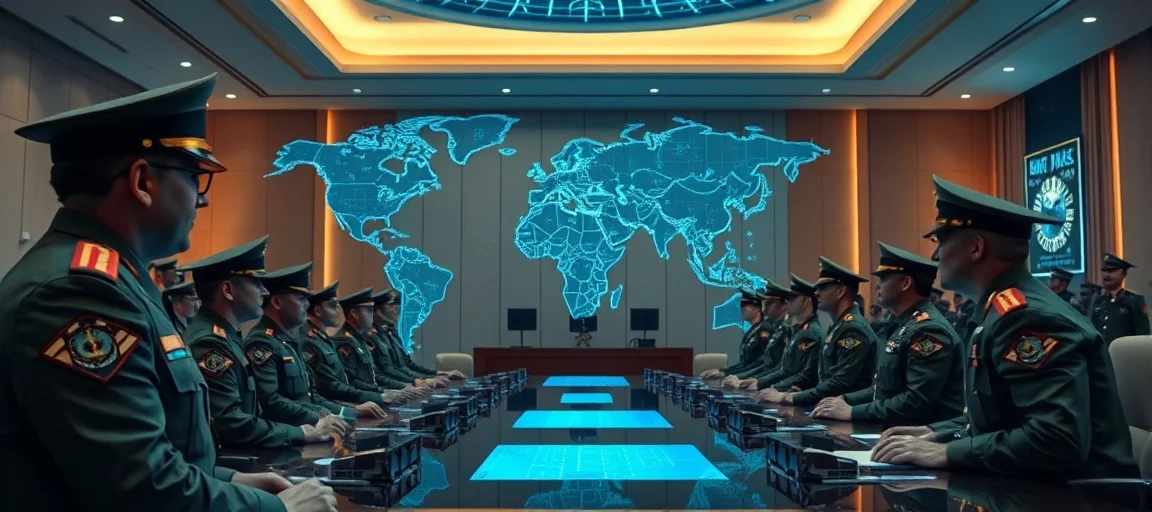
Military Action Discussions: Senior Trump administration officials have reportedly gamed out plans for military action against Cuba, including a recent "tabletop" exercise led by U.S. Southern Command. While officials state that "everything is on the table, but no invasion is planned or imminent," the rhetoric suggests a clear consideration of forceful options. Secretary of State Marco Rubio has emerged as a key proponent of these hawkish policies, pushing for sanctions targeting Cuba's military-linked businesses.
Recent US-Cuba Military Talks Amid Rising Trump Pressure
Against this backdrop of heightened tension, the military talks on May 29, 2026, between General Francis Donovan and Cuban military leaders, including Lt. Gen. Roberto Legrá Sotolongo, are particularly noteworthy. The meeting, described as a "brief exchange on operational security matters" near the Guantanamo Bay base, was viewed positively by both sides as addressing security issues along the perimeter separating the military enclave. They also agreed to maintain communication between the two military commands.
Significance of the Guantanamo Meeting
While periodic "fence-line meetings" between American and Cuban officers to discuss Guantanamo Bay security are not unprecedented, a meeting involving the head of U.S. Southern Command is a far rarer occurrence. This suggests a level of engagement, however limited, even amidst the escalating political and economic pressure from Washington. It could indicate a desire from both sides to manage potential miscalculations or de-escalate specific operational concerns in a volatile environment.
Other High-Level Contacts
The military talks are not isolated. In recent months, other high-level contacts have occurred:
-
CIA Director John Ratcliffe visited Havana two weeks prior to the military talks to meet with Raúl Castro's grandson, conveying that the U.S. could expand cooperation if Cuba made "fundamental changes".
-
State Department diplomats also visited Havana last month to explore possible improvements in relations, although the U.S. side reportedly came away "unimpressed," leading to even more sanctions.
These interactions, despite varying degrees of success, underscore a complex dynamic where channels of communication are maintained even as political pressure intensifies.
The Trump Administration's Strategy and Its Implications
The Trump administration's "maximum pressure" campaign appears designed to force the Cuban government into significant economic and political concessions. The strategy involves creating economic hardship, fostering internal unrest, and signaling the possibility of more forceful interventions. Officials reportedly believe that worsening economic conditions, including blackouts and food shortages, coupled with rising summer temperatures, could trigger protests similar to those seen in 2021.
"Accelerationism" and "Deportation" Motives
Some analysts suggest that the strategy could be described as "accelerationism," aiming to weaken Cuba without immediately seeking regime change, but rather to create conditions for future leverage. There are also indications that a key, albeit unspoken, motivation behind the pressure campaign is to make Cuba "ripe for deportation" – essentially creating conditions where Cuban migrants in the U.S. could be sent back, with the administration claiming improved conditions on the island. This is a controversial viewpoint, but it highlights the multi-faceted and often opaque nature of U.S. policy.
Risks and Warnings
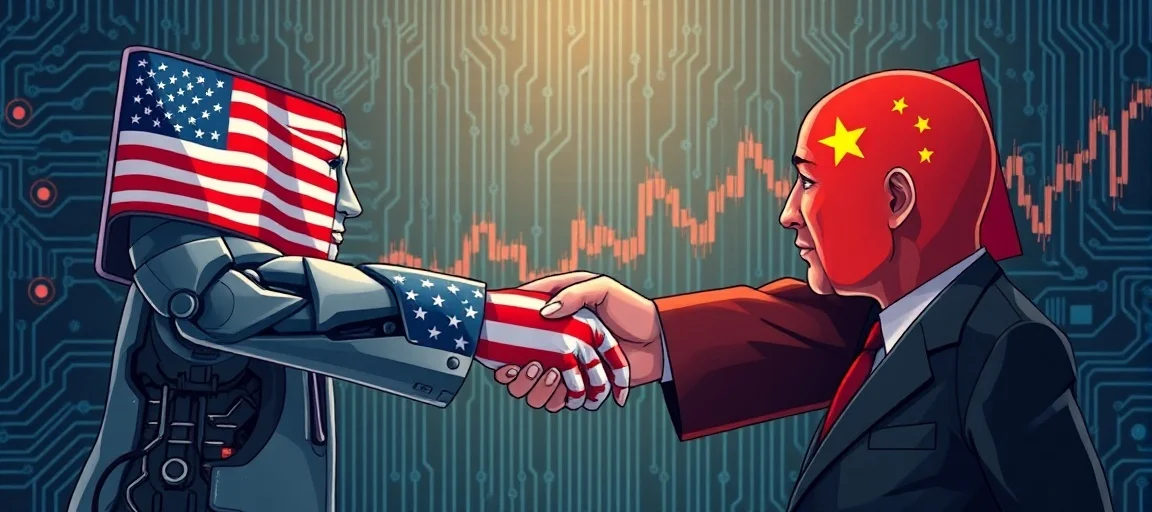
However, this approach carries significant risks. Experts warn that pushing too hard on Cuba and destabilizing the island could lead to a refugee crisis, with Cubans heading to Florida in makeshift boats. Such an outcome would have major humanitarian and political consequences for the U.S. Additionally, a major U.S. operation against Cuba could introduce new friction with global powers like China and Russia, who have expressed opposition to U.S. sanctions and interference. Given Cuba's fragile infrastructure and existing shortages, a large-scale military operation risks collapsing the Cuban state, triggering significant internal unrest or a deluge of refugees.
Expert Opinion and Future Outlook
Experts on U.S.-Cuba relations express a mix of skepticism and concern regarding the Trump administration's current approach. While some acknowledge the long-standing frustration with the Cuban government, many doubt the effectiveness of a purely coercive strategy. Michael J. Bustamante, chair in Cuban and Cuban-American Studies at the University of Miami, has noted the unpredictability of the Trump administration's approach, suggesting that part of the strategy might be to "keep Cuban counterparts guessing".
The Cuban government, for its part, has consistently condemned the U.S. pressure, vowing "impregnable resistance" to any external aggression. Despite the tough rhetoric, Cuba has also reiterated its willingness to maintain respectful dialogue and cooperation on matters of mutual interest. They insist they are not a threat to the U.S. and actively cooperate on issues like counter-narcotics, despite the U.S. recently removing Cuba's chapter from its annual counter-narcotics report without explanation.
Unclear Goals and Path Forward
The ultimate goals of the Trump administration's campaign remain somewhat unclear, extending beyond simple regime change to a more complex interplay of regional dominance, internal political considerations, and a desire to alter Cuba's political and economic system. The ongoing military talks, however limited, represent a fragile thread of communication in a relationship otherwise characterized by escalating tension. The coming months will be crucial in determining whether dialogue can avert further escalation, or if the rising pressure will lead to an unpredictable and potentially destabilizing outcome in the Caribbean.
Conclusion
The current state of US-Cuba Military Talks Amid Rising Trump Pressure highlights a precarious moment in the enduringly complex relationship between the two nations. While direct military-to-military communications offer a slender hope for de-escalation and managing operational security, they are overshadowed by an intensified pressure campaign from the Trump administration. The blend of diplomatic overtures and aggressive sanctions, coupled with the looming threat of military action, underscores a period of profound uncertainty for Cuba and the wider Caribbean region. The international community watches closely, hoping that pragmatic dialogue can prevail over further confrontation, ensuring stability in a region already facing numerous challenges.
Frequently Asked Questions
Q: What are the key drivers behind the recent US-Cuba military talks?
A: The talks, particularly the rare meeting involving the head of U.S. Southern Command, primarily aim to manage operational security along the Guantanamo Bay perimeter. They also serve as a limited channel for communication amidst escalating political tensions and pressure from the Trump administration.
Q: How has the Trump administration's policy towards Cuba evolved in its second term?
A: In its second term, the Trump administration has intensified its "maximum pressure" campaign. This includes imposing an oil blockade, maintaining a naval presence in the Caribbean, unsealing an indictment against Raúl Castro, and reportedly discussing military action scenarios.
Q: What are the primary risks associated with the US's "maximum pressure" campaign on Cuba?
A: Experts warn that excessive pressure could lead to a humanitarian crisis, including a potential refugee exodus to Florida. It also risks destabilizing the island, potentially collapsing the Cuban state, and could introduce new friction with global powers like China and Russia.