US-China: A New Legal Battleground Emerges – Global Implications
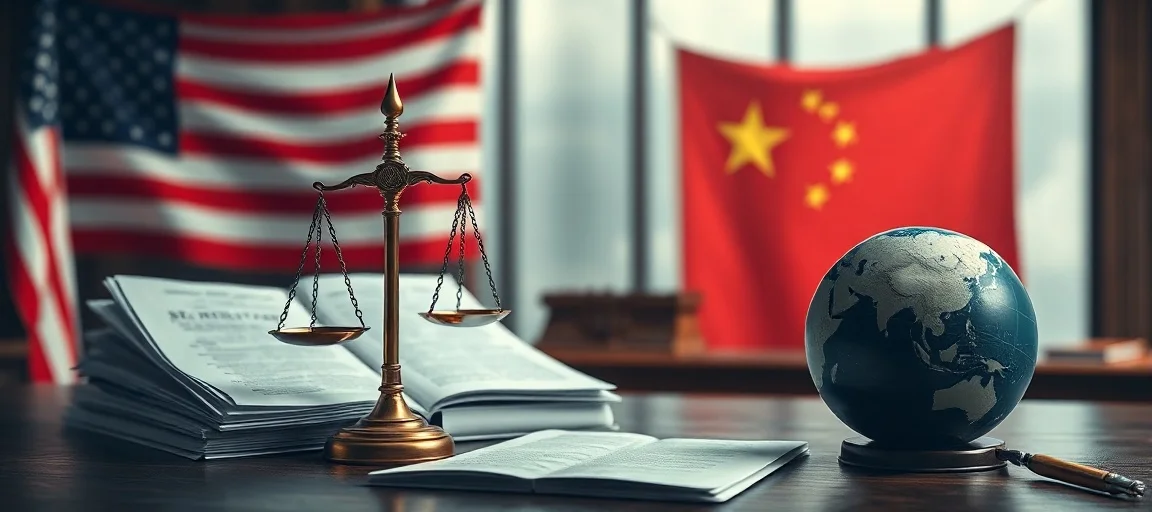
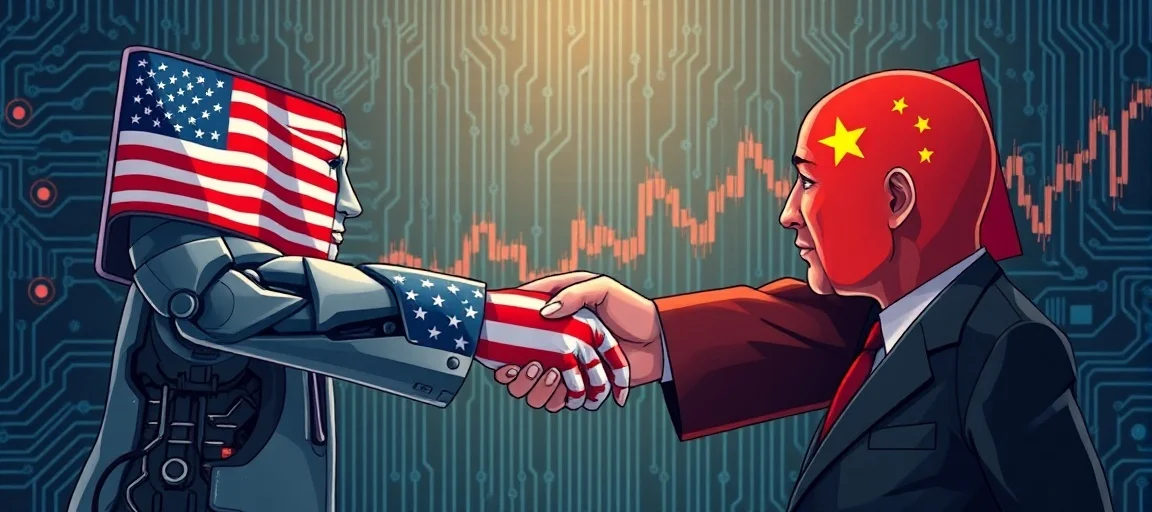
The geopolitical landscape is continually shifting, with a new and increasingly complex legal battleground emerging between the United States and China, carrying significant global implications. What started largely as trade disputes has evolved into a comprehensive legal battleground, deeply impacting international commerce, technological innovation, and even national security frameworks. The US-China: A New Legal Battleground Emerges, signifying a profound shift in how these two economic powerhouses interact and setting precedents for future international relations. This emerging reality involves intricate legal challenges, regulatory crackdowns, and a heightened focus on compliance across various sectors, creating significant global implications for businesses and governments alike.
- The Shifting Sands of Geopolitical Confrontation
- Understanding the Key Arenas of Legal Conflict
- Navigating the New Legal Battleground Between US and China
- Expert Perspectives on the Evolving Legal Landscape
- Global Impact and Future Outlook
- Conclusion
- Frequently Asked Questions
- Further Reading & Resources
The Shifting Sands of Geopolitical Confrontation
The relationship between the United States and China has historically oscillated between cooperation and competition. However, in recent years, this dynamic has transformed into a more confrontational stance, particularly within the legal and regulatory spheres. This shift is not merely an extension of trade tariffs but rather a deeper structural divergence manifesting in legal challenges that touch upon sovereignty, economic policy, and international norms. The core issues fueling this new legal battleground are multifaceted, encompassing everything from technological dominance and intellectual property theft to human rights concerns and data governance.
Historically, legal disputes between nations were often arbitrated through established international bodies or bilateral agreements. However, the current US-China legal landscape often involves unilateral actions, domestic legal proceedings with extraterritorial reach, and the weaponization of legal frameworks to achieve strategic national interests. This approach fundamentally alters the traditional understanding of international legal recourse and creates an environment of unpredictability for multinational corporations operating within both jurisdictions.
Understanding the Key Arenas of Legal Conflict
The legal battleground between the US and China is not confined to a single domain but spans multiple critical sectors, each presenting unique challenges and implications. These arenas reflect the broader strategic competition between the two nations.
Trade and Economic Law
Initially, trade imbalances and tariff disputes dominated the economic friction. The US has frequently accused China of unfair trade practices, including subsidies, state-owned enterprise advantages, and currency manipulation. This led to a series of tariff impositions and countermeasures, legally contested at the World Trade Organization (WTO) and through domestic legal actions. Beyond tariffs, concerns persist regarding non-tariff barriers, market access restrictions, and forced technology transfers, which US businesses argue violate international trade law and fair competition principles.
More recently, the focus has shifted to export controls and investment restrictions. The US has increasingly used its legal authority to restrict the export of sensitive technologies to China, citing national security concerns. These restrictions often involve complex legal interpretations of export control regulations and require meticulous compliance from US companies and their global partners. Similarly, the Committee on Foreign Investment in the United States (CFIUS) has heightened scrutiny of Chinese investments in US critical infrastructure and technology sectors, leading to blocked deals and divestiture orders based on national security reviews.
Intellectual Property Rights (IPR)
Intellectual property rights have long been a contentious issue. The US government and American companies have consistently raised concerns about IP theft, forced technology transfer, and inadequate protection of patents, trademarks, and copyrights in China. Legal battles in this area often involve complex cross-border litigation, challenging the enforcement mechanisms and judicial independence within China. Recent US legislation and executive orders aim to bolster domestic protection and provide more legal avenues for US companies to seek redress for IP infringement emanating from China. This includes stricter enforcement actions against entities suspected of IP theft and enhanced cooperation with international partners to combat global IP infringement networks.
The legal framework for intellectual property protection in China has undergone reforms in recent years, but implementation and enforcement remain areas of concern for foreign companies. Cases often highlight differences in legal interpretation and procedural standards between the two countries, leading to prolonged and costly legal disputes.
Technology and Data Governance
The race for technological supremacy, particularly in areas like artificial intelligence, 5G, semiconductors, and quantum computing, has fueled a significant portion of the legal conflict. The US has moved to block Chinese technology companies from accessing critical American components and software, often through inclusion on entity lists maintained by the Commerce Department. These actions create substantial legal challenges for affected companies, requiring them to navigate complex licensing and compliance regimes.
Data governance and privacy are also emerging as major legal flashpoints. Both countries are implementing stricter data localization, cross-border data transfer, and cybersecurity laws. China's Cybersecurity Law, Data Security Law, and Personal Information Protection Law (PIPL) impose stringent requirements on data handling, often conflicting with US legal frameworks and the operational needs of multinational companies. This necessitates careful legal navigation to ensure compliance with both sets of regulations, particularly for businesses that collect, process, or store data involving citizens of both nations. The extraterritorial reach of these laws creates a complex web of legal obligations and potential liabilities for global enterprises.
Human Rights and Sanctions
Human rights concerns, particularly regarding Xinjiang, Hong Kong, and other regions, have prompted the US to impose sanctions on Chinese officials and entities. These sanctions, rooted in US domestic law (such as the Global Magnitsky Act), carry significant legal implications, including asset freezes and travel bans, and can prohibit US persons and companies from engaging in transactions with sanctioned individuals or entities. Compliance with these sanctions regimes is a critical legal requirement for US and international financial institutions and businesses, failure of which can result in severe penalties.
China, in turn, has responded with its own anti-sanctions laws and an unreliable entity list, creating legal counter-pressures. These laws aim to counter foreign sanctions and protect Chinese companies and individuals from perceived extraterritorial overreach. This reciprocal legal action creates a challenging environment for companies that may find themselves caught between conflicting legal obligations from both governments.
Navigating the New Legal Battleground Between US and China
The increasing legal entanglements between the US and China demand a sophisticated understanding of international law, domestic regulations, and geopolitical realities. Businesses and policymakers must anticipate continued legal friction and develop robust strategies to mitigate risks.
Supply Chain Resilience and Legal Due Diligence
Companies heavily reliant on either US or Chinese markets or supply chains face heightened legal and operational risks. The imposition of export controls, sanctions, or forced labor import bans can disrupt supply chains overnight, leading to significant financial losses and legal liabilities. Robust legal due diligence is crucial to identify and assess risks associated with suppliers, partners, and customers in both jurisdictions. This includes vetting entities against sanctions lists, ensuring compliance with origin regulations, and understanding the potential impact of sudden policy shifts. Businesses are increasingly exploring diversification strategies, seeking alternative manufacturing bases, and building more resilient supply chains to reduce exposure to these legal and geopolitical risks.
Data Localization and Cross-Border Data Flows
For companies operating globally, navigating the divergent data privacy and security laws of the US and China is a monumental legal challenge. China's strict data localization requirements and controls on cross-border data transfers often clash with the data processing models used by multinational corporations, as well as with privacy regulations such as the GDPR in Europe or state-level privacy laws in the US. Legal teams must meticulously design data architectures and implement robust compliance programs to ensure legal transfers and storage of data, minimizing the risk of penalties for non-compliance in either jurisdiction. This includes implementing contractual clauses, obtaining necessary regulatory approvals, and performing regular data privacy impact assessments.
Corporate Governance and Disclosure
Increased regulatory scrutiny in both countries also impacts corporate governance and disclosure requirements. For instance, the US has tightened auditing requirements for foreign companies listed on American exchanges, particularly targeting Chinese firms, with the potential for delisting if auditing standards are not met. This legal pressure necessitates greater transparency and adherence to US accounting and auditing standards, which can present operational and legal hurdles for Chinese companies accustomed to different regulatory environments. Conversely, Chinese regulators are also imposing stricter disclosure rules on companies operating within its borders, particularly concerning data security and national interest matters.
Expert Perspectives on the Evolving Legal Landscape
Legal scholars and geopolitical analysts emphasize the long-term implications of this new legal battleground. Many believe that the current trajectory indicates a continued "decoupling" in certain strategic sectors, driven by legal and regulatory mandates rather than purely economic forces.
One perspective suggests that both the US and China are actively shaping their domestic legal frameworks with extraterritorial ambitions, creating a complex and sometimes contradictory international legal order. "The era of seamless globalization, particularly in critical technologies, is facing fundamental challenges from national security-driven legal segmentation," notes one prominent international law professor. "Companies are increasingly forced to choose sides or find ingenious ways to comply with conflicting legal regimes, often at significant cost."
Another view highlights the potential for this legal competition to spill over into international forums, impacting the efficacy of multilateral institutions like the WTO. As both nations leverage their legal systems to advance their geopolitical agendas, the existing global governance structures may struggle to mediate disputes effectively, leading to a more fragmented and nationalistic approach to international law. This could undermine the stability of the global legal order and make it more difficult to resolve future disputes through established mechanisms.
Global Impact and Future Outlook
The ramifications of this burgeoning legal battleground extend far beyond the direct economic interests of the US and China. They influence global trade patterns, investment flows, technological development, and the very architecture of international law.
Impact on Global Business and Investment
Multinational corporations are perhaps the most directly affected, facing increased compliance costs, operational complexities, and legal risks. The need to navigate conflicting regulations, manage supply chain vulnerabilities, and protect intellectual property across increasingly divergent legal systems has become a top priority. This environment fosters a more cautious approach to cross-border investments and potentially leads to regionalized economic blocs, as companies prioritize operating within legally predictable zones. Smaller businesses or those with limited legal resources may find it increasingly difficult to compete effectively in this complex legal environment.
Reshaping International Law and Diplomacy
The US-China legal disputes are also testing and reshaping the contours of international law. Questions of sovereignty, extraterritorial jurisdiction, and the applicability of domestic laws in global contexts are at the forefront. Diplomatic efforts will be crucial in mitigating the most severe impacts of these legal clashes, but the precedent set by unilateral legal actions could lead to a more fragmented international legal order where power politics increasingly dictates legal outcomes. The challenge for international bodies will be to adapt and provide effective dispute resolution mechanisms that can bridge these widening legal gaps.
The Role of Third Countries
Third countries and their businesses are often caught in the crossfire, forced to choose between complying with US sanctions and export controls or risking penalties under China's anti-sanctions laws. This "choose a side" dilemma creates significant diplomatic and economic pressure, pushing many nations to carefully evaluate their own legal frameworks and foreign policies to avoid becoming collateral damage in the US-China legal rivalry. The development of distinct legal and economic ecosystems, one aligned with the US and another with China, could become more pronounced, impacting global standardization and interoperability.
Conclusion
The transformation of the US-China relationship into a new legal battleground marks a defining feature of contemporary geopolitics. From trade and technology to human rights and data privacy, the legal systems of both nations are being actively deployed as tools of strategic competition. This emerging reality presents formidable challenges for businesses, legal practitioners, and policymakers worldwide, demanding a proactive and informed approach to navigating an increasingly complex and legally fragmented global environment. The continued evolution of the US-China: A New Legal Battleground Emerges will undoubtedly shape international relations and global commerce for years to come, requiring constant vigilance and adaptive strategies from all stakeholders.
Frequently Asked Questions
Q: What defines the new legal battleground between the US and China?
A: It's an evolution from trade disputes to comprehensive legal conflicts encompassing technology, intellectual property, data governance, and human rights. Both nations use domestic legal frameworks with extraterritorial reach to advance strategic interests, impacting global commerce and international law.
Q: Which sectors are most affected by the US-China legal friction?
A: Key sectors include trade and economic law (e.g., export controls, investment restrictions), intellectual property rights (IP theft, enforcement challenges), technology and data governance (e.g., 5G, AI, data localization), and human rights (e.g., sanctions).
Q: How are businesses globally impacted by this legal competition?
A: Businesses face increased compliance costs, supply chain disruptions, data localization challenges, and heightened scrutiny of corporate governance. They must navigate conflicting regulations and potentially choose sides, leading to cautious investments and regionalized economic blocs.