US Cautions on China's Military at Asia Summit: Key Takeaways
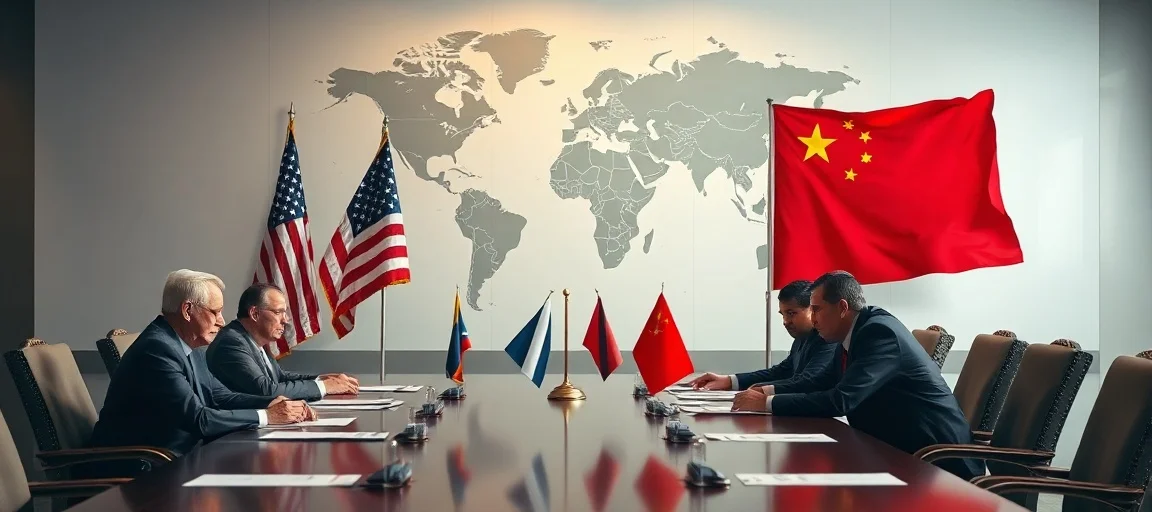
At a recent high-profile gathering of Asian defense leaders, the US Cautions on China's Military at Asia Summit served as a stark reminder of escalating geopolitical tensions in the Indo-Pacific. The United States delivered clear and unequivocal warnings regarding Beijing's assertive posture and rapid military modernization, emphasizing concerns over its actions in disputed territories and its implications for regional security. This summit provided a critical platform for the US to articulate its strategic outlook and call for adherence to international law, drawing significant attention from global observers and participating nations alike. The discussions underscored the persistent challenges posed by China's growing military capabilities and its increasingly assertive regional presence.
- The Broader Context of US-China Relations in Asia
- Key Details of the US Caution at the Asia Summit
- Regional Implications and Responses
- Broader Geopolitical Ramifications
- The Future of US-China Military Relations: US Cautions on China's Military at Asia Summit
- Conclusion
- Frequently Asked Questions
- Further Reading & Resources
The Broader Context of US-China Relations in Asia
The Indo-Pacific region stands as a critical geopolitical theater, characterized by dynamic economic growth, complex historical grievances, and an intricate web of alliances and rivalries. At its heart lies the evolving relationship between the United States and China, two global powers whose strategic competition profoundly shapes the regional landscape. The US has long maintained a robust military presence in Asia, underpinning its security commitments to allies like Japan, South Korea, and the Philippines, and advocating for a "free and open Indo-Pacific". This vision emphasizes adherence to international law, freedom of navigation, and peaceful resolution of disputes, often seen as a counterpoint to China's expanding influence.
China, on the other hand, views the region through the lens of its historical claims and burgeoning national interests. Its rapid economic rise has been accompanied by a significant modernization and expansion of its military, the People's Liberation Army (PLA), across all domains – land, sea, air, and space. This expansion is perceived by Beijing as essential for protecting its sovereignty, securing its trade routes, and projecting its legitimate power. However, China's increasingly assertive actions, particularly in the South China Sea and toward Taiwan, have generated considerable concern among its neighbors and the wider international community.
Key flashpoints and areas of contention include:
-
South China Sea: China claims vast swathes of the South China Sea, overlapping with claims from Vietnam, the Philippines, Malaysia, Brunei, and Taiwan. Its construction of artificial islands, militarization of features, and aggressive posture towards other claimants' vessels have been a major source of regional instability. The US consistently challenges these claims through freedom of navigation operations (FONOPs), asserting international maritime law.
-
Taiwan: Beijing considers Taiwan a breakaway province that must be reunified with the mainland, by force if necessary. The US maintains a policy of "strategic ambiguity" but provides Taiwan with defensive capabilities, a stance that frequently draws China's ire and raises fears of potential conflict.
-
Military Modernization: China's development of advanced weaponry, including hypersonic missiles, aircraft carriers, and stealth aircraft, alongside its growing nuclear arsenal, fundamentally alters the regional balance of power. The speed and scale of this modernization are closely monitored by the US and its allies.
These underlying tensions form the backdrop against which high-level diplomatic forums, such as the Shangri-La Dialogue and the ASEAN Defence Ministers' Meeting Plus (ADMM-Plus), become crucial arenas for articulating strategic positions and managing potential conflicts. These summits often serve as vital platforms for dialogue, even when deep disagreements persist, allowing nations to convey their intentions and red lines directly.
Key Details of the US Caution at the Asia Summit
At the recent Asia Summit, high-ranking US officials delivered pointed cautions regarding China's military activities, reflecting Washington's deepening concerns about regional stability. While specific details of every closed-door session remain confidential, public statements and press briefings highlighted several key areas of contention. US Secretary of Defense Lloyd Austin, or his equivalent at the time, reportedly reiterated the US commitment to a rules-based international order and warned against actions that undermine peace and security in the Indo-Pacific.
Specific US Statements and Concerns
The core of the US message revolved around China's persistent and escalating assertiveness in strategically vital regions.
-
South China Sea Militarization: The US specifically criticized China's continued militarization of artificial islands and features in the South China Sea. US officials emphasized that these actions, including the deployment of advanced military aircraft and missile systems, violate international law and infringe upon the sovereign rights of other claimant states. They underscored the importance of unimpeded lawful commerce and freedom of navigation and overflight, which are increasingly challenged by China's expansive claims and operational practices.
-
Coercive Actions Against Neighbors: Washington raised concerns about what it described as China's "coercive and dangerous actions" against vessels and aircraft from other nations operating in international waters and airspace. This includes incidents involving coast guard ships, fishing fleets, and naval vessels, which the US views as attempts to unilaterally alter the status quo through intimidation. The recent incidents with Philippine vessels near Second Thomas Shoal were likely cited as examples of such behavior.
-
Taiwan Strait Stability: The US delegation likely reiterated its concerns about Beijing's increasing military pressure on Taiwan. While maintaining its "One China" policy, the US stressed the importance of peace and stability across the Taiwan Strait and warned against any unilateral change to the status quo by force. The potential for miscalculation and escalation in this highly sensitive area was a central theme.
-
Lack of Crisis Communication Mechanisms: A recurring point of concern for the US is the perceived unwillingness of China to engage in robust, open, and reliable military-to-military communication channels. US officials have consistently called for improved crisis communication mechanisms to prevent misunderstandings and manage incidents, particularly during unexpected encounters at sea or in the air. Beijing's reluctance to fully engage in such dialogues is seen as increasing the risk of unintended conflict.
These statements were not merely rhetorical; they were backed by the ongoing strengthening of US alliances and partnerships in the region, alongside increased joint military exercises designed to enhance interoperability and deterrence.
China's Perspective and Response
China's delegation at the summit, typically led by its Minister of National Defense or a high-ranking PLA official, predictably offered a robust counter-narrative to the US cautions. Beijing often frames its military buildup and actions as purely defensive, aimed at protecting its national sovereignty, territorial integrity, and legitimate security interests.
Key aspects of China's response generally include:
-
Sovereignty Over Disputed Territories: China unequivocally asserts its historical and legal claims over territories like the South China Sea and Taiwan, viewing any external interference as an infringement on its sovereignty. From Beijing's perspective, its activities in these areas are internal affairs or legitimate exercises of its sovereign rights.
-
"Provocative" US Presence: China often characterizes the substantial US military presence and its alliance network in the Indo-Pacific as destabilizing and "Cold War mentality" remnants. It views US freedom of navigation operations and joint exercises as provocations designed to contain China and undermine regional peace.
-
Right to Modernize: Beijing maintains that its military modernization is a sovereign right, necessary for national defense and commensurate with its economic strength. It argues that its military development does not pose a threat to other nations, provided they do not infringe upon China's core interests.
-
Call for Mutual Respect: Chinese officials frequently call for the US to respect China's core interests and refrain from actions that could escalate tensions. They advocate for a new model of major-country relations based on mutual respect, non-confrontation, and win-win cooperation, even while criticizing specific US policies.
The exchange at the summit, therefore, highlighted the deep chasm in strategic perceptions and priorities between Washington and Beijing, making genuine breakthroughs on these core issues exceedingly difficult.
Regional Implications and Responses
The direct and unambiguous nature of the US cautions against China's military at the Asia Summit sends ripples across the entire Indo-Pacific, influencing the strategic calculations of nations large and small. The responses from regional players vary significantly, often reflecting their unique geopolitical positions, economic dependencies, and security concerns.
Allies' Stance: Reinforcing the US Position
Key US allies in the region, such as Japan, South Korea, Australia, and the Philippines, generally align themselves with Washington's concerns, albeit with varying degrees of public emphasis. These nations share concerns about China's assertiveness and rely on the US security umbrella for their own defense.
-
Japan: A staunch US ally, Japan has consistently expressed deep concerns over China's growing military activities, particularly around the Senkaku/Diaoyu islands in the East China Sea and the Taiwan Strait. Tokyo often echoes US calls for adherence to international law and freedom of navigation, simultaneously strengthening its own defense capabilities and its alliance with the US. Its leaders frequently articulate the importance of regional peace and stability as paramount to Japan's security and prosperity.
-
Australia: Australia has also voiced significant apprehension about China's actions in the South China Sea and the broader Indo-Pacific. Canberra has been a key partner in initiatives like the Quad (Quadrilateral Security Dialogue) and AUKUS (Australia, United Kingdom, United States security pact), both seen as mechanisms to counterbalance China's influence. Australia's defense posture and foreign policy increasingly reflect a strategic pivot towards addressing potential regional challenges posed by China's military expansion.
-
Philippines: The Philippines, which has direct territorial disputes with China in the South China Sea, has recently adopted a more assertive stance, drawing closer to the US. Incidents involving Chinese Coast Guard vessels and harassment of Filipino fishermen have spurred Manila to seek stronger security guarantees and support from its treaty ally, the United States. Philippine officials have often used such summits to highlight the challenges they face and garner international solidarity.
-
South Korea: While facing its own complex security challenges from North Korea, South Korea generally supports the principles of a rules-based order in the Indo-Pacific. While Seoul might be more circumspect in its public statements regarding China due to significant economic ties, it remains a critical US ally and participates in regional security dialogues that emphasize multilateral cooperation and conflict prevention.
These allied nations often leverage the platform of the Asia Summit to collectively underscore the importance of maintaining regional peace and to signal a united front against actions that could destabilize the existing security architecture.
Southeast Asian Nations' Balancing Act
For many Southeast Asian nations, navigating the US-China rivalry presents a delicate balancing act. While they share concerns about China's territorial claims and military might, they are also deeply integrated into China's economy through trade and investment. Overtly siding with either power carries significant risks.
-
ASEAN Centrality: The Association of Southeast Asian Nations (ASEAN) as a bloc often strives for "ASEAN centrality" in regional security architecture. Its members seek to engage both the US and China, promoting dialogue and multilateralism as means to manage tensions and avoid being forced to choose sides.
-
Economic Realities: China is often the largest trading partner and a major source of investment for many ASEAN countries. This economic interdependence makes outright condemnation or confrontation with Beijing challenging. Nations like Cambodia and Laos often maintain closer ties with China, while others like Vietnam and Indonesia are more vocal about their concerns regarding the South China Sea.
-
Desire for Stability: Ultimately, most Southeast Asian nations prioritize regional stability and economic development. They welcome the US presence as a counterweight to China, preventing any single power from dominating the region, but they also seek constructive engagement with Beijing on issues of mutual interest. Their response to US cautions on China's military often involves acknowledging the concerns while simultaneously calling for all parties to exercise restraint and pursue peaceful resolutions through diplomatic channels. They view the summit as an opportunity to reinforce the need for a peaceful and prosperous region, free from major power competition and the threat of conflict.
The differing responses underscore the complex geopolitical realities of the Indo-Pacific, where economic imperatives often intersect with security concerns, forcing nations to adopt nuanced and flexible foreign policy approaches.
Broader Geopolitical Ramifications
The US cautions on China's military at the Asia Summit are not isolated statements; they carry significant broader geopolitical ramifications that extend beyond the immediate regional context. These warnings contribute to a global narrative of intensifying major power competition, shaping international relations, economic policies, and defense strategies worldwide.
Impact on Global Stability
The escalating rhetoric and military posturing between the US and China directly impact global stability. Any major conflict in the Indo-Pacific, particularly over Taiwan or in the South China Sea, would have catastrophic worldwide consequences, disrupting global trade, financial markets, and supply chains. The warnings at the summit serve as a reminder that the risk of miscalculation, even unintentional, remains a persistent threat. The focus on improving military-to-military communication channels, repeatedly emphasized by the US, highlights the urgency of de-escalation mechanisms in an increasingly volatile environment. Without reliable dialogue, minor incidents could rapidly spiral into larger confrontations.
Moreover, the competition extends to the global commons, including space and cyber domains. Concerns about the militarization of space and state-sponsored cyber activities by both powers are regularly raised at international forums. The US cautions implicitly touch upon these broader strategic challenges, advocating for responsible behavior and adherence to international norms across all domains, thereby contributing to the discussion on global digital security and the peaceful use of outer space.
Economic Implications
The geopolitical tensions have profound economic implications. Businesses and investors are increasingly wary of the potential for conflict in the Indo-Pacific, leading to decisions on supply chain diversification and reduced investment in certain regions. The concept of "de-risking" from China, promoted by some Western nations, is a direct outcome of these security concerns, aiming to reduce economic vulnerabilities that could arise from geopolitical friction.
Furthermore, the competition for technological supremacy, particularly in critical areas like semiconductors, artificial intelligence, and quantum computing, is deeply intertwined with military capabilities. Export controls and investment restrictions implemented by the US and its allies are often justified on national security grounds, directly impacting global technology markets and fostering a bifurcation of technological ecosystems. The discussions at the Asia Summit indirectly reinforce these economic divisions, signaling a long-term strategic competition that will redefine global trade and technological innovation.
Potential for an Arms Race and Security Dilemma
The warnings from the US, coupled with China's ongoing military modernization, contribute to a classic security dilemma in the Indo-Pacific. As each power perceives the other's defensive measures as potential offensive threats, both are incentivized to enhance their own military capabilities. This dynamic risks igniting an regional arms race, where nations like Japan, Australia, and South Korea, in response to China's growth, further develop their military forces and deepen their alliances with the US.
The expansion of naval power, the development of advanced missile systems, and the increased frequency and scale of military exercises across the region are all indicators of this escalating competition. While these efforts are framed as deterrence, they inherently raise the stakes and increase the potential for accidental clashes or deliberate escalation. The focus on new defense pacts, such as AUKUS, and the revitalization of existing alliances reflect a collective effort to strengthen deterrence, but also demonstrate the accelerating pace of strategic competition in the region.
The Future of US-China Military Relations: US Cautions on China's Military at Asia Summit
The future trajectory of US-China military relations remains one of the most critical determinants of peace and stability in the Indo-Pacific and globally. The repeated US Cautions on China's Military at Asia Summit highlight a persistent and growing concern from Washington, signaling that the current state of tension is likely to endure, if not intensify, without significant shifts in policy from either side.
Persistent Tensions and Strategic Competition
It is highly probable that strategic competition between the US and China will continue to define their military relationship for the foreseeable future. The core disagreements over Taiwan, the South China Sea, and the broader vision for regional order are deeply entrenched and unlikely to be resolved easily. Both nations view their positions as fundamental to their national interests and security.
This persistence implies continued:
-
Military Modernization: Both the US and China will likely continue to invest heavily in their defense capabilities, leading to further advancements in naval power, air superiority, missile technology, and cyber/space warfare. This creates an ongoing challenge for regional balance and stability.
-
Alliance Reinforcement: The US will continue to strengthen its network of alliances and partnerships in the Indo-Pacific, seeking to bolster collective deterrence and interoperability. This includes increased joint exercises, intelligence sharing, and potentially further security agreements.
-
Freedom of Navigation Operations: The US is expected to maintain its freedom of navigation operations in disputed waters, asserting international law and challenging what it views as excessive maritime claims by China. These operations will likely continue to be a point of friction.
The Imperative of Dialogue and Crisis Management
Despite the pervasive competition, there is a clear imperative for both the US and China to maintain channels for dialogue and crisis management. The high stakes involved necessitate mechanisms to prevent accidental escalation and to manage unforeseen incidents. The US has consistently advocated for robust military-to-military communications, even in times of heightened tension. These include:
-
High-Level Consultations: Regular meetings between defense ministers and senior military leaders.
-
Working-Level Dialogues: Discussions among operational commanders on specific issues, such as rules of engagement or maritime safety protocols.
-
Hotlines: Direct communication lines to address urgent situations and prevent miscalculation.
While China has sometimes been reluctant to engage in these dialogues to the extent desired by the US, the potential consequences of a breakdown in communication are too severe to ignore. Future efforts will likely focus on finding common ground for engagement on these critical issues, even as fundamental disagreements persist.
Potential Paths for De-escalation or Escalation
The future could see either a managed rivalry or a slide towards increased confrontation.
Paths to De-escalation (less likely in the short term, but possible):
-
Modest Confidence-Building Measures: Incremental agreements on specific maritime or air safety protocols.
-
Focus on Shared Non-Traditional Security Threats: Cooperation on issues like climate change, pandemic response, or counter-piracy, which could build trust.
-
Economic Interdependence: While security concerns drive de-risking, the vast economic interdependence could still serve as a powerful disincentive for conflict.
Paths to Escalation (a significant concern highlighted by the US cautions):
-
Incidents in Disputed Territories: A collision, close encounter, or misjudgment in the South China Sea or Taiwan Strait could quickly escalate.
-
Taiwan Scenario: Any move by China to forcibly reunify Taiwan, or a significant shift in US policy towards Taiwan, would almost certainly lead to conflict.
-
Arms Race Acceleration: An unchecked arms race without effective communication could increase the likelihood of pre-emptive actions or miscalculation.
The US cautions on China's military at the Asia Summit therefore serve as a powerful signal of the ongoing challenges and the critical need for all parties to exercise restraint, adhere to international norms, and prioritize diplomatic solutions to ensure regional and global stability. The onus remains on both powers to manage this complex relationship responsibly.
Conclusion
The recent Asia Summit provided a crucial platform for the United States to voice its profound concerns, as the US Cautions on China's Military at Asia Summit dominated significant portions of the security discussions. These warnings underscored Washington's steadfast commitment to a free and open Indo-Pacific, emphasizing the importance of international law, freedom of navigation, and peaceful resolution of disputes. US officials articulated clear apprehension regarding China's rapid military expansion, its assertive actions in the South China Sea, and the persistent pressure exerted on Taiwan. While China countered these statements by asserting its sovereign rights and defensive posture, the summit highlighted the deeply entrenched differences in strategic outlook between the two global powers. The diverse reactions from regional allies and Southeast Asian nations further illuminated the complex geopolitical landscape, where countries strive to balance security concerns with economic realities. Ultimately, the exchanges at the summit reinforce the pressing need for robust diplomatic channels and reliable military-to-military communication to mitigate risks and prevent unintended escalation in an increasingly contested region. The ongoing dialogue, even amidst tension, remains vital for maintaining peace and stability in the Indo-Pacific and beyond.
Frequently Asked Questions
Q: Why is the US cautioning China's military?
A: The US is concerned about China's rapid military modernization, its assertive actions in the South China Sea, and increasing pressure on Taiwan, which could destabilize the Indo-Pacific region and challenge international norms. These actions raise fears of potential conflict and undermine regional security.
Q: How does China respond to these US cautions?
A: China typically asserts its actions are purely defensive, aimed at protecting national sovereignty and territorial integrity. It views the substantial US military presence in the Indo-Pacific as provocative and claims a sovereign right to modernize its military for national defense.
Q: What are the main regional implications of this tension?
A: US allies generally support Washington's stance, strengthening their own defenses and alliances. Southeast Asian nations, however, often perform a delicate balancing act, acknowledging security concerns while prioritizing economic ties with China and advocating for dialogue and regional stability.