Thai Teen Wins Global Award for Hornbill Project, Inspiring Global Conservation
A remarkable achievement in environmental conservation has brought international acclaim to Thailand, as Thai Teen Yanin “Proud” Tangkaravakoon Wins Global Award for Hornbill Project, captivating international judges with her initiative to protect endangered hornbill populations. The 17-year-old student’s project, "Homes for Hornbills," impressed with its ingenious approach to providing vital nesting sites for these crucial forest species. This compelling endeavor not only aids biodiversity but also champions sustainable practices and community engagement, marking a pivotal moment in youth-led conservation efforts and showcasing how local actions can have a global impact.
- Yanin "Proud" Tangkaravakoon: A Rising Star in Conservation
- The Critical Role of Hornbills in Ecosystems
- The Innovative Design of Artificial Nests
- Thai Teen Wins Global Award for Hornbill Project: A Beacon of Hope
- Proud's Vision and Future Endeavors
- The Broader Context of Youth in Environmental Conservation
- Challenges and Sustained Efforts in Hornbill Conservation
- Frequently Asked Questions
- Further Reading & Resources
- Conclusion: A Global Award for Hornbill Project Signals Hope
Yanin "Proud" Tangkaravakoon: A Rising Star in Conservation
Yanin “Proud” Tangkaravakoon, a 17-year-old Thai student, has become a beacon of hope for wildlife conservation, specifically for hornbills. Her groundbreaking project, "Homes for Hornbills," has garnered international attention and prestigious awards, highlighting the power of youth-led initiatives in addressing pressing environmental challenges. Proud's dedication and innovative spirit have set a new standard for conservation efforts, demonstrating how local actions can have a global impact. Her work is a testament to the fact that age is no barrier to making a profound difference in the world. Her achievements are particularly inspiring given the complex ecological challenges facing many tropical ecosystems.
The Genesis of "Homes for Hornbills"
The inspiration behind "Homes for Hornbills" stems from a critical ecological challenge facing Thailand's forests: the rapid decline of natural nesting cavities for hornbills. Hornbills, unlike many other bird species, do not construct their own nests. Instead, they rely entirely on existing tree cavities for breeding, where the female seals herself in to lay eggs and raise chicks. Deforestation, human disturbance, and poaching have severely depleted these essential natural habitats, leading to a perilous situation for the 10 out of 13 hornbill species in Thailand currently classified as threatened or endangered. The destruction of old-growth forests, which are home to the largest and most suitable tree cavities, exacerbates this problem.
Proud recognized this urgent need and conceptualized a solution that not only provides safe breeding grounds but also tackles another pervasive environmental issue: plastic waste. Her project involves crafting durable and environmentally friendly artificial hornbill nests using upcycled materials, primarily discarded plastic bottles and other recycled plastics. This innovative approach "kills two birds with one stone," so to speak, by both safeguarding hornbill populations and reducing plastic pollution. The ingenuity lies in transforming waste into a life-sustaining resource, showcasing a sustainable model for conservation.
The Critical Role of Hornbills in Ecosystems
Hornbills are often referred to as "farmers of the forest" or "masters of reforestation" due to their indispensable role as long-distance seed dispersers. Their diet primarily consists of fruits, berries, and insects, and as they fly across vast forest expanses, they deposit seeds, thereby aiding in forest regeneration and maintaining biodiversity. Without hornbills, the intricate balance of tropical forest ecosystems would be severely disrupted, impacting countless other species and the overall health of the environment. They are keystone species, meaning their presence or absence significantly affects the structure and function of their habitat. The loss of hornbill populations can lead to a drastic decline in certain plant species, which in turn affects herbivores and carnivores that rely on those plants. Understanding the intricate balance of tropical forest ecosystems is key to appreciating their role.
Species Under Threat in Thailand
Thailand is home to 13 species of hornbills, with a concerning number of them facing the threat of extinction. Species like the Helmeted Hornbill (Rhinoplax vigil), known for its distinctive casque and the high value placed on it in illegal wildlife trade, are critically endangered. Other threatened species include the Rhinoceros Hornbill (Buceros rhinoceros) and Great Hornbill (Buceros bicornis), all of which require large, mature trees for nesting, habitats that are increasingly scarce. The loss of these magnificent birds would not only be a tragedy for biodiversity but would also have cascading negative effects on the ecological integrity of Thailand's precious forest landscapes.
The challenges are multi-faceted, ranging from habitat loss due to agricultural expansion and illegal logging to direct poaching for their casques and feathers. Climate change also poses a growing threat, altering weather patterns and affecting food availability. Conservation efforts, therefore, require comprehensive strategies that address both habitat protection and community engagement, a philosophy that Proud's project perfectly embodies. These challenges are not unique to Thailand but reflect a global struggle to protect biodiversity in rapidly changing environments.
The Innovative Design of Artificial Nests
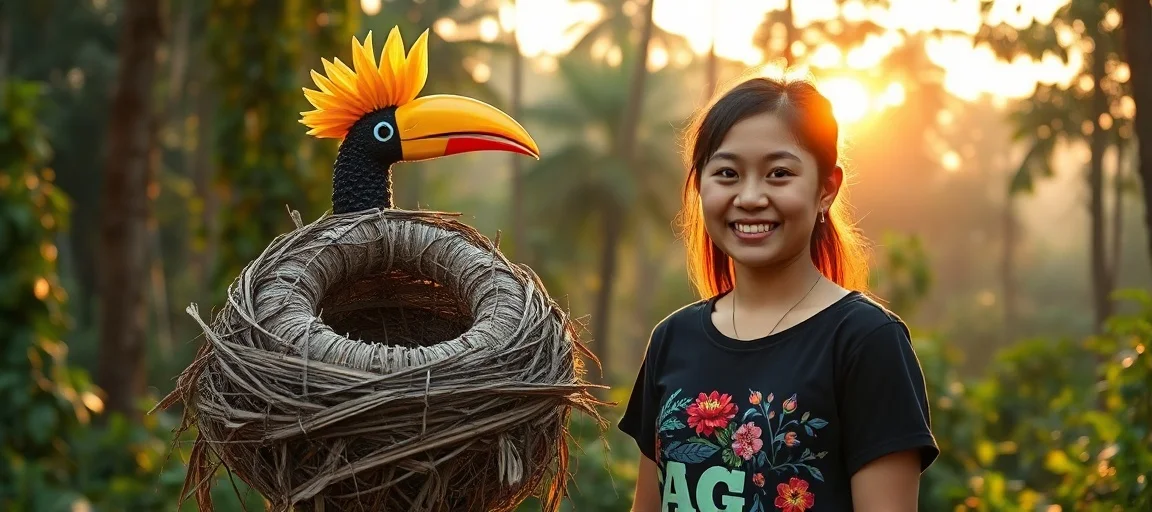
The artificial nests developed by the "Homes for Hornbills" project are a triumph of practical innovation. Unlike traditional wooden nest boxes, which can be susceptible to decay and damage from weather or parasites, Proud's nests are engineered for longevity and resilience. They are constructed from hemp fiber and resin, upcycled from recycled plastic bottles, making them strong, safe, and environmentally friendly. This choice of material not only provides a sustainable solution to nesting cavity shortages but also contributes directly to waste reduction efforts. The design carefully mimics the thermal and structural properties of natural tree cavities, ensuring optimal conditions for hornbill breeding. Research into material science played a crucial role in developing a durable yet lightweight structure that could withstand the tropical climate.
Success and Expansion
The impact of these artificial nests has been remarkable. The project has seen tangible success in increasing hornbill breeding rates. In 2025, 14 hornbill chicks successfully fledged from these artificial nests, and in 2026, 14 nests were occupied, demonstrating the viability and effectiveness of Proud's solution. So far, 20 such nests have been installed in southern Thailand, providing much-needed habitats where natural cavities are scarce. The careful monitoring of these nests provides invaluable data for future conservation strategies.
The project's success is not just in nest installation but also in its collaborative approach. It has actively involved 60 local students and partnered with TOA Venture Holding, a company supporting the use of recycled plastic materials in nest construction. This community-centric model ensures long-term sustainability and fosters a sense of ownership among local residents, which is crucial for successful conservation. This involvement also provides educational opportunities for younger generations, raising awareness about their local environment.
Thai Teen Wins Global Award for Hornbill Project: A Beacon of Hope
Proud's "Homes for Hornbills" project has not only made a local impact but has also resonated on a global stage, earning her two highly prestigious international awards in 2026. This significant recognition highlights the universal appeal and critical importance of her conservation efforts.
The Earth Prize 2026
Yanin “Proud” Tangkaravakoon was named the Oceania and Southeast Asia winner of The Earth Prize 2026. The Earth Prize is a global environmental competition for students aged 13-19, recognizing innovative projects that address environmental issues. As one of seven regional winners, Proud received US$12,500 in funding and mentorship to further develop her project. This significant financial and advisory support will undoubtedly help scale her initiative, allowing "Homes for Hornbills" to reach more hornbill populations and engage more communities. The overall global winner for The Earth Prize 2026 is scheduled to be announced on May 29, following public voting, underscoring the competitive nature and high prestige of the award.
National Geographic's Slingshot Challenge 2026
In addition to The Earth Prize, Proud's project also received a Top Honors Award in the 2026 Slingshot Challenge, a global environmental competition supported by the National Geographic Society and Allen Family Philanthropies. The Slingshot Challenge, launched in 2022, invites young people aged 13 to 18 to submit one-minute videos proposing solutions to environmental issues related to nature protection, waste reduction, climate change, ocean restoration, and air quality.
This year's challenge attracted over 2,300 submissions from more than 5,900 participants across 104 countries, making Proud’s achievement particularly significant. As a Top Honors Award recipient, she received US$10,000 in funding and became eligible for the public-voted People's Choice Award and the Explorer Connection Award. This recognition places Proud among the leading youth environmental innovators worldwide, providing her with a platform to inspire countless others and demonstrating the profound impact of youth environmental activism.
Proud's Vision and Future Endeavors
Yanin Tangkaravakoon's journey into conservation extends beyond her award-winning project. She has also produced an award-winning documentary titled "Homes for Hornbills," which ranked among Thailand's top 10 youth documentaries and is currently streaming on Thai PBS's VIPA platform. This documentary further amplifies her message and raises awareness about the plight of hornbills and the importance of conservation, reaching a wider audience through visual storytelling.
Scaling the Impact
Proud has already presented her findings to the Faculty of Forestry at Kasetsart University, demonstrating the scientific rigor and potential of her work. This academic engagement helps validate her methods and opens doors for collaborative research. With the combined funding of US$22,500 from both awards, Proud plans to significantly expand "Homes for Hornbills." Her immediate goals include deploying more artificial nests and forging deeper partnerships with local communities.
Proud's stated aims include:
- Expanding Nest Deployment: Increasing the number of artificial nests installed in suitable forest areas to support more hornbill breeding pairs, focusing on regions with critical hornbill populations and high deforestation rates.
- Strengthening Community Engagement: Working even more closely with local residents, researchers, and park rangers to monitor nest use, collect vital conservation data, and implement long-term solutions for both wildlife and the forests they inhabit. This includes training local communities and students on nest monitoring and hornbill conservation, empowering them to become stewards of their environment.
- Promoting Educational Outreach: Continuing to raise awareness about the ecological importance of hornbills and inspiring other young people to get involved in conservation through workshops, school programs, and public presentations.
Her vision extends to creating long-term solutions for the sustainability of Thailand's forests and their diverse wildlife. "Seeing how important hornbills are to forests made me realise how urgent it is to protect them," Proud stated, emphasizing her deep personal connection to the cause.
The Broader Context of Youth in Environmental Conservation
Yanin Tangkaravakoon's success is part of a growing global trend of young people taking the lead in environmental activism and conservation. Across the world, youth are increasingly recognizing the urgency of environmental issues and are stepping up to demand action and implement solutions. Their passion, innovative thinking, and willingness to challenge the status quo are proving to be powerful catalysts for change. This generation often brings fresh perspectives and leverages technology to amplify their messages and organize movements.
Inspiring a Generation
Proud's achievements serve as a powerful inspiration for other young people to engage in environmental stewardship. Her story underscores the message that age is not a barrier to innovation and impact. From climate strikes led by teenagers like Greta Thunberg to local initiatives addressing waste and biodiversity loss, young people are proving to be formidable forces for change. Their ability to connect with peers and advocate for a sustainable future is unparalleled.
Organizations like the World Wildlife Fund (WWF) and the Conservation Leadership Programme (CLP) actively support and recognize youth conservation leaders, providing funding and mentorship to help them expand their projects and develop their skills. These programs are crucial in nurturing the next generation of environmental heroes, ensuring a continuous pipeline of dedicated individuals committed to protecting our planet.
Challenges and Sustained Efforts in Hornbill Conservation
Despite inspiring successes like Proud's project, the path to hornbill conservation remains challenging. Deforestation continues to threaten their habitats, driven by agricultural expansion, illegal logging, and infrastructure development. Moreover, combating illegal wildlife trade persists as a significant danger for certain species, particularly the Helmeted Hornbill, whose casques are highly sought after in black markets. Climate change also adds another layer of complexity, altering ecosystems and food sources.
Established initiatives, such as the Thailand Hornbill Project (THP) under the Hornbill Research Foundation (HRF), have been working for decades to protect these birds, often by transforming former poachers into paid nest guardians and engaging local communities in monitoring and protection efforts. These long-standing projects highlight the importance of sustained commitment, rigorous scientific research, and community-based approaches that integrate local knowledge with modern conservation science. They also emphasize the need for continued funding and robust policy support to safeguard hornbill populations for generations to come. Proud's "Homes for Hornbills" project beautifully complements these efforts, bringing fresh innovation and youthful energy to a critical and ongoing cause, demonstrating how new approaches can integrate with existing frameworks for greater impact.
Frequently Asked Questions
Q: Who is Yanin Tangkaravakoon and what did she win?
A: Yanin Tangkaravakoon, a 17-year-old Thai student, won two prestigious global environmental awards for her "Homes for Hornbills" project. This initiative creates artificial nests from recycled plastic to protect endangered hornbill species in Thailand. Her innovative approach highlights the potential for youth-led conservation efforts.
Q: What is the "Homes for Hornbills" project?
A: It's an innovative conservation project by Yanin Tangkaravakoon that addresses the critical shortage of natural nesting cavities for hornbills. It constructs durable, artificial nests from upcycled plastic bottles and hemp fiber, providing safe breeding grounds and simultaneously contributing to plastic waste reduction.
Q: Why are hornbills important to their ecosystem?
A: Hornbills are crucial "farmers of the forest" because they are vital long-distance seed dispersers. By consuming fruits and subsequently depositing seeds across vast areas, they play an indispensable role in forest regeneration and maintaining the biodiversity of tropical ecosystems, supporting countless other species.
Further Reading & Resources
- Khaosod English: 17-year-old Thai wins two global awards for hornbill conservation project
- Taejai.com: Building Artificial Nests for Endangered Hornbill Species in Thailand
- Thailand Hornbill Research Foundation
- The Earth Prize Official Website
- National Geographic Society: Slingshot Challenge
Conclusion: A Global Award for Hornbill Project Signals Hope
The remarkable story of Yanin “Proud” Tangkaravakoon, the Thai teen who won a global award for her hornbill project, serves as a powerful reminder of the potential within young people to drive meaningful environmental change. Her "Homes for Hornbills" initiative, converting plastic waste into life-sustaining nests, exemplifies innovative thinking and a deep commitment to conservation. This recognition not only celebrates Proud's individual brilliance but also underscores the urgent need for global cooperation in protecting endangered species and their habitats. Her success, particularly the global award for her hornbill project, will undoubtedly inspire countless others to take action and contribute to a more sustainable future for our planet. The integration of local action with global recognition offers a compelling model for future conservation efforts worldwide.