Pentagon Chief Addresses China Alarm at Asia Summit: Key Insights
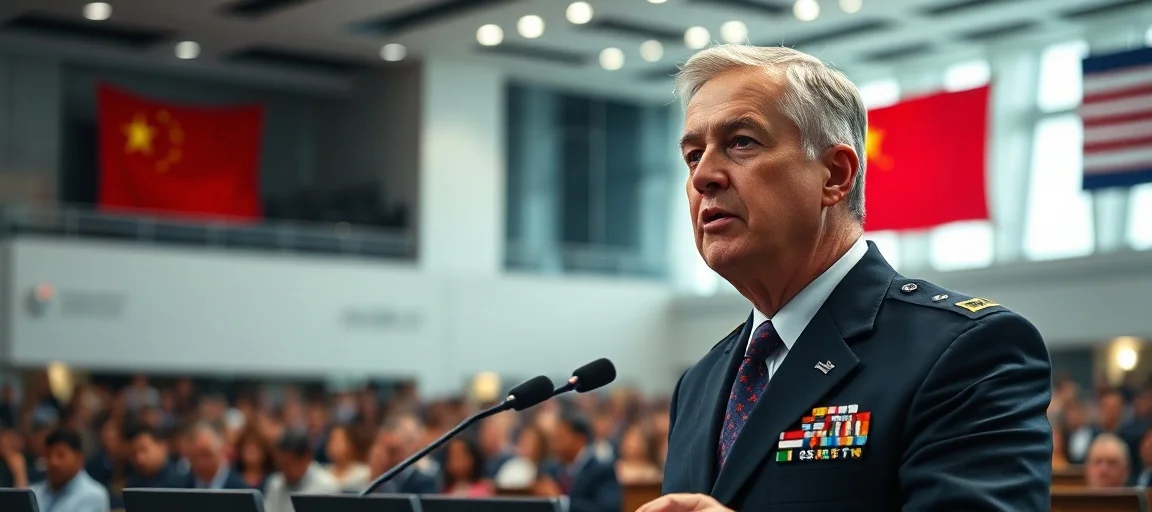
At a recent high-profile gathering, the Pentagon Chief addressed growing anxieties over Beijing's escalating assertiveness and the broader China alarm at the Asia Summit, providing crucial insights into Washington's strategic approach for regional stability. This pivotal moment saw the Pentagon Chief Addresses China Alarm at Asia Summit, offering key insights into Washington's strategy for navigating complex geopolitical dynamics in the Indo-Pacific. The address underscored the Biden administration's commitment to upholding a free and open international order amidst rising China alarm and outlined collaborative approaches to ensure peace and security across Asia.
- Addressing China's Growing Assertiveness at the Asia Summit
- The Pentagon Chief Addresses China Alarm at Asia Summit: A Detailed Look
- International Reactions and Geopolitical Implications
- The Future of Indo-Pacific Security: Navigating a Complex Landscape
- Conclusion
- Frequently Asked Questions
- Further Reading & Resources
Addressing China's Growing Assertiveness at the Asia Summit
The recent Asia summit, a critical forum for defense dialogue and security cooperation in the Indo-Pacific, became the focal point for renewed discussions on China's expanding military capabilities and its increasingly assertive actions in the region. The Pentagon Chief's remarks were delivered against a backdrop of ongoing geopolitical tensions, including disputes in the South China Sea, increased military activity near Taiwan, and China's growing influence across various global sectors. The speech emphasized the United States' unwavering commitment to its allies and partners, reinforcing the idea that collective security is paramount in maintaining regional stability.
The summit brought together defense ministers, military leaders, and security analysts from across Asia and beyond, creating a platform for candid exchanges on the most pressing security challenges. Discussions often revolved around freedom of navigation, cyber security threats, and the potential for miscalculation in contested areas. The Pentagon Chief's intervention was highly anticipated, as nations sought clarity on Washington's strategic priorities and its resolve to counter what many perceive as a destabilizing force in the region.
The Pentagon Chief Addresses China Alarm at Asia Summit: A Detailed Look
The U.S. Secretary of Defense, in a powerful address, articulated Washington's perspective on the multifaceted challenges posed by China's military modernization and its regional ambitions. The core message centered on the importance of transparency, adherence to international law, and the perils of coercive actions. The Pentagon Chief highlighted several areas of concern, urging Beijing to engage in constructive dialogue and respect the sovereignty of its neighbors. This address aimed to reassure allies and signal a clear, consistent American stance.
Key Points of the Address
The Pentagon Chief's speech covered several critical themes, meticulously outlining the United States' approach to managing competition with China while preventing conflict. These points included:
- Upholding International Law: The Secretary emphasized the necessity of all nations, including China, abiding by established international norms and maritime law. This was particularly relevant concerning territorial claims in the South China Sea, where Beijing's expansive claims often conflict with those of other littoral states. The U.S. reiterated its commitment to freedom of navigation operations, asserting the right to operate wherever international law allows.
- Deterrence and Defense: A significant portion of the address focused on enhancing deterrence capabilities in the Indo-Pacific. This involves investing in advanced military technologies, strengthening alliances, and ensuring the U.S. and its partners possess the capacity to respond to any aggression. The goal is to make any potential military adventure too costly for an aggressor to contemplate.
- Transparency and Risk Reduction: The Pentagon Chief called for greater transparency from China regarding its military spending, strategic intentions, and the nature of its growing armed forces. The absence of such transparency, it was argued, fuels mistrust and increases the risk of miscalculation, especially in crowded maritime and air environments. Mechanisms for crisis communication and de-escalation were also discussed as vital for reducing regional instability.
- Economic Coercion: Beyond military concerns, the address also touched upon economic coercion, where China has been accused of using its economic leverage to pressure smaller nations. The U.S. highlighted its commitment to supporting economic resilience and diversification among its partners, enabling them to resist such pressures. This aspect of the strategy recognizes that security is not solely military but also economic.
- Human Rights and Values: While not the primary focus of a defense summit, the Pentagon Chief subtly underscored the importance of democratic values and human rights, suggesting that a nation's internal governance often reflects its external behavior. This implicit critique served to frame China's actions within a broader context of global responsibilities.
Strengthening Alliances and Partnerships
A cornerstone of the U.S. strategy, as articulated by the Pentagon Chief, is the reinforcement and expansion of its network of alliances and partnerships in the Indo-Pacific. These relationships are seen as indispensable for creating a collective security architecture capable of managing complex threats.
- Bilateral Alliances: The U.S. reaffirmed the strength of its longstanding bilateral alliances with countries like Japan, South Korea, Australia, the Philippines, and Thailand. These alliances are routinely reviewed and updated through joint exercises, intelligence sharing, and coordinated defense planning. The Secretary specifically mentioned the commitment to modernizing these alliances to meet contemporary challenges.
- Minilateral Formats: The address also highlighted the growing importance of minilateral groupings such as the Quad (Australia, India, Japan, United States) and AUKUS (Australia, United Kingdom, United States). These formats allow like-minded democracies to collaborate on specific security challenges, ranging from maritime domain awareness to critical technology sharing. The Quad, for instance, has expanded its agenda beyond purely security matters to include climate change and vaccine diplomacy.
- ASEAN Centrality: The Pentagon Chief underscored the U.S. commitment to ASEAN centrality in the regional security architecture. Engaging with ASEAN nations individually and collectively is seen as crucial for fostering a broad-based, inclusive approach to Indo-Pacific security. The U.S. aims to support ASEAN’s role as a diplomatic and strategic hub in the region.
- Capacity Building: A significant part of the U.S. strategy involves assisting partner nations in building their own defense capabilities. This includes providing military aid, training, and technology transfers, enabling these countries to better protect their sovereignty and contribute to regional stability. This approach aims to empower partners rather than solely relying on direct U.S. military presence.
The message was clear: the United States is not seeking confrontation but is resolute in defending its interests and supporting its allies against any attempts to unilaterally alter the status quo through force or coercion.
International Reactions and Geopolitical Implications
The Pentagon Chief's stern warnings regarding China's actions resonated differently across the various nations present at the Asia summit. While many regional allies, particularly those with direct territorial disputes with Beijing, welcomed the strong stance, others adopted a more cautious tone, emphasizing the need for dialogue and de-escalation. The complexities of economic interdependence with China mean that a purely confrontational approach is often viewed with apprehension by some states.
Reactions from Key Allies and Partners
Nations like Japan, Australia, and the Philippines publicly echoed many of the U.S. concerns, particularly regarding maritime security and the rule of law. Japanese officials expressed shared anxieties about China's growing naval presence and its implications for regional stability, while Australia reiterated its commitment to a free and open Indo-Pacific, often aligning its foreign policy with that of the U.S. The Philippines, facing direct confrontations with China in the South China Sea, found significant reassurance in the U.S. commitment to its treaty obligations.
Conversely, some Southeast Asian nations, while concerned about China's actions, also stressed the importance of maintaining good relations with Beijing, given their significant economic ties. These countries often advocate for a delicate balance, avoiding overtly provocative statements while subtly seeking to strengthen their defensive capabilities and diplomatic options. Their reactions highlighted the challenge of forming a completely unified front against China, given the diverse national interests at play.
China's Response and Counter-Narratives
As anticipated, China's delegation at the summit and its official media outlets swiftly rejected the U.S. assertions, characterizing them as attempts to contain China's peaceful rise and sow discord in the region. Chinese officials reiterated their long-standing positions on territorial sovereignty, particularly regarding Taiwan and the South China Sea, asserting these as internal affairs where external interference is unwelcome. They often frame their military buildup as purely defensive and necessary for national security.
Chinese counter-narratives typically emphasize:
- Peaceful Development: Beijing consistently portrays its rise as peaceful and beneficial for global stability and prosperity.
- Internal Affairs: China often characterizes issues like Taiwan as purely internal matters, firmly rejecting any foreign intervention.
- U.S. "Hegemony": Chinese state media frequently accuses the U.S. of maintaining a "Cold War mentality" and attempting to preserve its global hegemony by stifling China's legitimate development.
- Regional Cooperation: China highlights its extensive economic engagement with Southeast Asian nations through initiatives like the Belt and Road Initiative, aiming to present itself as a benevolent partner in regional development.
These contrasting narratives underscore the deep ideological and strategic chasm between Washington and Beijing, making diplomatic breakthroughs challenging but essential.
The Future of Indo-Pacific Security: Navigating a Complex Landscape
The Pentagon Chief's address at the Asia summit serves as a stark reminder of the evolving security landscape in the Indo-Pacific. The region, home to some of the world's busiest shipping lanes and fastest-growing economies, is also a theater of intense geopolitical competition. The future trajectory will depend heavily on the actions of major powers, the resilience of regional alliances, and the effectiveness of diplomatic channels.
Moving forward, several factors will shape the security environment:
- Continued Military Modernization: Both the U.S. and China are expected to continue investing heavily in their military capabilities, leading to an ongoing strategic competition. This will necessitate careful management to prevent accidental escalation.
- Technological Competition: The race for technological supremacy, particularly in areas like artificial intelligence, quantum computing, and hypersonics, will have profound implications for future military balances and overall global power dynamics.
- Diplomatic Engagement: Despite the rhetoric, continued diplomatic engagement between the U.S. and China, as well as multilateral forums involving regional actors, will be crucial for managing crises and finding common ground on global challenges such as climate change and non-proliferation.
- Economic Interdependence: The deep economic ties between China and many Indo-Pacific nations will continue to exert influence, tempering outright confrontation and encouraging pathways for cooperation where possible.
The U.S. strategy appears focused on strengthening a network of alliances and partnerships, enhancing deterrence, and advocating for a rules-based international order. This approach aims to create a robust and collective response to challenges, rather than relying solely on unilateral action. The effectiveness of this strategy will be continuously tested by China's expanding influence and its willingness to challenge existing norms.
Conclusion
The recent high-stakes Asia summit provided a vital platform for the Pentagon Chief Addresses China Alarm at Asia Summit, highlighting the ongoing strategic competition and the imperative for stability in the Indo-Pacific. The U.S. Secretary of Defense clearly articulated Washington's concerns regarding China's assertive posture, reaffirming commitments to allies and emphasizing the importance of international law and transparency. While challenges remain in balancing competition with cooperation, the U.S. is resolute in its strategy to foster a free, open, and secure Indo-Pacific through strong alliances and a robust deterrent posture. The discourse from the summit underscores that navigating the complexities of U.S.-China relations will require sustained diplomatic effort, strategic foresight, and unwavering resolve from all stakeholders in the region.
Frequently Asked Questions
Q: What were the main concerns raised by the Pentagon Chief regarding China?
A: The Pentagon Chief expressed concerns over China's military assertiveness, lack of transparency, economic coercion, and adherence to international law, particularly in the South China Sea. The U.S. emphasized the need for dialogue and de-escalation mechanisms to mitigate risks.
Q: How does the U.S. plan to address China's growing influence in the Indo-Pacific?
A: The U.S. strategy focuses on strengthening alliances and partnerships, enhancing deterrence capabilities, and promoting a rules-based international order. This includes supporting allies through capacity building and engaging in minilateral forums like the Quad and AUKUS.
Q: What was China's response to the Pentagon Chief's statements?
A: China rejected the U.S. assertions, characterizing them as attempts to contain its peaceful rise and sow discord. Beijing reiterated its claims over territorial sovereignty and accused the U.S. of maintaining a "Cold War mentality" aimed at preserving its global hegemony.