EU Pushes China to Rebalance Trade Relations Amid Growing Concerns
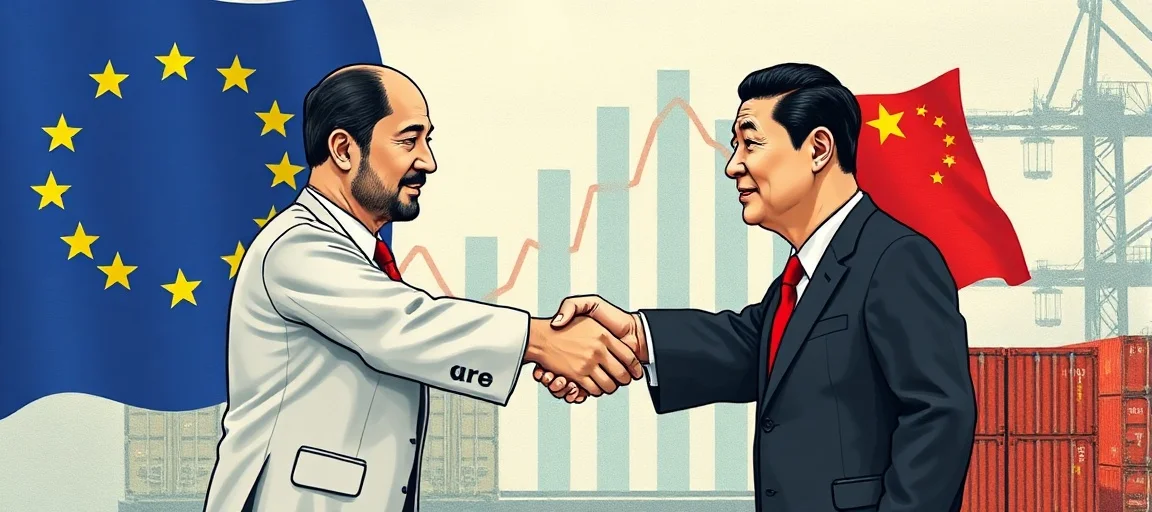
The European Union has intensified its efforts to encourage Beijing to rebalance its trade relations, citing persistent imbalances and unfair market access as significant concerns. This strategic push comes as EU leaders increasingly voice dissatisfaction with the current economic dynamic, advocating for a level playing field and reciprocal opportunities for European businesses operating in China. The EU Pushes China to Rebalance Trade Relations is a critical theme shaping global economic discourse, reflecting a broader shift in international trade policy.
Understanding the EU-China Trade Imbalance
The trade relationship between the European Union and China is one of the world's most substantial, yet it is increasingly characterized by a significant and growing imbalance. For years, the EU has faced a substantial trade deficit with China, meaning it imports far more goods from China than it exports. This deficit reached a record high in 2022, exceeding €396 billion. While trade deficits are not inherently problematic, the EU argues that this particular imbalance stems from structural issues, including restricted market access for European companies, state subsidies for Chinese industries, and what it perceives as unfair trade practices.
The economic landscape has been further complicated by China's unique economic model, which combines market forces with significant state intervention. This approach, while contributing to China's rapid industrial growth, often creates an uneven playing field for foreign competitors. European businesses frequently encounter non-tariff barriers, discriminatory regulations, and intellectual property theft, hindering their ability to compete effectively in the Chinese market. These challenges stand in stark contrast to the relatively open access Chinese companies enjoy within the EU's single market. The EU's concerns are not merely about the volume of trade but the fundamental fairness and reciprocity underlying the economic engagement. This situation has prompted a re-evaluation of the long-term sustainability and equity of the current trade architecture.
The Scale of the Disparity
The sheer scale of the EU's trade deficit with China underscores the urgency of the Union's calls for rebalancing. Recent figures indicate that while China remains a vital trading partner, the flow of goods is heavily skewed. For instance, in 2022, the EU's imports from China amounted to €626 billion, while its exports to China stood at only €230 billion. This gap is not sustainable in the eyes of many European policymakers, who argue that it reflects a fundamental lack of reciprocity. The deficit is particularly pronounced in high-tech sectors and emerging industries, where Chinese companies, often backed by substantial state support, have gained considerable market share both within China and globally.
The disparity extends beyond mere goods trade to services and investment, although the data here can be more complex. European companies often face significant hurdles when attempting to invest in China, including joint venture requirements, technology transfer demands, and opaque regulatory environments. These barriers are significantly higher than those encountered by Chinese investors in the EU, leading to a perception of an unbalanced investment landscape. This lack of a level playing field for market access and investment is a core grievance that the EU seeks to address in its ongoing dialogue with Beijing.
EU's Strategy for a Level Playing Field
The European Union's approach to confronting the trade imbalance with China is multi-faceted, combining diplomatic engagement with the potential for new trade defense instruments. Brussels is advocating for "de-risking" rather than "decoupling," emphasizing the need to reduce strategic dependencies on China while maintaining engagement and promoting fair competition. This strategy involves both direct bilateral discussions and the development of internal tools to protect the EU's economic interests.
Key to the EU's strategy is a push for greater transparency and adherence to international trade rules. European officials have consistently raised issues such as industrial subsidies, forced technology transfers, and intellectual property rights protection in their meetings with Chinese counterparts. The goal is not to halt trade but to ensure that it occurs under conditions that are equitable and mutually beneficial. This means demanding that China opens its markets further to European goods and services, removes discriminatory practices, and provides legal certainty for foreign investors. The EU also aims to diversify its supply chains, reducing its reliance on single sources, particularly for critical raw materials and components, to enhance its economic resilience.
Diplomatic Pressure and High-Level Dialogues
High-level diplomatic engagements have become a regular feature of the EU's efforts to address trade imbalances. European Commission President Ursula von der Leyen and European Council President Charles Michel have repeatedly visited Beijing to discuss trade and economic issues directly with Chinese leadership. These dialogues often serve as platforms for expressing the EU's concerns about unfair practices and pushing for concrete commitments towards greater reciprocity. The EU's message is consistent: while it values its strategic partnership with China, the economic relationship must be built on a foundation of fairness and mutual respect.
These discussions are not always easy, often characterized by frank exchanges and differing perspectives on what constitutes fair trade. However, the EU believes that sustained diplomatic pressure is essential to underscore the importance of these issues and to encourage gradual shifts in China's trade policies. The aim is to foster a constructive dialogue that can lead to tangible improvements in market access and a reduction in trade distortions. The EU also leverages multilateral forums, such as the World Trade Organization (WTO), to advocate for stronger global trade rules and dispute resolution mechanisms, though progress in these arenas can be slow.
New Trade Defense Instruments
Recognizing that diplomatic pressure alone may not always be sufficient, the EU has also been developing and implementing a suite of new trade defense instruments. These tools are designed to protect the EU's internal market and its industries from what it considers to be unfair foreign competition and economic coercion. One significant example is the Anti-Coercion Instrument, which allows the EU to impose countermeasures against countries that attempt to economically pressure an EU member state. This instrument provides the EU with a deterrent against political interference in trade.
Furthermore, the EU has launched investigations into specific Chinese industries suspected of benefiting from unfair state subsidies. A prominent example is the ongoing investigation into Chinese electric vehicle manufacturers, where the EU is examining whether subsidies provide an unfair advantage, potentially harming European carmakers. Similar probes are being considered for other sectors, such as wind turbines and medical devices. These investigations can lead to the imposition of tariffs or other restrictive measures if evidence of unfair practices is found. These trade defense instruments signal the EU's readiness to take concrete action to safeguard its economic interests and enforce a more level playing field.
China's Perspective and Response
China's perspective on its trade relationship with the EU often differs significantly from Brussels' assessment. Beijing frequently emphasizes the mutual benefits of the vast trade volume and points to the role of global supply chains and consumer demand in shaping trade flows. Chinese officials often argue that the trade imbalance is a natural outcome of comparative advantages and consumer preferences, rather than solely a result of unfair practices. They also highlight China's growing middle class as a significant market for European goods, particularly luxury items, automobiles, and high-tech machinery.
While acknowledging some areas for improvement, China generally resists what it views as protectionist tendencies from the EU. Beijing often counters allegations of state subsidies by pointing to support programs in European countries and emphasizes its commitment to opening its market, albeit at its own pace and according to its own developmental priorities. China also expresses concerns about the EU's increasing use of trade defense instruments, viewing some of them as potentially discriminatory and protectionist measures that could harm global trade stability. The ongoing dialogue is therefore a complex negotiation, with both sides seeking to protect their own economic interests and policy space.
Economic Development and State Support
From China's viewpoint, state support for strategic industries is a legitimate tool for economic development and industrial upgrading. This approach has been central to China's remarkable economic growth and its rise as a global manufacturing powerhouse. Chinese policymakers argue that these policies are necessary to foster innovation, achieve technological self-sufficiency, and address national development goals. They often draw parallels with historical industrial policies in Europe and other developed economies.
However, the scale and nature of China's state intervention, particularly through vast state-owned enterprises and extensive subsidies, raise red flags for the EU. European officials argue that such support distorts global markets, leads to overcapacity, and makes it impossible for unsubsidized foreign firms to compete fairly. This fundamental difference in economic philosophy forms a core tension in the trade relationship. China views its policies as essential for its national rejuvenation, while the EU sees them as undermining the principles of free and fair trade that underpin the global economic order.
Market Access Commitments and Challenges
China has made various commitments over the years to open its market further to foreign investment and goods. These include reducing its negative list for foreign investment, improving intellectual property protection, and simplifying regulatory processes. However, the implementation of these commitments is often a point of contention. European businesses frequently report that despite high-level assurances, practical barriers at the provincial or local level persist, making market entry and operation challenging.
For example, while China has made strides in areas like financial services, significant restrictions remain in other key sectors. Furthermore, issues such as opaque licensing procedures, unclear regulatory enforcement, and a preference for domestic champions continue to frustrate European companies. China argues that many of these are complex, systemic issues that require time to resolve, given the country's vast size and diverse regulatory landscape. Yet, for the EU, the pace of reform is often too slow and the impact on the ground too limited to genuinely address the structural trade imbalances.
Geopolitical Implications and Global Trade Dynamics
The ongoing tensions and efforts to rebalance trade between the EU and China extend beyond purely economic concerns, carrying significant geopolitical implications. This dynamic is set against a backdrop of increasing global trade fragmentation and rising geopolitical competition. The EU's stance on trade with China is not only driven by economic fairness but also by broader strategic considerations, including human rights, climate change, and regional security.
The EU's "de-risking" strategy is part of a larger trend among Western economies to reduce reliance on single countries for critical goods and technologies, particularly those that could be weaponized or used for coercive purposes. This strategy aims to enhance economic resilience and protect national security interests, especially in sectors deemed vital. The discussions around trade rebalancing therefore become intertwined with debates about global supply chain security, technological sovereignty, and the future of international cooperation. The outcome of these negotiations will undoubtedly influence the shape of global trade rules and the broader geopolitical landscape for years to come.
Impact on Global Supply Chains
The EU's push for rebalancing and de-risking has a direct impact on global supply chains. As European companies are encouraged to diversify their sourcing and manufacturing locations, there is a gradual shift away from an over-reliance on China. This trend is driven by a combination of factors, including the desire for greater resilience in the face of geopolitical shocks, the need to meet sustainability goals, and the increasing costs of manufacturing in China. While a complete decoupling is unlikely, the move towards diversified supply chains suggests a significant restructuring of global production networks.
This shift presents both opportunities and challenges. For some developing nations, it could mean new investment and manufacturing opportunities. However, for China, it represents a potential erosion of its position as the "world's factory." The process of reconfiguring supply chains is complex and costly, requiring significant investment in new infrastructure and logistical arrangements. Nonetheless, the EU sees it as a necessary step to reduce vulnerabilities and ensure long-term economic stability.
The Future of Multilateralism
The EU-China trade dynamic also has implications for the future of multilateral trade institutions, particularly the World Trade Organization (WTO). The EU frequently argues that China's economic model challenges the fundamental principles of the WTO, such as non-discrimination and market openness. By addressing these issues bilaterally and through new trade defense instruments, the EU is also, in effect, pushing for a re-evaluation of how international trade rules are applied and enforced in a globalized economy.
Should bilateral negotiations prove insufficient, the EU may increasingly rely on its own tools or seek to reform the WTO to better address issues like state subsidies and forced technology transfers. This could lead to a more fragmented global trade system, with regional blocs developing their own sets of rules and enforcement mechanisms. The ultimate goal for the EU is to strengthen a rules-based multilateral trading system, but its actions suggest a willingness to adapt its strategy if the existing framework fails to deliver fair outcomes with major trading partners like China.
Conclusion: The EU Pushes China to Rebalance Trade Relations
The intensified efforts by the European Union to encourage Beijing to rebalance its trade relations mark a pivotal moment in global economic diplomacy. The persistent and growing trade deficit, coupled with concerns over market access, state subsidies, and intellectual property, has prompted the EU to adopt a more assertive strategy. While maintaining open channels for dialogue, the EU is also bolstering its trade defense mechanisms and advocating for greater reciprocity and fairness in its economic engagement with China. The EU Pushes China to Rebalance Trade Relations is not just an economic imperative but also a reflection of broader geopolitical considerations and a desire to foster a more resilient and equitable global trading system. The path forward will likely involve continued complex negotiations, but the EU's commitment to a level playing field remains resolute.
Frequently Asked Questions
Q: What is the main concern of the EU regarding trade with China?
A: The EU's primary concern is the significant trade imbalance and perceived lack of reciprocity. This stems from issues like restricted market access, extensive state subsidies for Chinese industries, and unfair trade practices, which collectively create an uneven playing field for European businesses operating in China.
Q: What is the EU's "de-risking" strategy concerning China?
A: The "de-risking" strategy is the EU's approach to reduce its strategic dependencies on China for critical goods and technologies, without outright "decoupling." It aims to enhance the EU's economic resilience and protect its national security interests by diversifying supply chains and strengthening domestic capacities.
Q: How does China typically respond to the EU's claims of trade imbalance?
A: China often explains the trade imbalance as a natural outcome of comparative advantages and global supply chain dynamics. While acknowledging potential areas for improvement, Beijing typically resists what it views as protectionist measures from the EU and highlights its own market opening efforts.