China Unveils Advanced Stealth Drone, WZ-X: A Game-Changer?
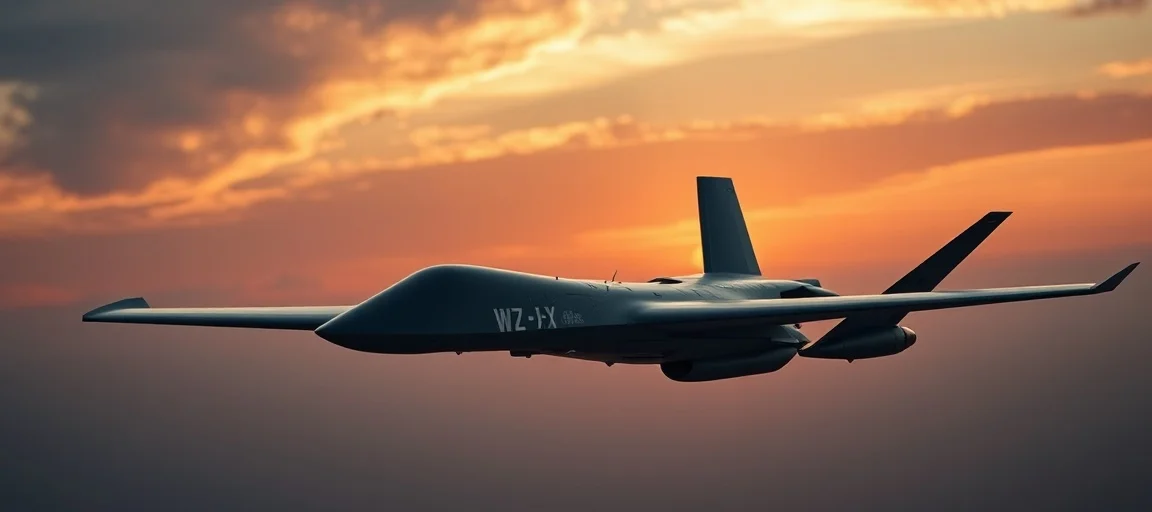
Beijing has officially unveiled its highly anticipated, advanced stealth drone, the WZ-X, a development poised to significantly reshape global military dynamics and aerial reconnaissance capabilities. This groundbreaking reveal marks a pivotal moment in China's ongoing military modernization efforts, signaling a clear intent to push the boundaries of unmanned aerial vehicle (UAV) technology. The new drone, boasting unparalleled stealth features and sophisticated operational potential, immediately draws attention from military analysts and international observers alike, prompting widespread discussion on its strategic implications and the future of air superiority.
Background and Strategic Significance
China's rapid advancements in military technology, particularly in the realm of unmanned aerial vehicles (UAVs), have been a focal point of international defense analysis for years. The nation has consistently invested heavily in research and development, aiming to bridge technological gaps with leading global powers and establish itself as a frontrunner in critical defense sectors. This strategy is driven by a desire to safeguard national interests, project power, and potentially redefine future warfare scenarios through asymmetric advantages.
Historically, Chinese defense industries have demonstrated a remarkable capacity for reverse engineering and independent innovation, progressing from licensed production to developing indigenous, cutting-edge systems. Early iterations of Chinese drones often focused on reconnaissance and light strike capabilities, but successive generations have shown increasing sophistication, incorporating stealth characteristics, longer ranges, and enhanced autonomous functions. The development path has seen a clear progression from smaller, tactical UAVs to larger, strategic platforms capable of operating in contested airspace.
The unveiling of an advanced stealth drone like the WZ-X underscores China's commitment to achieving technological superiority in key military domains. Such platforms are not merely tools for intelligence gathering but represent a critical component of modern anti-access/area-denial (A2/AD) strategies, aiming to deter potential adversaries from operating within a certain geographic range. Furthermore, the development of sophisticated stealth drones reflects a broader trend among major military powers to reduce human risk in high-threat environments while increasing the precision and reach of their airpower.
The strategic significance of the WZ-X cannot be overstated. It positions China as a leading innovator in stealth UAV technology, potentially rivaling or even surpassing similar programs in other nations. This technological leap has profound implications for regional stability, particularly in areas like the South China Sea and the Taiwan Strait, where aerial surveillance and strike capabilities are critical. Globally, it contributes to a more complex and competitive security landscape, forcing other nations to re-evaluate their own defense postures and investments in similar technologies. The introduction of such a high-capability system fundamentally alters the strategic calculus, influencing everything from defense budgets to alliance structures.
China Unveils Advanced Stealth Drone, WZ-X: Key Features
The newly unveiled WZ-X advanced stealth drone represents a significant leap forward in unmanned aerial combat and reconnaissance capabilities, embodying years of intensive research and development by China's aerospace engineers. Its design principles prioritize survivability in highly contested environments, operational flexibility, and the integration of advanced artificial intelligence for autonomous mission execution. The official reveal provided initial glimpses into a platform that could redefine future aerial engagements.
Stealth Technology
The most striking feature of the WZ-X is its formidable stealth capability. Engineers have reportedly incorporated advanced radar-absorbent materials (RAM) across its airframe, designed to minimize its radar cross-section (RCS) across a broad spectrum of frequencies. The drone's distinct, angular fuselage and blended wing-body configuration are characteristic of modern stealth aircraft, meticulously engineered to deflect radar waves away from their source. Furthermore, the WZ-X likely employs sophisticated electronic warfare (EW) suites to actively jam or deceive enemy radar systems, further enhancing its low observability. The exhaust nozzles are also engineered to reduce infrared signatures, making the drone harder to detect by heat-seeking sensors, a crucial element in maintaining stealth against advanced adversaries. This multi-spectral approach to stealth aims to ensure the WZ-X can penetrate sophisticated air defense networks with a significantly reduced risk of detection and engagement.
Operational Range and Payload
While precise specifications remain classified, initial reports suggest the WZ-X possesses an impressive operational range, enabling long-duration missions deep into enemy territory or over vast maritime expanses. This extended reach is crucial for strategic reconnaissance, surveillance, and target acquisition (RSTA) roles, allowing it to monitor critical areas without needing to be stationed close to the front lines. The drone is expected to carry a versatile payload, encompassing a suite of advanced sensors for intelligence gathering, including high-resolution synthetic aperture radar (SAR), electro-optical/infrared (EO/IR) sensors, and electronic intelligence (ELINT) systems. Beyond intelligence, there is strong speculation that the WZ-X is designed with strike capabilities, potentially carrying precision-guided munitions in internal weapons bays to maintain its stealth profile. This dual-role capability – reconnaissance and strike – would make it an invaluable asset for both pre-emptive and retaliatory operations.
Advanced AI and Autonomous Flight
A cornerstone of the WZ-X's advanced capabilities lies in its sophisticated artificial intelligence (AI) and autonomous flight systems. This drone is expected to leverage AI for complex mission planning, real-time threat assessment, and adaptive route optimization, allowing it to make critical decisions without constant human intervention. Such autonomy can significantly reduce response times in rapidly evolving combat scenarios and enhance survivability by enabling the drone to react instantaneously to threats. Furthermore, AI-driven sensor fusion capabilities would allow the WZ-X to process vast amounts of data from multiple sources simultaneously, generating a comprehensive and accurate picture of the operational environment. The integration of swarm intelligence is also a potential future enhancement, allowing multiple WZ-X drones to operate collaboratively, sharing information and coordinating actions to overwhelm enemy defenses or achieve complex mission objectives more effectively. This level of autonomy represents a paradigm shift in aerial warfare, moving towards more intelligent and self-sufficient unmanned systems.
Regional and Global Implications
The unveiling of an advanced stealth drone like the WZ-X carries profound implications, not only for regional stability but also for the broader landscape of global military power and international relations. Its capabilities are such that they could significantly alter existing balances and necessitate a re-evaluation of defense strategies by multiple nations.
Impact on Regional Dynamics
In the immediate region, particularly East Asia and the Indo-Pacific, the WZ-X is set to intensify existing security dilemmas. Nations neighboring China, already wary of its growing military might, will likely view this development as a direct threat to their air superiority and reconnaissance capabilities. For example, countries like Japan, South Korea, and Taiwan, which operate sophisticated air defense networks, will now face a new, more elusive adversary. This could trigger an accelerated arms race, with these nations investing more heavily in advanced counter-stealth technologies, integrated air and missile defense systems, and potentially their own stealth drone programs. The increased difficulty in detecting and intercepting such a platform could also lead to heightened tensions during routine patrols or military exercises, raising the risk of miscalculation. Furthermore, the WZ-X's potential for long-range surveillance and precision strike capabilities could allow China to project power more effectively over disputed territories, such as the South China Sea, further complicating territorial claims and challenging freedom of navigation operations.
Global Military Modernization Trends
Globally, the WZ-X serves as a powerful testament to the ongoing military modernization trends that prioritize unmanned systems, stealth technology, and artificial intelligence. It will undoubtedly spur other major military powers to accelerate their own research and development in these areas. Nations like the United States, Russia, and European powers, already engaged in their respective stealth UAV programs, will likely redouble their efforts to maintain or gain a technological edge. This development highlights a shift towards a future where aerial dominance will increasingly depend on a combination of manned and unmanned platforms, with stealth drones playing an ever-more critical role in reconnaissance, electronic warfare, and precision strikes. The proliferation of advanced stealth drone technology also raises questions about international arms control and the future of air combat rules of engagement, as the lines between traditional warfare and autonomous operations blur. The WZ-X's emergence reinforces the idea that future conflicts will be characterized by highly networked, intelligent systems operating in complex, contested environments, pushing defense establishments worldwide to adapt their doctrines and procurements.
Expert Analysis and International Reactions
The unveiling of China's WZ-X advanced stealth drone has immediately triggered a cascade of analyses from defense experts and prompted significant discussion among international political and military circles. The consensus largely points to a transformative impact on the geopolitical landscape.
Leading defense analysts have emphasized the WZ-X’s potential to significantly enhance China’s intelligence, surveillance, and reconnaissance (ISR) capabilities, especially in contested maritime and territorial zones. Dr. Anya Sharma, a senior fellow at the Institute for Global Security Studies, stated, "The WZ-X demonstrates China's commitment to developing a multi-layered, highly survivable reconnaissance and strike capability. Its stealth features mean it can operate with greater impunity in environments where manned aircraft would be at extreme risk." Other experts highlighted the drone's presumed integration of advanced AI, suggesting it could operate with unprecedented levels of autonomy, reducing decision-making latency and increasing operational effectiveness in dynamic combat scenarios. This technological sophistication positions the WZ-X not just as an incremental improvement but as a potential force multiplier that could reshape regional power balances.
Initial international reactions have varied, but a thread of concern is evident across several capitals. Officials from the United States have acknowledged China's advancements in UAV technology, with some Pentagon sources indicating that the WZ-X's capabilities will be closely monitored and factored into future strategic planning. Japan and Australia, key regional allies of the U.S., have expressed particular vigilance, given their proximity and existing territorial disputes. There is an expectation that these nations will bolster their investments in counter-stealth technologies and enhance intelligence-sharing agreements.
Conversely, some nations have adopted a more reserved stance, emphasizing the need for greater transparency regarding the WZ-X's operational doctrine and potential export controls. International bodies are likely to see renewed calls for discussions on the ethical implications of autonomous weapon systems and the potential for a new arms race in advanced drone technology. While China maintains that the WZ-X is a defensive asset intended to protect national sovereignty, its offensive capabilities, if confirmed, would represent a significant escalation in regional military postures, compelling a reconsideration of existing security frameworks and alliances.
The Future of Drone Warfare
The introduction of the WZ-X serves as a potent reminder that drone warfare is not a future concept but a rapidly evolving reality, continually pushing the boundaries of military technology and strategic thought. The trajectory of unmanned aerial systems points towards greater autonomy, enhanced stealth, and increasingly specialized roles that could fundamentally alter the nature of armed conflict.
One of the most significant trends is the continued push towards greater autonomy. As AI algorithms become more sophisticated, future drones are expected to perform an increasing array of tasks without direct human intervention, from complex reconnaissance missions to target identification and engagement. This shift raises profound ethical and legal questions regarding accountability and decision-making in combat. The WZ-X, with its reported AI integration, is a clear indicator of this direction, suggesting a future where drones can adapt to real-time threats and opportunities with minimal latency.
Another critical aspect is the ongoing "stealth race." As anti-access/area-denial (A2/AD) strategies become more prevalent, the ability of drones to penetrate heavily defended airspace undetected becomes paramount. This drives continuous innovation in radar-absorbent materials, aerodynamic design, electronic countermeasures, and signature reduction across multiple spectra (radar, infrared, acoustic). The WZ-X's emphasis on comprehensive stealth highlights that survivability in future conflicts will largely depend on invisibility to an adversary's sensor networks.
Furthermore, drone warfare is moving beyond individual platforms to integrated "system-of-systems" approaches. This involves networked operations where multiple drones, potentially of different types and capabilities, collaborate with manned aircraft, ground forces, and naval assets. Swarm intelligence, where large numbers of drones operate autonomously as a collective, is another area of intensive research and development. These networked capabilities aim to overwhelm enemy defenses, provide unprecedented situational awareness, and execute complex missions with greater efficiency and effectiveness. The WZ-X, as an advanced platform, is likely designed to seamlessly integrate into such future networked combat environments, acting as a crucial node in a broader digital battlefield.
The proliferation of advanced drone technology also presents significant challenges to international security frameworks. As more nations acquire and develop sophisticated UAVs, the risk of escalation in regional conflicts, accidental engagements, and the potential for non-state actors to gain access to such technology becomes a pressing concern. Discussions around international norms, arms control, and the responsible use of autonomous weapons will become increasingly vital in managing the implications of these technological advancements. The WZ-X, therefore, is not just a technological marvel but a catalyst for critical strategic and ethical deliberations on the future of warfare.
Conclusion
The unveiling of the WZ-X advanced stealth drone marks a defining moment in China's military modernization journey and an inflection point in the global development of unmanned aerial systems. This new platform, with its cutting-edge stealth capabilities, extended operational range, and sophisticated artificial intelligence, underscores China's ambition to be at the forefront of defense technology. Its introduction promises to significantly alter the calculus of aerial power, offering new tools for reconnaissance and potentially strike missions in contested environments. The WZ-X will undoubtedly spur accelerated military development and strategic re-evaluations across the Indo-Pacific and beyond, intensifying competition and demanding careful consideration from international actors. As nations grapple with the implications of this advanced drone, the focus will inevitably shift to how such capabilities will be integrated into future defense doctrines and what impact they will have on global security and stability.
Frequently Asked Questions
Q: What is the WZ-X advanced stealth drone?
A: The WZ-X is China's newly unveiled unmanned aerial vehicle (UAV), featuring cutting-edge stealth capabilities, extended operational range, and advanced artificial intelligence. It's designed for sophisticated reconnaissance and potential strike missions in highly contested airspace.
Q: What are the WZ-X's key features?
A: Its primary features include advanced radar-absorbent materials and aerodynamic design for low observability, a versatile payload for diverse sensors and precision munitions, and AI-driven autonomous flight for complex mission planning and real-time threat adaptation.
Q: How might the WZ-X impact global security?
A: The WZ-X is expected to intensify regional security dilemmas, potentially accelerating an arms race in counter-stealth technologies and unmanned systems. It will influence military modernization trends worldwide, prompting re-evaluations of defense strategies and geopolitical balances.