China's Tiananmen Silence: 37 Years On - A Somber Anniversary
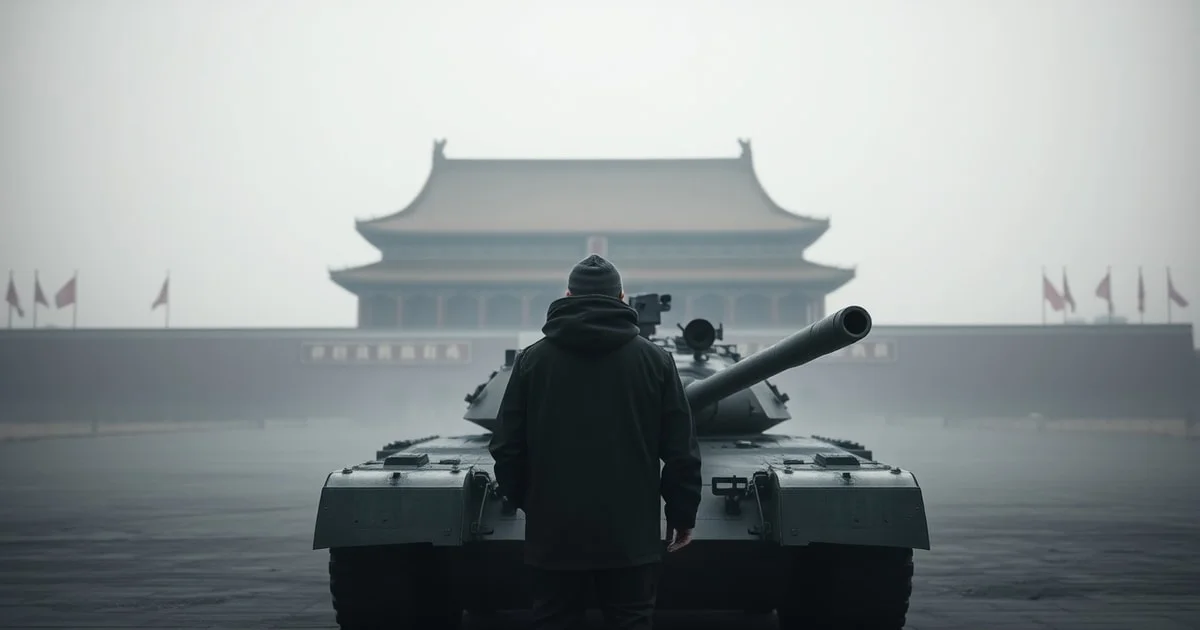
As China marks 37 years since the Tiananmen Square crackdown, the country's leadership maintains its characteristic silence on the event. China's Tiananmen Silence: 37 Years On is a somber reminder of the government's stance on freedom of speech and human rights. This annual suppression of history highlights the deep-seated fear of political instability that still grips Beijing. The protests, which began on April 15, 1989, drew hundreds of thousands of people calling for democratic reforms, an end to state-level corruption, and greater basic freedoms. The movement was violently suppressed on June 4, 1989, resulting in the loss of thousands of lives and permanently altering the nation's political trajectory. Today, the systematic erasure of this tragedy remains one of the most stark examples of historical revisionism in the modern era.
The Origins of the 1989 Protests
To understand the profound impact of the Tiananmen Square protests, one must examine the socio-political climate of China in the late 1980s. Under the leadership of Deng Xiaoping, China had embarked on a path of economic liberalization known as "Reform and Opening Up." While these reforms brought rapid economic changes and wealth to certain sectors, they also introduced severe inflation, widespread unemployment, and institutional corruption. Students and intellectuals began to question whether economic liberalization could truly succeed without corresponding political reforms.
The catalyst for the protests was the sudden death of Hu Yaobang on April 15, 1989. Hu was the former General Secretary of the Chinese Communist Party (CCP) who had been ousted by party hardliners for his relatively lenient stance on student demonstrations in 1986. His passing galvanized a generation of politically conscious youth. What started as a public mourning in Tiananmen Square quickly transformed into an organized call for systemic reforms.
The demonstrators’ demands were broad and reformist, rather than revolutionary. They sought:
-
Freedom of speech, press, and assembly to allow public dialogue.
-
Official government recognition of their student organization.
-
The disclosure of assets by government officials to combat rampant corruption.
-
Democratic elections and institutional checks on state power.
As the weeks progressed, the movement spread beyond the student body. Millions of workers, ordinary citizens, and even members of the military and police expressed sympathy for the protesters' goals. Hunger strikes in May 1989 drew global attention, turning Tiananmen Square into the epicentre of a nationwide cry for freedom.
The Fateful Night of June 3-4, 1989
The escalating situation presented a severe challenge to the CCP's top leadership, which was deeply divided on how to respond. Reform-minded officials like Zhao Ziyang advocated for dialogue and compromise, while hardliners, backed by Deng Xiaoping, viewed the protests as a counter-revolutionary rebellion that threatened to destabilize the entire socialist regime. By mid-May, the hardliners had won the internal power struggle.
On May 20, 1989, the Chinese government declared martial law. Troops from the People's Liberation Army (PLA) were mobilized from across the country to converge on Beijing. Despite initial resistance from local citizens who blocked military convoys with human barricades, the final order to clear the square was issued.
On the night of June 3 and the early morning of June 4, military forces equipped with assault rifles and tanks advanced from multiple directions toward Tiananmen Square. What followed was a brutal and indiscriminate use of force.
The Crackdown in Beijing:
The troops did not just clear the square; they opened fire on unarmed civilians who had gathered to defend the students. Key intersections, such as Muxidi, became sites of intense violence where hundreds of citizens were killed trying to block the military's advance.
By the morning of June 4, Tiananmen Square had been cleared, but the cost in human lives was catastrophic. The Chinese government officially claimed that roughly 200 civilians and several dozen security personnel died. However, independent estimates from student leaders, foreign journalists, and international organizations like the Red Cross put the death toll in the thousands. Thousands of others were injured, imprisoned, or forced into exile, and the true extent of the casualties remains one of China's most guarded state secrets.
Assessing China's Tiananmen Silence: 37 Years On
For nearly four decades, the Chinese government has maintained a policy of absolute historical erasure regarding the events of June 4. China's Tiananmen Silence: 37 Years On represents not just a passive omission in school history textbooks, but an active, heavily funded apparatus of censorship designed to purge the collective memory of the nation.
This state-enforced amnesia is maintained through several sophisticated mechanisms:
-
Algorithmic Censorship: Every year around June 4, China's "Great Firewall" operates at peak capacity. Internet service providers and social media giants are mandated to block combinations of terms, numbers, and emojis that could reference the crackdown. This includes "64," "89," "June 4," and even seemingly benign images like candles, tanks, or yellow umbrellas.
-
Physical Surveillance: Human rights activists, relatives of the victims (such as the Tiananmen Mothers group), and political dissidents are routinely placed under house arrest, forced to leave Beijing temporarily, or kept under strict surveillance during the anniversary period.
-
The Muzzling of Hong Kong: Historically, Hong Kong was the only place on Chinese soil where the victims of June 4 could be openly commemorated. The annual candlelight vigil in Victoria Park regularly drew over a hundred thousand participants. However, following the imposition of the National Security Law in 2020, these vigils have been effectively banned, organizers have been prosecuted, and public statues honoring the victims have been removed from university campuses.
By eliminating all public spaces for mourning and remembrance, the state hopes to raise a generation entirely ignorant of the democratic aspirations of their predecessors.
Geopolitical Impacts and the Sino-Western Rift
The violent suppression of the 1989 protests sent shockwaves through the global political landscape. Western nations, led by the United States and member states of the European Community, immediately condemned the military crackdown. In the weeks that followed, the West imposed severe economic sanctions, suspended high-level diplomatic contacts, and implemented arms embargoes—some of which remain in place today.
The crackdown forced Western policymakers to re-evaluate their engagement with China. Prior to 1989, many in the West believed that economic modernization would naturally lead to political liberalization in China. The events of June 4 shattered this assumption, demonstrating that the CCP was prepared to use extreme force to maintain its monopoly on power.
Despite the initial diplomatic isolation, China’s economic potential proved too vast for Western markets to ignore. By the mid-1990s, the international community began decoupling trade policy from human rights concerns, paving the way for China's accession to the World Trade Organization (WTO) in 2001. Deng Xiaoping's strategic vision—often summarized as "hide your strength and bide your time"—guided China through this critical period, allowing the country to build immense economic power while maintaining absolute political control.
Human Rights and Dissent in Contemporary China
The legacy of the Tiananmen Square protests is deeply intertwined with the current state of human rights and political expression in China. Under President Xi Jinping, the space for civil society, independent journalism, and legal activism has shrunk to its narrowest point in decades.
The System of Suppression:
The modern Chinese surveillance state utilizes artificial intelligence, facial recognition, and digital tracking to preemptively identify and neutralize potential dissent. This hyper-monitored environment makes the large-scale, coordinated public organizing seen in 1989 virtually impossible today.
Despite this oppressive framework, the spirit of dissent has not been entirely extinguished. In late 2022, the "White Paper Protests" erupted across several major Chinese cities. Demonstrators gathered to protest the government's zero-COVID policies, with some calling for political reforms and freedom of expression—echoes of the demands voiced 37 years earlier. Although these protests were quickly shut down, they demonstrated that public frustration can still pierce the surface of state control.
The international community continues to monitor China's human rights record, focusing not only on historical injustices like Tiananmen but also on ongoing issues. These include the mass internment of Uyghur Muslims in Xinjiang, the erosion of democratic institutions in Hong Kong, and the suppression of regional identities in Tibet.
Conclusion
Thirty-seven years after the tanks rolled into Beijing, the scars of June 4 remain unhealed. China's Tiananmen Silence: 37 Years On stands as a testament to the enduring power of memory in the face of absolute state suppression. By refusing to allow any public acknowledgment of the massacre, the Chinese Communist Party hopes to cement an artificial consensus of historical harmony.
However, the global community, along with dedicated activists and the families of the victims, continues to keep the memory of 1989 alive. As long as the truth remains censored within China's borders, the anniversary of the Tiananmen Square crackdown will remain a powerful symbol of the ongoing struggle for human dignity, democratic ideals, and fundamental human rights.
Frequently Asked Questions
Q: What is the significance of the 37th anniversary of Tiananmen Square?
A: It highlights the ongoing censorship in China and the global call for transparency regarding the 1989 military crackdown on peaceful pro-democracy protesters.
Q: How does China censor information about the Tiananmen Square protests?
A: The Chinese government uses advanced digital firewalls, keyword blocking, and strict media oversight to systematically erase any public mention or commemoration of the June 4 event.
Q: What was the international reaction to the Tiananmen Square crackdown?
A: The global community condemned the violence, leading to economic sanctions, arms embargoes, and long-term diplomatic strains between China and Western democracies.