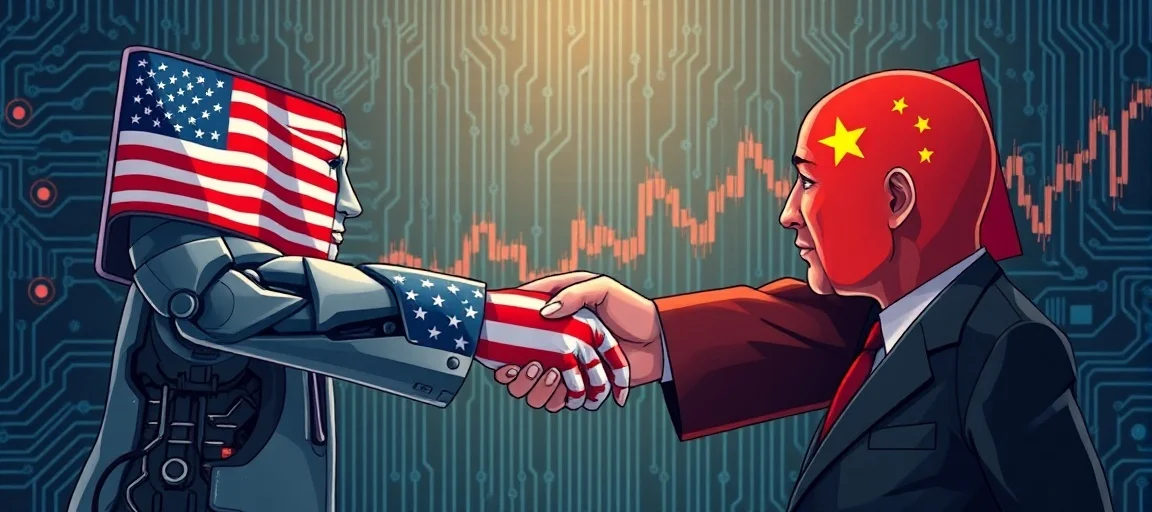
China Champions Multilateralism at UN Security Council Meeting
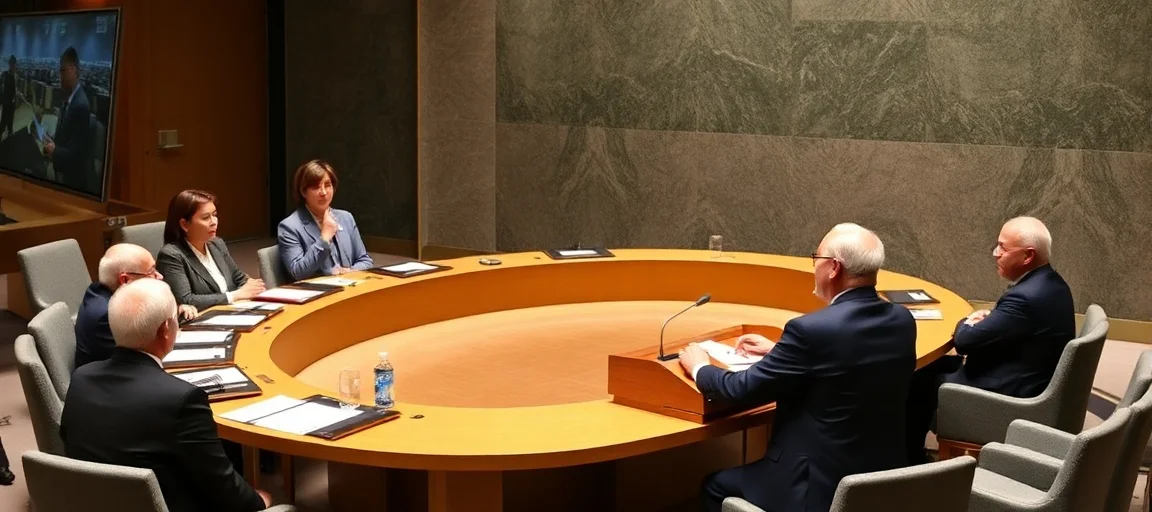
The recent UN Security Council meeting saw China take a strong stance in championing multilateralism, emphasizing the need for global cooperation and dialogue to address pressing international issues. China Champions Multilateralism at UN Security Council meeting, as the country continues to play a significant role in shaping global affairs and advocating for a more collaborative international system.
- Background Context and Global Tensions
- China Champions Multilateralism: Key Aspects and Initiatives
- Expert Perspectives on China's Multilateralism
- Impact on Global Affairs and International Relations
- Challenges and Future Trajectories for Multilateralism
- Conclusion
- Frequently Asked Questions
- Further Reading & Resources
Background Context and Global Tensions
The UN Security Council meeting convened amidst a complex and increasingly volatile international landscape. Rising geopolitical tensions between major world powers, exacerbated by factors such as intensified trade wars, persistent territorial disputes, and the accelerating climate crisis, have cast a shadow over traditional diplomatic avenues. In this environment, where unilateral actions and protectionist sentiments often threaten to undermine global stability, China's consistent commitment to multilateralism stands out as a critical call for structured cooperation and diplomacy.
The global order is currently grappling with a confluence of crises, from protracted conflicts in Eastern Europe and the Middle East to lingering economic uncertainties and the lingering impacts of the COVID-19 pandemic. These challenges, by their very nature, transcend national borders and demand collective action. It is within this intricate web of interdependent issues that China's permanent representative to the UN, Chen Jun, articulated Beijing's unwavering stance. He reiterated that multilateralism is not merely an idealistic principle but an indispensable framework for effectively addressing these multifaceted global challenges. His call for all countries to unite in promoting peace, stability, and sustainable development resonated deeply, underscoring the urgency of collaborative solutions over fragmented responses. This particular meeting highlighted China's effort to position itself as a central proponent of a more inclusive and equitable global governance structure. For further insights into the evolving global power dynamics, consider reading about Geopolitical Tensions and Their Global Impact.
China Champions Multilateralism: Key Aspects and Initiatives
China's multilateralism agenda is meticulously structured around several foundational principles, reflecting its long-term vision for international relations. These principles include:
- Promoting peace and stability through dialogue and cooperation: Beijing consistently advocates for diplomatic resolutions to international disputes, urging restraint and negotiation over confrontation. This is evident in its proposals for peace talks in various conflict zones and its emphasis on adherence to international law.
- Addressing global challenges such as climate change, poverty, and inequality: China has actively participated in and often led initiatives related to sustainable development. For instance, it has pledged significant efforts to combat climate change, setting ambitious carbon neutrality goals, and has made substantial contributions to poverty alleviation both domestically and through international development aid.
- Supporting the UN and its pivotal role in maintaining international peace and security: China is a permanent member of the Security Council and a significant financial contributor to the UN system. It actively participates in UN peacekeeping operations, particularly in Africa, and frequently uses the UN platform to articulate its views on global governance.
- Fostering economic cooperation and development: This principle is perhaps best embodied by the Belt and Road Initiative (BRI), a colossal infrastructure and investment project that aims to connect Asia, Africa, and Europe. The BRI, launched in 2013, is envisioned as a mechanism to promote economic integration, trade, and development across participating nations, thereby fostering shared prosperity and interdependence. China views the BRI as a practical manifestation of its commitment to global common development, aligning its economic might with its multilateral aspirations. You can delve deeper into The Belt and Road Initiative's Economic Impact to understand its broader implications.
Diverse Reactions from the International Community
The international community's reception of China's multilateralism agenda has been varied, reflecting the complex dynamics of contemporary global politics. Many developing countries, particularly those in the Global South, have largely welcomed China's emphasis on multilateralism and its practical initiatives like the BRI. They often view China as a partner offering alternative development models and investment opportunities, particularly in areas where traditional Western funding has been scarce. These nations often praise China's adherence to the principle of non-interference in internal affairs, which contrasts with the conditional aid sometimes offered by Western powers.
However, the United States and some of its allies have frequently voiced skepticism and criticism regarding China's growing influence within the UN system and its broader multilateral endeavors. Critics often accuse China of attempting to reshape the international order in ways that might challenge established democratic norms and undermine the liberal rules-based system championed by Western nations. Concerns have been raised about the transparency and financial sustainability of certain BRI projects, often labeled as "debt-trap diplomacy," and about China's human rights record, particularly concerning minorities within its borders. Despite these criticisms, China's persistent advocacy for multilateralism has garnered significant traction globally, with a growing number of countries recognizing the imperative for global cooperation and dialogue in an increasingly interconnected world. The desire among many nations for a more multipolar world, where power and influence are distributed among multiple centers, often aligns with China's calls for reformed global governance.
Expert Perspectives on China's Multilateralism
According to Dr. Fu Ying, a distinguished senior fellow at the Chinese Academy of Social Sciences and a former Vice Minister of Foreign Affairs, China's unwavering commitment to multilateralism is a direct reflection of its expanding global influence and its strategic ambition to assume a more substantive and constructive role in shaping international affairs. "China's multilateralism agenda is not merely about promoting narrow Chinese interests," Dr. Fu asserts, "but is fundamentally about contributing to global peace, stability, and shared development. Beijing understands that the scale and complexity of contemporary global challenges necessitate a collective response, and it is resolutely committed to collaborating with other countries to forge these essential solutions."
Conversely, Dr. Emma Harrison, a Senior Research Fellow specializing in East Asian foreign policy at the Royal Institute of International Affairs, offers a more nuanced perspective. While acknowledging China's increasing engagement with multilateral institutions, Dr. Harrison points out, "While China champions multilateralism, particularly where it serves its national interests, there are legitimate questions regarding its interpretation of these principles. Beijing often emphasizes state sovereignty and non-interference, which can sometimes be at odds with the more interventionist or values-driven approaches favored by some Western democracies when addressing issues like human rights or humanitarian crises. This divergence in approach can lead to friction within multilateral forums and complicates the consensus-building process." Both perspectives highlight the intricate balance China attempts to strike between its national priorities and its declared commitment to a collaborative global future, underscoring the ongoing debate about the nature and direction of global governance.
Impact on Global Affairs and International Relations
China's championing of multilateralism at the UN Security Council meeting and across various global platforms carries profound implications for the trajectory of global affairs and the future of international relations. It serves as a powerful reminder of the imperative for nations to transcend narrow self-interest and work collaboratively to address the most pressing international issues of our time. Moreover, it unequivocally demonstrates China's determination to play a proactive and positive role in shaping the evolving global order.
The tangible impact of China's multilateralism agenda is observable across several critical domains:
- Promoting global cooperation: China's consistent emphasis on multilateralism has undeniably encouraged other countries to engage more actively in collective efforts to tackle shared global challenges. This includes participation in international forums on climate change, global health initiatives, and efforts to reform international financial institutions. By providing a counter-narrative to unilateralism, China fosters an environment where cooperation is viewed as a pragmatic necessity rather than an optional endeavor.
- Shaping international relations: China's growing influence within the UN and other multilateral bodies is fundamentally reshaping the landscape of international relations. It actively challenges the vestiges of a unipolar or Western-centric global order, advocating instead for a more multipolar world where diverse voices and interests are represented. This shift implies a recalibration of power dynamics, with emerging economies and the Global South potentially having a stronger say in global governance. This rise of The Rise of Multipolarity and Global Shifts is a key trend to watch.
- Addressing global challenges: Beyond rhetoric, China's multilateral agenda has contributed to tangible progress in addressing critical global challenges. Its substantial investments in renewable energy, for instance, demonstrate a commitment to combating climate change, while its participation in UN development programs aids in poverty reduction and sustainable development initiatives worldwide. China's growing contributions to global health security, especially in the wake of pandemics, underscore its role in managing cross-border threats.
Challenges and Future Trajectories for Multilateralism
Despite China's vocal advocacy for multilateralism, its path is not without significant challenges and inherent complexities. One primary hurdle is the persistent mistrust from certain Western nations, who view China's multilateral efforts through the lens of strategic competition. Concerns regarding China's domestic policies, including human rights issues in Xinjiang and Hong Kong, often spill over into international forums, complicating its efforts to forge broader consensus. Furthermore, the economic implications of initiatives like the BRI, while lauded by many, have also drawn criticism for potentially creating debt dependencies and lacking transparency in some partner countries.
Looking ahead, the future trajectory of multilateralism will likely be shaped by how effectively China navigates these criticisms while continuing to advocate for its vision of a shared future. For multilateralism to thrive in an era of heightened geopolitical rivalry, it must become more inclusive, responsive, and equitable. This means reforming existing global institutions to better reflect contemporary power dynamics and ensuring that the voices of all nations, particularly the most vulnerable, are heard and respected. China's continued engagement with the UN Security Council and other international bodies will be crucial in defining whether multilateralism can evolve to meet the challenges of the 21st century or if it will buckle under the strain of great power competition. The success of global cooperation hinges on finding common ground and building trust, even amidst profound ideological differences.
Conclusion
In conclusion, China Champions Multilateralism at UN Security Council meetings and across various international platforms, consistently emphasizing the critical need for global cooperation and constructive dialogue to address the myriad pressing international issues confronting humanity. This steadfast commitment to multilateralism is a clear reflection of China's escalating global influence and its determined aspiration to play an increasingly significant and constructive role in shaping the trajectory of international affairs. As the world continues to grapple with an array of complex and often polarized global challenges, from climate change to economic instability and persistent conflicts, China's multilateralism agenda offers a distinct beacon of hope for fostering genuine cooperation and principled diplomacy.
The international community, therefore, bears a shared responsibility to continue supporting and strategically engaging with China's multilateralism agenda. This engagement is crucial, recognizing the undeniable imperative for collective global cooperation and sustained dialogue to effectively address the pressing international issues that demand our attention. By actively working together, nations can collectively strive to promote enduring peace, cultivate global stability, foster sustainable development, and confront the most formidable challenges facing our interconnected world, thereby building a more resilient and harmonious global order.
Frequently Asked Questions
Q: What is China's overarching stance on multilateralism?
A: China consistently advocates for multilateralism, viewing it as an essential framework for addressing complex global challenges, fostering international cooperation, and promoting a more equitable and peaceful world order.
Q: How does China actively promote its multilateralism agenda on the global stage?
A: China promotes multilateralism through its active participation in the UN, significant contributions to peacekeeping, its ambitious Belt and Road Initiative, and by consistently advocating for dialogue and negotiation to resolve international disputes.
Q: What are some of the criticisms or challenges associated with China's approach to multilateralism?
A: Critics raise concerns about the transparency of some initiatives like the BRI, potential "debt-trap diplomacy," and China's emphasis on state sovereignty which can sometimes clash with Western nations' focus on human rights in multilateral forums.