Volleyball Star's Viral Celebration Sparks Debate: A Global Conversation
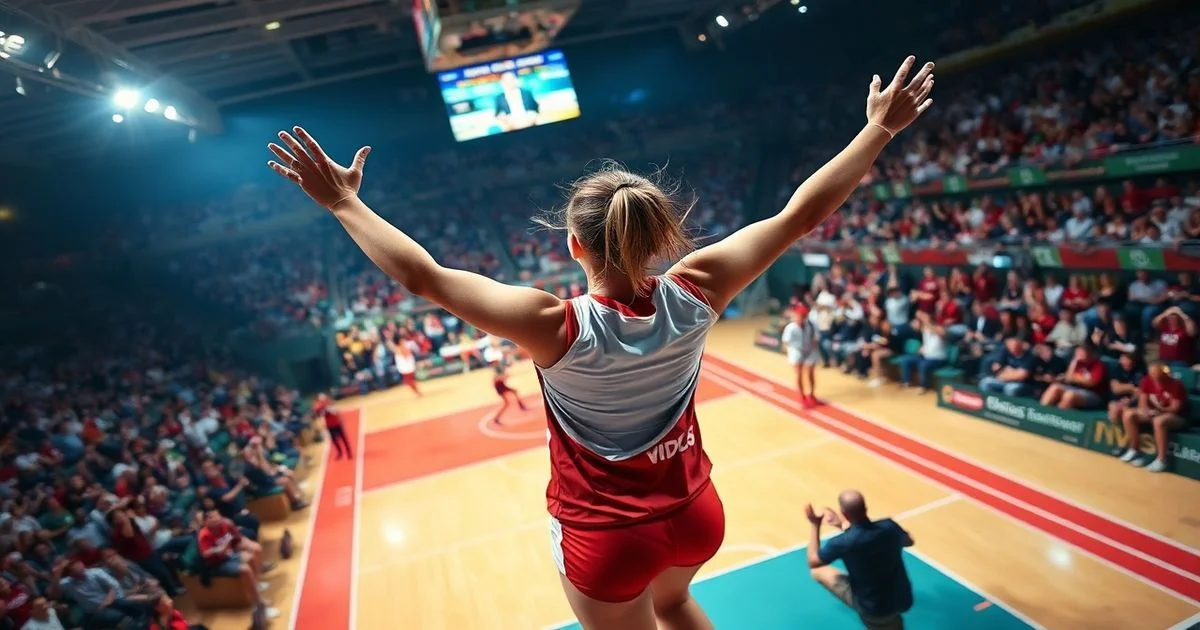
The world of sports is no stranger to passionate displays of emotion, but a recent incident involving a prominent volleyball star has ignited a far-reaching discussion. What started as a moment of triumph for national hero Lena Petrova has transformed into a global conversation, as her Volleyball Star's Viral Celebration Sparks Debate across social media platforms and sports communities. The incident, which occurred during a high-stakes championship match, saw Petrova unleash an unusually fervent and prolonged celebration after securing a pivotal match point, prompting immediate reactions from fans, pundits, and fellow athletes alike, raising questions about the boundaries of sportsmanship and the authenticity of athlete expression in the modern era.
- The Incident: A Moment of Triumph, A Spark of Controversy
- The Immediate Aftermath and Social Media Outcry
- Expert Opinions on the Volleyball Star's Viral Celebration Debate
- Historical Context and Comparisons
- The Call for Dialogue and Moving Forward
- Conclusion
- Frequently Asked Questions
- Further Reading & Resources
The Incident: A Moment of Triumph, A Spark of Controversy
The scene was set at the packed National Arena, with the championship title hanging in the balance. Lena Petrova, captain of the formidable Titans, had just delivered a thunderous spike, securing the final point against their long-standing rivals, the Meteors. Such high-stakes events are common in competitive sports, reminiscent of a crucial PWHL showdown recently. The stadium erupted, and in the euphoria of the moment, Petrova launched into a celebration unlike any seen from her before. Instead of her usual fist pump or embrace with teammates, she stood defiantly at the net, staring down the opposing team's bench, her arms outstretched and a look of intense triumph, bordering on taunt, etched across her face. This lasted for several seconds, seemingly directed at a specific Meteors player, before her teammates finally pulled her away to join their jubilant huddle.
The immediate aftermath on the court was tense. While the Titans celebrated their victory, the Meteors players appeared visibly dejected, with some shaking their heads in apparent disapproval of Petrova's actions. The referees did not issue any immediate warnings or penalties, as the celebration, while intense, did not involve physical contact or overt aggression. However, the television cameras captured every moment, and within minutes, clips of Petrova's celebration began circulating rapidly across social media platforms. Hashtags related to the match and Petrova herself quickly trended, with opinions sharply divided on the appropriateness of her actions. This singular moment, intended as a personal expression of victory, inadvertently became the catalyst for a much broader societal discussion.
Lena Petrova: A Profile of Excellence
Lena Petrova has long been considered one of the sport's most dominant figures. Known for her exceptional athleticism, powerful spikes, and strategic court vision, she has led her team to numerous victories and individual accolades. Off the court, Petrova has maintained a relatively private but professional image, often praised for her dedication, leadership, and humble demeanor. This established public persona is precisely why her uncharacteristic celebration caught so many off guard. Her previous celebrations were always spirited but never bordered on what many perceived as disrespectful or unsportsmanlike. This contrast fueled the intensity of the debate, as fans struggled to reconcile the image of the stoic champion with the fiery display witnessed during the championship final. Her reputation for composure made the outburst all the more striking and, for some, disappointing.
The Immediate Aftermath and Social Media Outcry
The digital realm immediately amplified the incident. Twitter, Instagram, and TikTok were awash with videos, memes, and impassioned discussions. Within hours, clips of Petrova's celebration had garnered millions of views, shares, and comments, much like other viral controversies that spark backlash online. The initial reactions were a maelstrom of contrasting viewpoints, reflecting the diverse perspectives within the global sports fandom.
On one side, many fans rallied to Petrova's defense, arguing that her celebration was a genuine expression of raw emotion in a high-pressure moment. They highlighted the intensity of championship sports and the immense dedication athletes pour into their craft, suggesting that such an emotional release was understandable, even commendable. These supporters emphasized the passion and fire that Petrova brings to the game, viewing her celebration as an authentic reflection of her competitive spirit. They pointed out that similar exuberant celebrations occur in other sports and are often celebrated rather than condemned. "It was pure passion! She earned that moment," one fan tweeted. "Athletes are humans, not robots. Let them feel!" another commented on Instagram.
Conversely, a significant portion of the audience condemned Petrova's actions as unsportsmanlike and disrespectful to her opponents. Critics argued that regardless of the intensity of the moment, athletes have a responsibility to uphold the principles of fair play and respect for their adversaries. They viewed her prolonged stare-down and aggressive posture as a deliberate taunt, suggesting it crossed a line into poor sportsmanship. Many called for sanctions from the league or a public apology from Petrova herself. "There's a difference between passion and disrespect. This was the latter," a prominent sports journalist posted on X (formerly Twitter). "It set a bad example for younger athletes," another user commented.
The Role of Instant Replay and Slow-Motion Analysis
The pervasive nature of instant replay and slow-motion video analysis significantly intensified the debate. Every nuance of Petrova's celebration was dissected frame by frame, allowing viewers to scrutinize her facial expressions, body language, and the exact duration of her stare-down. What might have been a fleeting moment in real-time became an infinitely repeatable loop, magnifying its perceived impact. This granular analysis further polarized opinions, with supporters seeing intense focus and determination, while detractors perceived calculated disdain. The ability to pause, rewind, and re-watch at will meant that the context of the live, fast-paced game was often lost in the meticulous examination of a single, controversial instant. This highlighted the double-edged sword of modern sports broadcasting, where technological advancements enhance viewership but can also fuel disproportionate reactions to isolated events.
Expert Opinions on the Volleyball Star's Viral Celebration Debate
The controversy quickly transcended fan forums, drawing in a chorus of expert voices from the sports world. Former athletes, coaches, sports psychologists, and ethicists weighed in, offering varied perspectives that enriched the discourse around the incident.
Perspectives on Sportsmanship and Athlete Expression
Many former athletes and coaches acknowledged the emotional intensity of professional sports. "In the heat of the moment, things happen," remarked former Olympic volleyball medalist, Maria Sanchez, in an interview. "You train your whole life for these moments, and sometimes the emotion just spills over. We shouldn't be too quick to judge without understanding the full context." Sanchez emphasized that while sportsmanship is paramount, demanding robotic composure from athletes in peak competitive states might be unrealistic. She also suggested that some of the criticism might stem from differing cultural interpretations of celebrations, noting that what is considered acceptable in one region might be seen as excessive in another.
However, other seasoned figures took a more critical stance. Renowned sports commentator and former national team coach, David Thompson, stated firmly, "There's a line, and Lena crossed it. Professionalism dictates a certain level of respect for your opponents, regardless of the stakes. Her team won, but at what cost to her image and the spirit of the game?" Thompson elaborated on the idea that young athletes look up to stars like Petrova, and therefore, their conduct carries a heavier burden of responsibility. For guidance on responsible athletic development, resources are available on preventing sports injuries in youth athletes. He suggested that such actions, if left unchecked, could erode the fundamental values of mutual respect and fair play that are supposed to underpin athletic competition. He stressed the importance of not just winning, but winning gracefully.
Sports psychologists added another layer to the discussion, often highlighting the psychological pressures athletes face. Dr. Evelyn Reed, a sports psychologist specializing in elite athletes, suggested that Petrova's celebration could be a manifestation of pent-up aggression or frustration from earlier in the match, or even from previous encounters with that specific opponent. "Athletes are under immense pressure to perform, and winning often comes with an equally intense emotional release," Dr. Reed explained. "While it's important to channel that emotion constructively, sometimes the raw, unfiltered reaction emerges. It doesn't necessarily mean ill intent, but it does highlight the need for emotional regulation training even at the highest levels." She also pointed out that the public's perception is heavily influenced by the narrative constructed around such incidents, often overlooking the deeper psychological drivers.
The Impact on the Sport's Image
Beyond the individual athlete, the debate also touched upon the broader image of volleyball and sports in general. Some argued that such passionate displays, even controversial ones, add to the drama and entertainment value of the sport, attracting new viewers who might be drawn to the raw emotion. They believe that sterilizing the game of all intense reactions could make it less engaging. "These moments create headlines, they get people talking about volleyball," commented a marketing executive for a major sports league. "While we encourage sportsmanship, a little controversy can also boost viewership and engagement, as long as it doesn't devolve into violence or truly offensive behavior."
However, others worried about the potential negative impact on the sport's reputation, particularly among younger audiences and those new to volleyball. They feared that if unsportsmanlike conduct becomes normalized, it could deter participation and alienate fans who value the traditional ideals of sportsmanship. The concern was that such incidents could shift the focus from athletic excellence to sensationalized theatrics, potentially undermining the integrity of the game. Parents expressed concern about the messages being sent to children regarding respecting opponents, regardless of the outcome.
Historical Context and Comparisons
The debate around Lena Petrova's celebration is not an isolated incident in the history of sports. Throughout various disciplines, there have been numerous instances where athletic celebrations have sparked controversy, forcing a re-evaluation of what constitutes acceptable behavior on the field of play. Examining these historical parallels provides valuable context for understanding the current discussion.
Notable Celebrations and Their Repercussions
Consider the infamous "Too Tall" Jones sack dance in American football, or the exaggerated goal celebrations in soccer, some of which have led to bookings for "unsportsmanlike conduct." In basketball, the prolonged stare-downs and trash talk, while often accepted as part of the game's competitive fabric, can sometimes cross a line that draws criticism. Even in individual sports like tennis, outbursts of emotion or perceived slights towards opponents have often been met with public censure. These examples underscore a recurring tension: the desire for athletes to express themselves authentically versus the expectation of adhering to codes of conduct and respect. Each sport, and indeed each era, grapples with where to draw this line.
One of the most comparable incidents involved a football (soccer) player who, after scoring a crucial goal against a former club, celebrated directly in front of their fans, leading to a massive outcry and a subsequent apology from the player. The sentiment then, as now, was divided between those who saw it as part of the game's passion and those who viewed it as a blatant act of disrespect. These comparisons highlight that while the sport and the specific action may differ, the underlying questions about sportsmanship, respect, and the boundaries of celebration remain remarkably consistent across time and athletic disciplines.
The Evolving Definition of Sportsmanship in the Digital Age
The rise of social media and 24/7 sports coverage has undoubtedly changed the landscape of these debates. In previous eras, a controversial celebration might have been discussed for a few days in newspapers and sports programs. Today, it can become a global phenomenon, dissected endlessly, and contribute to an athlete's public persona—for better or worse—in an instant. This digital amplification means that perceived infractions are scrutinized more intensely and have a far wider reach. The "cancel culture" phenomenon further complicates matters, as public opinion can rapidly coalesce, often demanding swift punitive action or public repentance.
Moreover, the line between "acceptable banter" and "unsportsmanlike conduct" seems to be constantly shifting. What was once considered a minor infraction might now be magnified into a major scandal, partly due to the increased visibility and the immediate, unfiltered feedback loop provided by social media. Athletes are increasingly navigating a world where every action, every expression, can be captured, shared, and interpreted by millions. This raises questions about the psychological burden on athletes to maintain a flawless public image while performing under immense pressure.
The Call for Dialogue and Moving Forward
As the dust settles from the immediate shockwaves, there's a growing consensus that the incident, while controversial, offers a valuable opportunity for introspection within the sports community. The Volleyball Star's Viral Celebration Sparks Debate has not only illuminated diverse viewpoints on athlete conduct but also highlighted the need for clearer guidelines and ongoing dialogue.
Awaiting Petrova's Statement and League Action
As of now, Lena Petrova has not issued a public statement regarding her celebration. Her team and the league have also remained tight-lipped, likely assessing the situation and preparing a measured response. The volleyball community eagerly awaits their official comments, which will undoubtedly shape the subsequent narrative and potentially influence future policy decisions regarding on-court conduct. Whether the league will issue a warning, a fine, or mandate a public apology remains to be seen, but any action or inaction will set a precedent.
There is a strong push from some quarters for the league to implement clearer rules regarding celebrations that could be perceived as taunting or disrespectful. This wouldn't necessarily stifle emotional expression but would aim to provide athletes with a better understanding of the boundaries. Such guidelines could encompass duration, proximity to opponents, and specific gestures.
Fostering a Culture of Respect
Ultimately, this incident serves as a reminder of the delicate balance between passion and professionalism in sports. While fans crave authentic displays of emotion, the integrity of the game and the mutual respect between competitors must also be preserved. Moving forward, the discussion should aim not to suppress the spirit of competition but to find constructive ways for athletes to express their triumphs without diminishing the efforts or dignity of their opponents.
Educational initiatives for young athletes, emphasizing both the pursuit of excellence and the importance of graciousness in victory and defeat, could be strengthened. Furthermore, open dialogues between players, coaches, officials, and sports psychologists can help foster an environment where intense competition coexists harmoniously with respect and sportsmanship. The aim should be to celebrate the incredible athleticism and drama of sports, while simultaneously upholding the values that make these contests truly meaningful.
Conclusion
The incident involving Lena Petrova's uncharacteristic celebration during a championship match has undoubtedly left an indelible mark on the sports landscape. What began as a personal moment of victory swiftly morphed into a multifaceted discussion, proving that a Volleyball Star's Viral Celebration Sparks Debate on a profound level, challenging our understanding of sportsmanship, athlete emotion, and the ever-present influence of social media. This incident has compelled the sporting world to re-examine the fine line between passionate expression and disrespectful conduct. While opinions remain divided, the conversation it has ignited is invaluable, prompting a deeper reflection on the values we cherish in competition and how we expect our sporting heroes to embody them. The path forward likely involves a renewed commitment to fostering respect, clear communication of guidelines, and a continuous dialogue within the global sports community, ensuring that the spirit of competition remains vibrant and honorable for generations to come.
Frequently Asked Questions
Q: Why did Lena Petrova's celebration spark such widespread debate?
A: Petrova's celebration was perceived by many as unusually fervent and prolonged, potentially bordering on a taunt towards the opposing team. This clashed with her previously composed public image, igniting discussion about sportsmanship and athlete emotional expression.
Q: How did social media influence the controversy?
A: Social media platforms amplified the incident immensely, with clips quickly going viral and sparking immediate, polarized discussions. Instant replay and slow-motion analysis further intensified scrutiny, contributing to the debate's global reach and depth.
Q: What are the broader implications of this incident for sports?
A: The debate highlights the evolving definition of sportsmanship in the digital age, the psychological pressures on athletes, and the challenge of balancing authentic emotional expression with respect for opponents. It prompts a call for clearer guidelines and ongoing dialogue within the sports community.