US AI Break: Groundbreaking Innovations Redefining Technology
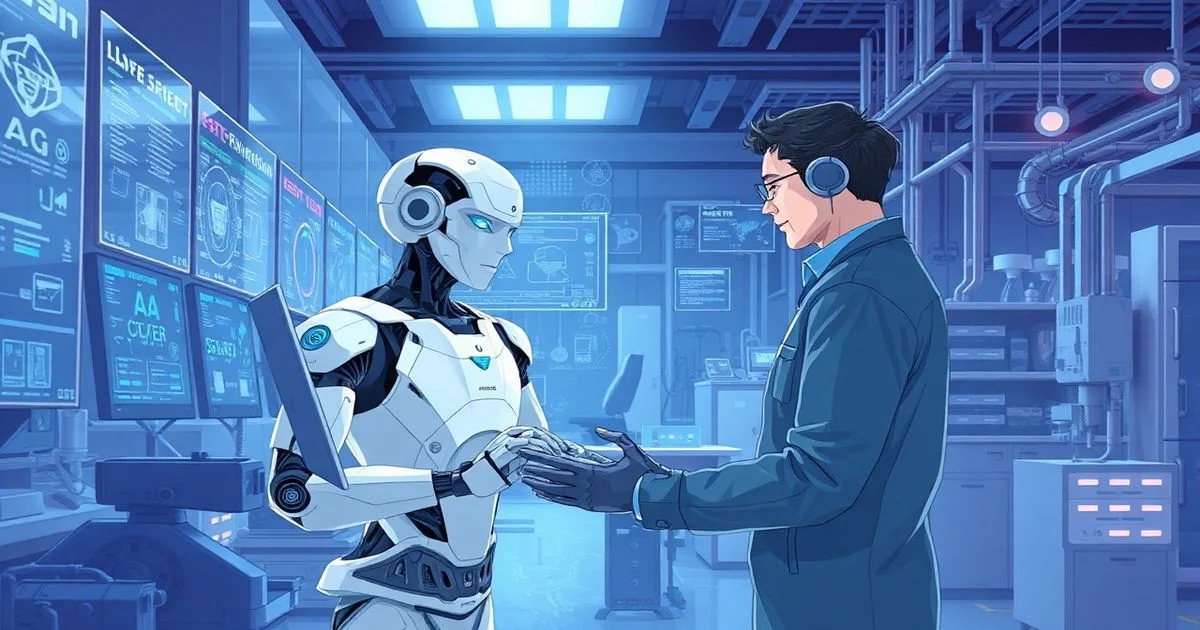
The US AI break is revolutionizing the technological landscape, as groundbreaking innovations in artificial intelligence redefine how we approach complex problem-solving. The United States has long been at the forefront of this field, and recent developments have fundamentally accelerated the pace of global innovation. By combining high-level academic research with aggressive venture capital, the nation is setting a new standard for what machines can achieve.
Background Context
The US AI break is built on a foundation of significant investments in research and development, talent acquisition, and infrastructure. Government initiatives, private sector investments, and academic collaborations have created a fertile ground for AI innovation that remains unmatched globally. This synergy allows for rapid prototyping and deployment of systems that were considered science fiction only a decade ago.
The US government has launched several initiatives to promote AI development, including the American AI Initiative, which aims to accelerate AI research and adoption across all major economic sectors. Private sector investments have also been substantial, with tech giants like Google, Microsoft, and Amazon committing billions of dollars to AI research, cloud infrastructure, and human capital.
Key Players and Initiatives
- Google's DeepMind and Research Labs: Google remains a leading research center for artificial intelligence, focusing on developing neural network architectures that can solve complex logic puzzles and scientific problems.
- Microsoft's AI for Good: Microsoft's AI for Good initiative aims to harness the power of AI to drive positive change, with a specific focus on areas like environmental sustainability, accessibility, and global healthcare distribution.
- Amazon's AI Research: Amazon's research team is working on developing scalable AI technologies that can improve supply chain logistics, customer experiences, and drive business innovation across global e-commerce platforms.
Key Details of the Evolution
The US AI break encompasses a wide range of applications and technologies, from machine learning and natural language processing to advanced computer vision and autonomous robotics.
Machine Learning Advancements
Machine learning has been the primary driver of this breakthrough, with significant advancements in areas like deep learning and reinforcement learning. These advancements have enabled the development of AI-powered systems that can learn from massive, unstructured data sets and improve their decision-making accuracy over time.
- Deep Learning Architectures: Modern deep learning algorithms have enabled AI systems to analyze complex multi-modal data sets—combining text, image, and sensory input—to make highly accurate real-time predictions.
- Reinforcement Learning: Reinforcement learning algorithms have enabled AI systems to learn from environmental feedback, allowing robots and software agents to adapt to changing, unpredictable real-world environments with unprecedented agility.
Natural Language Processing and LLMs
Natural language processing (NLP) has been another area of significant innovation, particularly with the emergence of Large Language Models (LLMs). These models have shifted the paradigm from simple command-following to complex reasoning.
- Generative Chatbots: Sophisticated chatbots have enabled businesses to provide 24/7 hyper-personalized customer support, bridging the gap between automated systems and human-like interaction.
- Virtual Assistants: Advanced assistants like Siri, Alexa, and newer generative agents have revolutionized the way people interact with their digital environments, turning passive tools into proactive collaborators.
The Infrastructure of Innovation
Behind the software lies a massive shift in hardware architecture. The US AI break is heavily supported by the domestic production of specialized semiconductors and high-performance computing clusters. These chips, designed specifically for tensor operations and matrix multiplication, are the engines that power modern neural networks. Without this domestic capacity for high-end hardware, the current pace of algorithmic growth would have been impossible.
Furthermore, the integration of distributed cloud computing ensures that these tools are available to startups and research labs, not just the largest corporations. This democratization of computing power is a core component of why the US has managed to sustain such an accelerated rate of development.
Impact on Global Industries
The US AI break has far-reaching implications for industries and society, with the potential to transform the way we work, live, and interact with technology on a daily basis.
Economic Impact and Productivity
The economic impact is significant, with various forecasts suggesting that AI could contribute trillions of dollars to the US GDP in the coming decade.
- Job Creation: While there are concerns about automation, the industry is simultaneously creating millions of new job opportunities in AI ethics, system architecture, data engineering, and specialized model training.
- Productivity Gains: AI is expected to drive massive productivity gains across professional services, enabling businesses to automate high-volume routine tasks and focus their human talent on high-value creative and strategic activities.
Societal Transformation
The societal impact of this movement is equally profound, touching upon healthcare, education, and planetary science.
- Healthcare: AI is being used to develop personalized medicine, improve the speed and accuracy of disease diagnosis through medical imaging, and streamline complex clinical workflows that currently consume hospital resources.
- Education: Adaptive learning systems are being deployed to tailor curricula to individual student needs, significantly improving outcomes and closing achievement gaps in underserved communities.
Challenges and Ethical Considerations
No technological leap of this magnitude comes without hurdles. The US AI break has prompted a national dialogue regarding safety, bias, and transparency. Researchers are now prioritizing "Explainable AI," which aims to ensure that when a machine makes a decision, humans can trace the logic behind it. This is particularly vital in sectors like finance and law, where algorithmic accountability is non-negotiable.
Furthermore, energy consumption remains a major technical challenge. Training massive models requires immense electrical power, leading to a new wave of innovation in sustainable data centers and energy-efficient hardware. The industry is currently pivoting toward "Green AI," aiming to maximize computational efficiency while minimizing the carbon footprint of training runs.
Conclusion
In conclusion, the US AI break is a groundbreaking innovation that is redefining technology, industries, and society. The convergence of government initiatives, private sector investments, and academic collaborations has created a unique ecosystem that is driving AI innovation and adoption. As AI continues to evolve and improve, it is likely to have a profound impact on the way we live, work, and interact with the digital world. The US AI break is a testament to the country's commitment to innovation and technological advancement, and it is expected to drive significant economic and societal benefits in the years to come.
Moving forward, the focus will likely shift from the sheer scale of models to their reliability and integration into the physical world. As we look to the future, it is clear that artificial intelligence will play an increasingly important role in shaping our world, and the United States will remain at the forefront of this revolution, provided it continues to foster a culture of open inquiry and robust investment.
Frequently Asked Questions
Q: What is the US AI break?
A: It refers to the rapid acceleration of artificial intelligence development in the US through public and private investment.
Q: How does it affect the economy?
A: It boosts GDP through increased productivity, automation, and the creation of new high-tech job sectors.
Q: Will AI change our daily lives?
A: Yes, through personalized healthcare, smarter education tools, and advanced personal assistants that streamline daily tasks.