Microsoft Unveils Superintelligence AI Lab Plans to Revolutionize Tech

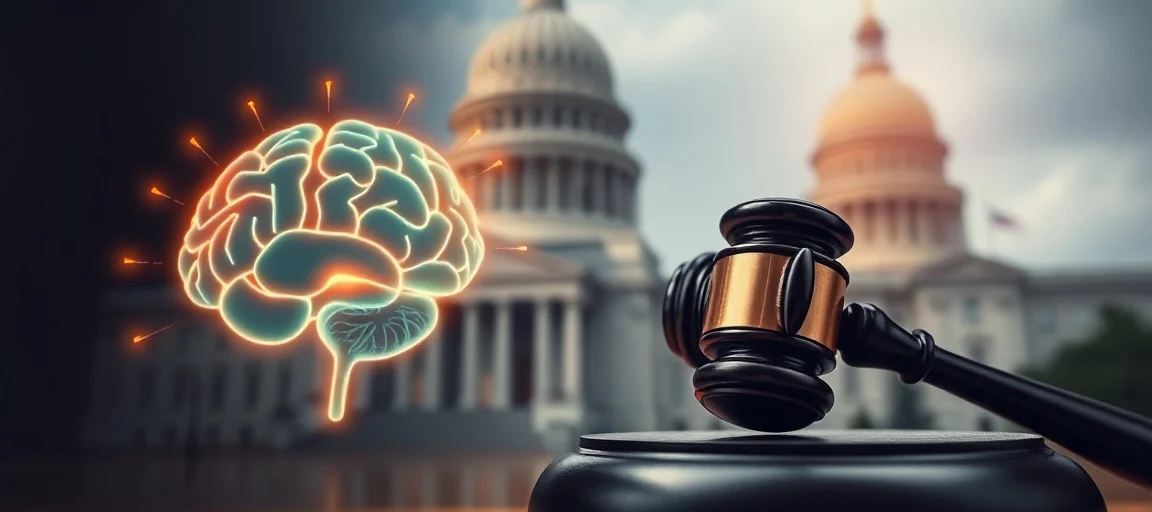
With the recent announcement that Microsoft Unveils Superintelligence AI Lab Plans, the tech giant is setting a course to revolutionize technology on a global scale. This strategic initiative signals a massive shift in artificial intelligence research, focusing specifically on artificial general intelligence (AGI) and cognitive systems that surpass biological limits. By establishing this dedicated hub, Microsoft hopes to build foundation models capable of reasoning, creative synthesis, and complex multi-step problem solving across all major scientific and industrial domains.
- Contextualizing the Microsoft Unveils Superintelligence AI Lab Plans
- Core Scientific Objectives and Architectural Focus
- Strategic Partnerships and Infrastructure Requirements
- Ethical Oversight, Safety Frameworks, and Alignment
- Anticipated Industry Disruptions and Economic Impact
- Conclusion
- Frequently Asked Questions
- Further Reading & Resources
Contextualizing the Microsoft Unveils Superintelligence AI Lab Plans
To appreciate the scope of this announcement, one must look at the historical trajectory of modern computing. For the past decade, AI development has focused largely on narrow tasks: recognizing faces, generating readable text, and analyzing specific data streams. The deep learning boom of 2012 and the transformer-driven breakout of 2022 demonstrated that scaling neural networks yields massive cognitive returns. However, the horizon of computer science has always been the creation of systems that possess generalizable intellect. This new laboratory represents Microsoft's direct bid to transition from specialized machine learning systems to true, autonomous superintelligence.
The laboratory will operate independently from but in collaboration with Microsoft's existing ecosystem, including its heavily publicized corporate partnerships. While commercial tools like Copilot continue to rely on iterative upgrades to existing large language model infrastructures, this new research facility is tasked with looking ten to twenty years into the future. It is not designed to produce incremental product features, but rather to construct the fundamental building blocks of cognitive systems that can autonomously generate new scientific theories, solve unsolved mathematical conjectures, and orchestrate complex physical experiments.
Historically, major technological paradigm shifts have required highly concentrated hubs of elite talent and capital, much like the Manhattan Project or Bell Labs in the 20th century. Microsoft is positioning this new laboratory as the spiritual successor to those foundational institutions. By gathering global experts in computer science, theoretical physics, cognitive psychology, and advanced mathematics, the company intends to create an environment where interdisciplinary breakthroughs can occur rapidly.
Core Scientific Objectives and Architectural Focus
The core objective of the lab is to break past the structural ceilings of the current transformer architecture. While transformers have proven incredibly adept at pattern matching and linguistic generation, they lack true reasoning engines and are severely constrained by their computational scaling limits and context windows. The quadratic cost of attention mechanisms means that processing massive, multi-modal datasets becomes prohibitively expensive at scale.
To overcome these barriers, the newly formed research team will focus heavily on several key scientific disciplines:
-
Neuro-Symbolic Integration: Combining deep learning's pattern-recognition capabilities with classical symbolic logic. This integration allows AI models to not only predict the next logical token but also mathematically prove the validity of their reasoning steps in real-time.
-
Continuous Learning Paradigms: Current frontier models are static snapshots frozen in time after their training phase. The lab is designing architectures that continuously update their knowledge bases without suffering from catastrophic forgetting, allowing them to adapt to real-world developments dynamically.
-
Automated Theorem Proving: Developing specialized sub-systems that can write, test, and verify code and mathematical equations in simulated sandboxes, accelerating the pace of scientific discovery.
-
State-Space Models (SSMs): Investigating alternative neural architectures that scale linearly rather than quadratically with sequence length, enabling the processing of entire textbooks, code repositories, or genomic sequences in a single pass.
By pioneering these architectural leaps, researchers aim to move away from brute-force scale—simply throwing more GPUs at the same algorithms—and instead focus on algorithmic efficiency and cognitive depth. This shift is critical as the industry approaches the physical limits of silicon scaling.
Strategic Partnerships and Infrastructure Requirements
Building superintelligent systems is as much a hardware challenge as it is an algorithmic one. To support the computational requirements of this new laboratory, Microsoft is leveraging its vast Azure cloud infrastructure and investing in unprecedented physical scaling.
The lab's operations will be anchored by next-generation supercomputers powered by custom silicon.
Computational Scaling:
The infrastructure team will deploy thousands of interconnected advanced accelerator chips, integrating both custom-designed Microsoft Maia silicon and the latest high-bandwidth graphics processing units from industry partners like NVIDIA. These systems are specifically optimized for training massive-scale, multi-modal systems with trillions of parameters. The physical layout of these clusters requires cutting-edge optical interconnects to reduce latency and maximize data throughput between individual server nodes.
Sustainable Power Infrastructure:
Recognizing the immense energy footprint of supercomputing clusters, Microsoft is pairing its lab plans with long-term clean energy commitments. This includes securing dedicated power from next-generation nuclear reactors, small modular reactors (SMRs), and massive geothermal arrays to ensure that the pursuit of superintelligence does not compromise the company's net-zero carbon objectives. Liquid cooling architectures will also be implemented at scale to maximize thermal efficiency and reduce auxiliary power draw.
Ethical Oversight, Safety Frameworks, and Alignment
The potential for a system to surpass human-level intelligence brings with it profound existential and societal risks. Microsoft is addressing these concerns by integrating a dedicated AI Safety and Alignment group directly into the lab's core structural framework. This is not an external audit committee, but an active engineering team working alongside the primary model designers.
The safety team will focus on three primary operational pillars:
-
Empirical Alignment Research: Developing concrete mathematical constraints that prevent models from exhibiting deceptive alignment or pursuing unintended sub-goals during training.
-
Scalable Oversight: Designing secondary AI systems that can monitor, audit, and explain the outputs of more complex, superintelligent models, ensuring human supervisors remain in control.
-
Red-Teaming and Sandbox Containment: Running frontier models in strictly air-gapped virtual environments to test their capabilities against adversarial prompts, social engineering scenarios, and autonomous replication attempts before any public release.
These safety measures will be integrated into the continuous training loop of the models. By testing for vulnerabilities at every step of development, the lab aims to create systems that are inherently safe, predictable, and aligned with human values from the ground up.
Anticipated Industry Disruptions and Economic Impact
The successful execution of Microsoft's plans will trigger seismic shifts across the global economy. In the short term, industries that rely heavily on cognitive labor—such as software engineering, financial modeling, and legal analysis—will see massive productivity gains as superintelligent agents automate complex, multi-day workflows.
In the long term, the most profound impacts will likely manifest in scientific domains.
Accelerating Healthcare and Medicine:
By leveraging automated reasoning, these models can analyze molecular structures and predict protein folding patterns at speeds thousands of times faster than human researchers. This could compress the timeline for developing life-saving therapeutics and vaccines from decades to weeks.
Environmental Engineering:
Superintelligent systems could design novel carbon-capture materials, optimize global electrical grid distributions, and discover highly efficient catalysts for green hydrogen production, directly addressing the global climate crisis.
Geopolitical and Sovereign AI Dynamics:
The development of superintelligence is also a geopolitical milestone. Nations and corporations that possess these computational capabilities will hold significant economic and strategic advantages. This reality highlights the need for international cooperation and standardized governance frameworks to prevent dangerous technological arms races.
Conclusion
The announcement that Microsoft Unveils Superintelligence AI Lab Plans represents a pivotal moment in the trajectory of modern computation. By merging raw computational horsepower with cutting-edge algorithmic research and strict safety guardrails, Microsoft is positioning itself to lead the next era of human technological evolution. While the path to true superintelligence is filled with unprecedented technical, logistical, and ethical hurdles, the potential rewards for global science, medicine, and industry are too significant to ignore. As this state-of-the-art facility begins its pioneering work, the boundaries of what is possible will be redrawn forever.
Frequently Asked Questions
Q: What is the primary focus of Microsoft's new superintelligence AI lab?
A: The lab focuses on developing next-generation AI architectures that surpass human capabilities in reasoning, multi-step planning, and scientific problem-solving.
Q: How does this lab differ from Microsoft's existing partnership with OpenAI?
A: This lab is an internal Microsoft research initiative designed to build native IP and custom architectures, complementary to but distinct from OpenAI's commercial efforts.
Q: When will the new superintelligence models be available to the public?
A: Initial research benchmarks are expected within the next two years, with gradual deployment into Azure enterprise services under strict safety guidelines.