Russia Unleashes Massive Drone, Missile Attack on Kyiv
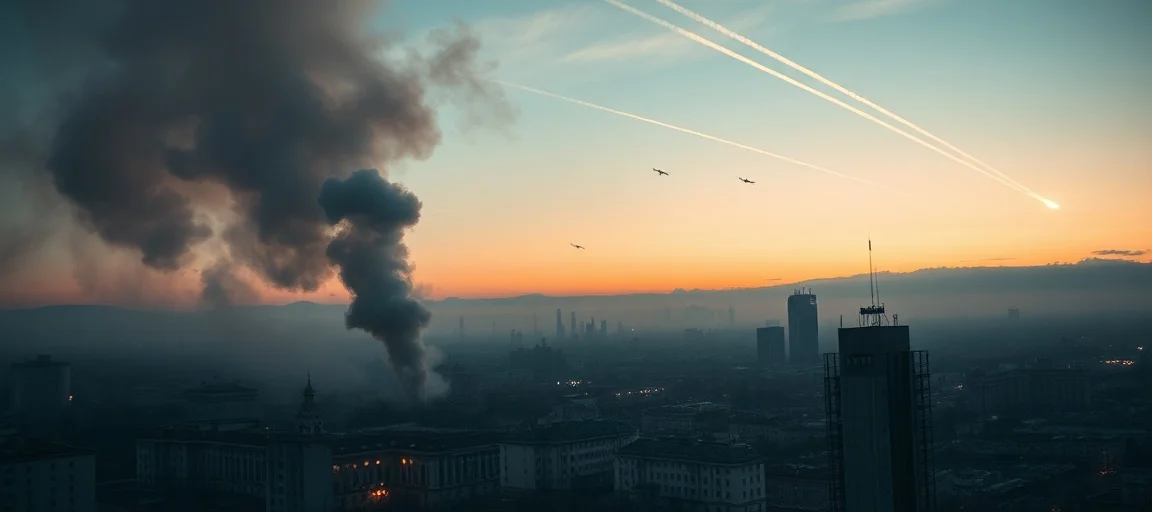
The Ukrainian capital, Kyiv, woke to a fresh wave of terror as Russia Unleashes Massive Drone, Missile Attack on Kyiv, a multi-vector aerial offensive that ravaged residential areas and infrastructure across the city. The coordinated overnight bombardment, which occurred on a Saturday-Sunday, involved a complex mix of cruise missiles, ballistic missiles, and an array of strike drones, including the feared Shahed type and the advanced Oreshnik hypersonic missile. This latest assault marks a significant escalation in Russia's sustained campaign against Ukraine, demonstrating an alarming sophistication in targeting and a grim determination to inflict widespread damage and psychological impact on the civilian population. Early reports confirmed two fatalities and 77 injuries, including children, underscoring the brutal human cost of these attacks across the capital and wider region.
- The Unprecedented Scale of the Assault
- Widespread Destruction and Civilian Impact
- Russia's Evolving Attack Strategies
- Global Condemnation and Ongoing Support for Ukraine
- Kyiv's Steadfast Resilience and the Future Outlook
- The Ongoing Struggle: Russia Unleashes Massive Drone, Missile Attack on Kyiv
- Frequently Asked Questions
- Further Reading & Resources
The Unprecedented Scale of the Assault
The recent aerial assault on Kyiv was characterized by its immense scale, strategic coordination, and the deployment of a diverse arsenal, designed to overwhelm Ukraine's formidable air defense systems. The sheer volume and variety of projectiles launched in the early hours of Sunday, May 24, 2026, underscored a calculated effort by Russian forces to maximize destruction and sow panic among residents.
Overnight Barrage: Missiles, Drones, and Hypersonics
The attack commenced shortly after 1:00 a.m. local time, triggering nationwide air raid alerts and sending countless residents scrambling for shelter in underground metro stations and other safe havens. Russian forces employed a multi-pronged approach, utilizing a combination of cruise missiles, ballistic missiles, and numerous Shahed-type strike drones. Alarmingly, Ukrainian President Volodymyr Zelenskyy confirmed that Russia also deployed the powerful hypersonic Oreshnik ballistic missile during this mass attack, marking its third reported use in the ongoing four-year conflict. The Oreshnik missile, capable of carrying both nuclear or conventional warheads and boasting speeds of more than 10 times the speed of sound, is considered exceptionally difficult to intercept. One such Oreshnik strike impacted the city of Bila Tserkva in the Kyiv region.
The intensity of the barrage was staggering, with reports indicating a combined attack involving hundreds of strike drones and scores of air, sea, and ground-launched missiles. This multi-vector offensive targeted not only civilian residential quarters but also shopping venues and historical infrastructure, illustrating a clear disregard for civilian life and international humanitarian law. The widespread destruction spanned more than 40 distinct locations across virtually every corner of the capital, affecting at least eight municipal districts.
Defensive Responses and Interception Efforts
Despite the overwhelming nature of the Russian assault, Ukraine's air defense systems demonstrated significant capabilities, intercepting a substantial portion of the incoming threats. Ukraine’s air force stated that its defenses destroyed and jammed hundreds of drones and dozens of missiles. This performance reflects the ongoing improvements in Ukraine's layered air defense system, which has been steadily enhancing its effectiveness. In March 2026, Ukraine claimed an air-defense interception rate close to 90% for Russian targets, a rise from previous months. They have leveraged a combination of advanced Western-supplied systems like Patriots, older Soviet-era systems, and increasingly, innovative home-grown air defense technologies.
However, challenges remain, particularly concerning ballistic missiles and the evolving tactics employed by Russia. Ukrainian officials have acknowledged that while interceptor drones have shown improved success rates against Shahed drones, protection against ballistic missiles continues to be a key gap that needs strengthening. The sheer volume of attacks, sometimes involving hundreds of drones in a single night, is also designed to exhaust air defenses and force costly interceptions, straining stockpiles of expensive interceptor missiles. The constant modernization of Russian missiles and drones further complicates the work of air defense.
Widespread Destruction and Civilian Impact
The human toll and material damage resulting from the massive Russian drone and missile attack on Kyiv are deeply sobering, affecting countless lives and leaving significant destruction in its wake. The targeted areas spanned densely populated residential districts, underscoring the indiscriminate nature of these assaults.
Casualties and Residential Devastation
The attack tragically resulted in fatalities and numerous injuries, transforming ordinary homes into scenes of chaos and devastation. Kyiv Mayor Vitali Klitschko confirmed that the massive attack killed two people and left 77 others wounded, including two children. Of those injured, 31 were hospitalized, with three in critical condition. Across the wider Kyiv region, an additional three civilians were hospitalized. Earlier reports from the Kyiv City Military Administration indicated at least one fatality and 44 injuries from the combined ballistic missile and drone strikes.
Residential areas bore the brunt of the assault. In the central Shevchenkivskyi district, a Russian weapon tore through the upper floors of a nine-story apartment building, instantly killing one resident and severely injuring three others amidst an expanding structural fire. Another strike impacted the 13th floor of a newly constructed 20-story residential high-rise in the Pecherskyi district, near the government quarter. A similar incident occurred in the Solomyanskyi district, where a large fire erupted on the 23rd floor of a 24-story residential complex, leading to partial external wall collapses. Drone strikes also hit a 16-story high-rise in Obolon, a single-story house, and sparked fires near residential buildings in Shevchenkivskyi. These attacks forced dozens of residents to take shelter in underground metro stations.
Targeting Critical Infrastructure
Beyond residential buildings, the Russian offensive deliberately targeted various civilian and critical infrastructure elements, disrupting essential services and jeopardizing public safety. In the Darnytskyi district, a drone strike ignited a 250-square-meter blaze on the roofing of a two-story student dormitory, leading to the evacuation of 10 residents and the rescue of 12 others. Shopping malls and supermarkets in the Desnyanskyi area, an active business center, were also hit by drone strikes. Furthermore, a tennis court in the Holosiivskyi district was struck, where an unexploded submunition warhead required pyrotechnic squads to defuse it.
The attacks on infrastructure are part of Russia's broader strategy to systematically cripple Ukraine's energy grid and essential services, particularly as the country faces ongoing conflict conditions. Past attacks have targeted critical power infrastructure, leading to emergency blackouts affecting millions and disrupting heating and water supplies, which are considered war crimes. The deliberate destruction of infrastructure indispensable to the survival of the civilian population is a direct violation of international humanitarian law, causing immense suffering, especially to vulnerable groups such as children, the elderly, and hospital patients.
Russia's Evolving Attack Strategies
The recent attack on Kyiv showcases Russia's continuous adaptation of its offensive tactics, marked by an increase in both the volume and sophistication of its aerial bombardments. This evolution is a critical aspect of the ongoing conflict, forcing Ukraine to constantly innovate its defensive posture.
The Shift in Tactics: Volume and Sophistication
Over the course of the war, Russia has consistently increased the frequency and intensity of its drone and missile attacks on Ukraine. From January to May 2025, Russian drone strikes averaged about 120 per day, a number that escalated to 185 per day from May to August of the same year. This strategy often involves launching hundreds of aerial munitions against key targets, with the Kremlin now capable of mustering up to 1,000 daily.
A key aspect of Russia's evolving strategy is the use of "saturation campaigns" and "multi-wave saturation," which combine various types of missiles and drones, including decoys, in coordinated waves. This approach aims to probe and exhaust Ukraine's air defense systems, forcing them to expend expensive interceptors on cheaper, mass-produced drones, thereby creating an unfavorable cost dynamic. The modernization of Russian missiles and kamikaze drones, making them less visible on radar and more effective, further complicates Ukraine's defensive efforts. Understanding drone warfare tactics is crucial for military strategists. There are also indications of Russia developing jet-engined Shahed and Geran variants, effectively transforming them into low-cost cruise-missile-like weapons that are harder to intercept.
Retaliation and Broader Offensive
The latest massive attack on Kyiv also appears to be part of a broader retaliatory strategy by Moscow. Ukrainian authorities and the U.S. Embassy had warned of a possible significant attack on the capital after Russia threatened retaliation for recent Ukrainian strikes in Russian-occupied eastern Ukraine. Specifically, Kyiv had expected a major Russian missile attack following its own drone barrage in the Russian-occupied east, which Moscow claimed hit a college dormitory and killed at least 18 people in Starobilsk in the occupied Luhansk region. Ukraine, however, denied targeting civilians, stating its forces had targeted a Russian drone command unit in the area.
This capital blitz was not isolated but formed part of a coordinated weekend offensive that targeted other major regional centers across Ukraine. On Saturday evening, Russian tactical aviation launched cruise missiles into the civilian transport infrastructure of the Odesa region, wounding nine people, including three children. Earlier on Saturday, Russian drone operators targeted the town of Balakliia in the Kharkiv region, causing a significant fire. These parallel attacks highlight Russia's intent to apply pressure across multiple fronts simultaneously, extending beyond Kyiv.
Global Condemnation and Ongoing Support for Ukraine
The relentless aerial assaults on Ukrainian cities, particularly the recent Russia Unleashes Massive Drone, Missile Attack on Kyiv, have drawn widespread condemnation from the international community, highlighting the ongoing geopolitical tensions and the continued global efforts to support Ukraine.
International Outcry
Governments and intergovernmental organizations worldwide have consistently denounced Russia's military actions against Ukraine, emphasizing the severe breaches of international law and humanitarian principles. The latest attack on Kyiv prompted immediate and strong condemnations from numerous nations and international bodies. For instance, the UK government summoned the Russian Ambassador following the abhorrent strikes on Kyiv, condemning the unprovoked and premeditated war. Similarly, statements from the Group of 7 (G7) leaders, the OSCE, and individual nations like Albania, Austria, and Canada have unequivocally condemned Russia's aggression, describing it as a gross violation of Ukraine's sovereignty and territorial integrity.
The systematic targeting of civilian objects and critical infrastructure, such as energy generation and distribution systems, has been widely recognized as a war crime. Amnesty International, among other human rights organizations, has stated that Russia's actions appear designed to inflict suffering on the civilian population, creating life-threatening conditions, particularly as Ukraine enters its third winter of full-scale invasion. These repeated attacks on essential services deprive civilians of electricity, heating, and water, amplifying the humanitarian crisis, a grave breach of international humanitarian law.
Sustained Aid and Resilience
In response to Russia's continued aggression, international partners have maintained their commitment to providing Ukraine with crucial military, economic, and humanitarian assistance. A primary focus of this support has been the strengthening of Ukraine's air defense capabilities, which are deemed a daily necessity. Agreements on missile supplies are crucial and must be implemented as quickly as possible.
Ukraine, in turn, has demonstrated remarkable resilience and innovation in adapting to the persistent threat. The country is actively developing and deploying a new air defense model built around mobile units, short-range systems, and interceptor drones, aimed at improving responsiveness to mass drone attacks. Efforts are underway to expand a "small" or "short-range" air defense system, with interceptor drones doubling their success rate against Shaheds even as Russian launches increased. Ukraine's Defense Ministry aims to intercept at least 95% of incoming missiles and drones, and is developing low-cost missiles specifically designed to counter Shahed drones, with several systems already in testing. This layered, redundant, and sustainable defense system, combining advanced Western technologies with home-grown innovations, is vital for protecting civilians and critical infrastructure.
Kyiv's Steadfast Resilience and the Future Outlook
Despite the continuous barrage of aerial attacks, Kyiv has repeatedly demonstrated an unwavering spirit of resilience, with its citizens and defense forces adapting to the harsh realities of ongoing conflict. The capital's ability to absorb such blows and continue functioning is a testament to the strength of its people and the strategic measures implemented to protect them.
Adapting to the Threat
The repeated attacks have ingrained a deep sense of vigilance among Kyiv's residents, who regularly seek refuge in metro stations and designated shelters during air raid alerts. This collective experience has fostered a robust community response, where individuals and organizations contribute to mitigating the impact of strikes and supporting those affected. While the psychological toll is immense, the city's infrastructure and emergency services are continuously refined to cope with the challenges. The city military administration promptly provides updates and coordinates rescue efforts, ensuring medical teams are dispatched to affected areas.
Strategically, Ukraine's long-term goal for its air defense is to establish an "anti-drone dome"—a multi-layered defense system capable of real-time detection and interception of aerial threats before they reach critical targets. This involves scaling up production of interceptor drones and low-cost anti-Shahed missiles, as well as integrating advanced digital situational awareness systems to enhance detection and response capabilities. The objective is to achieve a 95% interception rate for Russian air threats, a goal that appears to be on track with improving performance figures.
The Ongoing Struggle: Russia Unleashes Massive Drone, Missile Attack on Kyiv
The recent Russia Unleashes Massive Drone, Missile Attack on Kyiv serves as a stark reminder that the conflict in Ukraine is far from over. The sophisticated and sustained nature of these aerial bombardments indicates Russia's continued intent to destabilize the country, break the will of its people, and cripple its economy. The ongoing struggle demands constant international support and unwavering vigilance.
The future outlook for Kyiv and Ukraine remains challenging, characterized by the need for continuous adaptation and robust international backing. Every new attack reinforces the urgency of bolstering air defense capabilities, not only through advanced weaponry but also through indigenous innovation and strategic partnerships. The resilience of Kyiv, demonstrated through its ability to withstand such brutal assaults, is a powerful symbol of Ukraine's determination to defend its sovereignty and secure a peaceful future. The world continues to watch as Ukraine battles to protect its skies and its people from the ongoing aggression.
Frequently Asked Questions
Q: What types of weapons did Russia use in the attack on Kyiv?
A: Russia employed a complex mix of cruise missiles, ballistic missiles (including the hypersonic Oreshnik), and various strike drones, such as the Shahed type. This multi-vector approach aimed to overwhelm Ukraine's air defense systems.
Q: How effective were Ukraine's air defenses during the assault?
A: Ukraine's air defense systems intercepted a substantial portion of the incoming threats, destroying and jamming hundreds of drones and dozens of missiles. Despite challenges, continuous improvements and a layered defense system have enhanced their effectiveness.
Q: What was the human toll of the attack?
A: The attack resulted in two fatalities and 77 injuries, including children, across Kyiv and the wider region. Residential buildings and civilian infrastructure bore the brunt of the assault, displacing many and causing widespread destruction.