Viral Human Chain Rescue Honored with Kazakhstan Sculpture: A Timeless Tribute
Almaty, Kazakhstan – In a powerful testament to collective human spirit, a viral human chain rescue honored with Kazakhstan sculpture has been unveiled, transforming a spontaneous act of heroism into a timeless tribute. This art installation immortalizes a dramatic river rescue from 2016, where ordinary citizens linked arms to save a man and his dog from treacherous waters. The sculpture, now a permanent fixture in Almaty, serves as a poignant reminder of compassion, unity, and the extraordinary power of community action.
- The Viral Human Chain Rescue: A Decade-Old Event Immortalized
- The Conception of a Monument
- The Symbolism of "Unity" and Collective Action
- Broader Context: Public Art and Animal Rescue in Kazakhstan
- The Lasting Legacy of the Viral Human Chain Rescue Honored with Kazakhstan Sculpture
- Frequently Asked Questions
- Further Reading & Resources
The Viral Human Chain Rescue: A Decade-Old Event Immortalized
Nearly ten years ago, in 2016, the city of Almaty, Kazakhstan, witnessed a remarkable act of bravery and solidarity that quickly captured global attention. What began as a perilous situation on the Ulken River, near the Sairan Reservoir, culminated in a display of spontaneous human kindness that resonated with millions worldwide. The incident involved a dog that had fallen into the fast-moving river and was unable to climb out due to the steep, slippery banks. In an attempt to save his pet, the owner descended into the water but soon found himself also stranded and unable to ascend to safety.
Bystanders, witnessing the escalating danger, did not hesitate. They swiftly organized themselves, forming a "human chain" by linking arms and extending themselves towards the struggling man and dog. Through coordinated effort and sheer determination, they managed to pull both the owner and his canine companion to safety. The entire dramatic rescue was captured on video by a bystander and subsequently uploaded online. The footage quickly went viral, reportedly garnering around 15 million views on the Daily Mail's Facebook page alone and an additional 6.5 million views across other social media platforms, drawing coverage from international media outlets. The world watched, captivated by the raw display of selflessness and mutual aid. The phenomenon of content going viral across social media is well-documented, with various events capturing public attention, from lighthearted sports fan sensations to more serious geopolitical gaffes.
The Conception of a Monument
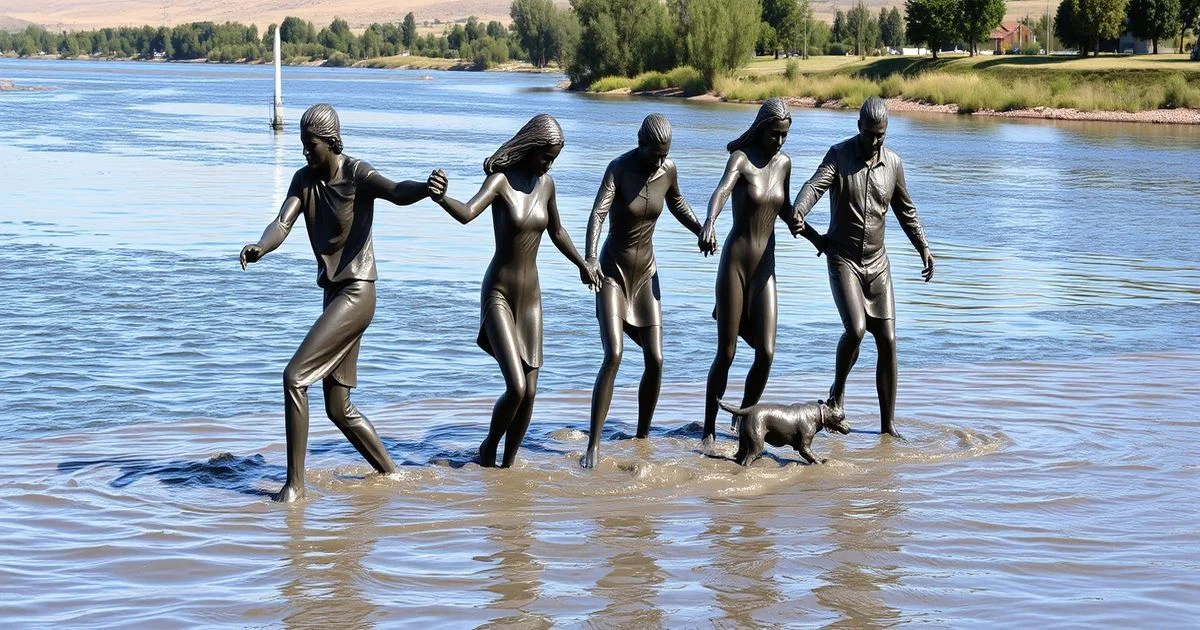
The profound impact of the 2016 rescue continued to echo through the years, culminating in a desire to permanently commemorate this powerful moment. In March 2026, a decade after the original incident, an art installation was unveiled on the Ulken River embankment, precisely at the site where the heroic human chain had formed. This bronze sculpture, titled "Unity" by some accounts, was designed to visually recreate the rescue scene, ensuring that its message of solidarity would endure for future generations.
The project was initiated by ForteBank JSC and the Progression agency, part of the DASM group, and received support from the Almaty Department for the Development of Public Spaces. Significantly, the installation was entirely funded through private donations, underscoring a collective societal commitment to honoring such acts of compassion without relying on public city budgets. This funding model further highlighted the community-driven nature of the tribute, mirroring the spontaneous, grassroots effort of the original rescue itself.
The Visionary Artist Behind the Sculpture
The task of transforming this iconic moment into a tangible, lasting artwork fell to Yerbosyn Meldibekov, a highly respected contemporary artist from Kazakhstan. Meldibekov's works are held in prestigious international museum collections, including M HKA | Museum of Contemporary Art in Antwerp, Burger Collection and M+ Museum in Hong Kong, and the National Museum of Singapore. His artistic practice often engages with historical documents, images, and landscapes, reinterpreting them through the lens of memory and identity.
For the human chain rescue sculpture, Meldibekov crafted a composition that depicts a series of figures, linked hand-in-hand, embodying the very essence of mutual support and collective action. A particularly engaging feature of the sculpture is the outstretched hand of the final figure, which extends beyond a railing. This design choice allows visitors to physically interact with the artwork, symbolically joining the human chain and becoming part of the narrative of humanity and assistance. This interactive element not only makes the monument a static tribute but an immersive experience, inviting contemplation and participation.
The Symbolism of "Unity" and Collective Action
The sculpture stands as a powerful symbol of unity, mutual aid, and the inherent human willingness to help others in times of need. It encapsulates the idea that "what one person cannot do alone becomes possible when we act together," as articulated by a ForteBank JSC spokesperson. In a world often characterized by division, the "Unity" installation offers a compelling counter-narrative, celebrating the moments when communities come together, regardless of background or circumstance, to overcome challenges.
The narrative embedded within the sculpture extends beyond the immediate rescue of a man and his dog. It speaks to broader societal values:
- Solidarity: The act of strangers linking arms underscores a profound sense of shared responsibility and connection within a community.
- Compassion: The initial impulse to save a struggling animal, and then a human, highlights the empathetic core of humanity.
- Courage: The individuals who formed the chain put themselves at potential risk, demonstrating courage in the face of danger.
- Collective Action: The monument serves as a reminder that even small, uncoordinated actions, when combined, can lead to extraordinary outcomes and meaningful change.
This emphasis on everyday heroism and the power of spontaneous cooperation distinguishes the "Unity" sculpture. Unlike monuments dedicated to grand historical figures or national triumphs, this installation honors an anonymous group of ordinary people performing an extraordinary act of kindness.
Broader Context: Public Art and Animal Rescue in Kazakhstan
The installation of the human chain sculpture is not an isolated event but rather part of a broader trend of public art in Kazakhstan that celebrates acts of bravery, especially those involving animals. Prior to this, murals were painted in Almaty (2019) and Karaganda (2020) to honor forestry inspector Yerlan Nurgaliyev. Nurgaliyev was tragically killed by poachers in 2019 while pursuing individuals illegally hunting saiga antelopes. These murals depict him holding a rescued saiga calf, based on a photograph that went viral after his death, further cementing the nation's appreciation for those who protect its wildlife and show profound compassion.
Kazakhstan's landscape of public art also features other notable works, such as the upcoming "Nades" sculpture by Spanish artist Jaume Plensa for the Almaty Museum of Arts, portraying the head of a young woman symbolizing female strength and dignity. Another example is the sculpture of mountaineer Anatoli Boukreev at Medeu, recognizing his heroism. However, not all public art installations have been met with universal acclaim, as seen with a controversial 40-foot-tall squirrel sculpture in Almaty that sparked public outrage over its use of public funds. This aligns with broader discussions on the impact of traditional festivals on modern society and how communities engage with cultural expressions. The human chain rescue sculpture, funded privately and celebrating a universally appreciated act of kindness, appears to have resonated positively with the public, even going viral on social media before its official opening.
Public Engagement and Resonating Impact
The interactive nature of the "Unity" sculpture has been a key factor in its widespread positive reception. By allowing passersby to physically grasp the outstretched hand of the final figure, the artwork transcends its role as a mere observation point and transforms into a direct invitation for participation. This engagement fosters a personal connection to the story, reinforcing the idea that anyone can be a part of a collective act of humanity.
The unveiling of the sculpture itself reignited interest in the original 2016 rescue video, leading to a fresh wave of social media discussions and renewed viral sharing. Users across various platforms expressed sentiments of pride, nostalgia, and a general affirmation of human decency, hailing the gesture as a crucial reminder of everyday humanity. Comments from the public reflect a deep appreciation for "what a society chooses to value," highlighting the monument's role in inspiring hope and encouraging people to believe in the power of small, collective actions. The sculpture has become a talking point not just in Kazakhstan but across the global internet, demonstrating the enduring appeal of stories centered on kindness and teamwork.
The Lasting Legacy of the Viral Human Chain Rescue Honored with Kazakhstan Sculpture
The installation of the "Unity" sculpture along the Ulken River in Almaty marks a significant moment in Kazakhstan's cultural landscape. It stands as a permanent fixture, not just of bronze and stone, but of a deeply ingrained memory of selfless action and community spirit. The sculpture ensures that the powerful message of solidarity, mutual assistance, and the inherent goodness of people will continue to resonate for generations to come. It serves as a beacon, reminding citizens and visitors alike of the extraordinary impact ordinary individuals can have when they choose to come together in moments of crisis.
The viral human chain rescue honored with Kazakhstan sculpture has become more than just an art piece; it is a narrative of courage cast in metal, an enduring symbol of compassion that transcends time and language. In an era often dominated by complex global challenges, this monument provides a simple yet profound message: that acts of kindness, however small, have the power to inspire, unite, and leave an indelible mark on the collective human consciousness. It is a powerful testament to the idea that a truly heroic tale is one where humanity itself is the protagonist, extending a hand to those in need.
Frequently Asked Questions
Q: What specific event does the "Unity" sculpture in Almaty commemorate?
A: The "Unity" sculpture commemorates a dramatic human chain rescue that took place in 2016 on the Ulken River in Almaty. During this event, ordinary citizens linked arms to save a man and his dog from treacherous floodwaters, an act that quickly went viral globally.
Q: Who is the artist behind the human chain rescue sculpture?
A: The sculpture was created by Yerbosyn Meldibekov, a highly respected contemporary artist from Kazakhstan. Meldibekov is known for his works that often reinterpret historical documents and images through the lens of memory and identity.
Q: How was the "Unity" sculpture project funded?
A: The project was entirely funded through private donations, with initiation by ForteBank JSC and the Progression agency. This ensured that the tribute to community spirit was made possible without utilizing public city budgets.