Urgent Climate Warning: Antarctic Ice Melt Accelerates – A Global Threat
Urgent Climate Warning: Antarctic Ice Melt Accelerates – A Global Threat
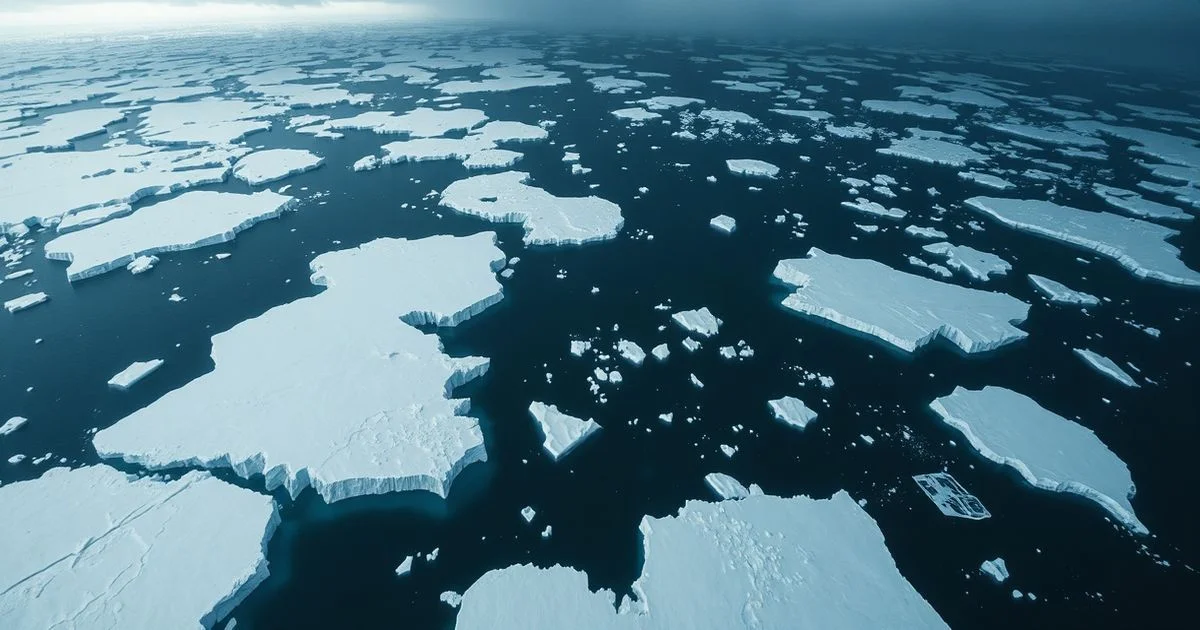
Recent scientific findings paint a stark picture: an urgent climate warning: Antarctic ice melt accelerates at an alarming rate, posing a profound global threat. This accelerating melt, particularly in the vulnerable West Antarctic Ice Sheet, has far-reaching implications for sea levels, coastal communities, and the delicate balance of our planet's climate systems. As temperatures rise and ocean currents shift, the Antarctic continent, a colossal storehouse of freshwater, is undergoing changes that demand immediate attention and understanding.
- Urgent Climate Warning: Antarctic Ice Melt Accelerates – A Global Threat
- The Accelerating Pace of Antarctic Ice Loss
- Underlying Causes and Mechanisms
- Expert Consensus and Future Projections
- The "Greenlandification" of Antarctica
- Broader Impacts of Antarctic Ice Melt
- Monitoring and Research Efforts
- Frequently Asked Questions
- Conclusion: Addressing the Urgent Climate Warning: Antarctic Ice Melt Accelerates
- Further Reading & Resources
The Accelerating Pace of Antarctic Ice Loss
Antarctica, home to approximately 90% of the world's freshwater, is experiencing an unprecedented decline in its ice mass. This ice loss is not only significant in volume but is also speeding up. Satellite data from missions like NASA's GRACE and GRACE Follow-On reveal that the Antarctic ice sheet has been losing mass since 2002, with an average rate of about 135 billion tons per year. Other estimates suggest an average loss of approximately 150 billion tons per year. This rate of loss has dramatically increased over time, with some studies indicating that by 2020, the speed of ice loss in Antarctica had multiplied sixfold over three decades.
The acceleration is particularly concentrated in West Antarctica and the Antarctic Peninsula, though parts of East Antarctica are also showing signs of increased melting. While some regions of East Antarctica have historically been considered more stable, new research highlights that even here, glaciers are accelerating at rates similar to those in West Antarctica, with regions like the Totten Glacier showing rapid melting. Between 1979 and the end of 2023, the Antarctic Ice Sheet lost a staggering total of 4,817 ± 534 gigatons of ice, contributing 13.4 ± 1.5 mm to global mean sea level rise. The majority of this mass loss, about 83%, originates from West Antarctica.
Key Glaciers Under Threat
Among the most closely watched areas is the Amundsen Sea Embayment in West Antarctica, home to the "Doomsday Glacier," or Thwaites Glacier, and the Pine Island Glacier. These glaciers are critical because of their rapid rate of change and their potential impact on global sea levels.
The Thwaites Glacier, roughly the size of Florida, is considered the most unstable glacier in Antarctica. Recent research indicates it is melting faster than previously thought, with warm seawater intruding miles beneath the glacier, making it more vulnerable to ocean warming. This widespread contact between warm seawater and grounded ice will induce vigorous melt over kilometers. Scientists warn that tidal action on the underside of the Thwaites Glacier will "inexorably" accelerate melting this century, potentially destabilizing the entire West Antarctic Ice Sheet. Its complete collapse could raise global sea levels by approximately 65 centimeters (26 inches). However, if its collapse leads to the eventual loss of the entire West Antarctic Ice Sheet, sea levels could rise by 3.3 meters.
Underlying Causes and Mechanisms
The primary driver behind this escalating ice melt is the warming ocean. Relatively warm ocean water amplifies melting underneath the ice shelves, which are the floating extensions of the grounded ice sheet. This "basal melting," occurring where the ocean meets the ice, is a major factor in Antarctic Ice Sheet instability and ice loss.
Studies have shown that this basal melting often occurs at small spatial and temporal scales, making it challenging to model accurately. However, new research, including high-resolution ocean models, highlights two distinct modes of melting across Antarctica, with East Antarctic ice shelves experiencing strong shallow melting during summer when sea ice retreats and warm ocean water flows beneath them. These seasonal dynamics have been largely overlooked by climate models but could have significant implications for future sea-level rise projections.
Another crucial factor is the retreat of "grounding lines" – the boundaries where ice anchored to bedrock begins to float on the ocean. These grounding lines are highly sensitive to sea-level rise and are key indicators of ice-sheet stability and ice mass loss. Over the past three decades, Antarctica has lost nearly 5,000 square miles (12,950 square kilometers) of grounded ice, an area roughly twice the size of Delaware. The largest changes have been detected along the Amundsen Sea coast of West Antarctica and in the Getz sector, where the grounding line in some places pulled back by as much as 26 miles (42 km) during the study period. This retreat is most pronounced where deep underwater pathways funnel warm ocean water toward the base of glaciers.
Expert Consensus and Future Projections
The scientific community broadly agrees on the gravity of the situation. The Intergovernmental Panel on Climate Change (IPCC) and numerous independent studies consistently point to accelerated ice loss from Antarctica as a critical contributor to global sea-level rise. For years, the Greenland and Antarctic ice sheets have been melting faster than predicted by the IPCC.
Research analyzing the Antarctic Ice Sheet's behavior over the past 800,000 years suggests that even a minimal increase in ocean temperatures above today's levels, or the sustained continuation of current temperatures, could trigger the irreversible collapse of the West Antarctic Ice Sheet (WAIS). Once such a "tipping point" is crossed, destabilization can occur in just a few decades, setting in motion feedback loops that amplify heat absorption and ice loss, making it nearly impossible to halt. While a full collapse could take centuries to millennia, the commitment to significant ice loss could happen much sooner.
Projections for global sea-level rise vary depending on emissions scenarios and the complexity of ice sheet models. The 2021 IPCC Report predicted sea levels would rise between 11 and 21 inches (28-55 cm) by the end of the century, but noted that a rise of over 6 feet (around 180 cm) cannot be ruled out under a worst-case scenario. These projections might be significant underestimates, as some scientific models have not fully considered the newly identified accelerated melting rates.
The "Greenlandification" of Antarctica
Scientists are observing a process dubbed "Greenlandification" in Antarctica, referring to the unprecedented retreat of Greenland's outlet glaciers and longer surface melt seasons. Like Greenland, Antarctica was initially expected to remain more stable despite climate change. However, recent Antarctic research contradicts this, showing rapidly increasing surface melt, shrinking sea ice, and higher rates of iceberg calving from ice shelves.
The Amundsen Sea Embayment in Western Antarctica, specifically the Pine Island and Thwaites Glaciers, has seen a 50% acceleration in ice flow since the 1990s and 2000s, respectively, mirroring the melting pattern of Greenland's Sermeq Kujalleq Glacier. This increasing resemblance between Antarctica and Greenland in terms of accelerating ice sheet mass loss is a growing source of concern among researchers.
Broader Impacts of Antarctic Ice Melt
The consequences of accelerating Antarctic ice melt extend far beyond rising sea levels.
Global Sea Level Rise and Coastal Communities
The most immediate and widely recognized impact is the contribution to global sea-level rise. The Antarctic Ice Sheet holds enough water to raise global sea levels by about 58 meters (200 feet) if it melted entirely. Even a modest sea-level rise of a few feet would displace approximately 230 million people living within about 3 feet of the high tide line today. Rising sea levels contaminate freshwater sources, inundate farmlands with saltwater, and lead to increased coastal flooding, posing a significant threat to low-lying communities worldwide. These environmental challenges often necessitate broader discussions on global policy and diplomacy, similar to examining The Role of Soft Power in 21st-Century Diplomacy.
Ocean Circulation and Climate Stability
Ice loss from Antarctica generates fresh meltwater at a rate of 1100–1500 billion tons per year. This meltwater dilutes the saline Antarctic bottom water, weakening the lower cell of the Southern Ocean overturning circulation. This process, known as freshening, leads to increased stratification and stabilization of the ocean layers, which can have the largest impact on the long-term properties of Southern Ocean circulation. The Southern Ocean is disproportionately and increasingly important in global ocean heat increase. Disruptions to this ocean conveyor belt could have dramatic consequences for global climate stability, impacting phenomena like atmospheric pressure, as explored in Understanding the Physics Behind Atmospheric Pressure. A new study predicts that the melting of Antarctic ice could strengthen the Antarctic Slope Current (ASC) by about 50% by 2050, potentially altering the transport of heat towards the continent.
Ecosystems and Wildlife
The abrupt changes unfolding in Antarctica also have devastating consequences for the region's wildlife and ocean ecosystems. The loss of Antarctic sea ice, for example, brings a heightened extinction risk for emperor penguins, whose chicks depend on stable sea ice habitat before growing waterproof feathers. Early sea ice breakout events have already led to the loss of entire colonies of chicks and multiple breeding failures. Krill and other penguin and seal species are also at risk, while keystone phytoplankton species are increasingly affected by ocean warming and acidification.
Feedback Loops and Irreversible Change
The changes in Antarctica are "interlinked" and have global climate ripple effects. Melting in one area can trigger or accelerate ice loss in others through large-scale ocean circulation patterns, creating a "cascading positive feedback". This means that the ice sheet can undergo self-reinforcing, widespread melting once a certain threshold is crossed, making some changes irreversible. Scientists stress that once key parts of the ice sheet begin to weaken, feedback processes can take over, allowing retreat to continue long after the initial warming. Such complex interconnected systems, where small changes can lead to large-scale consequences, are also observed in fields such as stellar evolution, as detailed in The Lifecycle of Stars: A Guide to Stellar Evolution.
Monitoring and Research Efforts
Understanding the full scope and speed of Antarctic ice melt is crucial for preparing coastal communities threatened by sea-level rise. Scientists are employing advanced technologies, including satellite radar from space, to pinpoint seawater movements and track changes in ice thickness and surface velocity. Missions like GRACE and GRACE Follow-On are continually updated as observations become available, providing vital data on ice mass changes.
New research is also focusing on areas previously difficult to study, such as the tidally controlled grounding zone of the Thwaites Glacier, where warm seawater intrusions significantly impact melt rates. Grounding line shifts are being mapped comprehensively across all of Antarctica over long time spans with unprecedented precision. Furthermore, studies are drilling deep into the subglacial sediment to uncover geological records of past ice sheet behavior, offering critical insights into how the West Antarctic Ice Sheet responded to warmer climates in the past.
Frequently Asked Questions
Q: What is the Thwaites Glacier, and why is it important?
A: The Thwaites Glacier, often called the "Doomsday Glacier," is a rapidly melting glacier in West Antarctica. Its potential collapse could significantly raise global sea levels, destabilizing the entire West Antarctic Ice Sheet.
Q: How much has Antarctic ice contributed to sea level rise?
A: Between 1979 and 2023, the Antarctic Ice Sheet lost approximately 4,817 gigatons of ice, contributing 13.4 millimeters to global mean sea level rise. This rate is accelerating dramatically.
Q: What are the broader impacts of Antarctic ice melt beyond sea level rise?
A: Beyond sea-level rise, meltwater can disrupt ocean circulation patterns, affecting global climate stability. It also threatens unique polar ecosystems and wildlife, such as emperor penguins and krill, and can alter global weather patterns.
Conclusion: Addressing the Urgent Climate Warning: Antarctic Ice Melt Accelerates
The scientific evidence is clear: the urgent climate warning: Antarctic ice melt accelerates dramatically, demanding a global response. The rapid and interconnected changes observed across Antarctica's ice, oceans, and ecosystems highlight the profound threat posed by human-caused climate warming. While the exact timing of some catastrophic scenarios remains uncertain, the commitment to significant, long-term sea-level rise and ecosystem disruption is becoming increasingly likely if current trends continue.
To avert the most severe consequences, scientists stress that only rapid and decisive action on carbon emissions can slow down or potentially avoid these newly discovered tipping points. The fate of our planet's coastlines and the stability of global climate systems depend on how quickly humanity can reduce greenhouse gas emissions and protect this vital polar region.