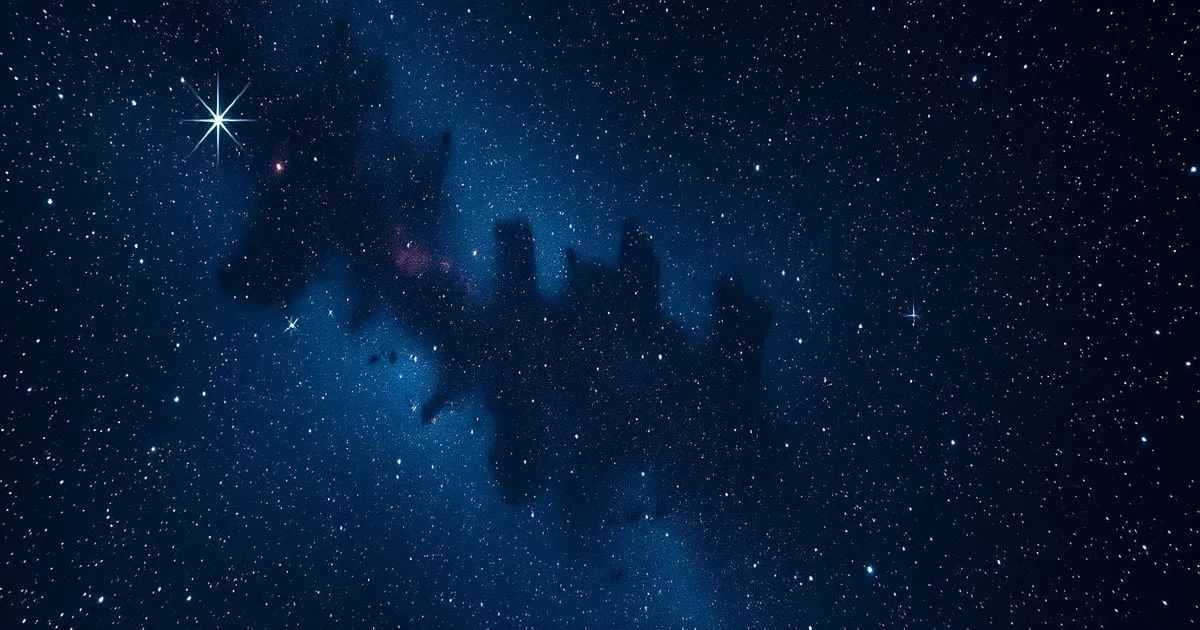
The night sky, a timeless spectacle, has captivated humanity for millennia. From ancient navigators to modern astrophysicists, the distant pinpricks of light scattered across the inky blackness continue to inspire wonder, curiosity, and a profound sense of our place in the cosmos. But what exactly are these celestial beacons, and what stories do they tell?
- More Than Just Twinkling Lights: The Science Behind Stars
- A Tapestry of Light: Types of Stars
- Navigating the Cosmic Ocean: Constellations & Celestial Guides
- The Silent Enemy: Light Pollution's Impact
- Embracing the Darkness: Tips for Stargazing
- Capturing the Cosmos: A Glimpse into Astrophotography
- Conclusion: Look Up and Wonder
More Than Just Twinkling Lights: The Science Behind Stars
When we gaze upon the night stars, we're not just seeing random points of light. We're witnessing the raw power of nuclear fusion, the birthplaces of elements, and the building blocks of galaxies. Each star is a distant sun, a colossal sphere of plasma, primarily hydrogen and helium, held together by its own immense gravity.
At their core, temperatures and pressures are so extreme that hydrogen atoms fuse to form helium, releasing an extraordinary amount of energy in the process. This energy radiates outwards, making the star shine brilliantly across unimaginable distances.
The Vastness of Space and Starlight's Journey
The light we perceive from even the closest stars has traveled for years, decades, or even centuries to reach our eyes. This incredible journey means that when you look up, you're essentially looking back in time.
Consider the star Proxima Centauri, our closest stellar neighbor beyond the Sun, approximately 4.24 light-years away. A light-year is the distance light travels in one Earth year, roughly 9.46 trillion kilometers (5.88 trillion miles).
To put this into perspective, let's look at a simple conceptual calculation:
# Illustrative Python code for understanding light travel time
# (Note: A light-year *is* already a measure of time-distance,
# this snippet serves to demonstrate the underlying calculation.)

distance_light_years = 4.24  # Distance to Proxima Centauri
light_speed_km_per_sec = 299792.458 # Speed of light in km/s
seconds_per_year = 31557600 # Approximate seconds in an Earth year

# To calculate actual distance in km:
distance_km = distance_light_years * light_speed_km_per_sec * seconds_per_year

# The time light takes to travel this distance (which is, by definition, the light-years value)
travel_time_seconds = distance_km / light_speed_km_per_sec
travel_time_years = travel_time_seconds / seconds_per_year

print(f"Light from Proxima Centauri, {distance_light_years} light-years away,")
print(f"takes approximately {travel_time_years:.2f} years to reach Earth.")
print("\nThis means we see Proxima Centauri as it was 4.24 years ago!")
This simple fact underscores the profound historical record embedded in the night sky.
A Tapestry of Light: Types of Stars
Not all stars are created equal. They vary dramatically in size, temperature, color, and luminosity, forming a cosmic palette of stellar diversity.
- Main Sequence Stars: Like our Sun, these stars are in the prime of their lives, fusing hydrogen into helium. They range from small, cool red dwarfs to massive, hot blue-white stars.
- Red Giants & Supergiants: Towards the end of their lives, stars like our Sun expand dramatically, becoming cooler and redder. More massive stars evolve into even larger red supergiants.
- White Dwarfs: The dense, hot remnants of stars like our Sun after they've shed their outer layers. They slowly cool over billions of years.
- Neutron Stars: The incredibly dense cores left behind after massive stars explode as supernovae. A teaspoon of neutron star material would weigh billions of tons.
- Black Holes: While not stars, they are the ultimate remnants of the most massive stars, whose gravitational pull is so intense that nothing, not even light, can escape.
Navigating the Cosmic Ocean: Constellations & Celestial Guides
For millennia, humans have connected the dots between stars, forming patterns known as constellations. These aren't physically related groups of stars but rather helpful visual aids for mapping the sky. From Orion the Hunter to Ursa Major (the Great Bear), constellations have served as calendars, navigational tools, and inspiration for countless myths and legends.
Modern astronomy still uses constellations to define regions of the sky and locate celestial objects. Learning a few prominent constellations is an excellent first step for any aspiring stargazer.
The Silent Enemy: Light Pollution's Impact
Tragically, the increasing glow of artificial light from our cities and towns is steadily eroding our view of the night sky. Light pollution, the excessive and misdirected use of artificial light, scatters into the atmosphere, creating a skyglow that washes out all but the brightest stars.
This isn't just an aesthetic loss; it has significant ecological consequences, disrupting nocturnal wildlife, and it impedes scientific research. Preserving dark skies is crucial for future generations to experience the wonder of the cosmos. Organizations like the International Dark-Sky Association (IDA) are dedicated to combating light pollution and promoting responsible lighting practices.
Embracing the Darkness: Tips for Stargazing
Ready to reconnect with the night stars? Here are some tips to enhance your stargazing experience:
- Find a Dark-Sky Location: Get away from city lights. National parks, rural areas, or designated Dark Sky Parks offer the best views.
- Check the Moon Phase: A bright full moon can wash out fainter stars. Aim for nights around the new moon for optimal viewing.
- Allow Your Eyes to Adapt: It takes 20-30 minutes for your eyes to fully adjust to the dark. Avoid looking at bright screens during this time. Use a red-light flashlight if you need illumination.
- Dress Warmly: Even on a mild evening, temperatures can drop significantly when you're stationary for extended periods.
- Use Star Charts or Apps: Free mobile apps like Stellarium, SkyView Lite, or Sky Tonight use your phone's GPS to show you what you're looking at in real-time. Traditional planispheres are also excellent tools.
- Binoculars are Your Friend: You don't need an expensive telescope to start. A good pair of binoculars (e.g., 7x50 or 10x50) can reveal hundreds more stars, the moons of Jupiter, and even nebulae.
Capturing the Cosmos: A Glimpse into Astrophotography
For those who want to do more than just observe, astrophotography offers a rewarding challenge. With modern cameras and some basic equipment, you can capture breathtaking images of the Milky Way, star trails, and even deep-sky objects. While it's a technical discipline requiring specialized skills, the results are truly spectacular and serve as a powerful reminder of the beauty above.
Conclusion: Look Up and Wonder
The night stars are more than just distant suns; they are a profound connection to the universe, a canvas of scientific marvels, and a source of endless inspiration. By understanding their nature, protecting our dark skies, and taking the time to simply look up, we can rekindle that ancient sense of wonder and deepen our appreciation for the cosmos that surrounds us. So, on the next clear night, step outside, find a quiet spot, and let the infinite beauty of the night stars remind you of the vast, intricate, and utterly magnificent universe we call home.