Understanding the Lifecycle of Stars: From Nebula to Supernova
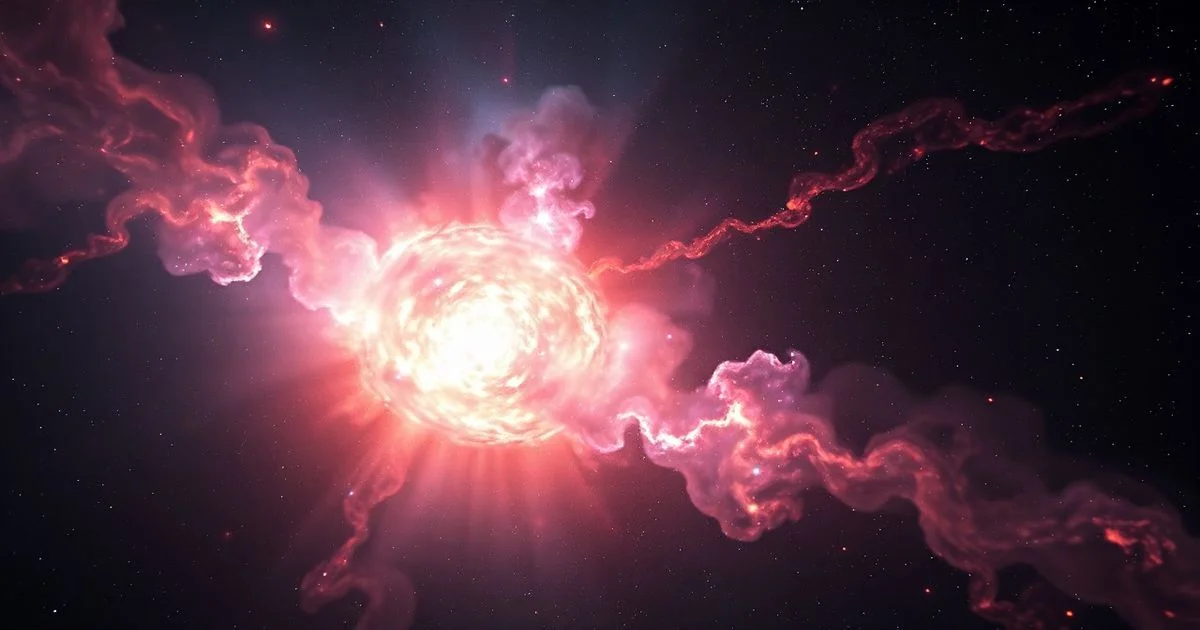
The cosmos is not a static void but a dynamic engine of creation and destruction, governed by the laws of thermodynamics and nuclear physics. For any enthusiast of astrophysics, understanding the lifecycle of stars: from nebula to supernova is essential to grasping how the heavy elements in our own bodies were forged in the hearts of distant furnaces. This stellar journey spans billions of years, moving through phases of gravitational collapse, nuclear ignition, and eventual cataclysmic expiration. By studying these lifecycle stages, we gain insight into the evolution of galaxies and the very fabric of the universe itself, where gravity and pressure engage in a cosmic dance that lasts eons.
- The Genesis: Giant Molecular Clouds and the Nebula Phase
- The Main Sequence: The Longest Chapter
- Core Transitions: Understanding the Lifecycle of Stars: From Nebula to Supernova
- The Cataclysm: Supernova and Nucleosynthesis
- Stellar Remnants: What Remains After the Blast?
- Real-World Applications: How We Map the Lifecycle
- Future Outlook: The Era of Stellar Decay
- Conclusion
- Frequently Asked Questions
- Further Reading & Resources
The Genesis: Giant Molecular Clouds and the Nebula Phase
Every star begins its journey within a Giant Molecular Cloud (GMC), often referred to as a "stellar nursery." These nebulae are vast regions of interstellar space filled with gas—primarily hydrogen and helium—and microscopic dust particles. While these clouds can remain stable for millions of years, external triggers are required to initiate the process of star formation. Without these triggers, the gas remains diffuse, and the potential for a star remains locked within the cold, dark reaches of space.
Types of Nebulae and Their Roles
Not all nebulae are created equal. In the context of star formation, we primarily look at:
-
Emission Nebulae: High-temperature clouds of ionized gas that emit their own light in various colors, often ionized by the very stars they have just birthed.
-
Reflection Nebulae: These do not emit their own light but reflect the light of nearby stars. They often appear blue because blue light is scattered more efficiently by the dust particles.
-
Dark Nebulae: Dense clouds of molecular gas and dust that are so opaque they block the light from stars behind them. These are often the actual sites where the densest clumps of gas reside.
Gravitational Instability and Jeans Mass
The transition from a diffuse cloud to a structured star begins when a region of the nebula exceeds what physicists call the "Jeans Mass." This occurs when the internal gas pressure can no longer resist the inward pull of gravity. Understanding the basics of orbital mechanics for Mars missions often involves similar principles of gravitational attraction and velocity, albeit on a much smaller, planetary scale.
Triggers for this collapse often include:
-
Shockwaves from nearby supernova explosions.
-
Galactic collisions or tidal interactions between passing galaxies.
-
The ionizing radiation from existing massive stars that compresses surrounding gas.
As the cloud collapses, it fragments into smaller clumps. Each clump becomes a hot, dense core known as a protostar. During this phase, the object is not yet a star; it is an embryonic mass shrouded in a cocoon of dust, radiating energy in the infrared spectrum as gravitational potential energy converts into heat.
The Protostar and T Tauri Phase
As the protostar continues to accumulate mass from its surrounding disk, its core temperature rises. Once the temperature reaches approximately 1 million Kelvin, the object enters the T Tauri phase. At this point, the star is visible but has not yet achieved the pressure required for sustained hydrogen fusion.
It clears away the surrounding gas and dust through powerful stellar winds, revealing the young star. The duration of this phase depends entirely on the initial mass of the cloud fragment. More massive stars move through this embryonic stage much faster than low-mass stars like our Sun. During this time, the star follows what is known as the "Hayashi Track" on the Hertzsprung-Russell diagram, gradually decreasing in luminosity as it contracts.
The Main Sequence: The Longest Chapter
Once the core temperature hits 10 million Kelvin, hydrogen nuclei begin to fuse into helium. This marks the "birth" of the star and its entry onto the Main Sequence of the Hertzsprung-Russell (H-R) diagram. This is the most stable and longest-lasting phase of a star’s life, representing about 90% of its total existence.
Hydrostatic Equilibrium: A Delicate Balance
The stability of a main-sequence star is a delicate balancing act known as hydrostatic equilibrium. Gravity pulls inward, attempting to crush the star, while the outward thermal pressure from nuclear fusion pushes back. If the fusion rate increases, the star expands and cools, naturally slowing the fusion; if it slows, the star contracts and heats up, accelerating fusion.
Forces in Equilibrium Data:
Inward Force: Gravity (F_g) = G * (m1 * m2) / r^2
Outward Force: Radiation Pressure (P_rad) + Gas Pressure (P_gas)
Status: Hydrostatic Equilibrium
Net Result: Stable Stellar Radius and Luminosity
As long as the star has hydrogen fuel to burn in its core, this balance remains intact. Our Sun has been in this state for about 4.6 billion years and is expected to remain here for another 5 billion.
The Role of Stellar Mass in Evolution
Mass is the single most important factor determining a star's fate. Astronomers measure this in solar masses ($M_{\odot}$).
-
Low-Mass Stars (< 0.5 $M_{\odot}$): Known as Red Dwarfs, these burn their fuel so slowly that they can stay on the main sequence for trillions of years. Because they are fully convective, they use all their hydrogen fuel, not just the gas in the core.
-
Intermediate-Mass Stars (0.5 to 8 $M_{\odot}$): Stars like our Sun. They burn hydrogen for roughly 10 billion years. They primarily use the Proton-Proton (PP) chain reaction to convert hydrogen into helium.
-
High-Mass Stars (> 8 $M_{\odot}$): These are the "rock stars" of the universe. They live fast and die young, exhausting their hydrogen in a few million years. These stars utilize the CNO (Carbon-Nitrogen-Oxygen) cycle, which is far more efficient at higher temperatures.
Core Transitions: Understanding the Lifecycle of Stars: From Nebula to Supernova
To truly appreciate the transition from stability to destruction, we must look at the nucleosynthesis processes that occur as a star ages. When the hydrogen in the core is exhausted, the star leaves the main sequence, and its internal structure undergoes a radical transformation. This transition is the pivotal moment in understanding the lifecycle of stars: from nebula to supernova.
The Red Giant Phase
When the core runs out of hydrogen, the "outward" pressure drops. Gravity takes over, compressing the core and heating it up. Meanwhile, the outer layers of the star expand and cool, turning the star into a Red Giant. This expansion is so significant that when the Sun reaches this stage, it will likely consume Mercury, Venus, and possibly Earth.
In the core, temperatures eventually reach 100 million Kelvin, triggering the "Triple Alpha Process." This is the fusion of three helium nuclei into one carbon nucleus. For a star like our Sun, this is the beginning of the end. The star becomes unstable, pulsating and eventually shedding its outer layers into space, creating a beautiful "Planetary Nebula." What remains is a white dwarf—a dense, cooling ember of carbon and oxygen supported by electron degeneracy pressure.
Massive Stars and the Shell Fusion Model
For stars significantly larger than the Sun, the story is much more violent and complex. These stars don't stop at carbon. Because their gravity is so intense, they can compress their cores to even higher temperatures, initiating a series of fusion cycles that produce increasingly heavy elements:
-
Neon Burning: Occurs after carbon exhaustion, creating oxygen and magnesium.
-
Oxygen Burning: Produces sulfur, silicon, and other intermediate elements.
-
Silicon Burning: The final stage of fusion, producing iron (Fe).
This creates an "onion-skin" model where different elements are fused in concentric shells around the core. However, iron is the ultimate "poison" for a star. Unlike hydrogen or helium, fusing iron consumes energy rather than releasing it.
The Cataclysm: Supernova and Nucleosynthesis
The appearance of iron in the core signals the immediate death of a massive star. Without the outward pressure of fusion to support it, the star's core—which may be the size of Earth but with the mass of the Sun—collapses in less than a second.
The Physics of Core Collapse (Type II Supernova)
When the core collapses, it reaches densities comparable to an atomic nucleus. Protons and electrons are crushed together to form neutrons and neutrinos. The collapse is suddenly halted by "neutron degeneracy pressure." The infalling outer layers of the star hit this ultra-dense core and bounce off, creating a titanic shockwave that moves outward at significant fractions of the speed of light.
This shockwave rips the star apart in a Type II Supernova. In these few seconds, the explosion is so bright it can outshine an entire galaxy. It is during this explosion that elements heavier than iron, such as gold, uranium, and silver, are synthesized through rapid neutron capture (the r-process).
Supernova Taxonomy
While we focus on the lifecycle of a single massive star, it is important to distinguish between the two primary types of supernovae that astronomers observe:
Type I Supernovae:
These occur in binary star systems. A white dwarf pulls material from a companion star until it exceeds the Chandrasekhar Limit (roughly 1.44 $M_{\odot}$), triggering a runaway thermonuclear explosion. These are used as "standard candles" to measure galactic distances.
Type II Supernovae:
These are the result of the core collapse of a single massive star, as described above. They are characterized by the presence of hydrogen in their spectra, which comes from the star's outer layers that were not consumed by fusion before the blast.
Stellar Remnants: What Remains After the Blast?
After the supernova clears, the star doesn't simply disappear. Depending on the remaining mass of the core, one of two exotic objects is formed. These objects represent the most extreme states of matter in the known universe.
Neutron Stars and Pulsars
If the remaining core is between 1.4 and approximately 3 solar masses, it becomes a neutron star. These objects are incredibly dense; imagine the mass of two Suns squeezed into a sphere the size of a small city (about 20 kilometers in diameter).
-
Density: A single teaspoon of neutron star material would weigh approximately 1 billion tons on Earth.
-
Pulsars: Some neutron stars rotate at incredible speeds (hundreds of times per second), emitting beams of radiation from their magnetic poles. As these beams sweep across Earth, we detect them as "pulses" of radio waves.
-
Magnetars: A subset of neutron stars with magnetic fields a quadrillion times stronger than Earth's, capable of distorting the shapes of atoms.
Black Holes: The Ultimate Singularity
If the remaining core mass exceeds approximately 3 solar masses (the Tolman-Oppenheimer-Volkoff limit), not even neutron degeneracy pressure can stop the collapse. Gravity wins completely, crushing the core into a singularity.
The core collapses into a point of infinite density and zero volume. Around this point is the Event Horizon, the "point of no return" where the escape velocity exceeds the speed of light. Black holes represent the final stage of the most massive stars in the universe and serve as the anchors for many galactic centers.
Real-World Applications: How We Map the Lifecycle
Our ability to verify these stages depends on advanced technology and observation techniques. Modern astrophysics utilizes more than just visible light to peer into the hearts of nebulae. For those starting out, the fundamentals of amateur astronomical observation provide the necessary foundation to appreciate these celestial phenomena through a telescope.
Multi-Messenger Astronomy
By combining data from different "messengers," we can construct a complete picture of stellar evolution. This multi-faceted approach allows us to see through dust and into the very hearts of collapsing stars.
-
Electromagnetic Spectrum: The James Webb Space Telescope (JWST) uses infrared sensors to look through the dust of nebulae to see protostars. X-ray observatories like Chandra look at the high-energy remnants of supernovae.
-
Gravitational Waves: Facilities like LIGO and Virgo detect the ripples in spacetime caused by the collision of neutron stars or black holes, providing data on the "afterlife" of stars.
-
Neutrino Detection: When a supernova occurs, it releases a massive burst of neutrinos. Detecting these particles allows us to see into the core collapse in real-time, often before the light from the explosion even reaches us.
The Galactic Chemical Evolution
Understanding these lifecycles is not just academic; it explains our origin. Every atom of oxygen we breathe and every gram of iron in our blood was once inside a star. Supernovae act as the "delivery system" of the universe, scattering these elements back into the interstellar medium to be incorporated into the next generation of stars and planets. This process is known as chemical enrichment, and without it, life as we know it would be impossible.
Future Outlook: The Era of Stellar Decay
As the universe continues to expand, the rate of star formation is gradually slowing down. We are currently living in the "Stelliferous Era," the age of stars, but this will not last forever.
The Long Decay
In about 100 trillion years, the last of the red dwarfs will exhaust their fuel. The universe will enter the "Degenerate Era," populated only by white dwarfs, neutron stars, and black holes. Eventually, even these will decay or merge.
However, the study of the current stellar lifecycle provides the roadmap for predicting this eventual "Heat Death" of the universe. By mapping the transition from gas to plasma to remnant, we define the timeline of our cosmic history. Even the concept of building scalable microservices architecture shares a thematic link with the universe's need for scalable systems of energy distribution, though the universe’s systems eventually reach their limits.
Conclusion
The cosmos operates on a scale that humbles human experience, yet it is governed by predictable physical constants. From the cold, dark gases of a molecular cloud to the blinding brilliance of a core-collapse explosion, the journey of a star is a testament to the power of gravity and nuclear force.
By understanding the lifecycle of stars: from nebula to supernova, we bridge the gap between quantum mechanics and cosmology. We learn that death is not the end in the stellar context, but rather a redistribution of matter that allows for the birth of new worlds. As we look at the night sky, we aren't just looking at points of light; we are looking at various chapters of a multi-billion-year epic that eventually led to us. We are, quite literally, made of star-stuff.
Frequently Asked Questions
Q: How long do stars live?
A: A star's lifespan depends on its mass. Sun-sized stars live 10 billion years, while massive stars live only millions of years.
Q: What is a nebula?
A: A nebula is a giant cloud of dust and gas in space where stars are born through gravitational collapse and fusion.
Q: Do all stars become supernovas?
A: No, only stars at least eight times the mass of our Sun end their lives in a supernova explosion, others become white dwarfs.