Understanding the Fundamentals of Inflation and Macroeconomics
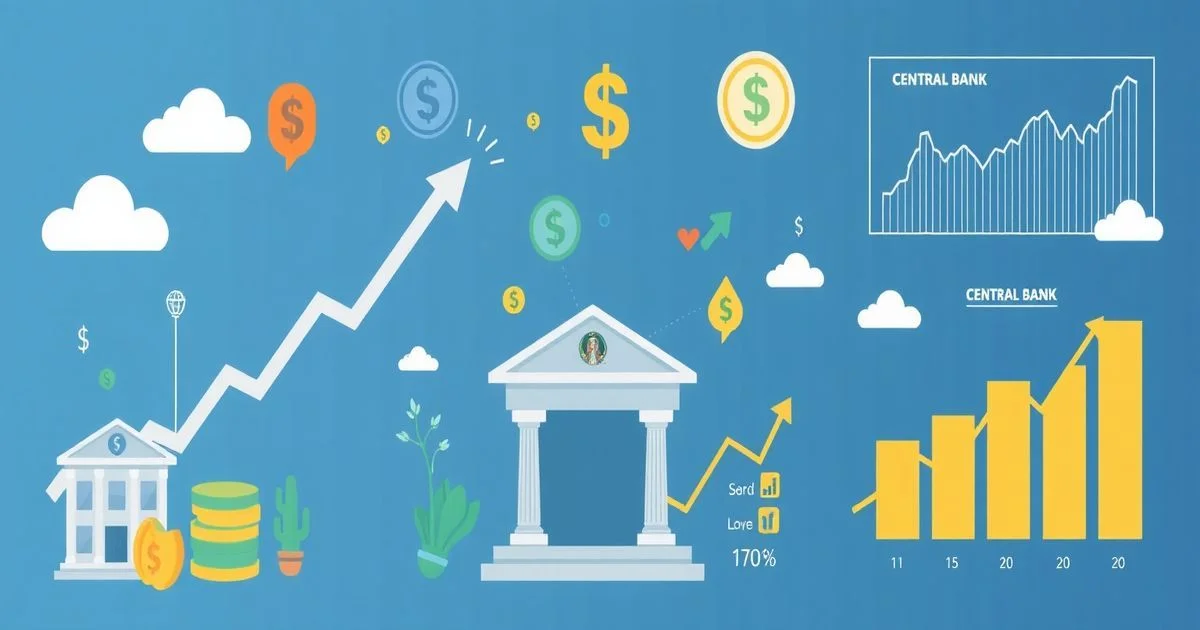
To truly grasp the intricate economic forces shaping our world, a solid understanding of the fundamentals of inflation and macroeconomics is paramount for every informed citizen and investor. This comprehensive guide aims at Understanding the Fundamentals of Inflation and Macroeconomics, demystifying the intricate forces that shape our economic realities. From the subtle erosion of purchasing power to the grand strategies employed by governments and central banks, we will embark on a journey to explore the concepts, mechanisms, and real-world implications that underpin global financial health. Gaining a solid understanding of these fundamental principles is crucial for anyone looking to navigate the complexities of modern finance and make informed decisions, whether personal or professional.
- Demystifying Inflation: The Erosion of Purchasing Power
- Understanding the Fundamentals of Macroeconomics: The Big Picture View
- The Forces Behind Inflation: Causes and Consequences
- Macroeconomic Policy Tools: Steering the Economic Ship
- Interplay and Challenges in Modern Macroeconomics
- Practical Implications and Future Trends
- Conclusion: Mastering the Economic Landscape
- Frequently Asked Questions
- Further Reading & Resources
Demystifying Inflation: The Erosion of Purchasing Power
Inflation is one of the most commonly discussed, yet frequently misunderstood, economic phenomena. At its core, inflation represents the rate at which the general level of prices for goods and services is rising, and subsequently, the purchasing power of currency is falling. Imagine your money as a bucket of water. With inflation, that bucket develops a slow leak, meaning the same amount of water (money) buys less over time. A loaf of bread that cost $2 last year might cost $2.20 this year, signaling that your dollar doesn't stretch as far as it used to.
What is Inflation?
Inflation is not merely about individual items becoming more expensive; it's about a sustained increase in the aggregate price level across an economy. It's often measured by indices like the Consumer Price Index (CPI), which tracks the average change over time in the prices paid by urban consumers for a market basket of consumer goods and services. A healthy, manageable level of inflation (typically around 2-3% annually in developed economies) is often seen as a sign of a growing economy, indicating consumer demand and economic activity. However, when inflation spirals out of control, it can severely disrupt economic stability, eroding savings and creating uncertainty.
Types of Inflation
Understanding the different types of inflation helps pinpoint their root causes and informs appropriate policy responses. The primary classifications include:
-
Demand-Pull Inflation: This occurs when aggregate demand in an economy outpaces aggregate supply. Essentially, "too much money chasing too few goods." When consumers, businesses, and governments want to buy more than the economy can produce, prices are bid up.
- Mechanism: Strong consumer confidence, increased government spending, or booming exports can all contribute to a surge in demand. If factories are already operating at full capacity and cannot increase output quickly enough, the existing goods become scarcer relative to demand, leading to price increases.
- Analogy: Imagine a highly anticipated concert where only a limited number of tickets are available. If far more people want tickets than there are seats, the price of those tickets will naturally skyrocket due to demand.
-
Cost-Push Inflation: This type arises from an increase in the costs of production, which suppliers then pass on to consumers in the form of higher prices.
- Mechanism: Common drivers include rising wages, increased raw material costs (e.g., oil prices), or higher import tariffs. If it costs more for businesses to produce their goods, they must charge more to maintain their profit margins.
- Analogy: Consider a bakery that suddenly faces a significant increase in the price of flour and sugar. To cover these elevated input costs and remain profitable, the bakery must raise the price of its bread and pastries.
While these are the two main types, other forms exist, such as hyperinflation (extreme, out-of-control inflation), deflation (the opposite of inflation, a decrease in the general price level), and stagflation (a toxic combination of high inflation, high unemployment, and stagnant demand). Each presents unique challenges to economic stability and policymaking.
Understanding the Fundamentals of Macroeconomics: The Big Picture View
If microeconomics focuses on individual economic agents like households and firms, macroeconomics zooms out to examine the economy as a whole. It studies aggregate phenomena such as gross domestic product (GDP), national income, unemployment rates, and price levels, seeking to understand why economies grow, why recessions occur, and how policy interventions can improve overall economic performance. It’s about the grand chessboard where central banks, governments, and international trade play out their strategies.
The Scope of Macroeconomics
Macroeconomics is concerned with the broad performance, structure, behavior, and decision-making of an economy. Its primary objectives are generally to achieve:
- Economic Growth: Measured by the increase in a country's real GDP over time, reflecting an increase in the production of goods and services. Sustainable growth leads to higher living standards. For businesses looking to optimize their operations and foster such growth, best practices for managing remote team workflows in tech can be crucial.
- Full Employment: While 0% unemployment is an unrealistic goal (due to frictional and structural unemployment), macroeconomists aim for a low and stable unemployment rate, ensuring that those willing and able to work can find jobs.
- Price Stability: Controlling inflation and avoiding deflation to maintain the purchasing power of money and foster a stable economic environment for planning and investment.
- Balance of Payments Stability: Managing a country's transactions with the rest of the world, ensuring a sustainable level of trade and financial flows.
Macroeconomics provides the framework for governments and central banks to analyze economic problems and formulate policies aimed at achieving these objectives.
Key Macroeconomic Indicators
To understand the health and direction of an economy, macroeconomists rely on a suite of vital indicators. These are the economic vital signs that policymakers constantly monitor:
-
Gross Domestic Product (GDP): This is perhaps the most comprehensive measure of an economy's output. GDP represents the total monetary or market value of all the finished goods and services produced within a country's borders in a specific time period.
- Calculation: Typically measured annually or quarterly. It can be calculated using the expenditure approach (Consumption + Investment + Government Spending + Net Exports), the income approach, or the production approach.
- Significance: A rising GDP generally indicates economic growth and prosperity, while a declining GDP (especially for two consecutive quarters) signals a recession.
-
Unemployment Rate: This indicator measures the percentage of the total labor force that is unemployed but actively seeking employment.
- Calculation: (Number of Unemployed / Labor Force) * 100. The labor force includes both employed and unemployed individuals.
- Significance: A low and stable unemployment rate is a key goal for policymakers, reflecting a robust job market. High unemployment suggests underutilized human capital and economic hardship.
-
Consumer Price Index (CPI): As mentioned earlier, CPI is a key measure of inflation. It tracks the average change over time in the prices paid by urban consumers for a market basket of consumer goods and services.
- Calculation: Collected by government agencies by surveying prices of thousands of items in a representative basket.
- Significance: Changes in CPI indicate the rate of inflation or deflation, crucial for understanding the purchasing power of money and for indexing wages, pensions, and social security benefits.
-
Interest Rates: These are the cost of borrowing money or the return on saving money. Central banks heavily influence short-term interest rates to manage monetary policy.
- Significance: Higher interest rates tend to discourage borrowing and spending, slowing down the economy and potentially curbing inflation. Lower rates do the opposite.
-
Balance of Trade: This measures the difference between a country's total exports and total imports over a specific period.
- Significance: A trade surplus (exports > imports) can signal a strong competitive economy, while a persistent trade deficit (imports > exports) might indicate a country is consuming more than it produces, potentially leading to currency depreciation.
These indicators, viewed in conjunction, paint a holistic picture of an economy's performance and provide essential data for making informed policy decisions.
The Forces Behind Inflation: Causes and Consequences
Inflation isn't a random event; it's the result of specific economic forces at play. Understanding these drivers is critical for predicting its onset and designing effective counter-measures. Equally important is recognizing the pervasive impact inflation has on various facets of economic life, from personal finances to national stability.
Drivers of Inflation
Several key factors can independently or in combination ignite inflationary pressures:
-
Money Supply Growth: A fundamental principle of economics is that an increase in the money supply without a corresponding increase in the production of goods and services will lead to inflation. When there's more money circulating in the economy, each unit of currency becomes less valuable, requiring more units to purchase the same good.
- Mechanism: Central banks, through tools like quantitative easing, can inject liquidity into the financial system, expanding the money supply. If this money is not absorbed by productive investment and instead fuels consumption or asset bubbles, prices can rise.
- Historical Example: The hyperinflation experienced in Weimar Republic Germany or more recently in Venezuela can be largely attributed to excessive money printing by central banks to finance government deficits.
-
Demand Shocks: Sudden and significant increases in aggregate demand can outstrip the economy's productive capacity, pulling prices up.
- Mechanism: This can be triggered by a surge in consumer confidence leading to increased spending, substantial government stimulus packages, or a booming export market. If businesses cannot ramp up production quickly enough, they respond by raising prices.
- Recent Example: Post-pandemic economic recovery saw a surge in consumer demand, especially for goods, exacerbated by supply chain bottlenecks, contributing to inflationary pressures in many countries.
-
Supply Shocks: Abrupt disruptions to the supply of key goods or services can lead to cost-push inflation.
- Mechanism: Events like natural disasters destroying crops, geopolitical conflicts disrupting oil supplies, or global pandemics leading to factory closures and labor shortages can significantly increase the cost of production for businesses. These higher costs are then passed on to consumers.
- Recent Example: Russia's invasion of Ukraine dramatically impacted global energy and food prices, creating a significant supply-side shock that fueled inflation worldwide.
-
Inflation Expectations: Perhaps one of the most insidious drivers, inflation expectations refer to what people expect future inflation to be. If consumers and businesses anticipate higher prices in the future, they tend to act in ways that make those expectations a reality.
- Mechanism: Workers demand higher wages to maintain their purchasing power, and businesses raise prices in anticipation of higher input costs. This creates a self-fulfilling prophecy, often referred to as a "wage-price spiral."
- Significance: Central banks work hard to anchor inflation expectations, convincing the public that they are committed to maintaining price stability, to prevent this spiral from taking hold.
Impact of Inflation
The consequences of high and volatile inflation are far-reaching and can have significant negative effects on individuals, businesses, and the broader economy:
-
Erosion of Purchasing Power: This is the most direct and obvious impact. Each unit of currency buys less, diminishing the real value of savings, wages, and fixed incomes. People on fixed pensions are particularly vulnerable.
-
Uncertainty and Reduced Investment: High inflation creates an environment of economic uncertainty. Businesses find it difficult to plan for the future when costs and revenues are constantly shifting, discouraging long-term investment and slowing economic growth.
-
Redistribution of Income and Wealth: Inflation tends to benefit debtors at the expense of creditors. If you owe a fixed amount of money, inflation makes it easier to repay that debt with "cheaper" money. Conversely, those holding cash or fixed-income assets (like bonds with low fixed interest rates) see the real value of their wealth diminish.
-
"Shoe-Leather Costs" and "Menu Costs": These are the less obvious but real costs of inflation.
- Shoe-Leather Costs: The resources wasted when people try to reduce their money holdings (e.g., more frequent trips to the bank, investing in assets that hold value).
- Menu Costs: The costs businesses incur from frequently changing their prices (e.g., printing new menus, updating catalogs, re-pricing goods).
-
Impact on Interest Rates: Central banks typically raise interest rates to combat inflation. While this can cool down the economy and bring prices under control, it also increases the cost of borrowing for consumers and businesses, potentially stifling investment and consumption.
While moderate inflation is often a sign of a healthy economy, uncontrolled inflation can be a destructive force, destabilizing economies and imposing significant burdens on the population.
Macroeconomic Policy Tools: Steering the Economic Ship
Governments and central banks are not passive observers of economic tides; they actively employ a range of policy tools to influence economic outcomes. These tools fall broadly into two categories: monetary policy, managed by central banks, and fiscal policy, managed by governments. Both are crucial for Understanding the Fundamentals of Inflation and Macroeconomics and maintaining stability.
Monetary Policy: The Central Bank's Arsenal
Monetary policy refers to the actions undertaken by a central bank to influence the availability and cost of money and credit to help promote national economic goals. In many countries, the central bank's primary mandates include price stability (controlling inflation) and maximizing employment.
Key Central Banks:
- The Federal Reserve (The Fed) in the United States: Its dual mandate is maximum employment and price stability.
- The European Central Bank (ECB): Its primary objective is to maintain price stability in the Eurozone.
- The Bank of England (BoE): Aims to maintain price stability and support the government's economic policy.
Tools of Monetary Policy:
-
Interest Rates (Policy Rates): This is the most prominent tool. Central banks set a target for a key short-term interest rate (e.g., the federal funds rate in the US, the main refinancing operations rate in the Eurozone).
- Mechanism: When the central bank raises this rate, it becomes more expensive for commercial banks to borrow money, which in turn leads to higher interest rates for consumers and businesses on loans (mortgages, car loans, business credit). This discourages borrowing and spending, cooling down an overheating economy and combating inflation.
- Analogy: Think of the central bank as controlling the main spigot of money into the economy. Raising interest rates is like tightening the spigot, reducing the flow of money and making it more expensive. Lowering rates loosens the spigot, increasing flow.
-
Open Market Operations (OMOs): This involves the buying and selling of government securities (like bonds) in the open market by the central bank.
- Mechanism: To increase the money supply (and lower interest rates), the central bank buys bonds from commercial banks, injecting cash into the banking system. To decrease the money supply (and raise interest rates), it sells bonds, pulling cash out.
- Significance: OMOs are flexible and frequently used to fine-tune the money supply and influence short-term interest rates.
-
Quantitative Easing (QE) and Quantitative Tightening (QT): These are unconventional monetary policy tools often used during financial crises or periods of very low interest rates when traditional tools are ineffective.
- QE: The central bank buys large quantities of long-term government bonds and other assets from the market to lower long-term interest rates and inject liquidity directly into the economy.
- QT: The reverse process, where the central bank reduces its balance sheet by allowing bonds to mature without reinvesting the proceeds, effectively draining liquidity from the financial system.
-
Reserve Requirements: This is the fraction of deposits that commercial banks must hold in reserve, rather than lend out.
- Mechanism: Raising reserve requirements reduces the amount of money banks can lend, thereby contracting the money supply. Lowering them has the opposite effect.
- Frequency: This tool is used less frequently today due to its broad and disruptive impact on the banking system.
-
Discount Rate: The interest rate at which commercial banks can borrow money directly from the central bank.
- Mechanism: A higher discount rate discourages banks from borrowing, reducing the money supply. A lower rate encourages borrowing, expanding the money supply. It serves more as a signal of the central bank's stance than a primary tool.
Monetary policy operates with a lag; the full effects of changes in interest rates or money supply might not be felt for several quarters. This makes central banking a challenging balancing act, requiring careful forecasting and judgment.
Fiscal Policy: Government's Economic Lever
Fiscal policy refers to the use of government spending and taxation to influence the economy. Unlike monetary policy, which aims to influence money and credit conditions, fiscal policy directly impacts aggregate demand through government budgetary decisions.
Tools of Fiscal Policy:
-
Government Spending: This involves the government directly purchasing goods and services, investing in infrastructure, or providing transfer payments (like unemployment benefits or social security).
- Mechanism: Increased government spending directly injects money into the economy, boosting aggregate demand. For example, building a new highway creates jobs for construction workers, who then spend their wages, stimulating further economic activity (the "multiplier effect").
- Context: Used to stimulate the economy during recessions (expansionary fiscal policy) or to moderate demand during inflationary periods (contractionary fiscal policy).
-
Taxation: Governments can adjust tax rates on individuals (income tax, sales tax) and businesses (corporate tax).
- Mechanism: Lowering taxes leaves individuals and businesses with more disposable income, encouraging consumption and investment, thereby stimulating aggregate demand. Raising taxes has the opposite effect, reducing disposable income and cooling the economy.
- Context: Tax cuts can be used to combat recessions, while tax increases might be implemented to curb inflation or reduce budget deficits.
Types of Fiscal Policy:
- Expansionary Fiscal Policy: Involves increasing government spending or decreasing taxes. Used to combat recessions, stimulate economic growth, and reduce unemployment. Risks include increased national debt and potential for inflation if the economy overheats.
- Contractionary Fiscal Policy: Involves decreasing government spending or increasing taxes. Used to slow down an overheated economy, reduce inflation, and control budget deficits. Risks include slowing economic growth and potentially increasing unemployment.
Fiscal policy is often subject to political considerations and can be slower to implement than monetary policy due to legislative processes. However, its direct impact on specific sectors or income groups can make it a powerful tool for addressing particular economic challenges. The interplay between fiscal and monetary policy is critical, with central banks and governments ideally coordinating their efforts to achieve stable and sustainable economic growth.
Interplay and Challenges in Modern Macroeconomics
The dynamic nature of global economies means that macroeconomic forces are constantly interacting, often in complex and unpredictable ways. Understanding these interdependencies and the inherent challenges is crucial for sound policy-making. This deeper dive helps in further Understanding the Fundamentals of Inflation and Macroeconomics.
The Phillips Curve: Inflation vs. Unemployment
One of the most enduring and debated concepts in macroeconomics is the Phillips Curve, which suggests an inverse relationship between inflation and unemployment.
- Original Concept: Arthur Phillips observed that periods of low unemployment in the UK tended to coincide with periods of high wage inflation, and vice-versa. The theory posited that policymakers faced a trade-off: to reduce unemployment, they would have to accept a higher rate of inflation, and to reduce inflation, they would have to tolerate higher unemployment.
- Mechanism: When unemployment is low, the labor market is tight, giving workers more bargaining power to demand higher wages. Businesses, facing higher labor costs, pass these costs onto consumers through higher prices, leading to inflation. Conversely, high unemployment weakens workers' bargaining power, dampening wage growth and inflationary pressures.
- Limitations and Criticisms:
- Long-Run Vertical Phillips Curve: Milton Friedman and Edmund Phelps argued that this trade-off only exists in the short run. In the long run, people adjust their inflation expectations. If inflation is consistently high, workers will demand even higher wages, leading to a continuous wage-price spiral without a permanent reduction in unemployment. The long-run Phillips curve is vertical at the "natural rate of unemployment" (NAIRU - Non-Accelerating Inflation Rate of Unemployment).
- Stagflation of the 1970s: The simultaneous occurrence of high inflation and high unemployment (stagflation) in the 1970s, largely due to supply shocks (oil crises), challenged the conventional Phillips Curve, demonstrating that the trade-off wasn't always stable or predictable.
Despite its limitations, the Phillips Curve remains an important analytical tool for understanding the short-run dynamics between labor markets and price levels, and how inflation expectations can shift this relationship.
Global Interconnectedness and Inflation
In today's globalized world, domestic inflation is rarely an isolated phenomenon. International factors play an increasingly significant role:
-
Global Supply Chains: Disruptions to global supply chains, whether due to pandemics, geopolitical conflicts, or natural disasters, can have immediate and far-reaching impacts on inflation. If a key component manufactured in one country becomes scarce or expensive, it affects production costs globally.
- Example: The COVID-19 pandemic revealed the fragility of just-in-time supply chains, leading to shortages of everything from microchips to consumer goods, contributing to widespread cost-push inflation.
-
Exchange Rates: The value of a country's currency relative to others directly affects the cost of imports and exports.
- Mechanism: A depreciation of the domestic currency makes imports more expensive, contributing to domestic inflation (imported inflation). Conversely, an appreciation makes imports cheaper.
- Impact: Countries heavily reliant on imports (especially for essential goods like energy or food) are particularly vulnerable to exchange rate fluctuations.
-
Commodity Prices: Global prices of commodities like oil, natural gas, metals, and agricultural products have a pervasive impact. These are essential inputs for almost all industries.
- Mechanism: A surge in global oil prices, for instance, immediately increases transportation costs, energy bills for businesses, and the cost of producing plastics and other oil-derived products, feeding into broader inflation.
- Recent Example: The surge in oil prices following geopolitical events in recent years has been a major driver of inflation globally.
-
International Capital Flows and Trade Agreements: The movement of capital across borders and the terms of international trade agreements can influence domestic aggregate demand and supply, affecting price levels.
Stagflation and Deflation: Other Economic Monsters
While inflation often dominates headlines, its equally problematic counterparts—stagflation and deflation—present unique challenges.
-
Stagflation: As mentioned, this is a particularly difficult economic situation characterized by slow economic growth (stagnation), high unemployment, and high inflation.
- Why it's challenging: The traditional policy tools designed to combat inflation (raising interest rates, reducing government spending) tend to worsen unemployment and slow growth. Conversely, policies aimed at stimulating growth (lowering interest rates, increasing spending) can exacerbate inflation. This leaves policymakers in a difficult dilemma.
- Historical Context: The 1970s oil crises are the most prominent historical example, where supply shocks increased costs and inflation while simultaneously slowing economic activity.
-
Deflation: The opposite of inflation, deflation is a sustained decrease in the general price level of goods and services. While seemingly beneficial (your money buys more), severe deflation can be highly detrimental.
- Mechanism: Falling prices often lead consumers to postpone purchases, anticipating even lower prices in the future. This reduces demand, which prompts businesses to cut production, leading to layoffs and further price cuts. This creates a vicious "deflationary spiral."
- Impact: It increases the real burden of debt (as the money owed becomes more valuable), discourages investment, and can lead to prolonged economic stagnation or recession.
- Historical Example: The Great Depression in the 1930s was characterized by severe deflation. More recently, Japan has struggled with periods of deflation for decades.
Navigating these complex economic conditions requires a deep understanding of their causes, careful monitoring of indicators, and often, a coordinated and adaptive policy response. The economic impacts of climate change (e.g., natural disasters, resource scarcity, transition costs to green energy) are becoming central to macroeconomic analysis. Understanding broader environmental systems, such as ocean currents and their role in global climate patterns, provides crucial context.
Practical Implications and Future Trends
Understanding the macro-economic forces at play isn't just an academic exercise; it has tangible implications for individuals, businesses, and the future of global finance. Recognizing how inflation and macroeconomic policies affect daily life is a cornerstone of financial literacy.
How Inflation Affects You (Personal Finance Angle)
Inflation isn't an abstract concept confined to economic textbooks; its effects ripple through your personal finances:
-
Savings: Inflation erodes the purchasing power of your cash savings. If your money is sitting in a low-interest savings account earning 1% interest, but inflation is 5%, your real return is -4%, meaning you're effectively losing money.
- Strategy: To combat this, individuals often seek investments that offer returns higher than the inflation rate, such as stocks, real estate, or inflation-protected securities (TIPS).
-
Investments: Different asset classes react differently to inflation.
- Stocks: Can be a mixed bag. Companies with strong pricing power may fare well, but high inflation can also squeeze profit margins or lead to higher interest rates that make borrowing more expensive for businesses.
- Real Estate: Often considered a hedge against inflation, as property values and rental income tend to rise with the general price level.
- Bonds: Generally perform poorly during periods of rising inflation, especially fixed-rate bonds, as their future fixed payments are worth less in real terms.
-
Debt: Inflation can be a borrower's friend (and a lender's foe) for fixed-rate debt. If you have a fixed-rate mortgage, the real value of your future payments diminishes over time due to inflation. Your income might rise with inflation, making the fixed payment relatively smaller.
- Consideration: For variable-rate debt, rising interest rates (often a central bank response to inflation) can increase your monthly payments, making debt more expensive.
-
Wages and Income: While wages often rise during inflationary periods, they may not always keep pace with the cost of living. If your nominal wage increase is less than the inflation rate, your real income (purchasing power) declines.
Future Challenges and Innovations in Macroeconomics
The field of macroeconomics is continually evolving, facing new challenges and opportunities for innovation:
-
Digital Currencies and Central Bank Digital Currencies (CBDCs): The rise of cryptocurrencies and the potential for central banks to issue their own digital currencies (CBDCs) could profoundly impact monetary policy, financial stability, and the global financial system.
- Implications: CBDCs could offer more direct control over money supply, faster payment systems, and potentially new tools for monetary policy transmission, but also raise questions about privacy and financial disintermediation.
-
Artificial Intelligence and Machine Learning in Forecasting: AI and ML are increasingly being leveraged to analyze vast datasets and improve the accuracy of economic forecasting models. The rapid advancements, exemplified by China's AI boom and global power shift, highlight the transformative potential.
- Potential: These technologies can identify complex patterns, incorporate alternative data sources (e.g., satellite imagery, social media sentiment), and provide more nuanced insights into economic trends, helping policymakers anticipate shifts in inflation or growth more effectively.
-
Climate Change and Green Macroeconomics: The economic impacts of climate change (e.g., natural disasters, resource scarcity, transition costs to green energy) are becoming central to macroeconomic analysis.
- Focus: Policymakers are exploring "green fiscal policies" (e.g., carbon taxes, subsidies for renewable energy) and how central banks can incorporate climate risk into financial stability assessments and monetary policy frameworks.
-
Demographic Shifts: Aging populations in many developed countries and rapid population growth in others pose long-term macroeconomic challenges related to labor force participation, pension systems, healthcare costs, and overall economic dynamism.
-
Geopolitical Fragmentation and Deglobalization: Shifts towards protectionism, regionalization, and geopolitical tensions can disrupt trade flows, investment patterns, and global supply chains, leading to more volatile inflation and slower global growth.
These evolving dynamics underscore the necessity for flexible, data-driven, and forward-thinking macroeconomic policies to ensure resilient and sustainable economic futures.
Conclusion: Mastering the Economic Landscape
The journey of Understanding the Fundamentals of Inflation and Macroeconomics reveals a complex yet fascinating interplay of forces that shape our economic world. We've explored how inflation erodes purchasing power, the different types of price increases, and the critical macroeconomic indicators that signal an economy's health. We've also delved into the powerful tools of monetary and fiscal policy, examining how central banks and governments attempt to steer the economic ship through calm and turbulent waters.
From the nuances of the Phillips Curve to the profound impacts of global interconnectedness and the looming challenges of climate change and digital currencies, it's clear that economics is a dynamic and evolving field. For the tech-savvy individual, grasping these fundamentals is not merely an intellectual exercise but a vital skill for navigating personal finance, understanding investment landscapes, and making informed decisions in an increasingly uncertain global environment. By continuing to learn and adapt, we can better prepare for the economic realities of tomorrow.
Frequently Asked Questions
Q: What is the main difference between monetary and fiscal policy?
A: Monetary policy is managed by central banks, using tools like interest rates and money supply to influence the economy. Fiscal policy is managed by governments, using spending and taxation to directly impact aggregate demand.
Q: How does inflation affect my personal savings?
A: Inflation erodes the purchasing power of your savings. If your money earns less interest than the inflation rate, its real value decreases, meaning it can buy fewer goods and services over time.
Q: What is stagflation and why is it problematic?
A: Stagflation is an economic condition marked by high inflation, high unemployment, and stagnant economic growth. It's problematic because traditional policies to combat inflation worsen unemployment, and conversely, policies to stimulate growth can exacerbate inflation, creating a difficult dilemma for policymakers.
Further Reading & Resources
- Inflation: A Global Challenge (International Monetary Fund)
- Monetary Policy Basics (Federal Reserve)
- Economic Research & Data (European Central Bank)
- Global Economic Prospects (World Bank)
- Macroeconomics Defined (Investopedia)