Understanding the history of modern jazz improvisation: A Deep Dive
The world of jazz is a complex tapestry, rich with innovation, emotion, and intellectual rigor. At its very heart lies improvisation—the spontaneous creation of music in real-time. This article embarks on a fascinating journey, offering a comprehensive understanding the history of modern jazz improvisation, tracing its evolution from early 20th-century roots to its myriad contemporary forms. For the tech-savvy mind accustomed to iterative development and algorithmic complexity, exploring the history of modern jazz improvisation reveals a parallel universe of creative problem-solving, rapid prototyping, and dynamic system architecture, all unfolding in the ephemeral realm of sound, much like understanding the history of major global trade routes involves complex, evolving systems. We'll dive deep into the key milestones, the revolutionary figures, and the theoretical frameworks that shaped this incredible art form.
- The Genesis of Jazz Improvisation: Roots and Early Forms
- The Swing Era and the Rise of the Virtuoso Soloist
- Bebop: The Birth of Modern Jazz Improvisation
- Cool Jazz and Hard Bop: Diverging Paths
- Modal Jazz: A New Paradigm for Improvisation
- Free Jazz and the Avant-Garde: Pushing Boundaries
- Jazz-Rock Fusion and the Electric Era
- Post-Fusion and Contemporary Approaches: The Ongoing Evolution
- The Enduring Legacy and Future of Jazz Improvisation
- Conclusion
- Frequently Asked Questions
- Further Reading & Resources
The Genesis of Jazz Improvisation: Roots and Early Forms
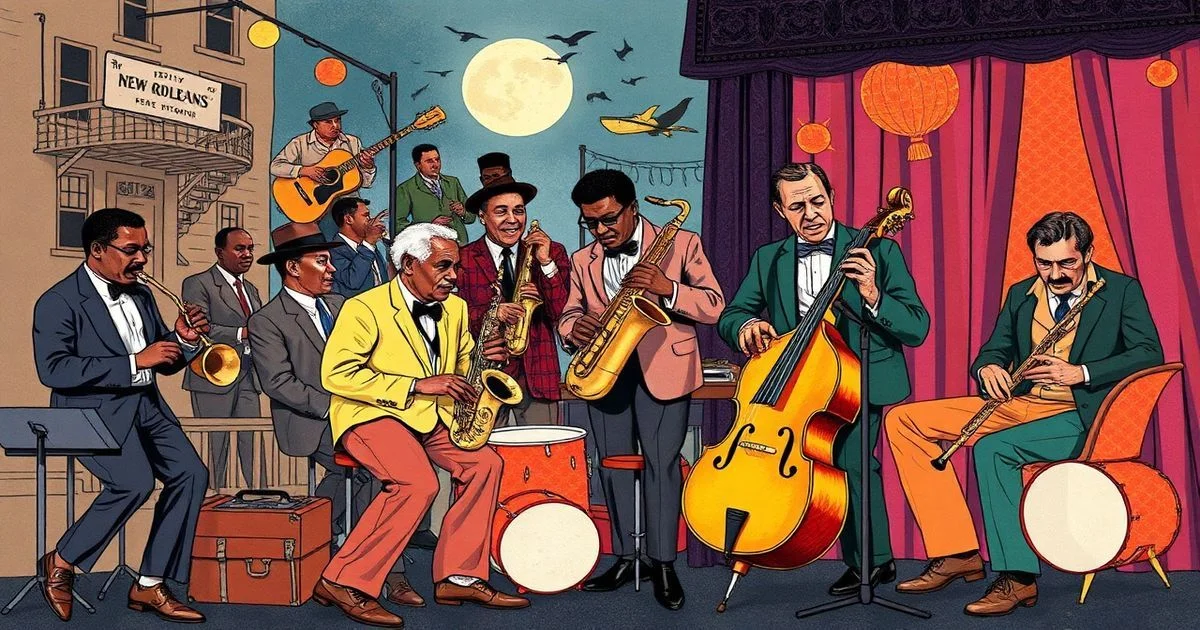
Before we dissect modern jazz, it’s crucial to acknowledge its bedrock. Jazz didn't appear in a vacuum; it emerged from a rich confluence of African and European musical traditions, particularly in the vibrant melting pot of New Orleans at the turn of the 20th century. Early forms of jazz were heavily influenced by the blues, ragtime, spirituals, and brass band music, each contributing unique elements to the nascent improvisational language.
Ragtime and the Precursors to Soloism
Ragtime, characterized by its syncopated rhythms and piano-centric nature, offered a glimpse into melodic invention. While much of ragtime was composed, its rhythmic vitality and the spirit of individual interpretation laid groundwork. Early jazz bands in New Orleans, often brass bands transitioning from parades to dance halls, featured collective improvisation where multiple instruments improvised simultaneously around a melody. This "collective" approach, however, wasn't about individual virtuosity in the modern sense but rather a communal texture.
The Blues: A Foundation for Expression
The blues, with its distinctive chord progressions (often I-IV-V), call-and-response patterns, and emotive storytelling, became the primary vehicle for early jazz soloists. Blues scales and bent notes provided a unique expressive vocabulary that musicians like Buddy Bolden and Jelly Roll Morton began to adapt. The raw, heartfelt spontaneity of the blues injected jazz with a profound emotional depth and a structural framework for individual expression that would persist through all its transformations.
The Swing Era and the Rise of the Virtuoso Soloist
The 1920s and 1930s saw jazz grow exponentially, evolving into the Big Band or Swing Era. This period marked a significant shift from collective improvisation towards the emergence of the individual soloist. As bands grew larger and arrangements became more complex, dedicated sections were carved out for improvised solos, allowing musicians to step into the spotlight and showcase their unique voices.
Louis Armstrong: Defining the Solo
No figure is more central to this transition than Louis Armstrong. His revolutionary approach to improvisation, beginning in the 1920s with King Oliver's Creole Jazz Band and later with his own Hot Fives and Hot Sevens, redefined the role of the soloist. Armstrong moved beyond simply embellishing the melody; he constructed entirely new melodies over the chord changes of a song, demonstrating a sophisticated harmonic awareness and an unprecedented rhythmic drive.
Key Contributions of Louis Armstrong:
- Melodic Invention: Armstrong created solos that were often as memorable, if not more so, than the original tunes. His solos were coherent, melodically strong, and rhythmically inventive, setting a new standard for improvisation.
- Harmonic Awareness: He wasn't just playing notes; he was navigating the underlying chord progressions, hitting crucial chord tones, and outlining the harmony in his improvisations.
- Rhythmic Sophistication: Armstrong's solos had a powerful swing feel, employing syncopation and rhythmic displacement to create excitement and forward momentum.
- Scat Singing: His pioneering use of scat singing extended the improvisational idiom to the human voice, treating it as another instrument.
Armstrong's innovations effectively moved jazz improvisation from an ornamental art to a primary expressive force. His influence was pervasive, shaping countless musicians who followed.
Swing Era Giants: Coleman Hawkins and Lester Young
As the Swing Era matured, other towering figures further refined the art of the jazz solo.
- Coleman Hawkins: Known as the "father of the tenor saxophone," Hawkins was a master of harmonic improvisation. His iconic 1939 recording of "Body and Soul" is a benchmark, showcasing his ability to construct elaborate solos by meticulously arpeggiating and embellishing the underlying chord changes, often hinting at altered harmonies. He treated chord progressions as a structural framework upon which to build intricate melodic narratives.
- Lester Young: In contrast to Hawkins's vertical, harmonic approach, Lester Young (Prez) pioneered a more horizontal, melodic style. His solos were characterized by a lighter tone, relaxed phrasing, and a focus on melodic contours that often implied harmonies rather than explicitly stating them. Young's approach was economical and understated, yet profoundly influential, foreshadowing the cool jazz aesthetic.
The Swing Era solidified the concept of the jazz soloist as a creative architect, laying down the technical and conceptual blueprints for future generations.
Bebop: The Birth of Modern Jazz Improvisation
The late 1930s and early 1940s witnessed a radical upheaval in jazz, giving birth to Bebop. This revolutionary style, developed largely in late-night jam sessions in New York clubs like Minton's Playhouse and Monroe's Uptown House, was a deliberate departure from the more dance-oriented, commercially driven swing music. Bebop was faster, more harmonically complex, and intellectually demanding, designed more for listening than dancing. It marked the definitive arrival of modern jazz improvisation.
The Architects of Bebop: Parker, Gillespie, Monk
Three figures stand out as the primary architects of Bebop:
- Charlie Parker (Alto Saxophone): "Bird" was a genius of melodic and harmonic invention. His improvisations were characterized by blazing tempos, dazzling technical virtuosity, and a profound understanding of harmony. Parker would often superimpose complex chord changes (substitutions and extensions) over existing progressions, creating a dense, often dissonant, yet ultimately logical and exhilarating sound. His solos were a masterclass in intervallic leaps, rapid-fire runs, and rhythmic asymmetry, transforming the jazz solo into an intricate, abstract puzzle.
- Dizzy Gillespie (Trumpet): Gillespie was not only a virtuoso trumpeter but also a brilliant composer, arranger, and bandleader. He codified many of Bebop's harmonic and rhythmic innovations, playing an essential role in teaching and popularizing the style. His trumpet solos matched Parker's intensity, featuring high notes, complex arpeggios, and rhythmic agility. Gillespie also introduced significant Afro-Cuban elements into jazz, pioneering Latin jazz.
- Thelonious Monk (Piano): Monk's approach to improvisation was unique, characterized by angular melodies, dissonant voicings, and a percussive attack. His solos were sparse yet profoundly rhythmic, full of space and unexpected melodic twists. Monk often improvised with an eye towards motif development, returning to and transforming short melodic ideas throughout his solos, making them instantly recognizable and deeply personal.
The Theoretical Underpinnings of Bebop Improvisation
Bebop introduced several theoretical advancements that profoundly reshaped improvisation:
- Extended Chord Tones: Musicians moved beyond the basic triads (1-3-5) and sevenths (1-3-5-7), actively incorporating 9ths, 11ths, and 13ths into their melodic lines. These extensions added a new layer of harmonic richness and color.
- Chord Substitutions: Bebop improvisers frequently employed tritone substitutions (e.g., replacing G7 with Db7) and other harmonic alterations to create tension and release, adding new pathways for melodic exploration over standard chord progressions.
- Chromaticism: Increased use of chromatic notes (notes outside the diatonic scale) within solos, creating greater melodic tension and complexity.
- Rhythmic Innovation: Bebop featured highly syncopated rhythms, often using eighth-note and sixteenth-note dominant lines, with irregular accents that pushed the boundaries of conventional swing. The "dropping bombs" technique by drummers (spontaneous bass drum accents) further added to the rhythmic excitement.
- Contrafact: Bebop musicians frequently composed new melodies over the chord changes of popular songs (known as "contrafacts"). This allowed them to explore complex harmonies without paying royalties on the original melody, and it encouraged a focus on harmonic improvisation. Famous examples include Parker's "Donna Lee" (over "Indiana") and "Anthropology" (over "I Got Rhythm").
Bebop marked a quantum leap in jazz improvisation, transforming it into a high-art form that demanded extreme technical proficiency, deep harmonic knowledge, and rapid intellectual processing from its practitioners, a level of intensity that could lead to professional burnout if not managed. It was, in many ways, the first "modern" jazz style, setting the stage for all subsequent developments.
Cool Jazz and Hard Bop: Diverging Paths
Following the intensity of Bebop, jazz improvisation branched into several new directions in the 1950s. Two prominent styles that emerged were Cool Jazz and Hard Bop, each offering a distinct response to the Bebop revolution.
Cool Jazz: Subtlety and Restraint
Cool Jazz, which emerged predominantly on the West Coast, was often seen as a reaction against Bebop's frenetic pace and harmonic density. It favored a more relaxed tempo, lighter tone, and a greater emphasis on melodic development and lyrical improvisation. While still harmonically sophisticated, Cool Jazz often sounded more understated and introspective.
Key Characteristics of Cool Jazz Improvisation:
- Relaxed Phrasing: Solos tended to be less aggressive and more flowing, with longer, sustained melodic lines.
- Emphasis on Texture and Dynamics: Greater attention was paid to the overall sound of the ensemble and the nuanced use of dynamics.
- Instrumentation: Often featured less common jazz instruments like French horn, tuba, and flute, alongside the traditional saxophone, trumpet, and piano, creating unique timbres.
- Influential Figures: Miles Davis's 1949-50 Birth of the Cool recordings were seminal. Other key improvisers included trumpeter Chet Baker, saxophonists Gerry Mulligan and Stan Getz, and pianist Lennie Tristano, who developed a highly intellectual, linear approach to improvisation.
Hard Bop: Soulfulness and Groove
Hard Bop, primarily developed on the East Coast, represented a return to the more visceral, bluesy, and gospel-infused roots of jazz, while retaining Bebop's harmonic and technical advancements. It was often characterized by a strong rhythmic drive, simpler melodic lines (compared to bebop's angularity), and a greater emphasis on "groove" and emotional directness. Hard bop improvisation often had a narrative quality, telling a story with each solo.
Key Characteristics of Hard Bop Improvisation:
- Blues and Gospel Influence: Solos were steeped in the blues scale and gospel inflections, giving them a soulful, earthy quality.
- Strong Rhythmic Feel: A pronounced, driving swing rhythm was central, making the music more danceable and accessible than bebop.
- Emphasis on "Groove": Musicians focused on creating a cohesive rhythmic and harmonic foundation that propelled the improviser forward.
- Influential Figures: Art Blakey and the Jazz Messengers were the quintessential Hard Bop ensemble. Key improvisers included trumpeters Clifford Brown and Lee Morgan, saxophonists Sonny Rollins and John Coltrane (in his early period), and pianists Horace Silver and Bobby Timmons. Sonny Rollins, in particular, was renowned for his thematic improvisation, developing and transforming short melodic motifs over the course of an extended solo.
These two styles, while seemingly opposed, demonstrated the expanding expressive capabilities of modern jazz improvisation, proving its adaptability and resilience.
Modal Jazz: A New Paradigm for Improvisation
By the late 1950s, some musicians began to feel constrained by the rapid-fire chord changes of Bebop and Hard Bop. The constant need to navigate complex harmonic progressions limited melodic freedom and encouraged a certain predictability in solos. This paved the way for Modal Jazz, a revolutionary approach that fundamentally altered the improvisational landscape.
Miles Davis and "Kind of Blue"
The seminal album for Modal Jazz was Miles Davis's Kind of Blue (1959). Instead of basing improvisation on a series of frequently changing chords, modal jazz improvisers focused on playing over a single musical mode (a type of scale) for extended periods, sometimes several minutes. This shift opened up vast new possibilities for melodic invention.
Key Concepts of Modal Jazz Improvisation:
- Extended Durations of Modes: Instead of chord changes every few beats, a mode (e.g., Dorian, Phrygian, Lydian) might persist for many measures. This gave improvisers more space to explore melodic ideas without constantly having to adjust to new harmonies.
- Horizontal Thinking: Improvisers were encouraged to think more horizontally, creating long, flowing melodic lines that explored the nuances of a single mode.
- Focus on Melodic and Rhythmic Variety: With harmonic complexity reduced, the emphasis shifted to varying rhythm, articulation, and melodic shape within the chosen mode.
- Influence on Harmonic Choices: While the underlying harmony was static, improvisers could still imply different chord extensions or colors through their melodic choices, adding subtle harmonic tension.
John Coltrane and "Giant Steps" / "My Favorite Things"
While Kind of Blue introduced the concept of modal improvisation, John Coltrane simultaneously pushed harmonic boundaries in other directions. His album Giant Steps (1959) represents the zenith of "sheets of sound" improvisation—a highly complex, harmonically dense style where he rapidly navigated a series of quickly changing, distantly related chord progressions, creating an overwhelming cascade of notes.
However, Coltrane quickly embraced modalism. His recording of "My Favorite Things" (1960) famously adapted a simple show tune into an extended modal exploration. Coltrane's modal solos were characterized by their intense spiritual quest, often using scalar patterns, pentatonic scales, and arpeggios within the mode to build incredible tension and release. He explored the full expressive range of a mode, from its serene beauty to its most fiery and impassioned utterances.
Modal jazz freed improvisers from some of the harmonic strictures of bebop, encouraging a more expansive, reflective, and sometimes ecstatic form of melodic expression. It provided a powerful counterpoint to the more harmonically driven styles, demonstrating the flexibility and enduring appeal of modern jazz improvisation.
Free Jazz and the Avant-Garde: Pushing Boundaries
The 1960s saw another radical shift with the emergence of Free Jazz, a highly experimental and avant-garde style that challenged virtually all conventional notions of jazz structure, harmony, rhythm, and form. It was a movement driven by a desire for complete creative freedom, often reflecting the social and political upheavals of the era.
Ornette Coleman: Harmolodics
Ornette Coleman is widely considered the pioneer of Free Jazz, with his groundbreaking album The Shape of Jazz to Come (1959) and his 1960 album Free Jazz: A Collective Improvisation. Coleman's concept of "harmolodics" sought to give equal importance to harmony, melody, rhythm, and the instrument's timbre, allowing musicians to improvise without strict adherence to predetermined chord changes or even a steady tempo.
Key Characteristics of Free Jazz Improvisation:
- Atonality or Pan-tonality: Often eschewed traditional tonal centers and functional harmony, leading to music that sounded dissonant or atonal to untrained ears.
- Ametricism: Dispensed with a regular pulse or meter, allowing for fluid, rubato rhythms and collective tempo shifts.
- Collective Improvisation: Reinvigorated the concept of collective improvisation from early jazz, but in a much freer, often anarchic, way, with multiple musicians spontaneously interacting without a defined lead or strict harmonic roadmap.
- Extended Techniques: Musicians often explored the full timbral possibilities of their instruments, using shrieks, multiphonics, and other non-traditional sounds.
- Emotional Intensity: Free Jazz was often characterized by raw, unbridled emotional expression, ranging from profound introspection to explosive catharsis.
Other Key Figures and Ensembles
- Cecil Taylor (Piano): Known for his percussive, dense, and highly energetic piano improvisations that treated the piano as a complete orchestral entity, often without discernible melody or harmony in the traditional sense.
- Albert Ayler (Tenor Saxophone): His playing was raw, spiritual, and deeply rooted in gospel, characterized by shrieks, guttural tones, and ecstatic melodic fragments.
- Sun Ra (Bandleader/Composer/Pianist): With his Arkestra, Sun Ra combined elements of free jazz with ancient Egyptian cosmology, elaborate costumes, and theatrical performances, creating a unique, cosmic brand of avant-garde music.
- The Association for the Advancement of Creative Musicians (AACM): Founded in Chicago in 1965, this collective (including figures like Anthony Braxton and Roscoe Mitchell) promoted self-determination, experimentation, and original compositions, fostering a vibrant scene for avant-garde jazz improvisation.
Free Jazz pushed the boundaries of musical definition, questioning the very essence of what constitutes "jazz." It demanded a different kind of listening and a radical re-evaluation of musical structure, representing the ultimate expression of improvisational freedom, albeit one that alienated some traditional jazz fans.
Jazz-Rock Fusion and the Electric Era
The late 1960s and early 1970s saw another major stylistic shift with the emergence of Jazz-Rock Fusion. This genre blended the improvisational sophistication of jazz with the raw power, electronic instrumentation, and rhythmic drive of rock music, as well as elements of funk and R&B. It aimed to reach a broader audience and inject new energy into jazz.
Miles Davis and the Electric Turn
Miles Davis once again played a pivotal role in spearheading a new movement. Albums like In a Silent Way (1969) and particularly Bitches Brew (1970) irrevocably changed the landscape of jazz. Davis plugged in, incorporating electric pianos, electric guitars, and funk-influenced drumming, leading to a more groove-oriented, often darker, and more experimental sound.
Key Characteristics of Fusion Improvisation:
- Electric Instrumentation: The omnipresence of electric guitars, electric basses, synthesizers, and amplified keyboards profoundly influenced the sound and texture of improvisation.
- Rock and Funk Rhythms: Drummers often employed rock backbeats, funk grooves, and polyrhythms, providing a more aggressive and danceable rhythmic foundation than traditional swing.
- Extended Forms and Textures: Fusion often featured longer pieces, with a greater emphasis on textural improvisation, soundscapes, and collective interaction within a groove.
- High Energy and Volume: The music was generally louder and more energetic than previous jazz styles, reflecting rock aesthetics.
- Virtuosity with a Rock Edge: Improvisers maintained the technical prowess of jazz but often adopted the aggressive attack and sustained notes characteristic of rock guitarists.
Fusion Giants
Numerous artists and bands emerged as titans of the Fusion era, each bringing their unique improvisational flair:
- Herbie Hancock (Keyboards): From his early work with Miles Davis to his own pioneering albums like Head Hunters, Hancock embraced synthesizers and funk rhythms, creating infectious grooves and inventive solos that blended jazz harmony with pop sensibilities.
- Chick Corea (Keyboards): A prolific artist, Corea led groundbreaking bands like Return to Forever, showcasing his dazzling piano and synthesizer virtuosity, often incorporating Latin American influences and intricate compositions.
- John McLaughlin (Guitar): With the Mahavishnu Orchestra, McLaughlin's lightning-fast guitar solos, often using distorted tones and complex scales, redefined the role of the guitar in jazz and influenced generations of rock and fusion guitarists.
- Weather Report: Led by Joe Zawinul (keyboards) and Wayne Shorter (saxophone), Weather Report perfected a brand of electric, often collective, improvisation that blurred the lines between composition and spontaneity, emphasizing continuous soundscapes and powerful grooves. Jaco Pastorius, their groundbreaking electric bassist, transformed the bass into a lead improvisational voice.
Fusion's improvisational language drew from the harmonic depth of bebop and modal jazz but infused it with the raw power and rhythmic drive of rock and funk. It expanded the audience for jazz, albeit sometimes at the cost of alienating purists who viewed it as a dilution of the art form.
Post-Fusion and Contemporary Approaches: The Ongoing Evolution
Since the peak of Fusion in the 1970s, jazz improvisation has continued its relentless evolution, embracing a multitude of styles, technologies, and global influences. The contemporary landscape is incredibly diverse, reflecting a synthesis of all previous eras while constantly pushing into new territories.
Neo-Traditionalism and the Resurgence of Acoustic Jazz
In the 1980s, a movement often termed Neo-Traditionalism, championed by figures like trumpeter Wynton Marsalis, sought to reaffirm the acoustic, swing-based traditions of jazz, particularly drawing from bebop, hard bop, and early jazz. This was a corrective against the excesses of fusion and free jazz, emphasizing mastery of standard forms, virtuosity, and swing. Improvisation in this context often involved deep engagement with the jazz canon, reinterpreting standards with contemporary harmonic and rhythmic sophistication while honoring historical styles.
Global Jazz and World Music Influences
The late 20th and early 21st centuries have seen a significant integration of world music traditions into jazz improvisation. Musicians from various cultural backgrounds have infused jazz with elements of:
- Latin Jazz: Continuing the legacy of Gillespie and others, artists like Paquito D'Rivera and Michel Camilo have brilliantly merged Afro-Cuban and other Latin American rhythms and melodies with jazz improvisation.
- Afrobeat and African Rhythms: Artists such as Randy Weston and members of the M-Base collective (e.g., Steve Coleman) have explored complex African rhythmic structures and melodic concepts.
- Indian Classical Music: John McLaughlin (post-Mahavishnu) with Shakti, and later artists, explored the intricate Ragas and rhythmic cycles of Indian classical music within an improvisational jazz context.
- European Folk and Classical: Artists like Jan Garbarek and Enrico Rava have incorporated elements of European folk music and classical structures into their improvisational approaches, often with a highly lyrical and atmospheric quality.
These cross-cultural exchanges have enriched the improvisational palette, offering new scales, rhythmic frameworks, and philosophical approaches to spontaneous music-making.
M-Base Collective: Structured Improvisation
The M-Base collective, founded by saxophonist Steve Coleman in the 1980s, developed a highly influential approach to improvisation that combined complex rhythmic and harmonic concepts with spontaneous creation. M-Base focuses on "conceptual music," often using intricate rhythmic cycles, non-traditional forms, and an emphasis on individual expression within a tightly structured framework. This pushes the boundaries of improvisation beyond mere chord-scale relationships, delving into polymetric and highly asymmetric rhythmic interactions.
The Role of Technology in Contemporary Improvisation
Modern technology continues to influence jazz improvisation in various ways:
- Digital Audio Workstations (DAWs) and Looping: Musicians use DAWs and looping pedals to create instant accompaniments or layers, allowing for solo performances that sound like full ensembles.
- Electronic Instruments and Software Synths: The evolution of synthesizers and software instruments offers an endless array of timbres and textures, expanding the sonic possibilities for improvisers.
- Algorithmic Composition and AI: While still nascent in direct improvisational interaction, the growing field of AI-generated music and algorithmic composition could one day offer new forms of human-computer improvisational collaboration, potentially blurring the lines between composer, performer, and algorithm.
- Global Collaboration: The internet and advanced communication technologies enable musicians from different parts of the world to collaborate and improvise together in real-time, transcending geographical barriers.
The contemporary landscape of modern jazz improvisation is a testament to its enduring vitality. It is a genre that refuses to stand still, constantly absorbing new influences, integrating new technologies, and re-imagining its core principles.
The Enduring Legacy and Future of Jazz Improvisation
The history of modern jazz improvisation is not merely a chronicle of past events but a living, breathing testament to human creativity and the continuous quest for expression. From the collective spontaneity of early New Orleans to the harmonic acrobatics of bebop, the lyrical expansiveness of modal jazz, the rebellious freedom of the avant-garde, and the electric energy of fusion, improvisation has remained jazz's defining characteristic. It is the language through which individual voices emerge, interact, and shape the collective narrative of the music.
The Educational Imperative
Today, formal jazz education plays a crucial role in preserving and propagating these improvisational traditions. Institutions worldwide teach the complex harmonic, rhythmic, and melodic concepts developed over a century. Students transcribe solos of masters like Parker and Coltrane, analyze theoretical frameworks, and develop their technical facility, ensuring that the legacy of jazz improvisation continues to thrive. However, this formalization also sparks ongoing debates about balancing tradition with innovation.
Analogy: Jazz Improvisation as Dynamic System Design
For a tech-savvy audience, jazz improvisation can be likened to dynamic system design or real-time algorithmic problem-solving. Each musician operates as an independent processor within a distributed system (the band). The "problem" is to create compelling music spontaneously over a given set of constraints (chord changes, tempo, form). A soloist's performance is an algorithm executed in real-time, taking inputs from the rhythm section and other soloists, processing them through a vast library of learned patterns, theoretical knowledge, and emotional intent, and outputting unique melodic and rhythmic statements. The "bugs" are mistakes, quickly assimilated or even embraced as new features in the flow.
Input: Chord Progression, Tempo, Groove, Band Interaction
Processing: Harmonic Knowledge, Melodic Vocabulary, Rhythmic Concepts, Emotional Intent, Technical Skill, Real-time Listening
Output: Spontaneous Melodic & Rhythmic Phrases (the "solo")
The success of the "system" (the performance) depends on the individual processors' expertise, their ability to communicate effectively, and their shared understanding of the underlying "protocol" (jazz theory and aesthetics), highlighting core principles of effective time management in a complex, real-time environment. The best improvisers are those who can leverage their learned patterns while simultaneously generating novel, unpredictable, and emotionally resonant solutions on the fly.
Conclusion
From its humble beginnings in the brothels and parades of New Orleans to its current status as a global art form, jazz improvisation has consistently pushed the boundaries of musical expression. It is a testament to the human spirit's capacity for spontaneous creativity, intellectual rigor, and profound emotional depth. The ongoing evolution of modern jazz improvisation continues to captivate, challenge, and inspire, demonstrating that innovation in music, much like in technology, is a never-ending journey. As new generations of musicians emerge, equipped with both the historical knowledge and a keen eye for the future, the soundscapes of jazz improvisation will undoubtedly continue to surprise and delight, reaffirming its place as one of the most dynamic and enduring art forms in human history.
Frequently Asked Questions
Q: What is modern jazz improvisation?
A: Modern jazz improvisation is the spontaneous creation of music in real-time within the jazz idiom, evolving from early blues and ragtime into complex harmonic and rhythmic forms. It is characterized by individual expression, harmonic sophistication, and rhythmic innovation, distinct from earlier collective improvisation.
Q: Who were the key figures in the development of bebop?
A: The primary architects of bebop were alto saxophonist Charlie Parker, trumpeter Dizzy Gillespie, and pianist Thelonious Monk. Their innovations in harmony, rhythm, and melody radically transformed jazz into a faster, more complex, and intellectually demanding art form.
Q: How did modal jazz change improvisation?
A: Modal jazz revolutionized improvisation by shifting the focus from rapidly changing chord progressions to extended periods over a single musical mode or scale. This allowed improvisers greater melodic freedom and space to explore the nuances of a mode, emphasizing horizontal melodic development over vertical harmonic navigation.