Understanding the history of major global trade routes
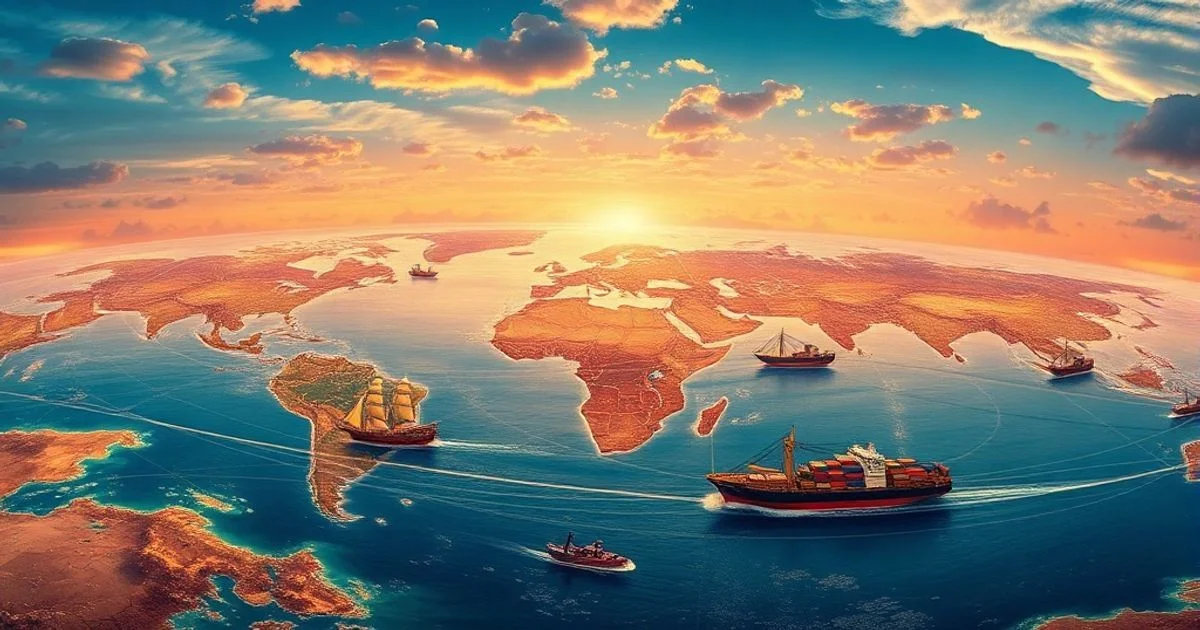
In an increasingly interconnected world, the flow of goods, services, and information across continents is often taken for granted. Yet, this globalized economy is the culmination of millennia of human ingenuity, exploration, and commercial ambition. To truly grasp the complexities of modern supply chains and international relations, it's essential to trace back to their origins. This article offers a comprehensive exploration into understanding the history of major global trade routes, examining how these arteries of commerce shaped civilizations, facilitated cultural exchange, and laid the groundwork for the digitally intertwined planet we inhabit today.
- The Genesis of Commerce: Early Trade Networks
- The Golden Age of Overland Trade: The Silk Roads
- Navigating the Seas: Maritime Routes Emerge
- The Age of Exploration and Global Integration
- The Industrial Revolution and Modern Trade Systems
- Post-WWII: The Era of Containerization and Digital Networks
- Challenges and the Future of Global Trade
- Understanding the History of Major Global Trade Routes: A Concluding Perspective
- Frequently Asked Questions
- Further Reading & Resources
The Genesis of Commerce: Early Trade Networks
Long before the advent of nation-states or sophisticated logistics, early human societies established rudimentary trade networks. These routes were often localized, connecting communities for the exchange of essential resources like obsidian for tools, salt for preservation, or unique shells for adornment. As societies grew and specialized, the demand for goods not locally available spurred longer-distance expeditions, pushing the boundaries of known geography and leading to the establishment of the first truly interregional trade routes. These early pathways were not merely conduits for goods; they were channels for ideas, technologies, and even diseases, fundamentally altering the trajectory of human development. The desire for exotic materials or strategic resources acted as a powerful catalyst for exploration and interaction.
The Amber Road: Europe's Ancient Lifeline
One of the earliest and most enduring long-distance trade routes in Europe was the Amber Road. Dating back to at least the Bronze Age (around 3000 BCE), this network primarily connected the Baltic Sea region, rich in amber – fossilized tree resin highly prized for its beauty and perceived mystical properties – with the Mediterranean civilizations, including Ancient Greece and Rome. Amber was transported overland, traversing forests, rivers, and mountains, reaching destinations as far as Egypt and Mesopotamia.
The Amber Road wasn't a single, defined path but a series of interconnected routes that evolved over millennia. It facilitated the exchange of goods far beyond amber itself. From the north came furs, honey, and slaves, while the south offered bronze, pottery, and wine. The route fostered cultural diffusion, spreading artistic styles, religious beliefs, and metallurgical techniques across a vast swathe of the European continent. Its importance waned with the decline of the Roman Empire and the rise of other trade routes, but its legacy as a foundational artery of European commerce remains significant. The logistical challenges were immense, relying on a relay system of tribes and traders, each moving goods a segment of the journey before passing them on.
The Incense Route: Arabian Peninsula's Aromatics
Parallel to the Amber Road, another ancient network flourished in the Arabian Peninsula and North Africa: the Incense Route. For thousands of years, starting around the 2nd millennium BCE, this arduous desert path transported highly coveted frankincense and myrrh from present-day Yemen and Oman to the temples and palaces of Egypt, Mesopotamia, Rome, and Greece. These aromatic resins were indispensable for religious ceremonies, perfumes, medicines, and embalming.
The Incense Route was a testament to human perseverance against harsh desert conditions. Caravans, often comprising hundreds of camels, navigated vast expanses, relying on strategically located oases and fortified trading posts. Cities like Petra in modern-day Jordan and Palmyra in Syria grew incredibly wealthy from controlling segments of this trade, becoming magnificent cultural centers. The route also carried spices, precious stones, and textiles from the East. Its decline began with the Roman shift towards maritime trade in the Red Sea and eventually the rise of Islam, which reoriented trade patterns, but its impact on ancient economies and cultures was profound. The incredible value of the cargo justified the immense risks and costs associated with its transport.
The Golden Age of Overland Trade: The Silk Roads
Perhaps the most famous and impactful of all ancient trade networks, the Silk Roads, represents a paradigm shift in global connectivity. Emerging around 200 BCE, this vast web of interconnected routes stretched over 6,400 kilometers (4,000 miles), linking Imperial China with the Mediterranean world. It wasn't a single road but a dynamic system of pathways traversing mountains, deserts, and steppes, connecting diverse civilizations across Asia, the Middle East, and Europe. The Silk Roads flourished for over 1,500 years, peaking during the Tang Dynasty in China and the Roman Empire in the West.
The term "Silk Road" itself, coined by German geographer Ferdinand von Richthofen in the 19th century, highlights the primary commodity desired by the West. However, the true significance of these routes extended far beyond the shimmering fabric. They facilitated an unprecedented exchange of goods, ideas, technologies, religions, and cultural practices, profoundly shaping the development of both Eastern and Western societies.
Beyond Silk: Goods, Ideas, and Disease
While Chinese silk was undeniably the most iconic export, the Silk Roads carried a multitude of commodities. From China, besides silk, came porcelain, tea, spices, jade, and lacquerware. From the West, merchants transported gold, silver, wool, glass, perfumes, and horses. Central Asia contributed horses, textiles, and precious metals. India offered spices, textiles, and gems.
More importantly, the Silk Roads acted as a superhighway for intellectual and cultural diffusion. Buddhism, originating in India, spread across Central Asia to China, Korea, and Japan via these routes. Christianity and Islam also found their way eastward. Technologies like papermaking, printing, gunpowder, and the compass traveled from China to the West, igniting revolutions in various fields. Artistic styles, musical instruments, and culinary traditions were also exchanged, leading to vibrant syncretic cultures along the route. Tragically, the Silk Roads also facilitated the spread of pathogens, most notably the Black Death in the 14th century, which devastated populations across Eurasia.
Technological Underpinnings: Caravans and Oases
The scale and longevity of the Silk Roads were made possible by specific adaptations and infrastructure. The primary mode of transport was the caravan, typically composed of camels, known for their resilience in arid environments. These convoys could carry substantial loads over long distances, enduring harsh weather and challenging terrain. Caravanserais, fortified roadside inns providing shelter, water, and provisions for merchants and their animals, were crucial nodes along the routes. These served not just as resting points but also as marketplaces and cultural melting pots.
The development of advanced horsemanship and cartography also played a role. The logistical complexity of coordinating such vast networks, managing supplies, and ensuring security against bandits was immense. The Pax Mongolica in the 13th and 14th centuries, which unified much of Eurasia under Mongol rule, provided a period of relative stability, allowing the Silk Roads to experience a renewed burst of activity before their eventual decline due to the rise of maritime trade and political fragmentation.
Navigating the Seas: Maritime Routes Emerge
While overland routes dominated early long-distance trade, the limitations of terrestrial transport – slow speeds, high costs, and vulnerability to bandits and terrain – pushed merchants towards the sea. Maritime trade offered the advantage of carrying larger volumes of goods more efficiently, albeit with different risks such as storms and piracy. The development of advanced shipbuilding techniques, navigational tools, and a better understanding of ocean currents and monsoon winds paved the way for the establishment of powerful maritime trade networks that would eventually surpass their overland counterparts.
Indian Ocean Trade: Monsoons and Merchants
The Indian Ocean became a vibrant hub of maritime commerce long before European powers entered the scene. From as early as 2000 BCE, and peaking between the 7th and 15th centuries CE, a vast network of trade routes connected East Africa, the Arabian Peninsula, India, Southeast Asia, and China. This trade was heavily reliant on the predictable monsoon winds: ships would sail eastward from Africa and the Middle East to India and beyond during the summer monsoons, and then return westward with the winter monsoons.
The diversity of goods traded was astonishing: gold, ivory, and timber from Africa; incense and horses from Arabia; spices, textiles, and gems from India; ceramics, silk, and tea from China; and spices like cloves, nutmeg, and mace from Southeast Asia. Unlike the Silk Roads, where goods often changed hands multiple times, Indian Ocean trade saw merchants from various cultures directly engaging in long-distance voyages. This fostered a truly cosmopolitan culture in port cities like Kilwa, Hormuz, Calicut, Malacca, and Guangzhou. Arabic, Persian, Indian, Chinese, and later Swahili, languages intermingled, leading to cultural syntheses evident in architecture, cuisine, and religious practices. Islam, in particular, spread widely along these routes, carried by merchants rather than conquerors.
Mediterranean Dominance: Roman and Venetian Networks
In the Western world, the Mediterranean Sea was the undisputed cradle of maritime trade for millennia. The Roman Empire, in particular, leveraged the sea to integrate its vast territories, transporting grain from Egypt and North Africa to feed Rome, alongside wine, olive oil, pottery, and luxury goods from across its provinces. The Mediterranean became a "Roman lake," its trade routes protected by the Roman navy. This maritime network was crucial for the empire's economic stability and military might.
Following the fall of Rome, and after centuries of upheaval, powerful Italian city-states like Venice and Genoa rose to prominence. From the 10th to the 16th centuries, Venice, in particular, established an unparalleled maritime empire. Its galleys plied the eastern Mediterranean, connecting Europe with the Byzantine Empire and the Mamluk Sultanate of Egypt, acting as the primary European gateway for luxury goods from the East – spices, silk, dyes, and precious stones. In return, Venice exported timber, metals, and textiles. Its sophisticated banking, naval power, and diplomatic prowess allowed it to dominate trade, creating a vast network of commercial outposts and fostering a unique blend of Eastern and Western cultures within its own borders. Genoa, Pisa, and Amalfi were also significant players, competing for control over key routes and markets.
The Age of Exploration and Global Integration
The late 15th and early 16th centuries marked a watershed moment in the history of global trade routes. Driven by a desire to bypass the Venetian-Ottoman monopoly on Eastern luxuries, and propelled by advancements in shipbuilding (like the caravel), navigation (compass, astrolabe), and cartography, European powers embarked on voyages that would fundamentally reshape the world's commercial geography. This era of exploration led to the discovery of new continents and the establishment of truly global trade networks, connecting previously isolated regions.
The Spice Routes: Columbus, Da Gama, and New Horizons
The quest for spices – pepper, cloves, nutmeg, cinnamon – was a primary motivator for European exploration. These highly valued commodities from Asia were not just flavor enhancers; they were used for medicine, perfumes, and food preservation. Christopher Columbus's voyage in 1492, attempting to find a westward sea route to Asia, famously led to the "discovery" of the Americas. While he didn't find the Spice Islands, his journey opened up a new hemisphere to European colonization and trade.
A few years later, in 1498, Vasco da Gama successfully rounded the Cape of Good Hope, establishing a direct sea route from Europe to India. This breakthrough effectively bypassed the traditional overland and Mediterranean intermediaries, disrupting existing trade patterns and ushering in an era of Portuguese dominance in the Indian Ocean spice trade. Soon, other European powers – Spain, the Netherlands, England, and France – followed, establishing vast colonial empires and consolidating control over global maritime trade routes. These new "Spice Routes" fueled intense competition and conflict but also led to an explosion of intercontinental commerce. These routes also had a profound impact on what we consume today, as explored in Historical Origins of Global Coffee Culture: A Deep Dive.
The Transatlantic Slave Trade: A Dark Chapter
The Age of Exploration also ushered in one of the most horrific chapters in human history: the Transatlantic Slave Trade. As European colonies in the Americas, particularly in the Caribbean and Brazil, developed vast plantations for cash crops like sugar, tobacco, and cotton, they created an insatiable demand for labor. This demand was met by forcibly transporting millions of Africans across the Atlantic, primarily between the 16th and 19th centuries.
This "Middle Passage" formed one leg of a complex triangular trade route. European ships would carry manufactured goods (textiles, guns, alcohol) to Africa, exchange them for enslaved people, transport the enslaved across the Atlantic to the Americas, and then return to Europe with raw materials (sugar, tobacco, cotton, rum) produced by enslaved labor. The economic impact was immense, fueling the industrialization of Europe and enriching colonial powers, but at an immeasurable cost in human suffering and the devastating disruption of African societies. The legacy of this trade continues to shape demographics, economies, and social structures in the Americas and Africa to this day.
The Manila Galleons: Bridging the Pacific
Connecting the silver mines of Spanish colonial America with the silk and spice markets of Asia, the Manila Galleon trade route was the first continuous maritime link across the Pacific Ocean. From 1565 to 1815, Spanish galleons sailed annually between Acapulco in New Spain (modern-day Mexico) and Manila in the Spanish Philippines. Silver from Potosí (Bolivia) and other American mines was transported to Acapulco, loaded onto the galleons, and sailed across the Pacific to Manila. There, it was exchanged for Chinese silks, porcelain, spices from the Spice Islands, and other Asian luxury goods, which were then transported back across the Pacific to Acapulco and onwards to Spain.
This route established a crucial link in the burgeoning global economy, effectively connecting four continents (Americas, Asia, Europe, Africa via the transatlantic leg). It allowed China, a major consumer of silver, to integrate more fully into the global monetary system, driving its economy and fueling its demand for foreign silver. The Manila Galleons fostered cultural exchange between Asia and the Americas, introducing new goods, ideas, and populations across the Pacific, influencing the cuisines, arts, and languages of the regions involved.
The Industrial Revolution and Modern Trade Systems
The Industrial Revolution, beginning in the late 18th century and accelerating through the 19th, fundamentally transformed global trade routes and patterns. New technologies, manufacturing processes, and energy sources created an unprecedented demand for raw materials and simultaneously produced a massive surplus of manufactured goods. This era necessitated faster, more efficient, and larger-scale transportation systems, leading to innovations that once again revolutionized global commerce.
Canals and Railways: Infrastructure Revolution
The 19th century saw a massive investment in infrastructure designed to speed up the movement of goods. Canals, initially a means of connecting rivers and industrial centers for efficient bulk transport, reached their zenith with monumental projects like the Suez Canal (opened 1869) and the Panama Canal (opened 1914). The Suez Canal drastically shortened the sea journey between Europe and Asia by eliminating the long and dangerous route around Africa. Similarly, the Panama Canal connected the Atlantic and Pacific Oceans, saving weeks of sailing around South America. These canals acted as critical choke points and accelerators for global maritime trade, fundamentally redrawing shipping lanes.
Simultaneously, the proliferation of railways transformed overland transport. Steam locomotives could pull heavy loads over long distances at speeds unimaginable for horse-drawn carts. Railways connected mines to factories, factories to ports, and agricultural hinterlands to urban markets. They allowed for the rapid movement of raw materials, finished goods, and even people, creating integrated national economies and facilitating the distribution of goods from industrial powerhouses like Britain and Germany across Europe and beyond. The transatlantic railway systems in North America, for instance, opened up vast territories for settlement and economic exploitation.
Steamships and Telegraphs: Accelerating Global Commerce
Alongside canals and railways, the development of steam-powered ships was perhaps the most significant maritime innovation of the era. Unlike sailing ships, steamships were not reliant on wind patterns, allowing for faster, more reliable, and scheduled voyages. This predictability reduced travel times and risks, making perishable goods more viable for long-distance transport. The ability to carry larger cargoes and maintain higher speeds meant that trade volumes soared.
The invention of the electric telegraph in the mid-19th century further revolutionized global commerce. For the first time, information could travel almost instantaneously across continents and under oceans via submarine cables. This meant that commodity prices, market demands, and shipping schedules could be communicated in real-time. Businesses could make decisions much faster, reducing risks and increasing efficiency. The telegraph essentially decoupled the flow of information from the physical flow of goods, marking an early step towards the digital networks of today. These combined innovations laid the groundwork for the highly interconnected global economy we recognize.
Post-WWII: The Era of Containerization and Digital Networks
The period following World War II witnessed another profound transformation in global trade, driven by a renewed push for international cooperation, technological advancement, and the rise of multinational corporations. The most visible and impactful change in physical logistics was the advent of containerization, while the digital revolution quietly laid the foundation for entirely new modes of commerce.
The Container Revolution: Standardizing Logistics
Before the mid-20th century, cargo ships were loaded piece-by-piece, a laborious, time-consuming, and costly process prone to damage and theft. Malcolm McLean, an American trucking entrepreneur, pioneered the concept of the intermodal shipping container in the mid-1950s. These standardized steel boxes, capable of being seamlessly transferred between ships, trains, and trucks, revolutionized logistics.
The "container revolution" drastically reduced shipping costs and transit times, making global supply chains economically viable on an unprecedented scale. Ports transformed, requiring massive cranes and automated systems to handle the millions of containers moved annually. This standardization led to exponential growth in international trade, facilitating the outsourcing of manufacturing and the creation of complex global production networks. Today, around 90% of the world's non-bulk cargo is transported in containers, demonstrating their pivotal role in modern global trade routes.
Global Supply Chains: From Raw Material to Consumer
Containerization, combined with advancements in communication and information technology, enabled the rise of sophisticated global supply chains. These chains are intricate networks that can span multiple countries and continents, involving the sourcing of raw materials, manufacturing of components, assembly of finished products, and distribution to consumers, all managed in a highly coordinated fashion. A smartphone, for instance, might contain components sourced from dozens of countries, assembled in another, and then sold globally.
This globalization of production has optimized efficiency and reduced costs but also introduced new vulnerabilities, such as disruptions from natural disasters, geopolitical tensions, or pandemics (as seen with COVID-19). Understanding these complex supply chains is crucial for nations and businesses alike, influencing everything from economic policy to risk management strategies. The pursuit of "just-in-time" inventory management, for example, heavily relies on the precision and reliability of these global logistics networks. For a deeper dive into market dynamics, read about Understanding the Fundamentals of Supply and Demand in Tech Markets.
Digital Trade Routes: The Internet's Economic Impact
While physical goods continue to flow along traditional maritime, air, and land routes, the internet has created an entirely new dimension of global trade: digital trade routes. This encompasses everything from e-commerce platforms like Amazon and Alibaba, which connect consumers and businesses across borders, to the exchange of digital services like software, cloud computing, online education, and entertainment streaming.
The speed and ubiquity of the internet mean that goods and services can be bought and sold instantly, transcending geographical barriers. Financial transactions, intellectual property, and data itself now constitute significant components of global trade, flowing along fiber optic cables and wireless networks. This digital infrastructure has lowered barriers to entry for many businesses, allowing small enterprises to reach global markets and fostering an explosion of cross-border e-commerce. The impact of the internet on global trade is still evolving, but it is clear that digital connectivity is as vital to the modern economy as physical infrastructure.
Challenges and the Future of Global Trade
The global trade landscape is constantly evolving, facing new challenges and opportunities. While the core principles of exchange remain, the context of geopolitical shifts, climate change, and technological disruption continuously reshapes the future of international commerce.
Geopolitical Shifts and Trade Wars
Recent years have highlighted the fragility of global trade routes in the face of geopolitical tensions. Trade wars, protectionist policies, and conflicts (such as those impacting shipping lanes in the Red Sea or the Black Sea) can disrupt supply chains, increase costs, and lead to significant economic instability. For a contemporary example, consider the insights on Gas Prices Soar Amidst Global Oil Tensions: What You Need to Know. Nations are increasingly reassessing their reliance on single-source suppliers or specific routes, leading to discussions about "reshoring" or "friend-shoring" production. The competition for control over strategic resources and critical technologies is also driving shifts in trade alliances and practices. These developments underscore the intertwined nature of geopolitics and global commerce, where political decisions can have immediate and far-reaching economic consequences.
Sustainability and Ethical Sourcing
Growing awareness of environmental impact and human rights has introduced new pressures on global trade routes. Consumers and governments are increasingly demanding sustainable and ethically sourced products. This translates into scrutiny of carbon footprints associated with shipping, labor practices in manufacturing countries, and the ecological impact of resource extraction. Businesses are adapting by investing in greener logistics, developing circular economy models, and ensuring transparency in their supply chains. The drive for sustainability will likely lead to innovations in shipping technologies (e.g., zero-emission vessels) and a greater emphasis on regional trade networks to reduce transport distances.
The Metaverse and E-commerce: New Frontiers
Looking ahead, emerging technologies promise to further redefine trade. The metaverse, with its potential for immersive virtual commerce, could create entirely new digital economies and marketplaces for virtual goods and experiences. Blockchain technology offers the promise of greater transparency and efficiency in supply chain management, improving traceability and reducing fraud. Artificial intelligence and advanced data analytics are already optimizing logistics, predicting demand, and personalizing the e-commerce experience. As physical and digital worlds continue to converge, the "trade routes" of tomorrow might involve a seamless blend of tangible goods moving through hyper-efficient physical networks and intangible assets flowing across augmented realities.
Understanding the History of Major Global Trade Routes: A Concluding Perspective
The journey through the history of major global trade routes reveals a continuous narrative of human ambition, innovation, and interconnectedness. From the ancient paths trodden by amber and incense merchants to the colossal container ships and instantaneous digital exchanges of today, these routes have been far more than mere conduits for goods. They have been vectors for cultural diffusion, technological transfer, and the very engine of economic development, shaping the rise and fall of empires, the spread of religions, and the evolution of human civilization itself. Understanding the history of major global trade routes provides critical context for the challenges and opportunities of our present and future globalized world. As technology continues to advance and geopolitical landscapes shift, the arteries of global commerce will undoubtedly continue their evolution, forever linking the diverse peoples and economies of our planet.
Frequently Asked Questions
Q: How did ancient trade routes impact cultural exchange?
A: Ancient trade routes were crucial vectors for cultural diffusion. They facilitated the spread of religions like Buddhism and Islam, technological innovations such as papermaking and gunpowder, and artistic styles, profoundly shaping diverse societies across continents.
Q: What was the significance of the Silk Roads beyond just silk?
A: The Silk Roads were a vast network exchanging a multitude of goods like spices, gold, and glass. However, their true impact lay in the unprecedented transfer of ideas, technologies, and religions between East and West, fostering intellectual and cultural development.
Q: How did containerization revolutionize modern global trade?
A: Containerization standardized shipping with intermodal steel boxes, drastically reducing costs and transit times for cargo. This innovation made global supply chains economically viable on an unprecedented scale, enabling the outsourcing of manufacturing and complex production networks that define today's economy.