Trump Orders Hormuz Blockade Amid Failed Iran Talks, Global Oil in Crisis
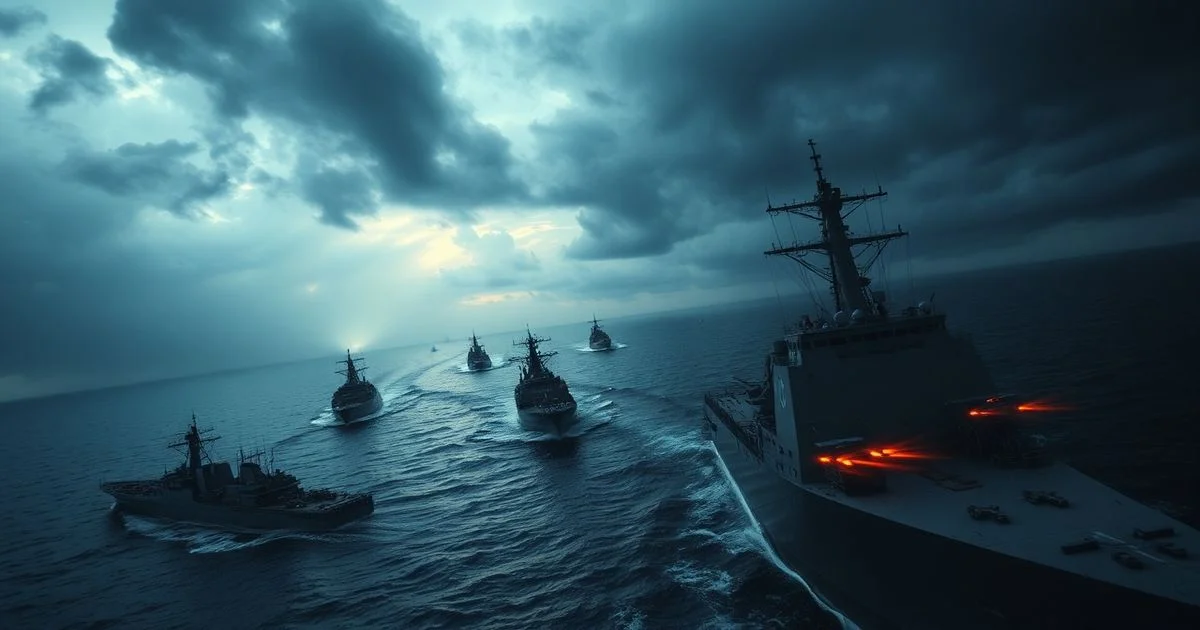
In a dramatic escalation of geopolitical tensions, President Donald Trump has issued a direct order for a naval blockade of the Strait of Hormuz, effective immediately. This decisive action follows the complete collapse of marathon peace talks with Iran in Islamabad, where negotiators failed to reach a resolution on critical issues, most notably Iran's nuclear program. The declaration of the blockade by President Trump on Sunday morning mandates the United States Navy to interdict any and all ships attempting to enter or exit the vital waterway, further exacerbating an already volatile situation and sending shockwaves through global energy markets. This bold move, which sees Trump Orders Hormuz Blockade Amid Failed Iran Talks, marks a perilous new chapter in the strained relationship between Washington and Tehran, raising serious concerns about a potential wider conflict and the severe disruption to international commerce.
- A History of Escalation: US-Iran Relations
- The Strategic Crucible: Why the Strait of Hormuz Matters
- Trump Orders Hormuz Blockade Amid Failed Iran Talks
- Global Repercussions: The Economic Fallout of the Blockade
- Voices from the Diplomatic Front: Reactions and Calls for De-escalation
- The Uncertain Path Ahead: Diplomacy or Further Confrontation
- Conclusion
- Frequently Asked Questions
- Further Reading & Resources
A History of Escalation: US-Iran Relations
The relationship between the United States and Iran has been fraught with tension for decades, characterized by a complex history of mistrust and strategic competition. Since the 1979 Islamic Revolution, which overthrew the pro-Western Shah, formal diplomatic relations between the two nations have been severed. Instead, contacts have been maintained through intermediary powers, with Pakistan serving as Iran's protecting power in the U.S. and Switzerland representing U.S. interests in Iran.
Throughout various U.S. administrations, Iran has been a consistent foreign policy challenge. Sanctions, initially imposed in response to the 1979 hostage crisis, have been a recurring tool in Washington's approach, targeting Iran's economy, nuclear program, and alleged support for terrorism. A significant point of contention was the 2015 Joint Comprehensive Plan of Action (JCPOA), or Iran nuclear deal, which aimed to limit Iran's nuclear activities in exchange for sanctions relief. However, the Trump administration unilaterally withdrew from this agreement in 2018, reinstating a "maximum pressure" campaign of sanctions, arguing the deal was flawed and did not adequately address Iran's ballistic missile program or regional influence. This withdrawal set the stage for intensified confrontations and the current crisis, as detailed in reports like Iran Rejects Truce as Trump's Deadline Looms.
The period leading up to the current crisis has been marked by a hypothetical "hot war" in early 2026, as described in recent reports, with both sides engaging in military actions and retaliatory strikes. Attempts at de-escalation through diplomacy, including a recent two-week ceasefire and Pakistan-mediated peace talks, ultimately faltered. Iran's Supreme Leader had previously banned direct talks with the United States in 2018, and recent negotiations reportedly stalled over Iran's insistence on sanctions relief and Washington's demands for full access to Iran's nuclear facilities. The perceived lack of progress in these indirect negotiations, coupled with long-standing grievances, has now culminated in President Trump's drastic order.
The Strategic Crucible: Why the Strait of Hormuz Matters
The Strait of Hormuz is not merely a waterway; it is arguably the most strategically vital maritime choke point in the world. Trump Warns on Strait of Hormuz Amid Mideast Tensions highlights its critical importance. This narrow channel, located between Oman and Iran, connects the Persian Gulf with the Gulf of Oman and the Arabian Sea, serving as the sole sea passage for a host of oil-rich nations to access international waters. Its significance cannot be overstated, as approximately 20% of the world's liquefied natural gas (LNG) and about 25% of all seaborne oil trade pass through this strait annually. During 2023–2025, an estimated 20.3 million barrels of petroleum and crude oil traversed the Strait daily.
The strait is only about 104 miles (167 km) long and varies in width from roughly 60 miles (97 km) to a mere 21 miles (39 km) at its narrowest point. Ships transiting the strait navigate through inbound and outbound lanes, each two miles wide and separated by a two-mile wide median. The sheer volume of global energy supplies that depend on this passage makes any disruption a potential catastrophe for the world economy. Major Asian importers such as China, India, Japan, and South Korea are particularly reliant on these oil flows, with an estimated 84% of crude oil and condensate moving through Hormuz destined for Asian markets in 2024. Beyond energy, the Persian Gulf is also a significant hub for global fertilizer production, and disruptions could impact agricultural input costs worldwide.
The United States maintains a substantial military presence in the region, primarily through the Fifth Fleet, headquartered in Bahrain. This naval component of U.S. Central Command is responsible for maritime security in the Persian Gulf, Red Sea, Gulf of Oman, and parts of the Indian Ocean. Additionally, multinational forces like Combined Task Force (CTF) 150, which includes vessels from the U.S., Canada, France, Germany, the UK, and Pakistan, operate in the area to protect shipping lanes. The presence of these forces underscores the long-standing international recognition of the Strait's critical importance to global trade and stability.
Trump Orders Hormuz Blockade Amid Failed Iran Talks
On April 12, 2026, following the complete breakdown of U.S.-Iran negotiations, President Donald Trump officially announced a naval blockade of the Strait of Hormuz. In a statement posted on social media, the President declared, "Effective immediately, the United States Navy, the Finest in the World, will begin the process of BLOCKADING any and all Ships trying to enter, or leave, the Strait of Hormuz." This declaration came after talks in Islamabad, mediated by Pakistan, failed to secure a deal, with Vice President JD Vance stating that Iran "has chosen not to accept our terms".
The President emphasized that Iran "will not be allowed to profit off this Illegal Act of EXTORTION," referring to previous reports that Iran had begun collecting tolls in Chinese yuan from vessels for safe passage through the strait. Furthermore, President Trump instructed the Navy to "seek and interdict every vessel in International Waters that has paid a toll to Iran" and announced that the U.S. would commence "destroying the mines the Iranians laid in the Straits". This move effectively escalates the situation from a standoff to an active military enforcement operation.
Iran had reportedly mined parts of the strait and required tankers to request permission to pass, asserting increased control over the waterway. Earlier this week, Iran's Islamic Revolutionary Guard Corps (IRGC) even issued guidance for ships to reroute through Iranian waters around Larak Island, coordinated with the group's navy. The Supreme Leader of Iran, Ayatollah Mojtaba Khamenei, was quoted as saying, "We will also undoubtedly take the management of the Strait of Hormuz to a new stage," signaling Tehran's intention to maintain its assertion of control. This clash of wills over the vital passage has reached a critical point.
International Law and the Legality of Blockades
A blockade, under international law, is recognized as an act of war. Its legal framework is primarily derived from customary international law and treaties such as the Declaration Respecting Maritime Law adopted in Paris in 1856 and the Declaration Concerning the Laws of Naval War adopted in London in 1909. The San Remo Manual on International Law Applicable to Armed Conflicts at Sea (SRM), adopted in 1994, provides further interpretation of these rules, particularly concerning humanitarian considerations.
Key principles governing blockades include the requirement for a formal declaration and notification, which must specify the blockade zone, its duration, and the date it commences. For a blockade to be deemed lawful, it must be effective, meaning it must be maintained by a sufficient force to genuinely prevent access to or departure from the blockaded area. Crucially, international humanitarian law (IHL) stipulates that a blockade is unlawful if implemented in a way that denies the civilian population access to essential goods necessary for their survival, or if its purpose is to cause starvation of civilians. Blockades must also not bar access to, or departure from, neutral ports and coasts, respecting the inviolability of neutral territory and ensuring humanitarian aid convoys are allowed safe passage.
The legality of the U.S. action will undoubtedly be scrutinized by the international community. While a blockade's purpose is to deny the enemy the use of its coastline or ports for military or economic gain, its impact on neutral shipping and civilian populations is a major concern. If the blockade restricts the flow of humanitarian aid or essential civilian goods to Iran, it could be deemed a violation of IHL. Furthermore, the blockade of a state's ports or coastlines could be considered an act of aggression under the Rome Statute of the International Criminal Court, potentially leading to prosecution, although specific jurisdictional requirements would need to be met. The nuances of identifying military vs. civilian goods in a global supply chain add further complexity to these legal considerations.
Immediate Military Response: Mine-Clearing Operations
In tandem with the blockade order, the United States military has swiftly commenced mine-clearing operations within the Strait of Hormuz. U.S. Central Command announced the deployment of guided-missile destroyers USS Frank E. Peterson and USS Michael Murphy into the strategic waterway, with the explicit mission to clear sea mines reportedly laid by Iran's Islamic Revolutionary Guard Corps. These destroyers will be supported by underwater drones in the coming days to facilitate the safe passage of maritime traffic.
Admiral Brad Cooper, commander of CENTCOM, stated that the operation aims to establish a new safe passage, which will soon be shared with the global maritime industry to restore the free flow of commerce. This operational directive directly confronts Iran's alleged mining of the strait, which had effectively halted nearly all traffic by mid-March following attacks on commercial ships and threats of further strikes. The success of these mine-clearing efforts will be critical in determining the immediate impact of the blockade and the potential for a resumption of any form of maritime trade. The dangerous nature of mine warfare, involving specialized equipment and highly trained personnel, adds another layer of risk to the already heightened tensions in the region, with potential for accidental escalation.
Global Repercussions: The Economic Fallout of the Blockade
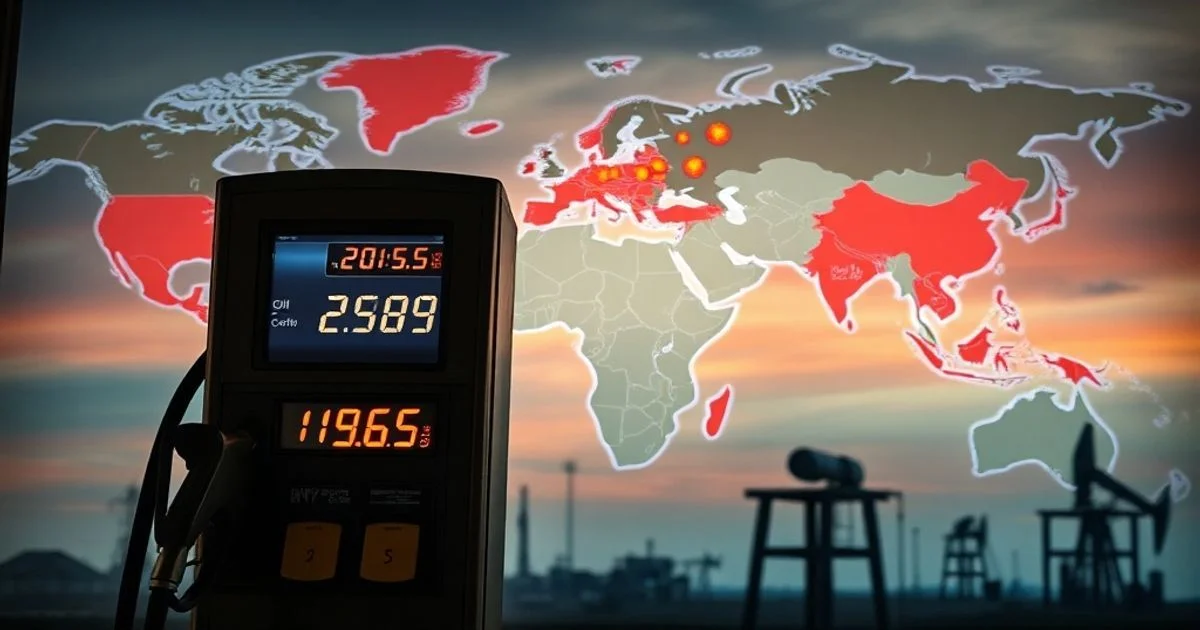
The imposition of a naval blockade on the Strait of Hormuz has immediately triggered severe repercussions across the global economy, primarily impacting energy markets and supply chains worldwide. Following the news, Brent crude oil prices surged dramatically, surpassing $120 per barrel and reaching $126 at its peak, marking the largest disruption to world energy supply since the 1970s energy crisis. This spike is particularly problematic for Asia, where major importers like China, India, Japan, and South Korea, which receive the vast majority of oil and LNG exports from the Gulf, face acute supply shortages and price volatility. Further insights into the broader context can be found in discussions like Gas Prices Soar Amidst Global Oil Tensions.
Beyond crude oil, the blockade has disrupted liquefied natural gas (LNG) exports, especially from Qatar and the UAE, which together account for almost 20% of global LNG exports. This creates a significant supply shock to the global gas market, as alternative routes for these volumes are extremely limited or non-existent, often requiring longer and more expensive transshipment. The head of the International Energy Agency described the situation as the "greatest global energy security challenge in history", emphasizing the interconnectedness and fragility of global energy infrastructure.
The economic fallout extends far beyond energy. The Strait of Hormuz is a crucial corridor for various other commodities essential to global supply chains. The near-total halt of tanker traffic has caused significant disruption in the global supply of sulfur, with Gulf countries accounting for roughly 45% of the global commodity. This is projected to spike fertilizer costs, impacting agriculture worldwide and potentially leading to food inflation. Similarly, the supply of helium, critical for semiconductor manufacturing and medical applications, and naphtha, a feedstock for plastics, packaging, solvents, and pharmaceuticals, are severely constrained, threatening to cripple diverse industries. Middle Eastern polyethylene exports, with approximately 85% moving through the strait, are also affected, impacting everything from consumer goods to industrial components.
Rising energy and freight costs will cascade through supply chains, leading to higher prices for a vast range of goods globally, worsening inflation expectations, and tightening financial conditions. Experts warn that the most significant economic consequences may not appear for months, as these effects move slowly through interconnected systems, but the initial shock is undeniable. In the Gulf states themselves, which rely heavily on food imports and desalination for water, the blockade has caused severe food and water security challenges, resulting in shortages and drastic price increases for groceries and other essential commodities, creating a humanitarian concern alongside the economic one.
Voices from the Diplomatic Front: Reactions and Calls for De-escalation
The dramatic announcement of the Strait of Hormuz blockade has drawn immediate and varied reactions from the international community, with many nations and international bodies expressing profound concern and calling for de-escalation. International organizations, including the United Nations Secretary-General, and various world leaders have appealed to both the United States and Iran to cease hostilities and urgently seek a peaceful solution. The European Union's foreign policy chief, Kaja Kallas, reportedly stated that Iran's choking of the strait had become "everybody's" problem, underscoring the global nature of the crisis and the shared imperative for its resolution.
Key regional and global powers are attempting to navigate the precarious situation. Pakistan, which mediated the recent failed peace talks, has reiterated its commitment to facilitating engagement and dialogue between the two adversaries in the days to come, emphasizing the need for sustained diplomatic efforts. Similarly, Russian President Vladimir Putin has reportedly spoken with his Iranian counterpart, offering to mediate and push for a diplomatic resolution amidst growing global calls for restraint, highlighting Russia's geopolitical interests in regional stability. These diplomatic overtures, however, are complicated by the entrenched positions of both sides, particularly Iran's refusal to accept Washington's terms for nuclear compliance and Washington's insistence on confronting Iran's regional actions and alleged toll collection. The delicate balance of power and conflicting national interests make any diplomatic breakthrough exceptionally challenging.
The Uncertain Path Ahead: Diplomacy or Further Confrontation
The path forward in the wake of President Trump's order for a Hormuz blockade remains deeply uncertain, teetering precariously between a return to diplomacy and the potential for an all-out military confrontation. The immediate future hinges on the effectiveness of the U.S. naval operation and Iran's response. While the U.S. Navy has begun mine-clearing operations to establish a safe passage for maritime commerce, Iran has previously shown a willingness to assert control over the strait through mining and imposing tolls. Any direct military engagement between U.S. and Iranian forces in the strait, whether intentional or accidental, could rapidly escalate into a broader conflict, drawing in regional and global allies. President Trump's warning that "Any Iranian who fires at us, or at peaceful vessels, will be BLOWN TO HELL!" leaves little room for ambiguity regarding the potential for further military action.
The core issue of Iran's nuclear program remains unresolved, identified by President Trump as the singular point of disagreement that led to the collapse of the Islamabad talks. With reports indicating Iran had a substantial reserve of 60% enriched uranium prior to recent military actions, the specter of nuclear proliferation continues to loom large. Washington's stance has been clear: either Iran complies with terms for dismantling its nuclear program, or face "stronger consequences". The question of whether Iran's nuclear material will remain within its borders, or be subject to removal by U.S. forces, adds another layer of complexity and risk, potentially leading to unprecedented interventions.
International mediators face an immense challenge in restarting meaningful negotiations. For diplomacy to succeed, both sides would need to agree on the scope of discussions and genuinely believe in a peaceful resolution over military engagement, which was reportedly not the case in the recent talks. The global community is now watching with bated breath, hoping that cooler heads will prevail and that a pathway to de-escalation can be found before the geopolitical landscape is irrevocably altered by a full-scale war in the Persian Gulf. The economic ramifications alone could plunge the world into an unprecedented crisis, making diplomatic solutions more urgent than ever.
Conclusion
The decision by President Trump to order a naval blockade of the Strait of Hormuz marks a critical and dangerous turning point in the already tumultuous relationship between the United States and Iran. Coming on the heels of failed diplomatic talks, this aggressive maneuver has immediately sent seismic shocks through global energy markets, driving oil prices to unprecedented levels and threatening to unravel intricate worldwide supply chains. The strategic importance of the Strait of Hormuz as the world's most vital oil transit chokepoint ensures that any sustained disruption will have profound and far-reaching economic and humanitarian consequences, particularly for energy-dependent Asian economies and the populations of Gulf states reliant on imported goods. As the U.S. Navy commences mine-clearing operations and international calls for de-escalation intensify, the world holds its breath, contemplating whether this latest escalation will lead to a broader conflict or force a breakthrough in desperately needed diplomatic solutions. The geopolitical stage is set for a period of extreme volatility, as the implications of Trump Orders Hormuz Blockade Amid Failed Iran Talks begin to fully unfold.
Frequently Asked Questions
Q: What is the Strait of Hormuz and why is it so strategically important?
A: The Strait of Hormuz is a narrow, critical maritime choke point connecting the Persian Gulf to the Gulf of Oman and the Arabian Sea. Approximately 20% of the world's liquefied natural gas (LNG) and 25% of all seaborne oil trade pass through this strait annually, making it vital for global energy security and international commerce.
Q: What specific events led to President Trump's order for a naval blockade?
A: The blockade order followed the complete breakdown of U.S.-Iran peace talks, primarily centered on Iran's nuclear program. Reports indicated Iran had also begun collecting tolls for passage and laid mines in the strait, which the U.S. characterized as "extortion" and "illegal acts."
Q: What are the immediate global economic consequences of this blockade?
A: The blockade has caused Brent crude oil prices to surge dramatically above $120 per barrel, marking a major disruption to world energy supply. It has also severely impacted LNG, sulfur, and naphtha exports, leading to increased costs for various commodities, heightened inflation, and significant supply chain disruptions worldwide.