Tiger Woods Crash: Viral Claims & DUI Arrest Details Unpacked
The world of golf, and indeed the broader sporting landscape, was rattled by the severe car crash involving legendary golfer Tiger Woods in February 2021. This incident, alongside the lingering discussions about a separate prior event, brought a whirlwind of media attention, sparking numerous viral claims and reigniting interest in past legal encounters, specifically the Tiger Woods Crash: Viral Claims & DUI Arrest Details. The severe accident on a winding road in Rancho Palos Verdes, California, led to significant injuries for Woods and prompted a thorough investigation by local authorities, capturing headlines globally and sparking widespread public concern for the athlete's well-being.
- The 2021 Single-Vehicle Crash: A Timeline of Events
- Investigating the Tiger Woods Crash: Viral Claims & DUI Arrest Details
- Understanding the 2017 DUI Arrest Details: A Separate Incident
- Public Reaction and Media Scrutiny
- Recovery, Return to Golf, and Lessons Learned
- Conclusion
- Frequently Asked Questions
- Further Reading & Resources
The 2021 Single-Vehicle Crash: A Timeline of Events
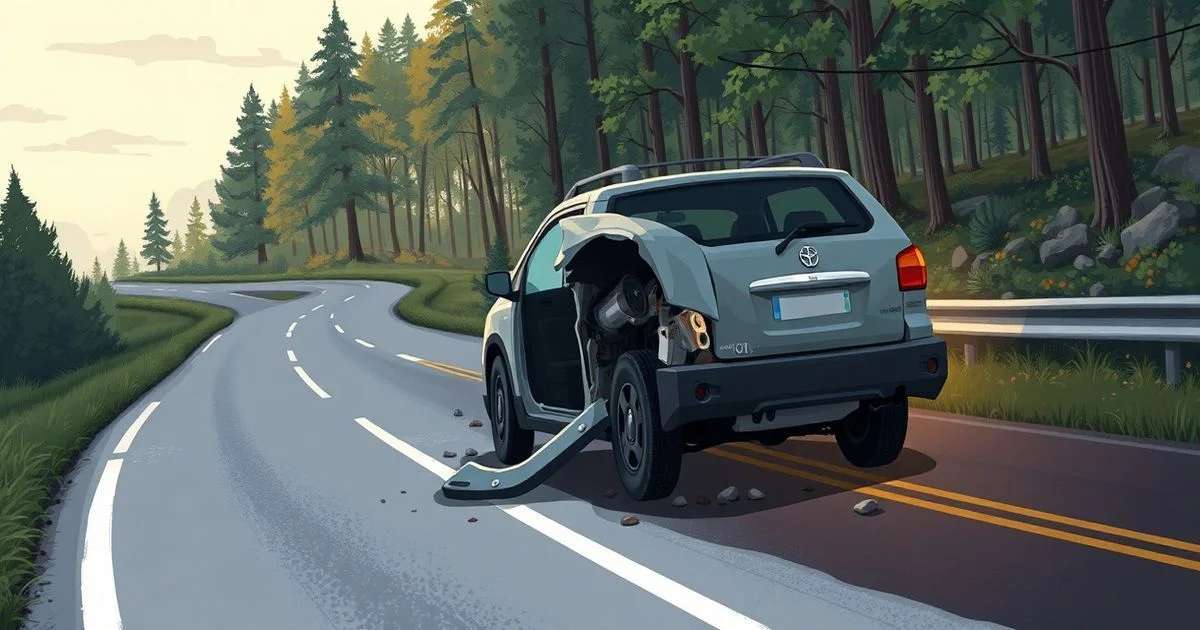
On February 23, 2021, at approximately 7:12 AM PST, emergency services responded to a single-vehicle rollover accident on Hawthorne Boulevard at Blackhorse Road in Rolling Hills Estates, near Rancho Palos Verdes, California. The vehicle involved was a 2021 Genesis GV80 SUV, driven by Tiger Woods. He was reportedly en route to a golf course for a photoshoot when the incident occurred.
Immediate Aftermath and Rescue Efforts
Upon arrival, deputies found Woods conscious but trapped inside the heavily damaged vehicle. The SUV had reportedly struck a median, crossed two oncoming lanes, hit a tree, and then rolled over multiple times before coming to a stop off the road. Firefighters and paramedics worked to extricate Woods from the wreckage using a "jaws of life" tool. He sustained multiple open fractures to his right leg, including comminuted open fractures affecting both the tibia and fibula bones, as well as additional injuries to his ankle and foot. He was transported to Harbor-UCLA Medical Center for emergency surgery.
The Official Investigation and Findings
The Los Angeles County Sheriff's Department conducted an extensive investigation into the crash. Initial statements indicated that there was no evidence of impairment, and Woods was not subjected to field sobriety tests at the scene due to the severity of his injuries. Investigators focused on factors such as speed and road conditions. The stretch of road where the crash occurred is known for its downhill slope and curve, with a history of accidents.
The sheriff's department later announced in April 2021 that the primary cause of the crash was excessive speed and Woods' inability to negotiate the curve. Data recovered from the vehicle's "black box" indicated that Woods was driving at speeds between 84 and 87 mph in a 45 mph zone immediately before impact. He also failed to brake adequately, with very little pedal pressure applied throughout the incident. This conclusion underscored the universal dangers of driving at speeds significantly above the posted limit, especially on winding or unfamiliar roads. The findings also highlighted the effectiveness of modern vehicle data recorders in reconstructing accident scenarios, offering crucial insights for both law enforcement and future vehicle safety improvements. Due to the absence of any evidence of impairment and no other vehicles or parties involved, no criminal charges were filed, and Woods was not issued a citation. This particular stretch of Hawthorne Boulevard has long been recognized by local authorities and residents as problematic, prompting ongoing discussions about increased traffic enforcement and potential road design modifications to enhance safety for all motorists.
Investigating the Tiger Woods Crash: Viral Claims & DUI Arrest Details
In the immediate aftermath of the crash, and even after the official findings were released, several viral claims and theories circulated across social media and certain news outlets. These ranged from speculative reasons for the crash to allegations of foul play or cover-ups.
Claims of Impairment or Distraction
Despite the sheriff's department's clear statement that there was no evidence of impairment, some online discussions suggested Woods might have been under the influence of substances or distracted by his phone. These claims were largely unsubstantiated and contradicted by official reports. Authorities explicitly stated that there were no signs of alcohol or drug influence at the scene, and no probable cause existed to obtain a search warrant for his blood samples.
Theories of a Cover-Up
Another persistent set of claims revolved around the idea that the investigation was not fully transparent or that details were being withheld due, in part, to Woods' celebrity status. These theories gained traction despite the comprehensive nature of the investigation and the eventual public disclosure of the findings. The sheriff's department released significant details from the black box data and their conclusions on the cause of the accident, aiming to provide full transparency and counteract any unfounded speculation.
Speculation on the Vehicle's Safety
The 2021 Genesis GV80, a luxury SUV, also became a subject of discussion, with some questioning its safety features in such a severe impact. However, safety experts and the manufacturer maintained that the vehicle performed as designed, protecting Woods from even more severe or fatal injuries given the violent nature of the crash. The structural integrity of the passenger compartment, despite extensive external damage, played a crucial role in his survival, demonstrating advancements in automotive safety engineering.
Understanding the 2017 DUI Arrest Details: A Separate Incident
While the 2021 crash did not involve any impairment, it often brings up discussions of Tiger Woods' past encounters with the law, particularly his May 2017 arrest for driving under the influence (DUI) in Jupiter, Florida. This incident provides specific DUI Arrest Details that are distinct from the 2021 crash but are relevant to understanding the broader public perception and media narrative surrounding Woods.
The Arrest and Initial Charges
On May 29, 2017, Woods was found asleep at the wheel of his Mercedes-Benz, stopped on the side of a road with the engine running and brake lights on. He was arrested by Jupiter police on suspicion of DUI. Body camera footage from the arresting officers showed Woods struggling to follow instructions and appearing disoriented.
Toxicology Report and Medications
Woods publicly stated that alcohol was not involved in his DUI incident and attributed his condition to an unexpected reaction to prescribed medications. A toxicology report later confirmed that there was no alcohol in his system. However, the report did show the presence of several prescription drugs, including Vicodin, Dilaudid, Xanax, Ambien, and THC (though he did not have a prescription for THC in Florida). Woods had undergone back surgery a month prior and was reportedly taking the medications to manage pain and sleep.
Legal Outcome and Plea Agreement
In August 2017, Woods pleaded guilty to a lesser charge of reckless driving. As part of a plea agreement, he entered a first-time DUI offender program. The terms of this program included 12 months of probation, a $250 fine, 50 hours of community service, regular drug tests, and attendance at a DUI workshop. He was also required to attend Impulse Control Disorder and Relapse Prevention meetings. Successful completion of the program meant the reckless driving charge would be expunged from his record. Woods completed the program in October 2018.
Public Reaction and Media Scrutiny
Both the 2021 crash and the 2017 DUI incident generated intense public reaction and media scrutiny, highlighting the unique position of high-profile athletes in the public eye.
Sympathy and Concern (2021 Crash)
Following the 2021 crash, the overwhelming public sentiment was one of concern and sympathy for Woods. Given the severity of his injuries and the dramatic nature of the accident, fans and fellow athletes alike expressed well wishes and hopes for his recovery. The focus was largely on his health and his potential return to professional golf, overshadowing initial speculation.
Disappointment and Scrutiny (2017 DUI)
The 2017 DUI arrest, however, elicited a more mixed reaction. While some expressed empathy for his struggles with pain and medication, many also voiced disappointment, especially given his previous public scandals. The body camera footage, in particular, became a point of significant media attention and public discussion, intensifying the scrutiny on his personal life and choices and demonstrating the heightened public interest in the private lives of celebrities.
Impact on Image and Legacy
Each incident, in its own way, has contributed to the complex public image and legacy of Tiger Woods. The 2021 crash, despite its severity, garnered more widespread support due to its accidental nature and the focus on physical recovery. The 2017 DUI, while less physically catastrophic, brought back memories of past transgressions and highlighted the challenges of managing pain and prescription medication, especially for a public figure. Both events serve as reminders of the immense pressure and scrutiny that come with being a global icon, illustrating how even non-performance-related incidents can profoundly shape a public figure's narrative.
Recovery, Return to Golf, and Lessons Learned
Following the 2021 crash, Tiger Woods embarked on a long and arduous recovery journey, demonstrating his renowned resilience. His injuries were severe, requiring multiple surgeries and extensive rehabilitation.
The Road to Recovery
Woods spent several months recovering at home, undergoing intensive physical therapy to regain strength and mobility in his right leg. His public appearances were initially limited, often showing him walking with crutches or with a visible limp. The extent of his injuries led many to speculate that his professional golf career might be over, a common concern for athletes facing career-threatening setbacks.
A Miraculous Return
Defying expectations, Woods made a remarkable return to competitive golf in April 2022, competing in the Masters Tournament. While he did not contend for the title, his mere presence on the course was celebrated as a testament to his determination and incredible recovery. The physical and mental fortitude required to return to elite competition after such catastrophic injuries cannot be overstated. His journey inspired millions globally, showcasing not just athletic prowess but also the sheer human will to overcome adversity. He continued to play a limited schedule on the PGA Tour, often struggling with fatigue and pain, but consistently demonstrating flashes of his old brilliance. His ability to compete at such a high level after his injuries is widely considered one of the greatest comebacks in sports history, cementing his legacy not only as a golfing legend but also as a symbol of perseverance.
Preventing Future Incidents
The lessons learned from both the 2021 crash and the 2017 DUI incident are manifold. For the 2021 crash, it highlighted the dangers of excessive speed, even on familiar roads, and the critical importance of adhering to posted speed limits. For the 2017 DUI, it underscored the serious risks associated with driving under the influence of prescription medications, even if legally prescribed, when they impair one's ability to operate a vehicle safely. Both incidents serve as stark reminders for public figures and the general populace about responsible driving practices and the profound consequences of vehicular incidents, advocating for greater awareness and caution behind the wheel.
Conclusion
The incidents surrounding Tiger Woods, particularly the severe 2021 crash and the detailed 2017 DUI arrest, have captivated public attention, revealing the complex interplay of celebrity, personal struggles, and the unforgiving nature of the spotlight. The 2021 accident, attributed to excessive speed, underscored the fragility of life and the intensity of a recovery from severe injury. Meanwhile, the 2017 DUI incident, a distinct event, shed light on the challenges of pain management and the responsible use of prescription medication. As Woods continues his remarkable journey back to professional golf, these events remain a significant part of his narrative, offering lessons on resilience, accountability, and the ever-present scrutiny faced by public figures. The ongoing discussions about the Tiger Woods Crash: Viral Claims & DUI Arrest Details continue to shape public perception and highlight the complexities of navigating personal adversities under the unwavering gaze of the world.
Frequently Asked Questions
Q: What caused Tiger Woods' 2021 car crash?
A: The Los Angeles County Sheriff's Department concluded that the primary cause of the 2021 crash was excessive speed and Woods' inability to negotiate a curve. Data indicated he was driving between 84 and 87 mph in a 45 mph zone immediately before impact.
Q: Was Tiger Woods impaired during the 2021 crash?
A: Official investigations found no evidence of impairment from alcohol or drugs at the scene of the 2021 crash. No field sobriety tests were administered due to the severity of his injuries, and no probable cause was found for a blood sample warrant.
Q: What was the outcome of Tiger Woods' 2017 DUI arrest?
A: Woods pleaded guilty to a lesser charge of reckless driving. He completed a first-time DUI offender program, which included probation, fines, community service, and mandatory attendance at DUI and relapse prevention workshops.