The Lifecycle of Stars: A Guide to Stellar Evolution
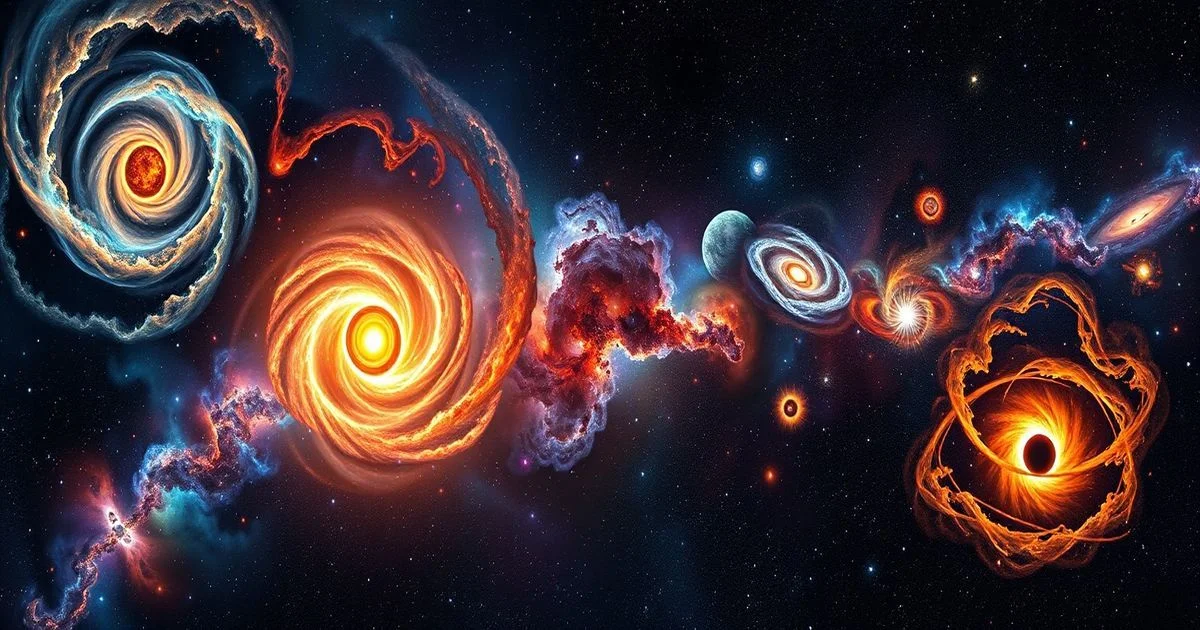
The universe is a dynamic canvas, constantly being reshaped by the fascinating process of stellar evolution, detailing the birth, life, and death of stars. These celestial bodies, seemingly immutable from our terrestrial vantage point, undergo profound transformations driven by fundamental physics. Understanding The Lifecycle of Stars: A Guide to Stellar Evolution offers a breathtaking glimpse into the universe's most powerful engines and the origins of everything we see, including ourselves. This comprehensive guide will navigate the intricate journey of stars, from their humble beginnings as swirling clouds of gas and dust to their dramatic finales, unveiling the cosmic processes that sculpt galaxies and forge the heavy elements essential for life.
- What is Stellar Evolution? Unpacking the Cosmic Journey
- The Cradle of Stars: From Nebula to Protostar
- The Main Sequence: A Star's Longest Act
- The Twilight Years: Post-Main Sequence Evolution
- The Remnants: Stellar Endpoints
- The Cosmic Recycling Program: Stellar Nucleosynthesis and Beyond
- Future Outlook: Unveiling More Stellar Secrets
- Conclusion: Understanding The Lifecycle of Stars: A Guide to Stellar Evolution
- Frequently Asked Questions
- Further Reading & Resources
What is Stellar Evolution? Unpacking the Cosmic Journey
Stellar evolution describes the sequence of changes a star undergoes throughout its lifespan, from its formation from a giant molecular cloud to its ultimate demise as a stellar remnant. This journey is primarily dictated by a delicate balance between two opposing forces: the inward pull of gravity, which attempts to collapse the star, and the outward pressure generated by nuclear fusion in its core, which seeks to expand it. The interplay of these forces, along with the star's initial mass and chemical composition, determines its evolutionary path, luminosity, temperature, and eventual fate.
The timescales involved in stellar evolution are vast, stretching from a few million years for the most massive stars to trillions of years for the smallest red dwarfs – far exceeding the current age of the universe. Our Sun, for instance, is a middle-aged star, having already completed about half of its projected 10-billion-year main-sequence lifespan. By studying stars across various stages of their existence, astronomers piece together this grand cosmic narrative, offering insights into fundamental physics, the distribution of elements, and the potential for life elsewhere in the universe. This field is inherently data-driven, relying on observations across the electromagnetic spectrum, from radio waves to gamma rays, coupled with sophisticated astrophysical models.
The Cradle of Stars: From Nebula to Protostar
Stars are not born in isolation but emerge from the vast, dark expanses of interstellar space, specifically within regions known as nebulae. These ethereal clouds of gas and dust are the universe's ultimate nurseries, where the raw materials for future suns patiently await the conditions for ignition.
Giant Molecular Clouds: The Birthplace
The journey of a star begins within a giant molecular cloud (GMC), colossal structures spanning tens to hundreds of light-years and containing enough material to form thousands or even millions of stars. These clouds are primarily composed of hydrogen (about 75%) and helium (about 23%), with trace amounts of heavier elements, often referred to as "metals" by astronomers. They are incredibly cold, typically only a few Kelvin above absolute zero (around -263°C), allowing molecules to form and persist.
The density of GMCs, while higher than the surrounding interstellar medium, is still incredibly tenuous by terrestrial standards. However, localized increases in density, triggered by phenomena like supernova shockwaves, galactic spiral arms, or even random turbulent fluctuations within the cloud, can lead to gravitational instability. When a region within a GMC becomes dense enough, its own gravity begins to overcome the internal pressure and magnetic fields resisting collapse. This critical point is often described by the Jeans instability criterion, which dictates the minimum mass and size a cloud must have to undergo gravitational collapse under specific temperature and density conditions.
Gravitational Collapse and Protostar Formation
Once a section of a GMC begins to collapse, it fragments into smaller, denser clumps. Each of these clumps is destined to become a protostar. As a clump contracts, its gravitational potential energy is converted into kinetic energy, and then into thermal energy, causing the core of the protostar to heat up significantly. This heating is initially not due to nuclear fusion but solely from gravitational compression.
The collapsing material doesn't fall directly onto the protostar. Instead, due to the conservation of angular momentum, it forms a rotating accretion disk around the nascent star. This disk is crucial for planet formation, providing the raw material for future planetary systems. As matter spirals inward through the disk, friction and magnetic forces transfer energy and momentum, allowing material to gradually fall onto the protostar's surface. Simultaneously, powerful bipolar jets of gas are often ejected from the protostar's poles, clearing away surrounding material and signaling its active formation phase. These objects are known as T-Tauri stars in their later protostellar stages, characterized by strong stellar winds and irregular variability.
During this protostellar phase, temperatures in the core climb dramatically. When the core temperature reaches approximately 10 million Kelvin (10^7 K), the conditions become ripe for nuclear fusion. This crucial event marks the end of the protostellar phase and the birth of a true star, ushering it onto the main sequence. The mass of the star is largely determined during this accretion phase, dictating its future evolution.
The Main Sequence: A Star's Longest Act
The main sequence represents the longest and most stable phase in a star's life. During this period, the star achieves a state of hydrostatic equilibrium, where the outward pressure generated by nuclear fusion in its core perfectly counteracts the inward pull of gravity. Our Sun is currently a main-sequence star, having resided in this phase for approximately 4.6 billion years.
Hydrogen Fusion: The Powerhouse
The defining characteristic of a main-sequence star is the sustained fusion of hydrogen into helium in its core. This process, nuclear fusion, releases an enormous amount of energy, which manifests as the light and heat we observe from stars. The primary fusion pathways depend on the star's mass:
-
Proton-Proton Chain: This is the dominant fusion process in stars with masses less than about 1.5 times that of our Sun. It involves a series of reactions where hydrogen nuclei (protons) combine to form helium nuclei.
- Example: Two protons fuse to form deuterium, a positron, and a neutrino. Deuterium then fuses with another proton to form helium-3. Finally, two helium-3 nuclei fuse to form helium-4 and two protons. This chain accounts for about 98% of the Sun's energy.
-
CNO Cycle (Carbon-Nitrogen-Oxygen Cycle): In more massive stars (greater than 1.5 solar masses), where core temperatures and pressures are higher, the CNO cycle becomes the dominant energy-generating mechanism. Carbon, nitrogen, and oxygen nuclei act as catalysts, facilitating the fusion of hydrogen into helium without being consumed themselves.
Both processes convert a tiny fraction of mass into energy according to Einstein's famous equation, E=mc². This energy, generated in the incredibly dense and hot core, slowly makes its way to the star's surface through a combination of radiative and convective transport, eventually radiating into space. The stability offered by this sustained fusion reaction makes the main sequence the bedrock of stellar existence.
Stellar Classification: Mass as the Determinant
The properties of a main-sequence star, including its temperature, luminosity, color, and most importantly, its lifespan, are primarily determined by its initial mass. Astronomers classify stars using the OBAFGKM spectral sequence, a mnemonic device that arranges stars from hottest and most massive (O-type) to coolest and least massive (M-type).
- O-type stars: Extremely hot (25,000-50,000 K), blue, very luminous, and incredibly massive (15-90 solar masses). They burn through their hydrogen fuel at an astonishing rate, existing for only a few million years.
- M-type stars: Relatively cool (2,500-3,500 K), red, dim, and low mass (0.08-0.45 solar masses). They consume their fuel very slowly, potentially living for trillions of years.
- G-type stars: Like our Sun, with temperatures around 5,200-6,000 K, yellow-white, and moderately massive (0.8-1.2 solar masses). They have lifespans of around 10 billion years.
The relationship between mass and lifespan is inverse: the more massive a star, the shorter its life. This is analogous to a gas guzzler car. A larger engine (more mass) has more fuel, but it burns that fuel so much faster that its effective range (lifespan) is far less than a smaller, more efficient car. For instance, a star 10 times more massive than the Sun might be 1,000 times more luminous, burning its fuel 1,000 times faster, resulting in a lifespan perhaps only 1/100th of the Sun's. This mass-luminosity relationship is one of the fundamental tenets of stellar astrophysics.
The Twilight Years: Post-Main Sequence Evolution
Eventually, even the prodigious hydrogen fuel supply in a star's core begins to dwindle. When approximately 10-12% of the star's total hydrogen has been converted into helium, the core primarily consists of helium ash. This depletion marks the end of the main sequence and initiates the dramatic post-main sequence evolutionary phases, which differ significantly based on the star's initial mass.
Low to Medium-Mass Stars (like our Sun)
Stars with initial masses roughly between 0.8 and 8 times that of the Sun follow a relatively predictable and well-understood path, culminating in the formation of a white dwarf.
Red Giant Phase: Core Contraction, Envelope Expansion
As hydrogen fusion ceases in the core, gravity gains the upper hand. The inert helium core begins to contract, heating up rapidly. This contraction also heats the hydrogen in a shell surrounding the core to temperatures high enough for hydrogen fusion to ignite there. This "hydrogen shell burning" becomes extremely energetic, pushing the star's outer layers outward and causing them to expand enormously. The star's surface cools significantly as it expands, leading to a shift in its color towards red. Thus, the star transforms into a red giant.
For a star like the Sun, this expansion will engulf the orbits of Mercury and Venus, potentially even Earth. While the core heats, it eventually reaches temperatures (around 100 million Kelvin) sufficient to ignite helium fusion into carbon and oxygen through the triple-alpha process. For stars below about 2.2 solar masses, this ignition occurs catastrophically in a "helium flash," a runaway fusion event that briefly makes the core incredibly luminous before settling into stable helium core burning. Stars then spend a period on the horizontal branch or red clump, fusing helium in their core. Once the helium in the core is exhausted, helium shell burning begins, alongside hydrogen shell burning, causing the star to expand even further into an asymptotic giant branch (AGB) star, becoming even larger and more luminous than a red giant.
Planetary Nebula: Shedding Outer Layers
The AGB phase is characterized by intense pulsations and strong stellar winds, causing the star to shed its outer layers of gas and dust into space. These ejected envelopes form spectacular, often spherical or bipolar structures known as planetary nebulae. The term "planetary" is a historical misnomer, as these nebulae have nothing to do with planets; they were named in the 18th century due to their often-round, planet-like appearance through early telescopes.
The central star, now exposed and extremely hot (tens of thousands to hundreds of thousands of Kelvin), emits intense ultraviolet radiation. This UV radiation ionizes the surrounding ejected gas, causing it to glow brightly across various wavelengths, creating the vibrant colors and intricate patterns observed in nebulae like the Helix Nebula or the Ring Nebula. This phase is relatively brief, lasting only tens of thousands of years, during which the central star's mass loss is significant, often losing up to 80% of its initial mass.
White Dwarf: The Stellar Corpse
Once the planetary nebula disperses, the remaining core of the star is left behind. This is a white dwarf, a dense, compact stellar remnant composed primarily of carbon and oxygen (and sometimes neon and magnesium for slightly more massive progenitors). It is no longer undergoing nuclear fusion but is incredibly hot, slowly radiating away its residual thermal energy over billions of years.
The white dwarf is supported against gravitational collapse not by thermal pressure, but by a quantum mechanical effect called electron degeneracy pressure. This pressure arises from the Pauli Exclusion Principle, which states that no two electrons can occupy the same quantum state. As the white dwarf cools and tries to contract, the electrons are forced into higher energy states, generating an outward pressure that resists further compression. However, this pressure has a limit: the Chandrasekhar Limit, approximately 1.4 solar masses. If a white dwarf accretes enough material from a binary companion to exceed this limit, electron degeneracy pressure fails, leading to a catastrophic Type Ia supernova. Otherwise, a solitary white dwarf will simply cool down over cosmic timescales, eventually becoming a cold, dark "black dwarf" (though none are expected to have formed yet, given the age of the universe). A white dwarf typically has a mass comparable to the Sun but is only about the size of Earth, making it incredibly dense. A teaspoon of white dwarf material would weigh several tons.
High-Mass Stars (8+ Solar Masses)
Stars with initial masses greater than about 8 solar masses lead much shorter, more dramatic lives and meet far more explosive ends. Their immense gravitational forces drive their cores to higher temperatures and pressures, allowing them to fuse progressively heavier elements.
Supergiant Phase: Multi-Shell Burning
After exhausting hydrogen in their core, high-mass stars also expand, but they become supergiants – even larger and more luminous than red giants. They can swell to diameters hundreds or even thousands of times that of the Sun (e.g., Betelgeuse). The crucial difference for supergiants is their ability to ignite successive stages of nuclear fusion in their core. Once helium is depleted, the core contracts further, heating up to fuse carbon into neon and magnesium. This process continues with increasingly heavier elements: neon into oxygen, oxygen into silicon, and finally silicon into iron.
This creates an "onion-like" structure within the supergiant, with layers of different elements fusing in concentric shells around an inert iron core. For example, a supergiant might have a hydrogen-fusing shell, a helium-fusing shell, a carbon-fusing shell, and so on, all surrounding a growing iron core. Each successive fusion stage produces less energy per reaction and lasts for a shorter duration than the previous one, as the star burns through its fuel increasingly rapidly. The silicon burning phase, for instance, might last only a few days to a week.
Core Collapse and Type II Supernova
The fusion sequence terminates with iron (Fe). Unlike lighter elements, the fusion of iron nuclei consumes energy rather than releasing it. When the iron core of a massive star grows to exceed the Chandrasekhar Limit (and a slightly higher limit for rotating, degenerate cores), electron degeneracy pressure can no longer support it against its immense self-gravity. The core undergoes a catastrophic core collapse, imploding in a fraction of a second.
This rapid inward collapse causes the core to become incredibly dense, compressing atoms so tightly that protons and electrons are squeezed together to form neutrons and neutrinos. The core effectively transforms into a proto-neutron star. When the collapsing outer layers of the star hit this incredibly rigid, newly formed neutron core, they rebound violently. This rebound, coupled with the immense burst of neutrinos generated during the collapse (which carry away a significant amount of the star's energy), drives a powerful shockwave outward through the star's remaining layers. This is a Type II supernova, a cataclysmic explosion that briefly outshines an entire galaxy, releasing more energy in a few weeks than the Sun will produce in its entire 10-billion-year lifetime. A typical Type II supernova can reach peak luminosities equivalent to about 10^49 to 10^50 ergs per second.
This explosion not only scatters the star's outer layers and newly synthesized heavy elements across space but is also the primary site for the creation of elements heavier than iron, through processes like the r-process (rapid neutron capture). These elements, crucial for planet and life formation, would otherwise not exist.
The Remnants: Stellar Endpoints
Following the spectacular finale of a massive star's life, the remnants left behind are among the most exotic and extreme objects in the universe. Their nature is determined by the mass of the core that survived the supernova.
Neutron Stars: The Dense Heart of a Supernova
If the stellar core that remains after a Type II supernova is between approximately 1.4 and 3 solar masses, it collapses further than a white dwarf but stabilizes as a neutron star. These objects are supported by neutron degeneracy pressure, an even more potent quantum mechanical effect than electron degeneracy pressure. Neutrons are squeezed so tightly together that the entire star is essentially a giant atomic nucleus.
Neutron stars are incredibly compact: a star with 1.5 times the mass of the Sun compressed into a sphere only about 20-25 kilometers (12-15 miles) in diameter – roughly the size of a city. Their density is mind-boggling; a single sugar cube of neutron star material would weigh billions of tons, more than all the cars in the world combined. They also possess incredibly strong magnetic fields and rotate at phenomenal speeds, sometimes hundreds of times per second. If their magnetic poles align with Earth, we observe them as pulsars, emitting beams of radiation that sweep across space like a cosmic lighthouse beacon. Some neutron stars, with even stronger magnetic fields, are known as magnetars, capable of generating powerful bursts of X-rays and gamma rays.
Black Holes: The Ultimate Gravitational Collapse
If the stellar core remnant exceeds approximately 3 solar masses (the Tolman-Oppenheimer-Volkoff limit), even neutron degeneracy pressure cannot halt the gravitational collapse. The core continues to shrink indefinitely, forming a stellar-mass black hole.
A black hole is not an object in the traditional sense, but a region of spacetime where gravity is so intense that nothing, not even light, can escape. The boundary of this region is called the event horizon. Once matter or light crosses the event horizon, it is irrevocably drawn towards the singularity at the center, a point of infinite density where all the mass of the black hole is theoretically concentrated. For a deeper exploration into how black holes function in the fabric of spacetime, further reading is recommended. The size of the event horizon is given by the Schwarzschild radius, which for a 3-solar-mass black hole is about 9 kilometers.
Stellar-mass black holes are notoriously difficult to detect directly because they emit no light. However, their presence can be inferred by their gravitational effects on nearby matter or companion stars. For example, they can pull gas from a binary companion, forming an accretion disk that heats up to X-ray temperatures as it spirals inwards, producing detectable X-ray emissions. The detection of gravitational waves from merging black holes by observatories like LIGO and Virgo has also provided direct evidence of their existence and the violent processes that can create them.
The Cosmic Recycling Program: Stellar Nucleosynthesis and Beyond
The lifecycle of stars is not just a tale of individual celestial bodies; it is the fundamental engine driving the chemical enrichment of the universe. This process, known as stellar nucleosynthesis, explains the origin of almost all elements heavier than hydrogen and helium.
Stars begin their lives with the primordial soup of hydrogen and helium, the raw ingredients left over from the Big Bang. Within their cores, through successive stages of fusion, they forge elements up to iron. While elements like carbon, oxygen, and nitrogen are vital for life and are created during a star's main sequence and red giant phases, elements heavier than iron, such as gold, silver, uranium, and platinum, require even more extreme conditions. These are primarily synthesized during the catastrophic events of supernovae explosions and, more recently discovered, during the mergers of neutron stars.
When massive stars explode as supernovae, they violently eject vast quantities of these newly forged elements into the interstellar medium (ISM). Planetary nebulae from lower-mass stars also contribute, albeit less dramatically, to this chemical enrichment. This "cosmic recycling" ensures that the gas and dust in the ISM become progressively richer in heavier elements with each new generation of stars. Subsequent generations of stars and planetary systems then form from this enriched material. Our own Sun, a second or third-generation star, incorporated these heavier elements into its protoplanetary disk, allowing for the formation of rocky planets like Earth and ultimately, the complex chemistry of life itself. The famous adage "We are stardust" is a literal truth, a profound testament to the role of stellar evolution in our very existence.
Future Outlook: Unveiling More Stellar Secrets
Our understanding of stellar evolution has progressed dramatically over the past century, yet there remain many mysteries to unravel. The advent of new observational technologies and theoretical models promises even deeper insights into the lives and deaths of stars.
One area of active research is the detailed modeling of stellar interiors and atmospheres, especially for extreme stars like rapidly rotating massive stars or those in very close binary systems. The precise mechanisms of core collapse supernovae, for instance, are still not fully understood, particularly the role of neutrinos and turbulent convection in driving the explosion. Gravitational wave astronomy, pioneered by detectors like LIGO and Virgo, offers an entirely new window into the universe, directly observing events like the mergers of black holes and neutron stars, providing unprecedented data on these extreme stellar remnants.
Furthermore, exoplanet research is intimately linked with stellar evolution. Understanding a star's lifecycle is crucial for determining the habitability of its planets and predicting how long life might persist around it. New telescopes, such as the James Webb Space Telescope (JWST), are providing unparalleled views of star-forming regions, planetary nebulae, and even distant galaxies, allowing astronomers to study stellar populations across cosmic time and varying environmental conditions. The interplay between dark matter and dark energy with stellar evolution, though subtle, also presents intriguing theoretical questions that may be addressed by future cosmological observations.
Conclusion: Understanding The Lifecycle of Stars: A Guide to Stellar Evolution
From the vast, frigid giant molecular clouds where they are born to the fiery, cataclysmic finales that scatter their essence across the cosmos, the journey of a star is a profound testament to the fundamental forces of nature. We have traced this remarkable path, observing how a star's initial mass dictates its entire destiny, shaping its main sequence lifetime, its dramatic post-main sequence transformations, and its eventual fate as a white dwarf, neutron star, or black hole.
The Lifecycle of Stars: A Guide to Stellar Evolution not only illuminates the mechanics of cosmic engines but also highlights our own intrinsic connection to these distant celestial bodies. The elements that constitute our planet and our very being were forged in the hearts of stars and dispersed by their explosive deaths. As technology advances, our ability to observe and model these processes will only deepen, offering new perspectives on the universe's grand design and our humble, yet significant, place within it. The ongoing cosmic drama of stellar evolution continues to shape the universe, making new worlds and new possibilities, including life itself, possible.
Frequently Asked Questions
Q: How long do stars live?
A: A star's lifespan is primarily determined by its initial mass. Massive stars burn through their fuel quickly, living only millions of years, while low-mass stars like red dwarfs can shine for trillions of years. Our Sun, a medium-mass star, has a projected lifespan of about 10 billion years.
Q: What is the difference between a red giant and a supergiant?
A: Both are expanded, late-stage stars. Red giants are formed from low to medium-mass stars (like our Sun) after hydrogen depletion. Supergiants come from much more massive stars (8+ solar masses) and are significantly larger, more luminous, and can fuse heavier elements beyond helium.
Q: What supports a white dwarf against collapse?
A: A white dwarf is supported by electron degeneracy pressure. This quantum mechanical effect prevents electrons from occupying the same state, creating an outward pressure that counteracts gravity, up to a limit of about 1.4 solar masses.