Social Media Giants Liable: Addiction Trial Verdict Reshapes Tech Accountability
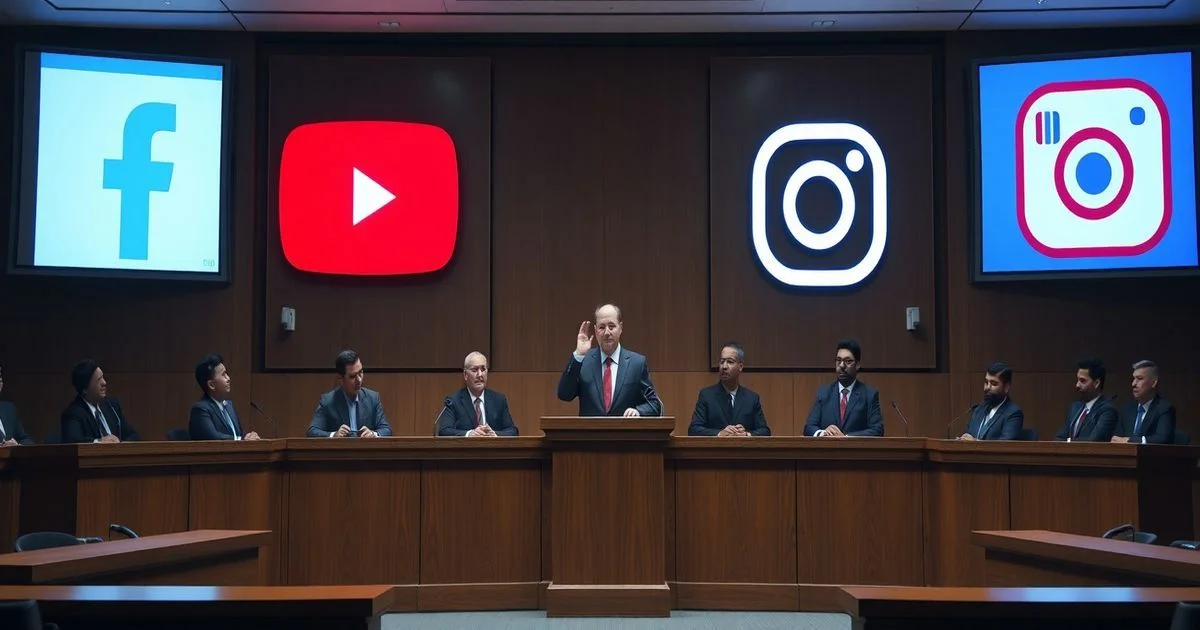
Social Media Giants Liable: Addiction Trial Verdict Reshapes Tech Accountability
In a watershed moment that is set to redefine the landscape of digital responsibility, the recent landmark verdicts delivering the Social Media Giants Liable: Addiction Trial Verdict have decisively found Meta and Google liable for harms related to addiction, reshaping how these powerful platforms are held accountable. Juries in both New Mexico and California delivered twin verdicts, marking significant victories for child online safety advocates and potentially opening the door to a wave of new lawsuits against companies that design and operate addictive features. These pivotal rulings indicate a growing societal consensus that platforms bear substantial responsibility for the mental distress and compulsive use their products can induce in young users. The decisions highlight a critical shift in legal strategy, moving beyond content moderation to scrutinize the very design features of social media applications.
- Social Media Giants Liable: Addiction Trial Verdict Reshapes Tech Accountability
- Background: The Mounting Pressure on Social Media Companies
- The Landmark Verdicts: Social Media Giants Liable: Addiction Trial Verdict
- Impact and Implications
- Expert Opinions and Reactions
- The Future of Digital Platforms
- Frequently Asked Questions
- Further Reading & Resources
Background: The Mounting Pressure on Social Media Companies
For years, social media companies have faced increasing scrutiny over the psychological impact of their platforms, particularly on young people. Allegations have mounted concerning deliberate design choices that foster compulsive usage patterns, contributing to a range of mental health issues such as anxiety, depression, body dysmorphia, and even self-harm and suicidal ideation. Critics, including parents, mental health professionals, and advocacy groups, have consistently argued that features like "infinite scroll," "autoplay" videos, and persistent notifications are engineered to maximize user engagement, often at the expense of user well-being.
Studies have consistently highlighted a strong link between heavy social media use and an increased risk for various mental health symptoms, especially among adolescents. The "addictive nature" of social media is often attributed to its ability to activate the brain's reward center, releasing dopamine with each "like," share, or notification, creating a feedback loop akin to gambling addiction. Despite these growing concerns, social media companies have largely disputed claims that their platforms are inherently addictive or directly cause mental health harms, often citing a lack of conclusive scientific evidence or attributing issues to external factors.
Previous legal challenges often grappled with the protections afforded to tech companies under Section 230 of the 1996 Communications Decency Act, which shields platforms from liability for third-party content posted by users. However, the recent lawsuits have strategically shifted focus, arguing that the harm arises not from user-generated content, but from the platforms' own engineering and design choices. This legal distinction has proven critical in allowing these cases to proceed.
The Landmark Verdicts: Social Media Giants Liable: Addiction Trial Verdict
This week, the legal landscape surrounding social media liability fundamentally shifted with two groundbreaking jury verdicts. In New Mexico, a jury found Meta (parent company of Facebook and Instagram) liable for violating the state's consumer protection laws by misleading users about the safety of its platforms, specifically concerning child exploitation and mental health impacts, imposing a $375 million civil penalty. This decision, following a nearly seven-week trial, sided with state prosecutors who argued that Meta prioritized profits over safety.
Concurrently, a California jury delivered a separate, equally significant ruling, finding Meta and Google-owned YouTube negligent in their design and operation, directly leading to mental distress for a young woman. The plaintiff, identified as KGM, a 20-year-old woman, alleged that her use of YouTube and Instagram from a young age resulted in addictive usage patterns and contributed to severe mental health problems, including depression, anxiety, and body dysmorphia. The jury awarded her $3 million in compensatory damages and an additional $3 million in punitive damages, holding Meta 70% responsible and YouTube 30% responsible for the harm. Snapchat and TikTok, initially named in the California lawsuit, settled with the plaintiff for undisclosed sums before the trial began.
These verdicts are considered landmark because they represent the first time such claims have reached a jury and resulted in liability findings against major tech companies based on product design rather than user-generated content. The trials scrutinizing the design of platforms as defective products have opened a new "legal playbook" for holding tech companies accountable.
Specific Allegations and Evidence
The core of the plaintiffs' arguments centered on the concept of "addiction by design." Lawyers presented evidence detailing how specific platform features were intentionally developed to maximize user engagement, thereby fostering compulsive use. These features include:
- Infinite Scroll and Continuous Feed: Designed to eliminate natural stopping points, encouraging endless consumption of content.
- Autoplay Videos: Automatically playing the next video, removing user choice and extending screen time.
- Algorithmic Recommendations: Systems that personalize content to be highly engaging and optimize for watch time, potentially leading users down "rabbit holes".
- Persistent Notifications and Alerts: Designed to prompt immediate action and pull users back to the platform through artificially created urgency.
- "Likes" and Social Validation: Exploiting the human need for social connection and approval, creating a dopamine-driven reward cycle.
Crucially, the trials introduced internal company documents and expert testimony revealing that tech executives were aware of the addictive potential and the mental health risks, particularly for minors, but allegedly prioritized profits over user safety. Meta CEO Mark Zuckerberg and Instagram head Adam Mosseri even took the stand to defend their products. The jury in California explicitly found that the companies were aware of the adverse effects on minors but failed to adequately warn users.
The Court's Reasoning
The courts in both New Mexico and California focused on the companies' conduct in designing and operating their platforms, not merely on the content posted by users. This allowed plaintiffs to circumvent traditional Section 230 defenses. The legal theories successfully advanced included:
- Consumer Protection Violations (New Mexico): Meta was found to have violated state consumer protection laws by misleading users about platform safety and failing to prevent and alert users to sexual predation and mental health impacts.
- Negligence and Product Liability (California): The California jury determined that Meta and YouTube were negligent in their design and operation, and that these design choices were a substantial factor in causing harm to the plaintiff's mental health. This approach treats social media platforms as "defective products," akin to cases against tobacco or opioid manufacturers. The jury also found that the companies acted with "malice, oppression, or fraud".
This distinction is vital, as it allows for liability based on the platform's architecture and features rather than the unpredictable nature of user-generated content.
Impact and Implications
The "Social Media Giants Liable: Addiction Trial Verdict" marks a monumental inflection point, promising far-reaching consequences for the tech industry, users, and regulatory bodies worldwide.
For Social Media Companies
The immediate implications for tech giants like Meta and Google are substantial. The financial penalties, while a fraction of their revenues, are merely the beginning. With thousands of similar cases pending in both federal and state courts across the U.S., these bellwether trials could unleash a floodgate of litigation, exposing companies to massive potential payouts in compensatory and punitive damages. Experts suggest these payouts could set the bar for future awards.
More profoundly, these verdicts challenge the fundamental business models of social media platforms, which are often optimized for maximizing engagement and attention for advertising revenues. The rulings could force companies to:
- Redesign Platform Features: This might include introducing more friction points, limiting infinite scroll, reducing autoplay, providing greater user control over algorithms, and implementing clearer warnings about potential risks, similar to emerging regulations seen in the broader field of AI governance and workplace rules.
- Increase Transparency: Mandated transparency around algorithmic operations and data collection practices could become standard.
- Invest in Safety and Well-being: A shift in focus from "growth at all costs" to prioritizing user mental health and safety, particularly for younger demographics.
- Face Reputational Risk: The negative publicity and legal findings could erode public trust and further fuel calls for stricter oversight.
- Re-evaluate Legal Defenses: The successful sidestepping of Section 230 protections in these cases means tech companies will need new strategies to defend against future product liability and negligence claims.
Meta has already indicated it will appeal the New Mexico decision, and it is expected that both companies will exhaust all legal avenues to challenge these verdicts.
For Users and Advocates
For individuals and families who have long struggled with the negative impacts of social media, these verdicts represent a monumental validation of their concerns. Child online safety advocates view these decisions as landmark victories, empowering them to push for further reforms and accountability. The rulings provide a legal precedent for future plaintiffs, giving hope to thousands of families with similar cases pending.
The increased public awareness resulting from these trials could also lead to:
- Greater User Awareness: More users may become critically conscious of how social media platforms are designed to influence their behavior and mental health.
- Demand for Safer Products: Users might demand more ethical design choices, greater control over their digital experience, and better protection, especially for minors.
- Empowerment of Advocates: The legal victories strengthen the hand of advocacy groups lobbying for legislative changes and corporate accountability.
Regulatory Landscape
The verdicts arrive amidst ongoing debates about social media regulation globally. Efforts to pass new child online safety guardrails have faced roadblocks at the federal level in the U.S., even as other tech companies grapple with strategic shifts, as seen in the recent decision by OpenAI to shut down its Sora AI video app. Some states, like New York, California, and Utah, have already passed laws granting parents more control over their children's algorithms and social media use.
Potential regulatory responses could include:
- Mandatory Age Verification and Restrictions: Laws enforcing minimum age requirements and stricter controls for underage users.
- Algorithmic Accountability: Legislation requiring transparency in algorithms and potentially restricting "predatory algorithmic feeds" that target minors.
- Default Privacy Protections: Policies that implement default privacy settings for youth and limit data collection.
- Warning Labels: Similar to the U.S. Surgeon General's call for warning labels on social media to highlight potential mental health risks.
- Independent Oversight Bodies: Establishing entities with genuine enforcement authority to ensure compliance with new safety standards.
The legal outcomes could also prompt international dialogue and action, as concerns about social media addiction are global.
Expert Opinions and Reactions
Legal experts have hailed these verdicts as transformative. Professor Terry Flew, Co-Director in the Centre for AI, Trust and Governance at The University of Sydney, noted that the cases "affirm what has been apparent for a long time: large tech companies have long been using addictive design features to develop compulsive use of their platforms by young people". He believes that policy measures like minimum age restrictions are likely to become more common worldwide in light of such findings.
Many see parallels between these social media lawsuits and the historical litigation against the tobacco and opioid industries, where companies were eventually held accountable for knowingly designing harmful products and concealing risks. This comparison underscores the magnitude of the legal shift.
However, some legal scholars, like Erwin Chemerinsky, dean of UC Berkeley School of Law, have expressed concerns regarding the First Amendment implications and whether such cases should even reach a jury trial. Social media companies, in their defense, often emphasize their efforts to provide safety tools and content restrictions for young users, while also questioning the scientific consensus on social media addiction as a formal disorder. Meta, for instance, has asserted that "teen mental health is profoundly complex and cannot be linked to a single app".
Despite these ongoing debates, the sentiment among plaintiffs' attorneys is clear. Rachel Lanier, an attorney for KGM, stated that the verdict is "a referendum — from a jury, to an entire industry" that accountability has arrived.
The Future of Digital Platforms
The "Social Media Giants Liable: Addiction Trial Verdict" signals a new era where the digital realm is no longer immune to traditional product liability laws. The focus has decisively shifted from content moderation to the fundamental architecture and design choices of social media platforms.
This shift presents both challenges and opportunities. For tech companies, it means a potential re-evaluation of core development philosophies, moving towards more "humane and ethical" design principles. This could involve greater investment in user well-being features, transparent age-appropriate experiences, and genuine co-design with end-users, especially young people. The industry may need to confront the reality that metrics optimized solely for attention and engagement can also be sources of harm.
For policymakers, the verdicts provide a powerful impetus to develop comprehensive regulatory frameworks that address algorithmic accountability, data collection practices, and age-appropriate online environments. The ongoing litigation represents a rare opportunity for courts and the public to scrutinize not just what young people do online, but what technology companies have built and why.
Ultimately, the future of digital platforms will likely be shaped by a delicate balance between innovation, user autonomy, corporate responsibility, and robust regulatory oversight. The recent verdicts serve as a stark reminder that the pursuit of technological advancement must always be tempered by a profound commitment to public health and safety.
Frequently Asked Questions
Q: What is the significance of the social media addiction trial verdicts?
A: These verdicts are landmark because they are the first to find major social media companies liable for harms based on their product design, not just user content. This fundamentally shifts legal accountability for digital platforms and sets a new precedent.
Q: Which social media companies were found liable and where?
A: Meta (parent company of Facebook and Instagram) and Google (owner of YouTube) were found liable. Juries delivered twin verdicts in New Mexico (against Meta) and California (against Meta and YouTube).
Q: How might these verdicts impact future social media design and regulation?
A: These rulings could compel tech companies to redesign features to be less addictive, increase transparency around algorithms, and prioritize user well-being. They also provide a strong impetus for new legislative action and stricter regulatory oversight globally.
Further Reading & Resources
- Landmark Verdicts Could Unleash New Legal Playbook Over Social Media Harms
- Social Media Companies Face Legal Reckoning Over Mental Health Harms to Children
- Jury Finds Meta, YouTube Liable in Landmark Social Media Addiction Case
Disclaimer: This blog post is based on information from recent news reports regarding ongoing social media addiction lawsuits and verdicts. The legal landscape is dynamic, and appeals or further legal actions may alter future outcomes.
Graph Representation:
Vertices: Social Media Giants, Legal System, Users, Regulators, Public Opinion
Edges:
(Social Media Giants, Legal System, "Defendant")
(Legal System, Social Media Giants, "Holds Liable")
(Users, Social Media Giants, "Affected by Design")
(Regulators, Social Media Giants, "Potential for New Laws")
(Public Opinion, Social Media Giants, "Shifting Perception")
(Legal System, Users, "Protects Rights")
(Social Media Giants, Regulators, "Responds to Pressure")
Social Media Addiction Symptoms:
Common symptoms associated with social media addiction, as highlighted in studies and court cases, include:
- Increased anxiety and depression.
- Feelings of inadequacy, dissatisfaction, and loneliness.
- Body dysmorphia and negative self-esteem.
- Compulsive checking of platforms.
- Difficulty reducing or stopping social media use despite attempts.
- Restlessness or distress when unable to access social media.
- Neglecting other activities or relationships due to social media use.
- Using social media to escape personal problems.
- Disrupted sleep patterns.
- Increased risk of self-harm or suicidal thoughts.