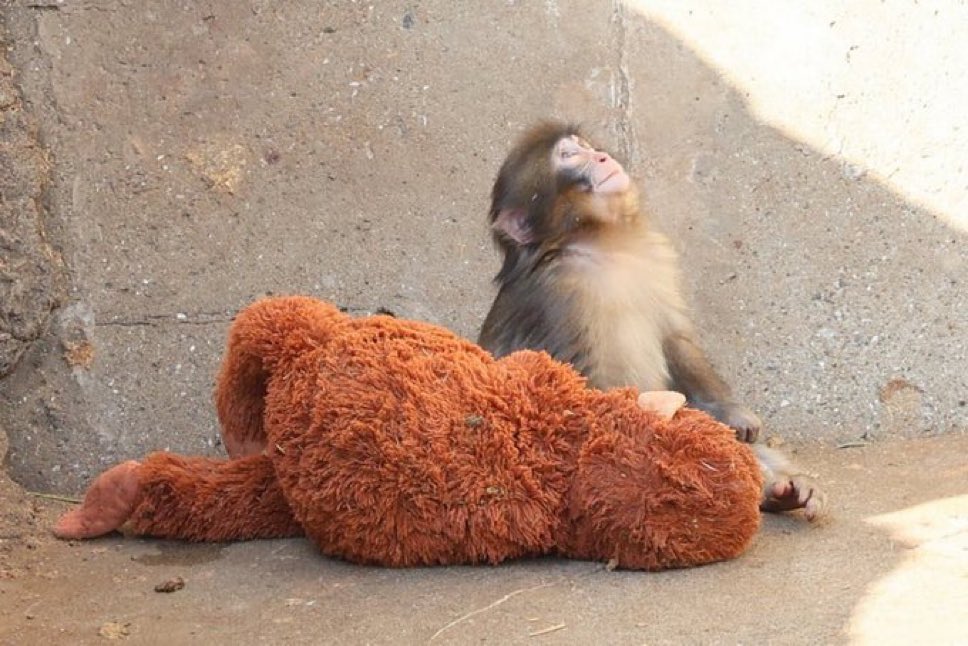
The Little Macaque Who Stole Our Hearts
In a world often filled with challenging news, stories of resilience and adorable animal antics have a way of capturing our collective attention. One such story is that of Punch, a seven-month-old Japanese macaque at Ichikawa City Zoo near Tokyo, who has become a global sensation. Born in July 2025, Punch faced a difficult start after being abandoned by his mother, a first-time parent, shortly after birth.
A Stuffed Comfort: Ora-mama
To provide comfort and aid his development, zookeepers at Ichikawa City Zoo hand-raised Punch. They gave him a bug-eyed orangutan plush toy, which quickly became his constant companion and a surrogate mother figure. Affectionately dubbed "Ora-mama" by many, this stuffed friend offered Punch the security and physical contact crucial for baby macaques, who naturally cling to their mothers to develop strength and confidence. Videos and images of Punch dragging his plushie around the enclosure touched millions, symbolizing his primal need for connection and safety.
Navigating the Complex Social World
Punch's journey isn't just about his adorable bond with a toy; it's also about his brave efforts to integrate into his macaque troop. After being raised in an artificial environment, the next crucial step for Punch is to learn the intricate social rules of his fellow macaques. This transition, however, hasn't been without its challenges, sometimes leading to viral videos that might appear concerning at first glance.
Understanding Monkey Business: Discipline and Play
Recently, footage circulated online showing Punch being "scolded" or "dragged" across the ground by an adult macaque. While these videos sparked sympathy and even outrage among some viewers, the Ichikawa City Zoo quickly clarified that such interactions are a normal and essential part of macaque social development.
Monkeys, especially macaques, live in complex social structures with strict hierarchies. Young macaques are low-ranking and must quickly learn how to show respect through various gestures and facial expressions. Adult monkeys, particularly mothers, don't hesitate to enforce discipline to teach youngsters the boundaries and social conventions necessary for group cohesion and survival. An adult monkey might intervene if a baby is perceived as annoying or disruptive to another young monkey. These interactions, while appearing rough, are crucial for Punch to understand his place and develop appropriate social skills within the troop.
Play is also a vital component of infant and juvenile monkey development, helping them forge social bonds and hone motor-coordination skills. It allows them to develop and assess their relative strength with peers. Even playful "poking" or wrestling matches are part of this learning process.
A Testament to Resilience
Punch's story is a powerful reminder of the resilience of animals and the importance of understanding natural behavior. Despite his initial abandonment, he is steadily learning to navigate the social landscape of his troop, gradually being accepted by other members. Zookeepers have reported milestones in his social development, including being groomed by another monkey—a key sign of trust—and playfully interacting with other young macaques.
His journey continues to captivate hearts worldwide, serving as a heartwarming example of adaptation and the wild world's intricate social dynamics. As Punch grows, his story underscores the vital role zoos play in animal welfare and education, helping us appreciate the complexities of primate life.
Conclusion
The "baby monkey punch" phenomenon, centered around the captivating macaque named Punch, highlights how observing animal behavior can lead to both concern and deeper understanding. What might initially seem like aggression is often a fundamental aspect of social learning and hierarchy within a monkey troop. Punch's ongoing integration into his group, even with its tough lessons, is a testament to his mental strength and resilience. His story encourages us to look beyond initial appearances and appreciate the rich, complex lives of our primate relatives.
Further Reading & Resources
- Japanese Macaque (Snow Monkey): https://en.wikipedia.org/wiki/Japanese_macaque
- Ichikawa City Zoo (Official Site): https://www.city.ichikawa.lg.jp/zoo/
- Macaque Social Behavior: https://en.wikipedia.org/wiki/Macaque#Social_behavior
- World Association of Zoos and Aquariums (WAZA): https://www.waza.org/
- The Importance of Play in Animals: https://www.nationalgeographic.com/animals/article/why-animals-play