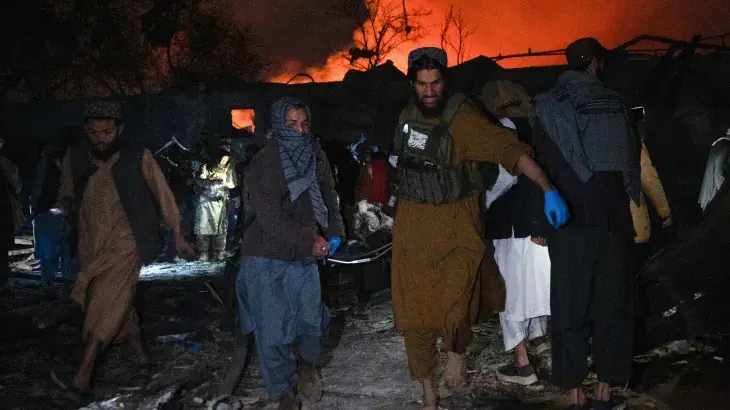
Pakistan Named World's Most Polluted Nation in 2025: A Deep Dive
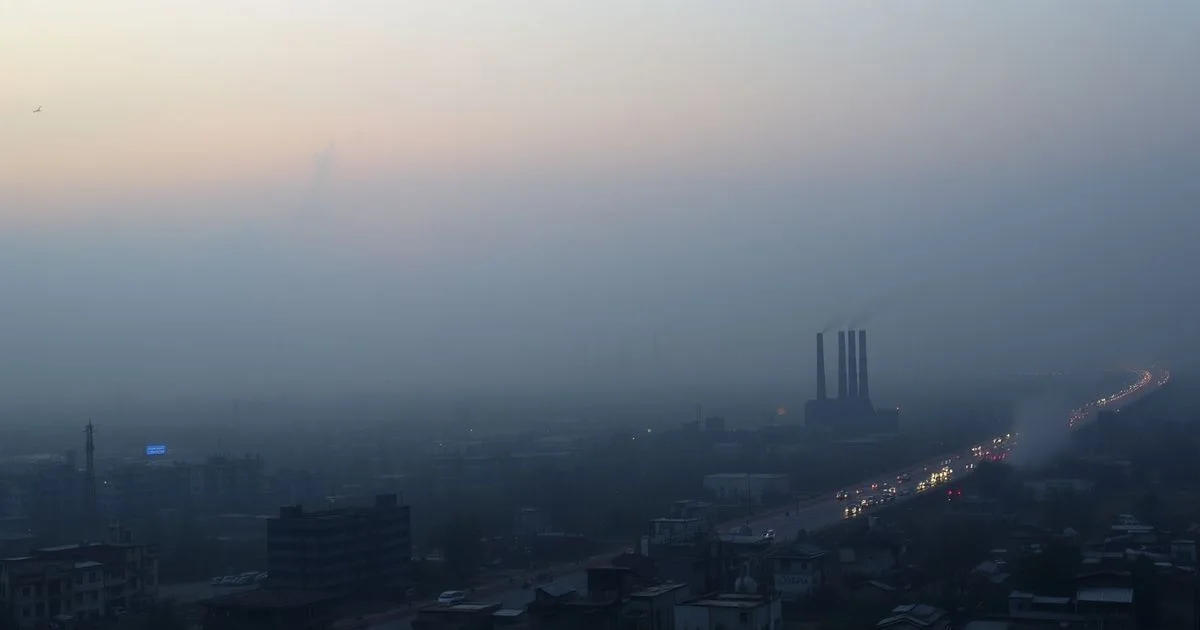
A stark environmental report has cast a grim shadow over South Asia, revealing that Pakistan Named World's Most Polluted Nation in 2025. This alarming designation, detailed in the latest global air quality assessment, underscores a severe and escalating crisis impacting millions across the country. The report highlights critical challenges in public health, economic stability, and environmental sustainability, demanding urgent and concerted action from both domestic and international stakeholders. The findings underscore the continuous deterioration of air quality in the region, bringing to light the profound and pervasive health risks faced by its population.
- Background and Methodology
- The Alarming Data: Pakistan Named World's Most Polluted Nation in 2025
- Causes and Contributing Factors
- Health and Economic Impacts
- Government Initiatives and International Response
- What Can Be Done? Solutions and Future Outlook
- Conclusion
- Frequently Asked Questions
- Further Reading & Resources
Background and Methodology
Understanding the recent declaration requires a look into the background and robust methodologies employed by leading environmental organizations to assess global air quality. These reports are typically compiled by analyzing vast datasets collected from ground-based monitoring stations, satellite imagery, and advanced atmospheric models. International bodies, often in collaboration with national environmental agencies, scrutinize these data points to identify trends, pinpoint pollution sources, and ultimately rank countries based on their air quality levels. This rigorous approach ensures that rankings and assessments are based on comprehensive, verifiable scientific evidence.
Understanding Air Quality Indices
Air Quality Indices (AQI) are standardized metrics used worldwide to communicate air pollution levels to the public. They translate complex pollutant data into a simple, color-coded scale, indicating the health risks associated with current air conditions. Different countries and regions may use slightly varied scales, but the core objective remains to provide easily understandable information for public health protection. The calculation of an AQI often incorporates concentrations of various pollutants, including particulate matter, ground-level ozone, carbon monoxide, sulfur dioxide, and nitrogen dioxide, each weighted by its potential impact on human health and the environment.
The Role of PM2.5
Central to these assessments is the measurement of particulate matter 2.5 (PM2.5). These microscopic particles, less than 2.5 micrometers in diameter, are particularly hazardous because their small size allows them to penetrate deep into the lungs and even enter the bloodstream. PM2.5 is generated from a variety of sources, including vehicle exhaust, industrial emissions, burning of fossil fuels, and natural dust. Globally, PM2.5 concentration is considered a critical indicator of air pollution severity and is often the primary metric used in international comparisons of air quality, serving as a direct proxy for overall environmental health due to its widespread origin and significant health implications.
The Alarming Data: Pakistan Named World's Most Polluted Nation in 2025
The recent air quality report, which officially states Pakistan Named World's Most Polluted Nation in 2025, builds upon years of concerning trends and scientific observations. This critical assessment reveals an average annual PM2.5 concentration significantly exceeding World Health Organization (WHO) guidelines, placing Pakistan at the forefront of countries grappling with severe atmospheric degradation. The data highlights that major urban centers, such as Lahore and Karachi, consistently experience dangerously high pollution levels, often several times higher than what is deemed safe for human health. The report's findings are a culmination of comprehensive data collection and analysis, reflecting a persistent and worsening environmental predicament that impacts daily life for millions and calls for immediate, drastic measures.
Regional Comparisons
When juxtaposed with other nations, particularly those within South Asia, Pakistan's air quality statistics present a stark picture. While other countries in the region, such as Bangladesh and India, also face significant air pollution challenges, Pakistan's average PM2.5 levels are now projected to be the highest. This unfortunate distinction signals that the country's environmental efforts, though present, have not been sufficient to counteract the burgeoning sources of pollution. The report provides detailed comparative analyses, illustrating how Pakistan's trajectory diverges negatively from global efforts to mitigate air pollution, indicating a critical need for intensified and more effective interventions that align with international best practices.
Historical Trends
Analysis of historical data reveals a disturbing upward trend in Pakistan's air pollution levels over the past two decades. What began as seasonal smog events in larger cities has evolved into a year-round crisis, with only slight improvements noted during specific periods or in certain localized areas. Factors such as rapid industrialization, burgeoning vehicular traffic, and inadequate regulatory enforcement have fueled this consistent rise in pollutants. This historical context provides crucial insights into the long-term drivers of the current crisis and underscores the urgency for a fundamental shift in environmental policy and public awareness to reverse this dangerous course before the damage becomes irreversible.
Causes and Contributing Factors
The complex issue of air pollution in Pakistan stems from a confluence of interconnected factors, both anthropogenic and natural. These elements interact to create a persistent layer of toxic smog, particularly during the winter months, affecting vast populations. Understanding these root causes is crucial for developing effective and sustainable mitigation strategies. The multifaceted nature of the problem requires a holistic approach that addresses each contributing factor systematically.
Industrial Emissions
Rapid industrial growth across Pakistan, particularly in sectors such as brick kilns, steel mills, cement factories, and power generation, has significantly contributed to air pollution. Many industries often operate with outdated technology and inadequate emission control systems, releasing harmful pollutants like sulfur dioxide, nitrogen oxides, and particulate matter directly into the atmosphere. The sheer volume of these emissions, concentrated in industrial zones often located near urban centers, exacerbates the overall air quality problem, posing a direct threat to surrounding communities. The lack of stringent enforcement mechanisms and economic pressures on small and medium enterprises further complicates efforts to regulate and reduce industrial discharges, making compliance challenging.
Vehicular Pollution
With a rapidly expanding population and increasing urbanization, the number of vehicles on Pakistan's roads has surged dramatically. A substantial portion of these vehicles, particularly older models and two-stroke engines common in motorcycles and rickshaws, are poorly maintained and lack modern emission control technologies, leading to high levels of carbon monoxide, hydrocarbons, and nitrogen oxides. Coupled with low-quality fuel, traffic congestion in major cities transforms urban areas into smog-ridden environments, directly impacting the respiratory health of commuters and residents alike. The growth of ride-sharing apps and increased personal vehicle ownership without corresponding infrastructure or emissions standards only adds to the challenge, demanding a comprehensive overhaul of the transportation sector.
Agricultural Practices and Stubble Burning
Agricultural activities, particularly the burning of crop residue (stubble) after harvest, are a significant seasonal contributor to air pollution. Farmers often resort to this practice as a quick and inexpensive way to clear fields for the next cropping cycle. This practice, prevalent in agricultural heartlands like Punjab, releases vast quantities of black carbon, methane, and other harmful gases into the atmosphere, which then drift towards urban centers, contributing significantly to the notorious "smog season." Despite bans and awareness campaigns, the practice persists due to economic pressures, a lack of viable alternatives, and insufficient enforcement, demanding more effective outreach and support for farmers to adopt cleaner practices.
Urbanization and Construction
Uncontrolled urbanization and the booming construction sector also play a substantial role in degrading air quality. Large-scale construction projects generate significant amounts of dust and particulate matter, which are often not adequately controlled or contained. Furthermore, the expansion of urban areas leads to increased demand for energy and transportation, further intensifying industrial and vehicular emissions. The removal of green spaces to accommodate new infrastructure also reduces natural air filters, exacerbating the problem. The rapid pace of development often outstrips the capacity for sustainable planning and environmental impact assessments, leading to environmental oversight and degradation.
Geographical Vulnerability
Pakistan's geographical location and meteorological conditions exacerbate its pollution problems. The country's topography, particularly the plains of Punjab, can trap pollutants, preventing their dispersion. During winter months, cold, dense air near the ground, combined with low wind speeds, creates temperature inversions that trap pollutants close to the surface, leading to dense, hazardous smog. This natural phenomenon acts as a "lid" over polluted air, making it difficult for contaminants to dissipate and resulting in prolonged periods of poor air quality, which can last for weeks or even months without significant relief.
Health and Economic Impacts
The pervasive air pollution crisis in Pakistan carries profound and devastating consequences for both public health and the national economy. These impacts are far-reaching, affecting quality of life, productivity, and the overall developmental trajectory of the nation. The health burden is particularly acute, manifesting in a surge of respiratory and other chronic illnesses across all age groups.
Public Health Crisis
The most immediate and severe impact of sustained exposure to high levels of air pollution is on public health. Respiratory illnesses such as asthma, bronchitis, and chronic obstructive pulmonary disease (COPD) are rampant, especially among children and the elderly. Studies have linked air pollution exposure to an increased incidence of lung cancer, heart disease, and strokes. Pregnant women and young children are particularly vulnerable, facing risks of premature birth, low birth weight, and impaired cognitive development. The healthcare system in Pakistan is already strained, and the escalating burden of pollution-related diseases further stretches its resources, leading to higher mortality rates and reduced life expectancy across the population. The chronic strain on healthcare systems due to such widespread health issues, and the need for resilient infrastructure, underscores challenges akin to designing scalable systems for high traffic applications in technological realms. The cost of treating these illnesses, combined with lost productivity due to sickness, represents a significant drain on both individual families and the national health budget.
Economic Repercussions
Beyond health, air pollution inflicts substantial economic damage. Agricultural yields suffer due to reduced sunlight penetration and deposition of pollutants on crops, impacting food security and farmer livelihoods. Tourism, a nascent but growing sector, is also negatively affected as visitors are deterred by poor air quality and reduced visibility. Furthermore, the overall productivity of the workforce declines due to pollution-induced illnesses and decreased outdoor activity, leading to significant labor losses. Businesses face increased operational costs due to damaged equipment, the need for air filtration systems, and the relocation of skilled workers seeking cleaner environments. The World Bank and other international organizations have repeatedly highlighted the significant economic cost of air pollution in South Asian countries, estimating billions of dollars in annual losses due to healthcare expenses, lost labor, and reduced agricultural output. This environmental crisis thus becomes a formidable barrier to sustainable economic development and poverty reduction efforts.
Government Initiatives and International Response
Recognizing the gravity of the air pollution crisis, the Pakistani government has initiated various measures to address the issue. These efforts are often complemented by support and collaboration from international organizations and partner countries. Despite these initiatives, the scale of the problem necessitates continuous and intensified action, highlighting the need for more comprehensive strategies and stronger enforcement mechanisms.
Domestic Policies and Challenges
The government has introduced policies such as the National Clean Air Policy and established air quality monitoring networks in major cities, aiming to provide data-driven insights. Efforts include promoting cleaner fuels, phasing out inefficient brick kilns, and implementing large-scale tree-plantation drives like the "Ten Billion Tree Tsunami." Awareness campaigns are also conducted to educate the public on the hazards of pollution and the importance of adopting cleaner practices. However, implementation remains a significant challenge due to limited financial resources, inter-departmental coordination issues, a lack of technical expertise, and the sheer scale of informal economic activities that are harder to regulate. Enforcement of existing environmental laws is often inconsistent, and judicial interventions are frequently required to prompt action against polluters, indicating systemic weaknesses.
Global Cooperation
Pakistan is also part of various international environmental agreements, such as the Paris Agreement, and receives technical and financial assistance from global bodies. Organizations like the United Nations Environment Programme (UNEP) and the World Bank provide expertise, funding, and support for developing sustainable urban planning and green infrastructure projects. Bilateral cooperation with neighboring countries and other developed nations focuses on sharing best practices, technology transfer for emission reduction, and regional data sharing to combat transboundary pollution. Such international collaboration is vital, as air pollution often transcends national borders, requiring a collective effort to manage its regional implications effectively, mirroring the broader global efforts to establish new rules for workplace and governance emerging globally in other complex domains.
What Can Be Done? Solutions and Future Outlook
Addressing the multifaceted challenge of air pollution in Pakistan requires a comprehensive and sustained approach that integrates policy reforms, technological advancements, and public participation. While the task is daunting, a concerted effort offers a clear path toward cleaner air and a healthier future for all its citizens.
Policy Reforms
Strengthening environmental regulations and ensuring their rigorous enforcement is paramount. This includes setting stricter emission standards for industries and vehicles, implementing robust real-time monitoring systems, and imposing deterrent penalties for non-compliance that are consistently applied. Policies promoting sustainable urban planning, such as developing efficient and accessible public transport systems, encouraging cycling and walking infrastructure, and expanding urban green spaces, can significantly reduce urban pollution. Furthermore, providing incentives and technical assistance for the adoption of cleaner technologies and practices in agriculture can mitigate stubble burning and other agricultural emissions. A national air quality action plan with clear, measurable targets, dedicated funding, and accountability mechanisms for all levels of government is essential for long-term success.
Renewable Energy Adoption
Transitioning away from fossil fuels towards renewable energy sources like solar, wind, and hydropower is a critical long-term solution. Investing heavily in renewable energy infrastructure reduces dependence on polluting thermal power plants and contributes to a cleaner energy mix, reducing the overall carbon footprint. Government subsidies and financial incentives for renewable energy adoption, both at industrial and household levels, can accelerate this transition by making green alternatives more economically viable. This shift would not only dramatically improve air quality but also contribute significantly to energy security, reduce import reliance, and help the country meet its climate change mitigation commitments. This transition often requires significant technological innovation and transfer, much like the rapid advancements witnessed in the AI hardware race that pushes new frontiers in computing power.
Public Awareness and Participation
Engaging the public through extensive and sustained awareness campaigns is crucial. Educating citizens about the immediate and long-term health risks of air pollution, the various sources of pollutants, and the individual actions they can take to reduce their carbon footprint can foster a sense of collective responsibility. Promoting behavioral changes, such as using public transport, carpooling, or adopting energy-efficient practices in homes and workplaces, can collectively lead to substantial improvements in air quality. Community involvement in monitoring local air quality, advocating for cleaner policies, and participating in green initiatives can also exert significant pressure on authorities for effective action and ensure grassroots ownership of environmental protection efforts.
International Aid and Technology Transfer
Continued international support in the form of financial aid, technical expertise, and technology transfer is vital for Pakistan to overcome its environmental challenges. Developed nations can assist Pakistan in acquiring advanced pollution control technologies for industries, improving vehicle emission standards through retrofitting programs, and developing sophisticated air quality forecasting and warning models. Collaborative research and development initiatives can also help in finding localized solutions tailored to Pakistan's specific environmental challenges, such as new ways to manage agricultural waste or low-cost air purification technologies. This global partnership approach recognizes that air pollution is a transnational problem requiring shared solutions and a commitment from the global community.
Conclusion
The designation of Pakistan Named World's Most Polluted Nation in 2025 is a grave reminder of an escalating environmental and public health crisis. The alarmingly high levels of particulate matter have dire consequences for the health of millions and pose significant threats to the nation's economic stability and future development. Addressing this complex challenge requires a multi-pronged strategy that encompasses stricter environmental policies, widespread adoption of renewable energy, enhanced public awareness, and robust international cooperation. While the path to cleaner air is arduous, a concerted and sustained effort by all stakeholders is imperative to safeguard the health and prosperity of Pakistan's current and future generations. The time for decisive action is now, to turn the tide against this invisible killer and build a more sustainable and breathable environment for everyone.
Frequently Asked Questions
Q: Why was Pakistan named the world's most polluted nation in 2025?
A: Pakistan was identified due to exceptionally high average annual PM2.5 concentrations, which significantly exceeded World Health Organization (WHO) guidelines. This is primarily driven by industrial emissions, vehicular pollution, agricultural stubble burning, and rapid, uncontrolled urbanization, creating persistent, hazardous smog.
Q: What are the primary health impacts of this severe air pollution?
A: The severe air pollution leads to a public health crisis, manifesting in widespread respiratory illnesses like asthma, bronchitis, and chronic obstructive pulmonary disease (COPD), along with an increased incidence of lung cancer, heart disease, and strokes. Vulnerable groups, including children and pregnant women, face risks of developmental issues and premature births.
Q: What measures are being taken to combat air pollution in Pakistan?
A: The Pakistani government has initiated policies such as a National Clean Air Policy, promotion of cleaner fuels, and large-scale tree plantation drives. International organizations also provide support for sustainable urban planning and green infrastructure projects. However, implementation challenges remain due to limited resources and inconsistent enforcement.