Ocean Currents: Their Role in Global Climate Patterns & Dynamics
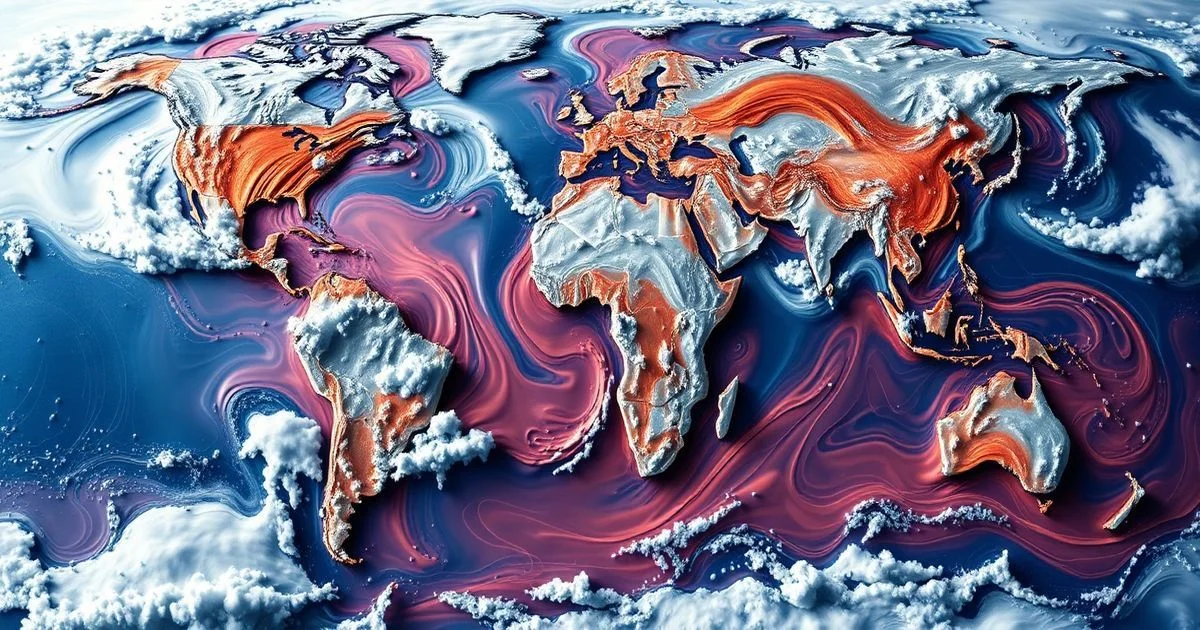
The vast expanse of our planet's oceans is far more than just a collection of water; it's a dynamic, interconnected system acting as the Earth's primary circulatory engine. These massive, continuous movements of seawater, known as ocean currents, play an absolutely critical and often underestimated role in shaping global climate patterns and the very dynamics of our planet's atmospheric systems. Understanding their intricate mechanisms and profound influence is paramount to comprehending everything from regional weather phenomena to long-term climate change projections. Without the constant redistribution of heat, nutrients, and gases by these colossal ocean rivers, Earth's climate would be far more extreme and significantly less hospitable.
- What Exactly Are Ocean Currents?
- The Fundamental Drivers of Ocean Circulation
- The Critical Role of Ocean Currents in Global Climate Patterns
- Major Ocean Current Systems and Their Climate Impacts
- Ocean Currents in a Changing Climate: Challenges and Future Outlook
- Conclusion: The Unseen Architect of Our Climate
- Frequently Asked Questions
- Further Reading & Resources
What Exactly Are Ocean Currents?
At its core, an ocean current is simply a continuous, directed movement of seawater generated by a number of forces acting upon the water, including breaking waves, wind, the Coriolis effect, temperature and salinity differences, and tides. These movements can occur on a range of scales, from localized coastal currents to vast, ocean-spanning gyres and deep-ocean flows. To grasp their significance, it's helpful to think of the oceans as the Earth's intricate circulatory system, diligently transporting vital components around the globe.
We can broadly categorize ocean currents into two main types:
-
Surface Currents: These currents affect the upper 400 meters of the ocean and are primarily driven by global wind patterns. They are responsible for the well-known ocean gyres, large systems of circulating ocean currents, which are often influenced by the Coriolis effect and the shape of the continents. These currents move warm water from the equator towards the poles and cold water from the poles back towards the equator, having a direct and immediate impact on coastal climates. The Gulf Stream, a powerful, warm and swift Atlantic Ocean current, is a prime example of a surface current’s profound regional influence.
-
Deep Ocean Currents: Also known as thermohaline circulation, these currents operate at much greater depths and are driven by differences in the water's density, which is determined by its temperature ("thermo") and salinity ("haline"). Cold, salty water is denser than warmer, less salty water, causing it to sink and flow along the ocean floor. This process creates a global "conveyor belt" that moves water, heat, and nutrients around the entire planet, albeit at a much slower pace than surface currents. This deep circulation is a fundamental component of the planet's long-term climate regulation.
Understanding both surface and deep ocean currents is essential because they are not isolated systems but are intrinsically linked, constantly exchanging energy and matter, and together orchestrating the planet's climatic symphony. Their complex interactions dictate a significant portion of the Earth's energy budget and biogeochemical cycles.
The Fundamental Drivers of Ocean Circulation
The intricate dance of ocean currents is orchestrated by a confluence of physical forces, each playing a crucial role in maintaining the planet's delicate thermal and chemical balance. These drivers dictate the speed, direction, and depth of ocean water movement, making them foundational to understanding global climate patterns.
Solar Radiation and Wind Patterns
The journey of ocean currents begins with the sun. Uneven solar radiation across the Earth's surface creates temperature gradients, which in turn drive atmospheric circulation, i.e., winds. These prevailing winds, particularly the trade winds, westerlies, and polar easterlies, exert a frictional drag on the ocean's surface, pushing the topmost layer of water and initiating surface currents.
This wind-driven motion is further modified by two critical phenomena:
-
The Coriolis Effect: As the Earth rotates on its axis, moving objects (like ocean currents or wind) appear to be deflected from their original path. In the Northern Hemisphere, this deflection is to the right, and in the Southern Hemisphere, it's to the left. This effect is not a force in itself but a consequence of observing motion from a rotating frame of reference. The Coriolis effect is responsible for the massive circular patterns of ocean currents, known as gyres, and dictates the rotational direction of large-scale weather systems. For example, it helps to create the clockwise circulation in the North Atlantic Gyre and the counter-clockwise circulation in the South Atlantic Gyre. Without the Coriolis effect, currents would simply flow in straight lines, and heat distribution would be far less efficient, leading to starker temperature contrasts across the globe. To delve deeper into the fundamental physics governing such planetary phenomena, explore Understanding the Basics of Planetary Orbital Mechanics.
-
Ekman Transport: Building on the Coriolis effect, Ekman transport describes the net motion of water in the upper ocean due to wind stress. When wind blows across the ocean surface, it drags the very top layer of water. This layer then deflects due to the Coriolis effect. The layer beneath it is then dragged by the layer above, also deflecting, but slightly less due to reduced energy transfer. This continues down through the water column, creating a spiral (the Ekman spiral) where each successive layer moves at a slower speed and at a greater angle to the wind above it. The net effect over the entire Ekman layer (typically 50-100 meters deep) is a transport of water at a 90-degree angle to the direction of the wind (to the right in the Northern Hemisphere, to the left in the Southern Hemisphere). This phenomenon is crucial for phenomena like coastal upwelling and downwelling, directly influencing nutrient distribution and marine biological productivity, which in turn impacts the carbon cycle.
Thermohaline Circulation: The Global Conveyor Belt
While winds drive surface currents, the deep ocean is moved by a slower, more profound mechanism: thermohaline circulation. This global conveyor belt is driven by differences in seawater density, which are primarily influenced by temperature ("thermo") and salinity ("haline").
Here’s how it works:
-
Deepwater Formation: The process begins primarily in the polar regions, such as the North Atlantic near Greenland and the Southern Ocean around Antarctica. As sea ice forms in these frigid areas, salt is rejected from the freezing water into the surrounding ocean. This makes the remaining seawater much saltier and, therefore, denser. Simultaneously, the extremely cold atmospheric temperatures cool this already dense water further, making it even heavier.
-
Sinking and Flowing: This cold, dense, salty water becomes negatively buoyant and sinks to the ocean floor. Once at the bottom, it flows along the abyssal plains, slowly but relentlessly, across entire ocean basins. This deep-water mass then spreads out, filling the deep trenches and basins of the Atlantic, Indian, and Pacific Oceans. The deep flow often meanders around underwater topographical features, following pathways dictated by the ocean floor.
-
Upwelling and Warming: As these deep-water masses travel, they gradually warm and mix with overlying waters. In certain regions, particularly along continental margins or in areas of divergent currents, this deep, cold water eventually rises back to the surface through a process called upwelling. Once at the surface, it is exposed to atmospheric influences, warms, and joins the surface current system, completing the global circuit. This process can take centuries to millennia, highlighting the immense timescale of deep ocean processes.
This global conveyor belt is incredibly important because it transports vast amounts of heat, oxygen, and carbon dioxide across the planet. For example, deep-water formation in the North Atlantic helps draw warm, salty water northwards from the tropics, contributing to the mild climate of Western Europe. Disruptions to this conveyor belt, such as those caused by freshwater input from melting glaciers, have significant implications for global climate stability, as it fundamentally alters the planet's heat distribution system.
The Critical Role of Ocean Currents in Global Climate Patterns
The primary keyword for this article is "The role of ocean currents in global climate patterns," and nowhere is this more evident than in their profound influence on regulating Earth's temperature, cycling essential elements, and shaping regional weather. These oceanic movements are not just bystanders; they are active architects of our planet's climate.
Heat Distribution: Regulating Earth's Thermostat
One of the most fundamental functions of ocean currents is the redistribution of heat energy across the globe. The sun's energy is not evenly distributed; equatorial regions receive far more direct solar radiation than the poles. Without a mechanism to transfer this excess heat from the tropics to the higher latitudes, the equator would be unbearably hot, and the poles would be significantly colder.
Ocean currents act as this vital heat transfer mechanism:
-
Global Thermostat: Warm surface currents, like the Gulf Stream and the Kuroshio Current, originate in equatorial regions and carry tremendous amounts of thermal energy towards the poles. This warm water releases its heat into the atmosphere as it moves, moderating the climate of adjacent landmasses. A classic example is the Gulf Stream's profound influence on Western Europe; despite being at latitudes comparable to Labrador, Canada, countries like the UK and Norway experience significantly milder winters due to the continuous flow of warm Atlantic water. Conversely, cold currents, such as the Benguela Current off the coast of Southern Africa or the Peru Current along South America, bring cooler water from higher latitudes or upwelled deep water towards the equator. This cools coastal areas and often leads to arid desert climates, as the cool air above the cold water is less likely to produce precipitation.
-
Preventing Extremes: By constantly mixing and moving water masses, ocean currents prevent extreme temperature differentials between different regions of the Earth. This moderating effect is crucial for maintaining habitable conditions across much of the planet. Disruptions to these heat-transporting currents, such as a slowdown of the Atlantic Meridional Overturning Circulation (AMOC), could lead to significant and potentially abrupt shifts in regional climates, including colder winters in Europe and altered rainfall patterns globally.
Carbon Cycle and Atmospheric CO2 Regulation
Beyond heat, ocean currents are indispensable players in the global carbon cycle, acting as a massive reservoir and regulator for atmospheric carbon dioxide (CO2), a primary greenhouse gas. The oceans currently absorb roughly 25% of the CO2 emitted by human activities annually, significantly mitigating the rate of atmospheric warming.
This carbon absorption and sequestration occur through two main "pumps" driven by oceanic circulation:
-
The Physical Pump: This mechanism relies on the solubility of CO2 in seawater. CO2 dissolves more readily in colder water than in warmer water. In polar regions, where cold, dense water sinks as part of the thermohaline circulation, vast amounts of dissolved CO2 are carried into the deep ocean. Once in the abyssal depths, this carbon can remain sequestered for hundreds to thousands of years, isolated from the atmosphere. As this deep water eventually resurfaces through upwelling, some of this CO2 can outgas back into the atmosphere, completing a very long-term cycle. Surface currents then help distribute this dissolved CO2 throughout the upper ocean, much like how the currents historically shaped global maritime trade routes.
-
The Biological Pump: This is an ocean current-assisted process driven by marine life. Phytoplankton, microscopic marine plants, utilize dissolved CO2 from the surface waters during photosynthesis, converting it into organic matter. They form the base of the marine food web. When these organisms die or are consumed by other marine creatures, their carbon-rich remains (and waste products) sink through the water column, often forming "marine snow." A significant portion of this organic carbon reaches the deep ocean, where it is either remineralized or buried in sediments, effectively sequestering carbon for geological timescales. Ocean currents are vital here because they distribute nutrients (brought up by upwelling, often current-driven) essential for phytoplankton growth and also facilitate the sinking of organic matter by influencing stratification and mixing.
The ocean's capacity to absorb CO2 is immense, yet it has limits. Increased CO2 absorption leads to ocean acidification, altering seawater chemistry and posing severe threats to marine ecosystems, particularly organisms with calcium carbonate shells or skeletons. This feedback loop underscores the complex and sensitive nature of the ocean's role in climate regulation.
Nutrient Distribution and Marine Ecosystems
Ocean currents are not just about large-scale climate patterns; they are the lifelines of marine ecosystems, dictating the distribution of essential nutrients that support virtually all ocean life.
-
Upwelling: This critical process occurs when deep, cold, nutrient-rich water rises to the surface. It is often driven by wind patterns that push surface waters away from coastlines (coastal upwelling) or by divergent currents in the open ocean (equatorial upwelling). The deep ocean is a vast reservoir of nitrates, phosphates, and silicates, derived from the decomposition of organic matter that has sunk from the surface. When these nutrients are brought to the sunlit euphotic zone, they fuel massive phytoplankton blooms. These blooms form the base of highly productive food webs, supporting vast populations of zooplankton, fish, seabirds, and marine mammals. Some of the world's most productive fishing grounds, such as those off the coasts of Peru, California, and West Africa, are sustained by persistent upwelling systems.
-
Downwelling: Conversely, downwelling occurs when surface waters converge and sink, carrying oxygen-rich surface water to deeper parts of the ocean. This process is less directly linked to productivity but is crucial for maintaining oxygen levels in the deep ocean, which is necessary for deep-sea organisms and for the decomposition of organic matter. Downwelling also helps transport warm surface waters and dissolved gases, including carbon, to the deep, completing the circulatory loop.
The health and productivity of marine ecosystems are intrinsically tied to these current-driven processes. Changes in current patterns due to climate change can disrupt upwelling zones, potentially leading to ecosystem collapses, reduced fish stocks, and altered biodiversity, with significant implications for global food security and marine conservation efforts.
Major Ocean Current Systems and Their Climate Impacts
Specific ocean current systems exert disproportionate influence on global and regional climates, often acting as pacemakers for significant weather events and long-term climatic shifts. Understanding these systems is crucial for forecasting and climate modeling.
The Gulf Stream and North Atlantic Oscillation
The Gulf Stream is perhaps one of the most well-known and impactful ocean currents globally. It is a powerful, warm, and swift Atlantic Ocean current that originates in the Gulf of Mexico, flows through the Straits of Florida, and then follows the eastern coastlines of the United States and Newfoundland before crossing the Atlantic Ocean. As it moves northeastwards, it transitions into the North Atlantic Current.
-
Moderating European Climate: The Gulf Stream transports an enormous amount of warm tropical water and heat energy towards Northern Europe. This substantial heat transfer significantly moderates the climate of Western European countries, making their winters considerably milder than other regions at comparable latitudes (e.g., eastern Canada). Without this heat, much of Western Europe would experience vastly colder, more severe winters, similar to those found in parts of Siberia.
-
North Atlantic Oscillation (NAO): The Gulf Stream's influence is often intertwined with the North Atlantic Oscillation (NAO), a major mode of atmospheric variability in the North Atlantic region. The NAO describes fluctuations in the difference of atmospheric pressure at sea level between the Icelandic Low and the Azores High. These pressure differences influence the strength and direction of westerly winds and storm tracks across the North Atlantic. A positive NAO phase typically brings stronger westerly winds, pushing more warm, moist air over Europe, leading to milder, wetter winters. A negative NAO phase weakens these winds, resulting in colder, drier winters in northern Europe and more rainfall in southern Europe. The NAO can influence sea surface temperatures and current pathways, and in turn, ocean heat transport can feedback into the atmospheric system.
The Pacific Decadal Oscillation (PDO)
The Pacific Decadal Oscillation (PDO) is a long-lived pattern of Pacific Ocean climate variability, lasting for 20 to 30 years. It involves fluctuations in sea surface temperatures (SSTs) across the North Pacific basin and influences atmospheric circulation. The PDO is characterized by two main phases:
-
Warm Phase (Positive): Characterized by warmer-than-average SSTs in the eastern tropical Pacific and along the west coast of North America, with cooler SSTs in the central North Pacific.
-
Cool Phase (Negative): Shows the opposite pattern, with cooler SSTs in the eastern tropical Pacific and warmer SSTs in the central North Pacific.
The PDO significantly impacts weather patterns, marine ecosystems, and socio-economic sectors across the North Pacific and North America. For example, during warm phases, the Pacific Northwest tends to experience warmer and drier winters, while during cool phases, it experiences cooler and wetter conditions. The PDO also influences salmon production, wildfire risk, and snowpack accumulation in the western U.S. Unlike ENSO (El Niño-Southern Oscillation), which is an interannual phenomenon, the PDO operates on multidecadal timescales, making its impacts more enduring.
El Niño-Southern Oscillation (ENSO)
The El Niño-Southern Oscillation (ENSO) is arguably the most significant natural climate fluctuation on Earth, operating on an interannual timescale (typically every 2-7 years). It involves coupled ocean-atmosphere interactions in the tropical Pacific, leading to global teleconnections and widespread climate impacts.
ENSO has two primary phases:
-
El Niño: This phase is characterized by a significant warming of sea surface temperatures in the central and eastern tropical Pacific Ocean. Normally, strong trade winds blow from east to west across the equatorial Pacific, pushing warm surface water towards Asia and allowing cold, nutrient-rich water to upwell along the coast of South America. During El Niño, these trade winds weaken or even reverse, leading to a reduction or cessation of upwelling in the eastern Pacific and a deepening of the warm water pool, which then expands eastward.
- Global Impacts: El Niño events profoundly alter global weather patterns. They often lead to increased rainfall and flooding in parts of Peru and Ecuador, droughts in Indonesia and Australia, and altered monsoon patterns in India. In North America, El Niño typically brings wetter-than-average conditions to the southern U.S. and warmer, drier conditions to the Pacific Northwest and parts of Canada. Marine life is also severely impacted, as the reduced upwelling of nutrients in the eastern Pacific causes declines in phytoplankton and subsequent drops in fish populations.
-
La Niña: This is the "cold phase" of ENSO, characterized by cooler-than-average sea surface temperatures in the central and eastern tropical Pacific, and stronger-than-average trade winds. Essentially, it's an intensification of the normal conditions.
- Global Impacts: La Niña typically brings contrasting weather patterns to El Niño. It can lead to increased rainfall in Southeast Asia and Australia, and often exacerbates drought conditions in the southern U.S. During La Niña, the Atlantic hurricane season tends to be more active, while the Pacific hurricane season is less active. In North America, La Niña often brings cooler, wetter conditions to the Pacific Northwest and parts of Canada, and warmer, drier conditions to the southern tier of the U.S.
-
Walker Circulation: The atmospheric component that couples with the oceanic temperature changes is known as the Walker Circulation. This is an east-west atmospheric circulation cell driven by differences in heating across the tropical Pacific. During normal conditions, rising warm, moist air over the western Pacific (due to warm waters) and sinking cool, dry air over the eastern Pacific (due to cold waters) create easterly surface winds. El Niño disrupts this circulation, weakening or reversing it, which in turn feeds back into the ocean, reducing upwelling and further warming the eastern Pacific.
Understanding and predicting ENSO events is a major focus of climate science, as they have immense societal impacts on agriculture, water resources, disaster preparedness, and economies worldwide. These phenomena vividly demonstrate how the ocean's dynamic state directly translates into palpable, global climate consequences.
Ocean Currents in a Changing Climate: Challenges and Future Outlook
The delicate balance of ocean current systems, which has largely regulated Earth's climate for millennia, is now facing unprecedented stress due to anthropogenic climate change. The warming planet is causing fundamental shifts that could have profound and potentially irreversible consequences for global climate patterns.
Impacts of Climate Change on Ocean Circulation
The increase in global temperatures, primarily driven by greenhouse gas emissions, is having a multifaceted impact on ocean currents:
-
Melting Ice and Freshening Polar Waters: One of the most significant concerns is the impact of melting glaciers and ice sheets in the Arctic and Antarctic. As vast quantities of freshwater melt and flow into the polar oceans, they can reduce the salinity of the surface waters. Since cold, salty water is essential for deepwater formation (the driving force of thermohaline circulation), a reduction in salinity makes the water less dense, hindering its ability to sink. This could potentially weaken or even shut down crucial components of the global conveyor belt, such as the Atlantic Meridional Overturning Circulation (AMOC). A weakened AMOC could lead to a dramatic cooling of the North Atlantic region, potentially bringing harsher winters to Europe, and disrupting rainfall patterns in the tropics.
-
Ocean Warming and Stratification: As the ocean absorbs a significant portion of the excess heat from the atmosphere, surface waters are warming. Warmer water is less dense than cooler water, leading to increased thermal stratification – a layering of water masses where warmer, lighter water sits atop cooler, denser water. This stratification makes it harder for surface waters to mix with deeper, nutrient-rich waters. Reduced mixing can inhibit upwelling, decrease the supply of nutrients to the surface, and thus reduce primary productivity in marine ecosystems. It also means that less oxygenated surface water can reach the deep ocean, potentially exacerbating ocean deoxygenation, creating "dead zones" where marine life cannot thrive.
-
Changes in Wind Patterns: Climate change is also projected to alter global wind patterns, which are the primary drivers of surface currents. Shifts in the strength and location of prevailing winds could reorganize ocean gyres, altering the pathways of heat and nutrient transport. Such changes could lead to regional climate shifts, changes in marine productivity, and impacts on the distribution of marine species.
Feedbacks and Tipping Points
The interaction between warming temperatures and ocean current changes is not linear; it can involve complex feedback loops that push the Earth system towards "tipping points"—thresholds beyond which small additional changes can lead to large, potentially irreversible, and abrupt shifts.
-
AMOC Collapse: The potential weakening or collapse of the AMOC is a prominent example of a potential tipping point. If the AMOC slows significantly or stops, it could trigger abrupt regional cooling in the North Atlantic, shift monsoon patterns, and accelerate sea-level rise along the U.S. East Coast. Models suggest such an event is possible, though its likelihood and exact timing are subjects of ongoing research.
-
Ocean Heat Content and Sea Level Rise: The oceans have absorbed over 90% of the excess heat generated by human emissions. This thermal expansion of water is a major contributor to global sea level rise, alongside ice sheet and glacier melt. Changes in ocean currents can also locally modulate sea level, creating regional variations in sea-level rise rates, which has critical implications for coastal communities.
Monitoring and Research: Leveraging Technology
Understanding these complex interactions and predicting future changes requires sophisticated monitoring and research efforts. Fortunately, advancements in technology are providing unprecedented insights:
-
Satellite Altimetry: Satellites equipped with altimeters can precisely measure sea surface height, which reveals information about ocean currents, eddies, and sea-level variability. Missions like Jason-3 and Sentinel-6 Michael Freilich provide continuous, global data, building upon a rich history of scientific observation that dates back to the early days of space exploration.
-
Argo Floats: The Argo program deploys a global array of autonomous profiling floats that drift with the currents and periodically dive to depths of 2000 meters, measuring temperature and salinity throughout the water column. These floats provide critical data on the subsurface ocean, enabling scientists to track heat content, freshwater content, and circulation patterns in real-time.
-
Autonomous Underwater Vehicles (AUVs) and Gliders: These robotic platforms can be programmed to survey specific ocean regions for extended periods, collecting high-resolution data on currents, temperature, salinity, oxygen, and biogeochemical parameters, especially in remote or hazardous areas.
-
Climate Modeling and Predictive Capabilities: Sophisticated climate models (coupled ocean-atmosphere models) are continuously being refined. These models simulate the Earth's climate system, incorporating ocean dynamics, to project future climate scenarios under different emissions pathways. The data from monitoring platforms is crucial for validating and improving these models, often leveraging advanced computational techniques, including those at the forefront of China's AI boom.
-
Interdisciplinary Approaches: Addressing the challenges posed by changes in ocean currents requires a highly interdisciplinary approach, integrating oceanography, atmospheric science, glaciology, ecology, and social sciences. Collaborative international research initiatives are essential for understanding and mitigating the global impacts.
The future outlook for ocean currents in a warming world is one of significant change and uncertainty. Continued monitoring, rigorous scientific research, and international cooperation are paramount to enhancing our understanding and capacity to adapt to these evolving climate dynamics.
Conclusion: The Unseen Architect of Our Climate
From the gentle sway of surface waters to the ponderous march of deep ocean currents, these colossal, dynamic forces are the unseen architects of our planet's climate. Their intricate interplay, driven by solar energy, wind, and fundamental physical laws, orchestrates the redistribution of heat, the cycling of carbon, and the sustenance of marine ecosystems. The role of ocean currents in global climate patterns cannot be overstated; they are the Earth's vital circulatory system, maintaining the delicate balance that has made our planet hospitable.
As we navigate an era of unprecedented climate change, the stability of these systems is under increasing pressure. Melting ice, warming waters, and altered wind patterns threaten to disrupt the established pathways of oceanic circulation, potentially leading to abrupt and significant shifts in regional and global climates. The scientific community's dedication to monitoring these changes, employing advanced technologies, and refining predictive models is more critical than ever. Understanding the ocean's past, present, and future dynamics is not merely an academic pursuit; it is fundamental to safeguarding our planet's climatic stability and the well-being of future generations.
Frequently Asked Questions
Q: How do ocean currents affect local weather?
A: Ocean currents significantly influence local weather by transporting heat and moisture. Warm currents can lead to milder, wetter climates in coastal areas, while cold currents often result in cooler, drier, or even arid conditions by cooling the overlying air and suppressing precipitation.
Q: What is thermohaline circulation and why is it important?
A: Thermohaline circulation, or the "global conveyor belt," is a system of deep ocean currents driven by differences in water temperature ("thermo") and salinity ("haline"). It's crucial for distributing heat, oxygen, and nutrients worldwide, playing a key role in long-term climate regulation and supporting marine ecosystems.
Q: How is climate change impacting ocean currents?
A: Climate change is affecting ocean currents by melting polar ice, which freshens and slows down deepwater formation, and by warming surface waters, increasing stratification. These changes can disrupt global heat distribution, alter rainfall patterns, and impact marine life.