Middle East Tensions Soar: Israel Strikes, Iran Retaliates
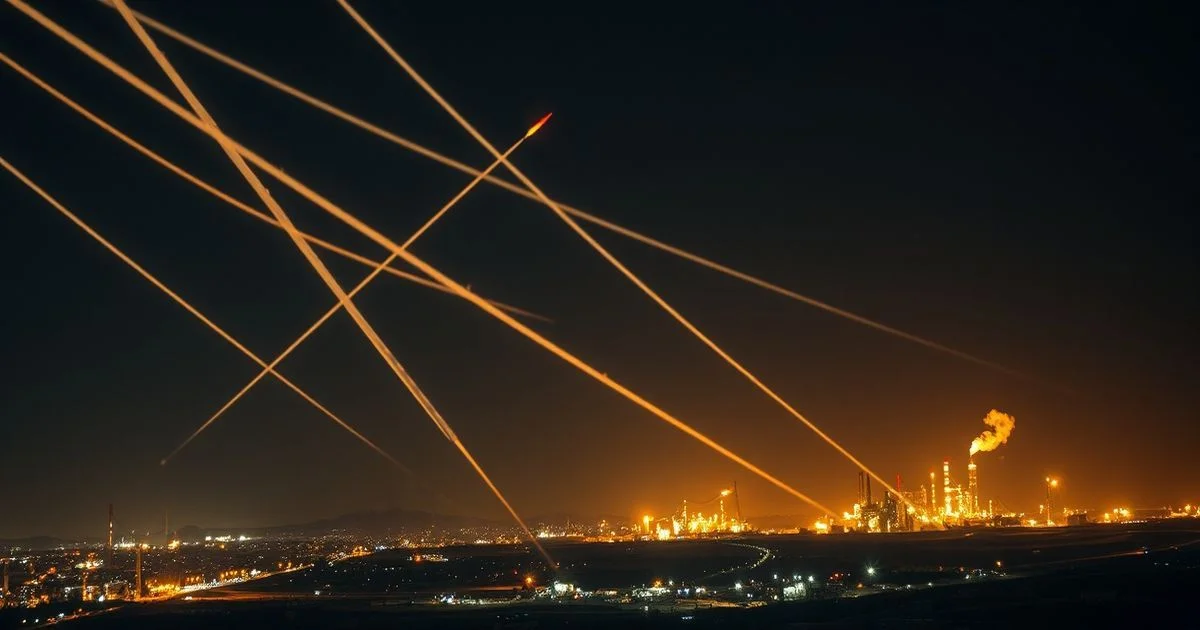
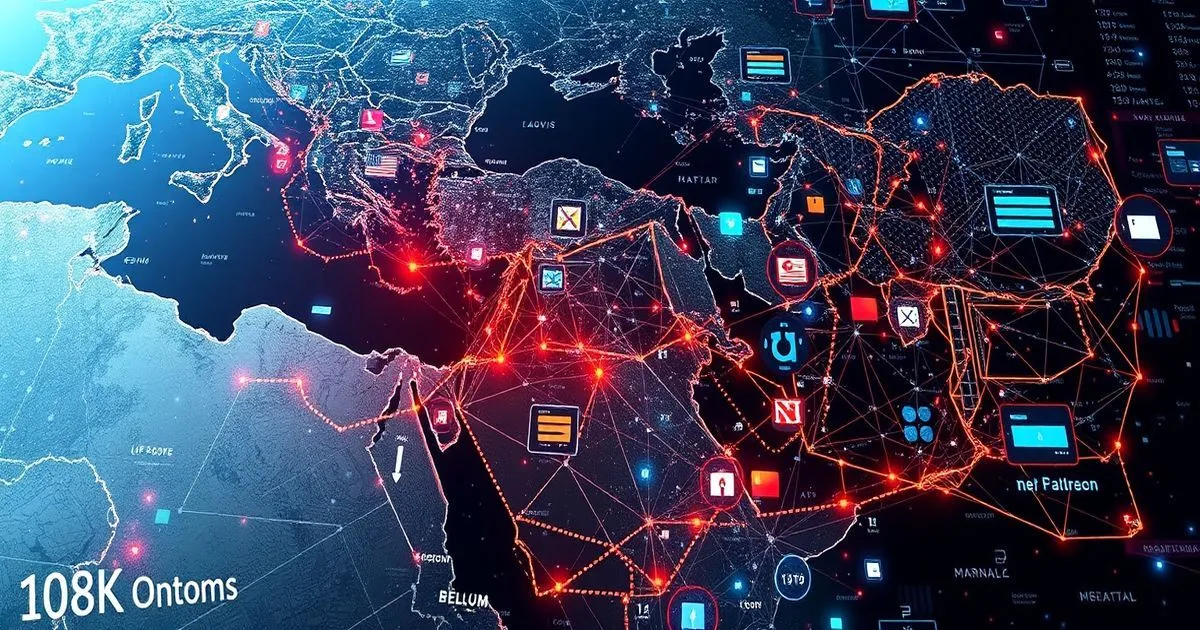
Recent events in the Middle East have seen a dramatic escalation in the long-standing rivalry between Israel and Iran, pushing the already volatile region closer to the brink of a broader conflict. Over the past weeks, a series of calculated Israeli strikes targeting Iranian regime assets and proxies has been met with swift and forceful retaliation from Tehran, leading to a dangerous cycle of tit-for-tat exchanges. This precarious situation underscores that Middle East Tensions Soar: Israel Strikes, Iran Retaliates, demanding urgent international attention and de-escalation efforts. The ongoing confrontation, which includes aerial campaigns and missile barrages, highlights the profound challenges to regional stability and carries significant global implications.
- A Region on Edge: The Escalation of Direct Conflict
- Israel's Targeted Strikes: Strategy and Objectives
- Iran's Forceful Retaliation: Responses and Regional Impact
- Middle East Tensions Soar: Global Repercussions
- Expert Analysis and Future Outlook
- Conclusion
- Frequently Asked Questions
- Further Reading & Resources
A Region on Edge: The Escalation of Direct Conflict
The dynamic between Israel and Iran has fundamentally shifted from a protracted shadow war to increasingly direct confrontations, particularly since mid-2025. This escalation marks a critical turning point, moving beyond proxy battles to overt military actions that directly involve the two regional powers. The international community watches with growing apprehension as the stakes continue to rise.
Historical Roots of Rivalry
The enmity between Israel and Iran is deeply rooted in historical grievances and conflicting geopolitical ambitions. Following the 1979 Islamic Revolution, Iran transitioned from a monarchy to an Islamic republic, fundamentally altering its regional stance and bringing it into direct ideological opposition with Israel. This ideological schism has fueled decades of indirect conflict, with both nations vying for influence across the Middle East.
Iran has long sought to expand its political and military influence, often through the cultivation of non-state armed actors and strategic alliances across the region. Conversely, Israel's national security strategy has consistently prioritized countering Iran's nuclear program and limiting its regional aspirations. This fundamental divergence in strategic objectives has ensured a persistent state of tension.
The "Axis of Resistance" and its Role
A cornerstone of Iran's regional strategy has been the formation and support of what it terms the "Axis of Resistance," a network of armed groups and proxies across the Middle East. This network includes powerful entities like Hezbollah in Lebanon, various militias in Iraq and Syria, Palestinian militant groups, and the Houthis in Yemen. These proxies have historically allowed Tehran to project power and exert influence without engaging in direct, state-on-state warfare, thereby maintaining a degree of plausible deniability.
However, the current escalation indicates a departure from this indirect approach, with both Israel and Iran demonstrating a willingness to engage directly. While the "Axis of Resistance" remains a critical component of Iran's overall strategy, the direct exchanges suggest a higher threshold for conflict has been crossed. This shift raises significant concerns about the potential for wider regional destabilization as these interconnected conflicts intensify.
Israel's Targeted Strikes: Strategy and Objectives
In the past few weeks, Israel has intensified its military operations, conducting fresh strikes on what it describes as "regime targets" in Tehran and sites linked to Hezbollah in Beirut. These operations represent a calculated effort to degrade Iran's military capabilities and dismantle its regional influence. The strikes followed multiple rounds of Iranian missile fire toward Israel, indicating a reactive posture aimed at restoring deterrence.
Key Targets and Justification
On March 21, 2026, the Israeli military reported striking "Iranian terror regime targets in Tehran" after earlier air raids on Hezbollah in Lebanon's capital. These strikes reportedly targeted ballistic missile sites within Tehran, highlighting Israel's focus on Iran's missile program. These actions come amid a period of "near daily bombardment" of Tehran, following a joint US-Israeli offensive that commenced on February 28, 2026.
Israel's justification for these strikes centers on preventing Iran from acquiring atomic weapons and neutralizing threats posed by its ballistic missile capabilities. Israeli Prime Prime Minister Benjamin Netanyahu has long articulated a policy of placing Israel at the forefront of international efforts to counter Tehran's nuclear ambitions. The trauma of strategic surprise, particularly in recent years, has reinforced a capabilities-based doctrine in Israel, meaning threats are assessed by demonstrated capabilities rather than declared intentions.
Moreover, the strikes have reportedly resulted in the deaths of high-ranking Iranian officials. On March 20, 2026, Iranian state television reported the killing of Ali Mohammad Naini, a spokesperson and deputy of public relations for the Iranian Revolutionary Guard Corps, in US and Israeli strikes. Intelligence Minister Esmail Khatib and senior security official Ali Larijani were also confirmed dead after earlier strikes.
The "Decapitation Strategy"
The deliberate targeting of senior Iranian officials appears to be part of what some analysts refer to as a "decapitation strategy," aimed at weakening the Iranian government by removing key figures. Israeli Prime Minister Benjamin Netanyahu has openly suggested that the killing of Iran's leaders is intended to weaken the government, ideally paving the way for a more pro-Western regime.
However, experts caution that this strategy carries significant risks and may not achieve its intended outcome. While targeted killings can offer tangible achievements for leaders, they rarely address the underlying grievances that propel conflicts. Critics argue that such a strategy might backfire, breeding greater resistance and potentially leading to an internally unstable Iran that is more prone to external acts of violence through cyberwarfare, proxies, or terrorism. Iran's government and military are composed of overlapping institutions, which have so far demonstrated resilience against sustained US and Israeli strikes, suggesting that removing individual leaders may not fundamentally alter the regime's strategic trajectory.
Iran's Forceful Retaliation: Responses and Regional Impact
Following the Israeli strikes, Iran has mounted a robust and multi-faceted retaliation, demonstrating its capacity to respond directly and through its regional proxies. This counter-offensive has further intensified the already fraught situation, affecting various strategic locations and raising concerns about economic stability. The speed of Iran's response suggests a pre-planned continuity strategy, indicating a high level of preparedness for such escalations.
Missile and Drone Barrages
Iran has launched significant missile and drone attacks in response to the Israeli and US strikes. Since February 28, Iran has launched over 500 ballistic and naval missiles and nearly 2,000 drones. Notably, approximately 40% of these attacks were directed toward Israel, with the remaining 60% targeting American assets and interests in the region. These barrages underscore Iran's considerable arsenal and its willingness to utilize it in direct confrontation.
On March 20, 2026, the Israel Defense Forces detected a new ballistic missile launch from Iran. Hezbollah, a key Iranian proxy, also launched missiles and drones against northern Israel on March 2, drawing Lebanon deeper into the conflict. These actions highlight the interconnected nature of the regional conflicts and Iran's ability to activate its "Axis of Resistance" to exert pressure on multiple fronts.
Targeting Energy Infrastructure
A particularly concerning aspect of Iran's retaliation has been the targeting of critical energy infrastructure in the Gulf states. On March 18 and 19, 2026, Iran conducted drone and missile attacks targeting Gulf states and their energy infrastructure, including the Ras Laffan Industrial City in Qatar. These strikes were in retaliation for reported Israeli attacks on Iran's South Pars gas facilities, part of the world's largest natural gas reserve.
This shift towards economic confrontation aims to exert indirect influence over Israel, the United States, and their allies by jeopardizing global energy security. The targeting of facilities linked to US regional partners suggests Iran's strategy is designed to generate external diplomatic pressure for de-escalation while maintaining its strategic initiative. Such attacks have an immediate impact on energy markets, with Middle East on Edge: Tensions Surge, Markets React to Volatility showing Brent crude prices experiencing immediate responses.
Proxy Activation and Red Sea Implications
The current escalation has also brought renewed focus on the activities of Iran-backed proxies, particularly in critical maritime choke points. Hezbollah's involvement in launching attacks against Israel underscores the immediate danger of a multi-front regional conflict.
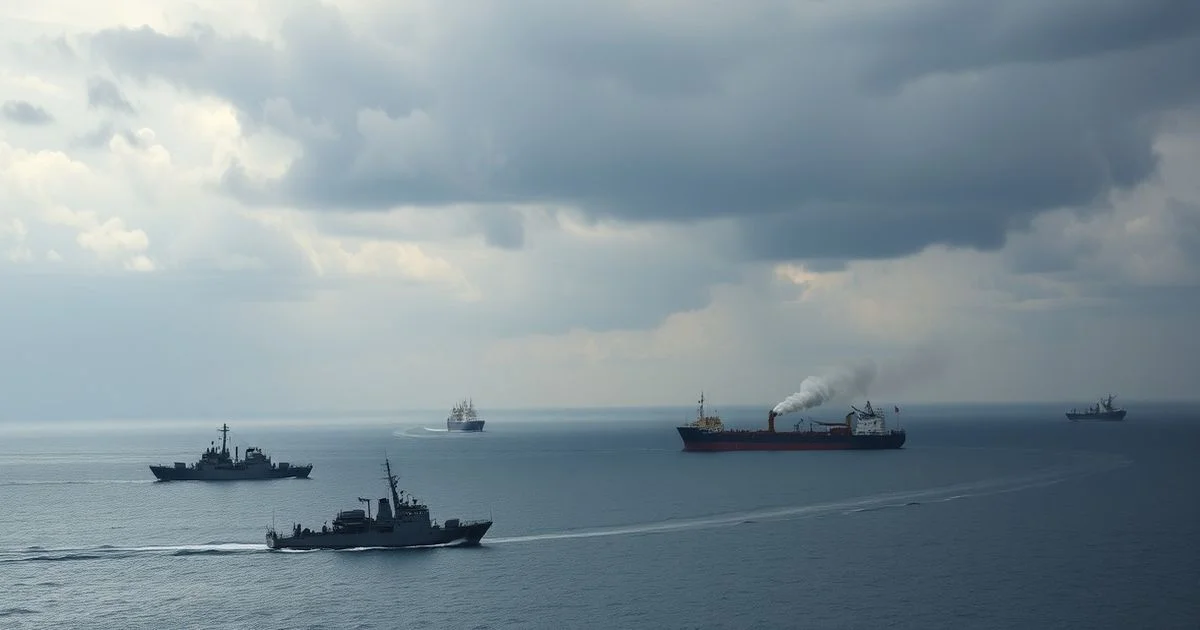
Furthermore, the Red Sea crisis, which began in October 2023 with Houthi attacks on shipping, is intimately linked to the broader Iran-Israel proxy conflict. There are significant concerns that the Houthis in Yemen, another key Iranian proxy, could re-enter the conflict more forcefully. Should the Houthis resume attacks on shipping in the Red Sea, it would further disrupt global trade routes, place upward pressure on oil prices, and potentially divert US and Israeli air and missile defenses. Such actions would serve as a force multiplier for Tehran, intensifying the economic pressure on the global system. The Strait of Hormuz, through which approximately 20% of the world's oil production passes, has also become a major point of contention, with Iran maintaining pressure and increasing attacks against oil installations in the Gulf.
Middle East Tensions Soar: Global Repercussions
The dramatic escalation between Israel and Iran extends far beyond the immediate geographical confines of the Middle East, sending ripple effects across the globe. The current crisis has profoundly impacted international markets, diplomatic relations, and the delicate balance of power, demonstrating that Middle East Tensions Soar: Israel Strikes, Iran Retaliates.
Economic Volatility and Energy Markets
One of the most immediate and significant global repercussions is the volatility in global energy markets. With Iran increasingly targeting energy infrastructure and maintaining pressure on critical maritime passages, oil prices have already shown an upward trend. The Hormuz Crisis Deepens, Oil Prices Surge Amid Deployments: A Global Concern highlights the Strait of Hormuz, a vital chokepoint for global oil supplies, which has become a major point of contention. Iran's actions to increase attacks against oil installations in the Gulf and potentially close or partially blockade the Strait would have immediate and severe global economic consequences, leading to a surge in hydrocarbon prices and disrupting global trade.
Furthermore, the Red Sea crisis, driven by Houthi attacks since late 2023, is intrinsically linked to the broader Iran-Israel proxy conflict. The current escalation has shattered hopes of a large-scale return of container shipping to the Red Sea in 2026. Rerouting vessels around the Cape of Good Hope, a consequence of these attacks, significantly increases transit times and costs, impacting global supply chains for various industries, from perishable goods to manufacturing components.
Diplomatic Divisions and Calls for De-escalation
The international community has reacted with alarm to the soaring tensions, with numerous calls for de-escalation. On March 21, 2026, UN Secretary-General Antonio Guterres expressed the United Nations' readiness to contribute to de-escalation efforts in the Middle East and ensure the protection of the vital Strait of Hormuz. This echoes earlier efforts, such as the UN Security Council's adoption of Resolution 2817 (2026) on March 11, which condemned Iran's "egregious attacks" against its neighbors amid rapidly escalating violence.
However, diplomatic efforts are complicated by existing divisions. While some nations, like Canada, are pushing for a collective G7 and Middle East approach to find "off-ramps" to the conflict, the consensus on how to achieve de-escalation remains elusive. Pakistan's Prime Minister Shehbaz Sharif also engaged with several world leaders on March 20, advocating for de-escalation and a resolution through dialogue and diplomacy. 15 Days Passed Since Iran War Update: Tensions Grip Middle East reflects these ongoing challenges. Despite these calls, the strategic interests of various global powers, including the United States, Russia, and China, intertwine with the regional conflict, complicating concerted international action.
Diverging War Aims
A notable aspect of the current situation is the apparent divergence in war aims between key allies, particularly the United States and Israel. When the US and Israel initiated their war against Iran in February 2026, their messages were initially in sync regarding the sweeping goal of regime change. President Donald Trump publicly encouraged Iranians to overthrow their government, while Prime Minister Benjamin Netanyahu similarly implored them to "cast off the yoke of this murderous regime."
However, nearly three weeks into the conflict, cracks in the alliance have begun to emerge. Reports indicate that Israel is pursuing a "scorched-earth campaign of regime change," aiming to decimate Iran's economy and energy infrastructure. In contrast, US officials suggest that President Trump's objectives, while including destroying Iran's ballistic missile program, sinking its navy, and neutralizing regional allies, aim to keep Iran's economy intact, rather than completely destroying it. This difference in ultimate goals presents a challenge to a unified strategy and could impact the trajectory and duration of the conflict. Both US and Israeli intelligence acknowledge that, despite the strikes, Iran's regime appears to be "intact but largely degraded" and its hold on power remains strong, indicating that a swift regime change is unlikely.
Expert Analysis and Future Outlook
The current escalation between Israel and Iran represents a complex and dangerous phase in regional geopolitics, prompting intense scrutiny from experts worldwide. Analysts are evaluating the long-term implications of the "decapitation strategy" and the potential for a protracted conflict. The intertwined interests of global powers further complicate any predictions for the future.
The Cycle of Confrontation
Experts highlight that the present crisis is part of a recurring cycle of confrontation, where deterrence often proves temporary rather than transformative. While military setbacks may occur, Iran's leadership has historically shown resilience, consistently treating its nuclear program and missile capabilities as core national security interests. The targeted killings of Iranian leaders, despite causing political tensions within the regime, have not yet led to its breakdown, largely due to established succession plans and ongoing internal political dynamics.
Some analysts suggest that the US-Israeli strategy, while relying on overwhelming force and precision strikes, may be "blind to the historical and sociopolitical realities of the region." They argue that such an approach, if aimed at regime change, underestimates the resilience of Iran's institutional layers and could instead lead to a more unstable, rather than compliant, Iran.
Pathways to Stability or Further Escalation
The future trajectory of the conflict remains uncertain, with several potential pathways. One scenario involves a prolonged war of attrition, where a decisive victory for either side remains unattainable. In such a situation, the conflict could continue to expand geographically, engulfing more regional actors and further destabilizing the Middle East. The involvement of various Iranian proxy groups, particularly the Houthis, could serve as a "force multiplier" for Tehran, further depleting adversary defenses and diverting military resources.
Alternatively, a pathway to de-escalation could emerge if a primary actor determines that its strategic objectives have been sufficiently achieved, creating conditions for dialogue and negotiation. Diplomatic efforts, such as those initiated by the UN and various nations, aim to create "off-ramps" that could lead to a cessation of hostilities. However, any lasting settlement would likely require addressing Iran's demands for sanctions relief, war reparations, and firm international guarantees against future strikes, which remains a complex diplomatic challenge. The existing rift in war aims between the US and Israel also complicates the formulation of a cohesive strategy for ending the conflict.
Conclusion
The recent surge in hostilities, marked by Israeli strikes on Iranian targets and Iran's subsequent retaliatory measures, has undeniably pushed the Middle East to a critical juncture. The escalation from shadow warfare to direct confrontations, coupled with the targeting of high-ranking officials and vital energy infrastructure, underscores the grave risks of a wider regional conflict. International efforts for de-escalation are underway, yet the deep-seated historical animosities, diverging strategic objectives, and the intricate web of proxy networks present formidable obstacles to achieving lasting stability. As Middle East Tensions Soar: Israel Strikes, Iran Retaliates, the global community faces the urgent imperative of fostering dialogue and diplomacy to prevent further bloodshed and avert a catastrophic regional conflagration with far-reaching economic and geopolitical consequences. The path forward demands concerted international action, recognizing the profound interconnectedness of this conflict with global security and economic stability.
Frequently Asked Questions
Q: What led to the current escalation between Israel and Iran?
A: The current escalation stems from a long-standing rivalry between Israel and Iran, which intensified as Israel initiated a series of strikes on Iranian assets and proxies. This prompted direct and forceful retaliations from Iran, moving the conflict beyond traditional proxy warfare to overt military actions.
Q: What are the global economic implications of these tensions?
A: The tensions have significant global economic implications, primarily causing volatility in energy markets and impacting oil prices. Threats to critical shipping lanes like the Strait of Hormuz and the Red Sea disrupt global supply chains by increasing transit times and shipping costs for various industries worldwide.
Q: Is a wider regional conflict likely?
A: The risk of a wider regional conflict is considered high due to the direct military confrontations, the active involvement of various Iranian proxy groups across the Middle East, and the differing strategic objectives among key international and regional actors. Urgent international diplomatic efforts are crucial to de-escalate the situation and prevent a broader conflagration.