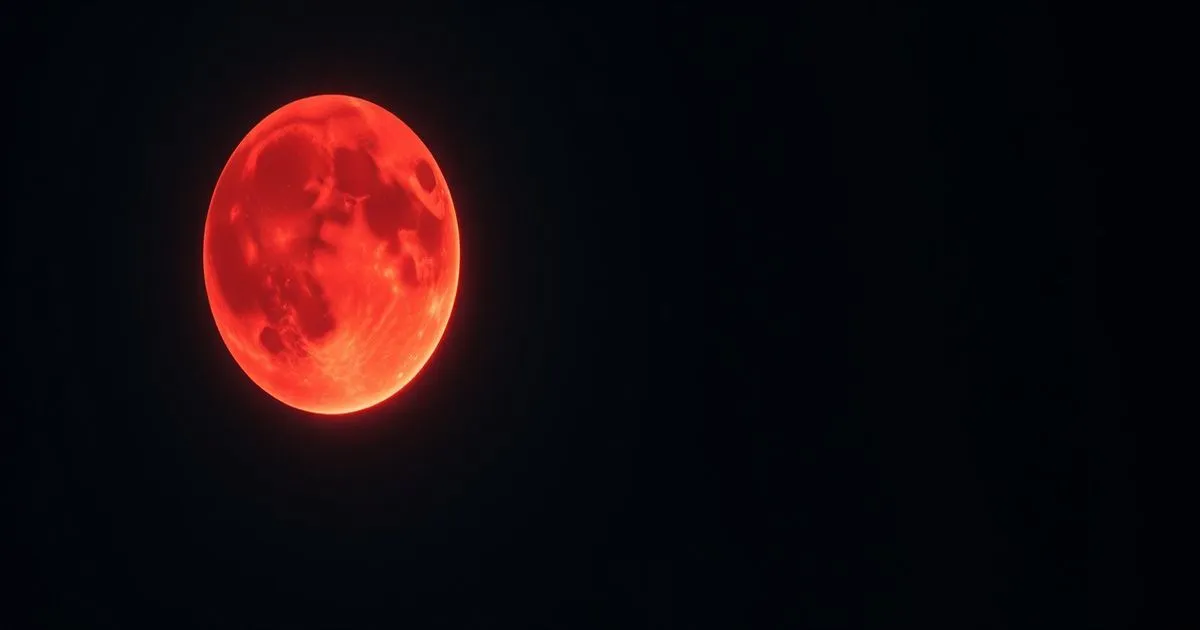
On Tuesday, March 3, 2026, skygazers across a significant portion of the globe will have the exceptional opportunity to witness a truly spectacular celestial event: a total lunar eclipse in March 2026. This highly anticipated astronomical phenomenon, often referred to as a "Blood Moon," promises to be a captivating display as our planet casts a dramatic shadow across the face of its natural satellite. This particular lunar eclipse March 2026 is noteworthy not only for its widespread visibility but also for being the only total lunar eclipse visible globally this year, making it a must-see event for amateur astronomers and casual observers alike. The moon's transformation into a deep coppery red is a sight that has fascinated humanity for millennia, offering a unique connection to the vastness of our solar system. To further expand your cosmic perspective, consider how many stars does space really hold and the scale of the universe.
- Understanding Lunar Eclipses: A Celestial Ballet
- The Total Lunar Eclipse March 2026: Key Timings and Global Visibility
- Witnessing the Spectacle: Viewing Tips and Preparations
- Scientific Significance and Cultural Echoes
- A Rare Treat: The Next Total Lunar Eclipse
- Conclusion: Don't Miss the Lunar Eclipse March 2026
- Frequently Asked Questions
- Further Reading & Resources
Understanding Lunar Eclipses: A Celestial Ballet
A lunar eclipse is a breathtaking cosmic alignment that occurs when the Earth positions itself directly between the Sun and the Moon. This precise arrangement causes Earth to block the Sun's light from reaching the Moon, casting a shadow upon its surface. While the concept might sound simple, the mechanics behind it involve intricate orbital dynamics that result in three distinct types of lunar eclipses: penumbral, partial, and total. Each type offers a slightly different viewing experience, depending on how deeply the Moon penetrates Earth's shadow.
What Causes a "Blood Moon"?
The most dramatic form, a total lunar eclipse, is famously known as a "Blood Moon" due to the striking reddish-orange hue the Moon adopts during its deepest phase. This vivid coloration is not a mystical occurrence but rather a beautiful consequence of atmospheric physics. During totality, while direct sunlight is completely blocked, some sunlight still manages to reach the Moon indirectly. This sunlight is filtered and refracted by Earth's atmosphere. Just as a sunset or sunrise appears red or orange due to the scattering of shorter-wavelength blue light by atmospheric particles, the same principle applies to the light reaching the eclipsed Moon. Longer-wavelength red and orange light penetrates Earth's atmosphere, bends around our planet, and illuminates the lunar surface. The intensity and shade of red can vary significantly from one eclipse to another, influenced by factors such as the amount of dust, clouds, or volcanic ash present in Earth's atmosphere at the time. A clearer atmosphere typically results in a brighter, more orange Moon, whereas a dustier atmosphere can lead to a darker, deeper red.
Unlike solar eclipses, which require special protective eyewear for safe viewing due to the direct glare of the Sun, lunar eclipses are entirely safe to observe with the naked eye. Furthermore, a total lunar eclipse can last for a substantial period, often up to nearly two hours, offering ample time for observation and appreciation. This extended duration provides a stark contrast to total solar eclipses, which typically last only a few minutes at any given location. The Moon's larger shadow, compared to that of a solar eclipse, contributes to this prolonged spectacle.
The Total Lunar Eclipse March 2026: Key Timings and Global Visibility
The total lunar eclipse March 2026 is set to unfold on Tuesday, March 3, 2026, stretching into the early hours of March 4 in some eastern time zones. This promises to be a truly global event, captivating billions of people across various continents. The entire celestial show, from the subtle dimming of the penumbral phase to the full immersion in Earth's umbra, will span approximately 5 hours and 39 minutes. However, the most anticipated phase—totality, when the Moon glows a vibrant red—will last for a remarkable 58 minutes and 19 seconds, providing a generous window for observers to soak in the "Blood Moon" spectacle.
For those planning to observe this grand event, understanding the precise timings is crucial. All times listed below are in Coordinated Universal Time (UTC), which can then be converted to your local time zone:
- Penumbral Eclipse Begins (P1): March 3, 2026, at 08:44 UTC. This marks the moment the Moon first enters Earth's faint outer shadow. Observers might notice a very subtle dimming of the lunar surface, though this phase is often difficult to detect with the naked eye.
- Partial Eclipse Begins (U1): March 3, 2026, at 09:50 UTC. As the Moon starts to enter Earth's darker, inner shadow (the umbra), a noticeable "bite" will appear on its edge, gradually growing larger.
- Total Eclipse Begins (U2): March 3, 2026, at 11:04 UTC. This is the moment totality commences, as the Moon is entirely enveloped by the umbra, beginning its transformation into the iconic "Blood Moon."
- Maximum Eclipse: March 3, 2026, at 11:33 UTC. At this point, the Moon is closest to the center of Earth's shadow, and its reddish hue is often at its most intense and dramatic.
- Total Eclipse Ends (U3): March 3, 2026, at 12:02 UTC. The Moon begins its exit from the umbra, and the brilliant white edge of the Moon starts to reappear.
- Partial Eclipse Ends (U4): March 3, 2026, at 13:17 UTC. The Moon completely leaves the darkest part of Earth's shadow, returning to its usual bright, full appearance, though still within the lighter penumbra.
- Penumbral Eclipse Ends (P4): March 3, 2026, at 14:22 UTC. The Moon fully exits Earth's outer shadow, and the eclipse officially concludes.
Regional Visibility: Where to Catch the Show
The visibility of the March 2026 total lunar eclipse spans a vast geographical area. Billions of people across multiple continents will have the chance to witness at least a portion of this celestial event.
- North and Central America: Observers in North and Central America will experience the eclipse in the early morning hours of March 3. For those on the US West Coast (Pacific Time), totality will occur from approximately 3:04 a.m. to 4:02 a.m. PST, offering optimal high-horizon views. Moving eastward, observers in the Mountain Time Zone will see totality from 4:04 a.m. to 5:02 a.m. MST, and those in the Central Time Zone from 5:04 a.m. to 6:02 a.m. CST. In the Eastern Time Zone, totality will begin at 6:04 a.m. EST but may be cut short by moonset for some, ending around 7:03 a.m. EST. Parts of far western South America will also catch the total phase.
- Australia and New Zealand: These regions are exceptionally well-positioned to witness the total lunar eclipse, with the event unfolding during their evening and overnight hours. In Sydney, Australia, totality is expected from 10:04 p.m. to 11:02 p.m. AEDT on March 3. New Zealand will see the total eclipse shortly after midnight on March 4, with totality from approximately 12:04 a.m. to 1:02 a.m. NZDT. Many locations in Australia and New Zealand are among the few where the entire event, from start to finish, will be visible.
- Eastern Asia and the Pacific: Much of Eastern Asia, including cities like Tokyo (8:04 p.m. to 9:02 p.m. JST for totality), and the vast Pacific Ocean region will also have prime viewing opportunities for the total eclipse during the evening of March 3.
- Central Asia and Southern America (Partial View): While not experiencing totality, parts of Central Asia and much of South America will still observe a partial lunar eclipse. This means the Moon will only partially enter Earth's umbra, and a distinct "bite" will be visible on its surface.
- India: The eclipse will be visible partially in India, coinciding with the Hindu festival of Holi, a rare cultural-astronomical overlap. The Moon will be visible from 6:26 PM IST, with maximum visibility between 6:33 PM and 6:40 PM IST on March 3.
- Regions of Non-Visibility: Unfortunately, the total lunar eclipse will not be visible from Africa or Europe. For those in these areas, online livestreams will offer a chance to experience the event remotely.
Witnessing the Spectacle: Viewing Tips and Preparations
Observing a total lunar eclipse is a straightforward and enjoyable experience that requires minimal preparation. Unlike solar eclipses, where specialized eye protection is mandatory, lunar eclipses are completely safe to view directly with the naked eye. This accessibility makes them perfect for spontaneous skywatching or planned family events.
No Special Equipment Needed
The beauty of a lunar eclipse lies in its natural visibility. You don't need expensive telescopes or complicated gear to appreciate the Moon's dramatic transformation. Your own eyes are the best tool. Simply step outside during the eclipse hours, find a clear view of the sky, and look up. The changing colors and the shadow progressing across the lunar surface will be clearly discernible.
However, for those seeking a more detailed and immersive experience, basic optical aids can significantly enhance the view. A pair of binoculars can bring the Moon's surface into closer focus, revealing craters and other topographical features with enhanced clarity, even as it dims and changes color. The reddish hues of the "Blood Moon" often appear more vibrant and textured through binoculars. Similarly, a small telescope can provide even greater magnification, allowing you to observe the subtle nuances of the Earth's shadow as it creeps across the lunar landscape and appreciate the depth of its coppery glow during totality. Finding a dark environment, away from the glare of city lights, will further improve visibility and allow your eyes to adjust to the night sky, making the fainter penumbral stages more noticeable and the deep red of totality more striking.
Planning Your Observation
To make the most of the March 2026 total lunar eclipse, a little planning can go a long way. First and foremost, check your local weather forecast. Clear skies are paramount for an unobstructed view. If your area is predicted to have heavy cloud cover, consider searching for online livestreams hosted by observatories or astronomy enthusiasts. Many organizations provide high-quality feeds of eclipses, offering an excellent alternative for those whose local viewing conditions are unfavorable.
Next, identify a viewing location with an unobstructed view of the moon. For this particular eclipse, knowing the moon's position in the sky during the various phases is helpful. For example, observers in North America will be viewing the eclipse in the early morning, so a westward-facing vantage point might be ideal as the Moon approaches the horizon. For those in Australia and New Zealand, the Moon will be high in the sky during totality in the evening, offering excellent visibility. Choose a spot away from bright artificial lights, such as streetlights or illuminated buildings, as light pollution can significantly diminish the visibility of fainter celestial phenomena. Allow your eyes approximately 10 to 15 minutes to fully adjust to the darkness for the best possible viewing experience. Consider bringing a comfortable chair, warm clothing (if it's a cool night), and perhaps a warm beverage to enhance your comfort during the extended observation period. It’s also a wonderful opportunity to involve children, sparking their interest in science and the cosmos.
Scientific Significance and Cultural Echoes
Beyond its stunning visual appeal, a lunar eclipse holds significant scientific value and has long played a role in human culture and history. Scientists use these events as natural laboratories to study various aspects of our solar system.
A Window into Our Planet's Atmosphere
The Earth's atmosphere acts as a lens during a lunar eclipse, filtering sunlight before it reaches the Moon. By observing the characteristics of the "Blood Moon"—its color, brightness, and variations in shading—astronomers can glean insights into the composition of Earth's atmosphere at that particular time. For instance, a very dark red or brown eclipse might indicate a higher concentration of dust or aerosols from recent volcanic eruptions or major wildfires. Conversely, a brighter, more orange eclipse suggests a clearer atmosphere. These observations contribute to our understanding of atmospheric changes and their global impact over time. Researchers also analyze the precise timing of the Moon entering and exiting Earth's shadow to refine calculations of lunar orbit and Earth's exact dimensions.
Lunar Eclipses Through History
Throughout history, lunar eclipses have been viewed with a mixture of awe, fear, and wonder across different cultures. Ancient civilizations often interpreted them as omens, divine messages, or manifestations of mythical beasts consuming the Moon. Many cultures developed intricate mythologies and rituals surrounding these celestial events. For example, in India, the March 2026 total lunar eclipse notably coincides with the vibrant Hindu festival of Holi, a rare and culturally significant overlap. This synchronicity adds another layer of meaning for those who observe traditional practices during lunar eclipses, known as Chandra Grahan. Such overlaps remind us how astronomical occurrences have been deeply interwoven with human traditions and spiritual beliefs for millennia, shaping our understanding of the world and our place within the cosmos. For a broader appreciation of the nation's diverse heritage, explore India: A Symphony of Wonders.
A Rare Treat: The Next Total Lunar Eclipse
This upcoming lunar eclipse March 2026 is not just a beautiful sight; it's also a relatively rare opportunity. While partial and penumbral lunar eclipses occur more frequently, a total lunar eclipse that is widely visible across much of the night side of Earth is a special event. For many, this will be the last chance to witness a total lunar eclipse until late 2028. Specifically, the next total lunar eclipse visible anywhere on Earth is predicted for New Year's Eve 2028. For observers in North America, the wait will be even longer, with the next total lunar eclipse visible from the continent not expected until June 2029. This emphasizes the significance of preparing to observe the March 2026 event.
Conclusion: Don't Miss the Lunar Eclipse March 2026
The total lunar eclipse on March 3, 2026, promises to be a memorable celestial spectacle, painting the Moon in mesmerizing shades of coppery red. This widely visible "Blood Moon" offers a unique chance for billions of people across Eastern Asia, Australia, New Zealand, the Pacific, and the Americas to connect with the cosmos. With no special equipment needed and the event unfolding over several hours, it's an accessible and awe-inspiring phenomenon for everyone. Mark your calendars, check your local timings, and prepare to witness the captivating lunar eclipse March 2026 as Earth casts its magnificent shadow, transforming our celestial neighbor into a temporary ruby in the night sky.
Frequently Asked Questions
Q: Is the March 2026 lunar eclipse a "Blood Moon"?
A: Yes, the total lunar eclipse on March 3, 2026, will be a "Blood Moon." This term refers to the reddish-orange hue the Moon takes on during totality, caused by sunlight filtering through Earth's atmosphere and refracting onto the lunar surface.
Q: Do I need special equipment to safely view the lunar eclipse?
A: No, lunar eclipses are completely safe to view with the naked eye and do not require any special protective eyewear, unlike solar eclipses. While binoculars or a small telescope can enhance the experience, they are not necessary for observation.
Q: Which regions will have the best view of the March 2026 total lunar eclipse?
A: The total lunar eclipse will be best viewed across Eastern Asia, Australia, New Zealand, the Pacific Ocean region, and the Americas (particularly North and Central America) during their respective night hours. Parts of India will also see a partial eclipse.