Kohli's Viral Clapback: "Overseas Player" Taunt in IPL 2026 Ignites Debate
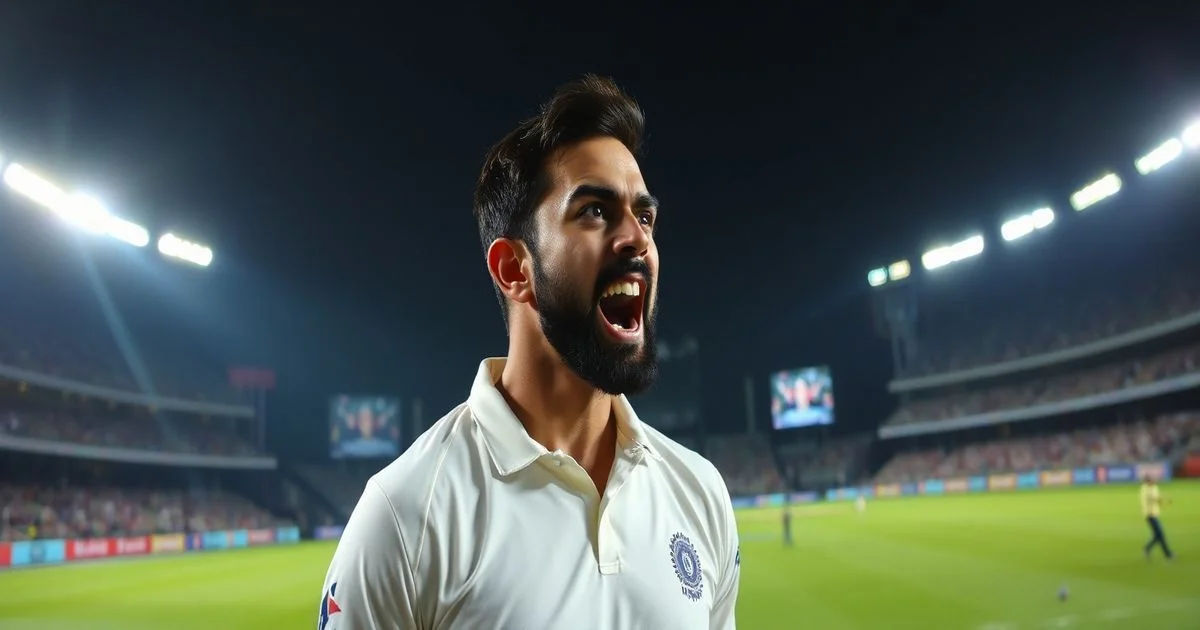
The cricketing world is once again buzzing, following a fiery on-field exchange involving star batsman Virat Kohli during a high-stakes encounter in the 2026 Indian Premier League (IPL) season. A specific moment, now dubbed Kohli's Viral Clapback: "Overseas Player" Taunt in IPL 2026, has rapidly become the focal point of discussions across social media, news channels, and fan forums, igniting a fresh debate about passion, sportsmanship, and rivalry in modern cricket. This particular incident has captivated audiences, highlighting the intense emotions that often simmer beneath the surface of professional competition and bringing to the forefront the competitive spirit of one of cricket's most iconic figures.
- The Genesis of the Spark: Background Context to Kohli's Intense Demeanor
- Unpacking the Incident: Key Details of the "Overseas Player" Clapback
- Deconstructing the Taunt: Why "Overseas Player" Struck a Nerve
- Voices from the Stands and the Commentary Box: Expert Opinions and Fan Reactions
- Upholding Standards: IPL's Code of Conduct and Potential Repercussions
- The Broader Impact: Kohli's Brand, IPL's Image, and the Spirit of Cricket
- A Pattern of Passion: Understanding Kohli's Competitive Edge
- Conclusion: The Enduring Legacy of Kohli's Viral Clapback: "Overseas Player" Taunt in IPL 2026
- Frequently Asked Questions
- Further Reading & Resources
The Genesis of the Spark: Background Context to Kohli's Intense Demeanor
Virat Kohli's career has been as much defined by his unparalleled batting prowess as by his fiery passion and unwavering intensity on the field. Known for wearing his heart on his sleeve, Kohli has, over the years, been involved in numerous animated exchanges with opposition players, often drawing both praise for his competitive spirit and criticism for perceived aggression. The IPL, a league renowned for its high-octane action and fierce rivalries, frequently provides the stage for such dramatic moments. Players from different nations, who often share dressing rooms in international cricket, become adversaries in the IPL, leading to unique dynamics and occasionally, heated confrontations.
Kohli's history includes memorable face-offs with various cricketers, from verbal duels with Australian players to animated reactions to dismissals and on-field banter that pushes the boundaries of conventional sportsmanship. These incidents, while sometimes controversial, have undoubtedly contributed to his larger-than-life persona, cementing his image as a fierce competitor who leaves no stone unturned in pursuit of victory. His expressive nature, while sometimes polarising, resonates deeply with a significant portion of his massive global fanbase, who see it as an authentic display of commitment to the game.
The pressure cooker environment of the IPL, with its massive stakes, fan expectations, and lucrative contracts, amplifies every on-field interaction. A single moment of tension can quickly escalate into a viral sensation, dissected and debated for days. This background context is crucial to understanding the latest chapter in Kohli's storied career and the widespread reaction to his recent Kohli's Viral Clapback: "Overseas Player" Taunt in IPL 2026. The stage was perfectly set for another iconic, albeit controversial, moment involving the former Indian captain. The continuous evolution of sports, particularly in a league like the IPL, means that player interactions and their public reception are constantly changing, keeping fans on the edge of their seats.
Unpacking the Incident: Key Details of the "Overseas Player" Clapback
The specific incident unfolded during a crucial league match in IPL 2026, involving Kohli's team, the Royal Challengers Bangalore, against a formidable opponent. Details emerging from on-field microphones and slow-motion replays paint a vivid picture of the confrontation. The altercation reportedly began after a particularly tight over, which saw a crucial wicket fall, bringing Kohli to the crease under immense pressure. As he walked out to bat, a comment from an opposing player, reportedly an "overseas" fast bowler, was heard. The exact words are still being debated, but the essence conveyed was a jab at Kohli's perceived "Indianness" or perhaps implying a lack of global experience in high-pressure situations, or perhaps subtly questioning his dominance against non-Indian bowlers.
What followed was vintage Kohli. With a steely gaze, he reportedly turned towards the bowler and delivered a sharp, unscripted retort that immediately caught the attention of stump microphones and broadcast cameras. While the complete dialogue is subject to interpretation and lip-reading efforts, the phrase "overseas player" was clearly distinguishable in Kohli's animated response. This was not a casual remark but a direct, pointed response, delivered with an intensity that left no doubt about its meaning. The opposing player appeared momentarily taken aback, while teammates from both sides quickly intervened to de-escalate the situation. The umpires also stepped in, issuing verbal warnings to both individuals, a testament to the heat of the moment.
The footage of this exchange quickly circulated across social media platforms, with countless replays and analyses emerging within minutes of the incident. Fans and pundits immediately began dissecting every frame, attempting to decipher the full extent of the verbal spat. The phrase "overseas player" became a trending topic, with many viewing Kohli's clapback as a powerful defense of his identity and prowess on the global cricketing stage, even within the confines of a franchise league. The immediacy and widespread nature of the reaction underscore the significant impact of Kohli's actions and words, further solidifying his status as a central figure in the IPL narrative. This incident not only highlighted the intense rivalry but also showcased Kohli's unyielding spirit to defend his turf and reputation.
Deconstructing the Taunt: Why "Overseas Player" Struck a Nerve
The choice of the phrase "overseas player" in the initial taunt, and Kohli's subsequent deployment of it in his clapback, is significant. In the context of the IPL, "overseas player" typically refers to international cricketers who are not from India. While this is a standard categorisation, using it as a taunt can carry multiple layers of implication, especially for a player like Kohli, who embodies Indian cricket pride.
Potential interpretations of the "overseas player" taunt could include:
-
Undermining Home Advantage: A subtle suggestion that Kohli's dominant performances are perhaps more pronounced on home soil or against certain types of bowling that might be perceived as less challenging than what "overseas players" might offer internationally. It could imply his success is less significant when not against world-class, non-Indian opposition.
-
Questioning Global Credentials: In a sport that increasingly prioritizes global performance, a taunt of this nature could be interpreted as an attempt to undermine a player's standing on the international stage, despite Kohli's undeniable records across formats and continents. It challenges his status as a universally dominant player.
-
Nationalistic Undertones: The IPL, while a league, often sees intense nationalistic sentiments emerge, especially when Indian stars face off against international talents. A comment like "overseas player" can, intentionally or unintentionally, tap into these sentiments, attempting to create a divide or assert dominance based on origin rather than skill. This can create a 'them vs. us' narrative.
-
Psychological Warfare: More broadly, it's a common tactic in sports to try and get under an opponent's skin, to disrupt their focus and composure. The "overseas player" taunt, given Kohli's persona, was likely a deliberate attempt to provoke a reaction, which it successfully did. Such tactics are designed to break a player's concentration and rattle their confidence.
Kohli's response, using the same terminology, was a forceful reclamation of the narrative. It wasn't merely a defensive reaction but an aggressive assertion of his stature and refusal to be pigeonholed or diminished by such a remark. It turned the tables on the taunter, perhaps implying that their "overseas" status didn't grant them any inherent superiority or right to disrespect a homegrown legend. This psychological battle is a key aspect of competitive sport, and Kohli's adeptness at responding, while sometimes crossing lines, often fuels his performance. His ability to turn a taunt into a motivational factor is a hallmark of his career.
Voices from the Stands and the Commentary Box: Expert Opinions and Fan Reactions
The fallout from Kohli's "overseas player" clapback has been immediate and widespread, drawing a spectrum of reactions from former cricketers, current commentators, and the ever-passionate fan base.
Divided Opinions Among Cricket Pundits
-
Support for Kohli's Passion: Many former players, particularly those known for their own aggressive styles, have defended Kohli's actions, viewing them as a display of genuine passion and commitment. "This is Virat Kohli," remarked a former Indian captain on a sports news channel. "He plays with fire, and that's what makes him a match-winner. You provoke him at your own peril." They argue that such moments, while intense, add to the theatre of the game and demonstrate a player's emotional investment, making cricket more engaging for viewers.
-
Concerns for Sportsmanship: Conversely, a section of experts has voiced concerns regarding the spirit of the game and the example set for younger players. "While passion is important, there's a line that shouldn't be crossed," stated a renowned international commentator. "The IPL should uphold certain standards of conduct." These voices often highlight the importance of respecting opponents, regardless of the heat of the battle, and adhering to the IPL's code of conduct to maintain the game's integrity.
-
Context is Key: Some analysts have adopted a more nuanced view, suggesting that the context of the initial taunt is crucial. "We need to understand what was said first," explained a cricket analyst on a popular podcast. "If it was genuinely provocative, then Kohli's reaction, while strong, is understandable within the competitive environment." They emphasize that such incidents are rarely one-sided and a full picture is needed for fair judgment.
The Fan Perspective: A Social Media Storm
On social media, the incident has sparked an inferno of debates, memes, and impassioned defenses.
-
#KohliRoars: Trending globally, this hashtag signifies the overwhelming support for Kohli, with fans celebrating his fierce response as a testament to his fighting spirit. Many shared videos of past Kohli confrontations, drawing parallels and reinforcing his image as a dominant force, much like the recent buzz around Arjun Tendulkar's viral reply that also shook the cricket world.
-
#SpiritOfCricket: This hashtag also gained traction, primarily from those critical of Kohli's conduct, advocating for adherence to traditional cricketing values and sportsmanlike behavior. Discussions ranged from the need for stricter penalties to calls for players to be more mindful of their public image, especially given their role model status.
-
Memes and Humour: As is often the case with viral moments, the incident quickly became fodder for memes, showcasing the humorous side of fan reactions and further spreading the awareness of the controversy. These lighthearted reactions often help to defuse tension while keeping the event in the public consciousness.
The varied responses underscore the complex nature of player conduct in professional sports, where the lines between acceptable passion and unsportsmanlike behavior are often blurred and subject to individual interpretation. This deep engagement reflects the psychology of fan loyalty in professional team sports, where supporters fiercely defend their idols through thick and thin.
Upholding Standards: IPL's Code of Conduct and Potential Repercussions
The IPL, like all major sporting leagues, operates under a stringent Code of Conduct designed to ensure fair play, respect among competitors, and the overall integrity of the game. Any on-field altercation, particularly one involving verbal abuse or aggressive gestures, falls under the purview of this code. Adherence to these rules is critical for maintaining the professional standards of the league and ensuring a level playing field.
Key aspects of the IPL Code of Conduct relevant to such incidents include:
-
Level 1 Offences: These typically cover minor breaches of the code, such as using audible obscenities, showing dissent at an umpire's decision, or engaging in aggressive sledging that goes beyond acceptable banter. Penalties for these are usually less severe.
-
Level 2 Offences: More serious breaches, including physical altercations, deliberately making contact with an opponent, or using language that is considered abusive, offensive, or brings the game into disrepute. These often carry heavier sanctions and can impact a player's standing significantly.
-
Match Referees: Appointed for every match, they are responsible for reviewing incidents, hearing from players and umpires, and imposing penalties. Their decisions are crucial in upholding the disciplinary framework of the league.
-
Penalties: Depending on the severity of the offence and the player's disciplinary record, penalties can range from a warning and a fine (a percentage of the match fee) to suspensions from one or more matches. Repeat offenders often face harsher consequences to deter future misconduct.
In the immediate aftermath of the "overseas player" incident, it was reported that the match referee took note of the exchange. While no official charges were immediately laid on the field, it is standard procedure for the referee to review all relevant footage and match reports. Given the high-profile nature of the players involved and the viral spread of the video, a thorough review by the IPL disciplinary committee would be expected. The committee's verdict will not only determine the consequences for the players involved but also send a clear message about the boundaries of acceptable behavior in the league.
While it is speculative to predict exact outcomes for a fictional event, in real-world scenarios, players involved in such confrontations often face a range of consequences. For example, in previous IPL seasons, players like Gautam Gambhir and Shane Watson have faced fines for aggressive on-field behavior. The precedent suggests that while passion is acknowledged, outright verbal altercations that cross certain boundaries are typically addressed with disciplinary action. The IPL aims to strike a balance between allowing players to express themselves and maintaining a respectful and professional environment, protecting both its image and the spirit of the game.
The Broader Impact: Kohli's Brand, IPL's Image, and the Spirit of Cricket
The ripple effects of an incident involving a player of Virat Kohli's stature extend far beyond the boundary ropes. His actions, both on and off the field, are constantly scrutinised, influencing perceptions of his personal brand, the image of his team, and even the broader reputation of the IPL. Such high-profile events often become case studies in sports marketing and public relations.
Impact on Virat Kohli's Brand
Kohli is not just a cricketer; he's a global brand ambassador, endorsing numerous products and representing the pinnacle of cricketing excellence.
-
Reinforced "Aggressive Leader" Image: For many, this incident reinforces his image as a fierce, no-nonsense competitor who will stand his ground. This might resonate positively with brands that seek to associate with strength and determination, aligning with a 'never-back-down' attitude.
-
Potential for Backlash: Conversely, brands that champion sportsmanship, fair play, and a more composed image might find such incidents problematic. Repeated controversies could lead to questions about his suitability for certain endorsements, especially those promoting family values or ethical conduct. Maintaining a clean image is paramount for many global brands.
-
Fan Polarization: The incident will likely further polarize his fan base, with ardent supporters defending him vehemently, while critics might use it to reinforce arguments about his temperament. This polarization, while sometimes generating buzz, can also alienate segments of the audience.
Influence on the IPL's Image
The IPL prides itself on being a premier T20 league, attracting top talent and offering exhilarating entertainment.
-
Increased Buzz and Viewership: Controversies, paradoxically, often generate immense public interest and can lead to spikes in viewership and social media engagement. The "overseas player" incident undoubtedly contributed to the viral buzz around IPL 2026, drawing more eyeballs to the league.
-
Concerns for Reputation: However, a series of high-profile altercations could also tarnish the league's image, potentially deterring some sponsors or raising questions about the league's ability to maintain discipline and decorum among its players. The IPL continually strives to balance the entertainment factor with upholding the integrity of the sport, a delicate act.
-
Setting Precedents: How the IPL's disciplinary committee handles this and similar incidents will set important precedents for future player conduct, influencing the overall ethos of the league and how future generations of players are expected to behave. Consistency in enforcement is crucial.
The Everlasting Debate: "Spirit of Cricket"
The "overseas player" clapback has inevitably reignited the timeless debate surrounding the "Spirit of Cricket." This unwritten code emphasizes fair play, respect for opponents, and playing the game hard but fairly, a concept rooted in cricket's long history.
-
Modern vs. Traditional Views: The incident highlights the growing chasm between those who advocate for a more expressive, aggressive style of play, seeing it as part of modern competitive sport, and traditionalists who lament what they perceive as a decline in gentlemanly conduct. This reflects a broader cultural shift in sports globally.
-
Fan Engagement: While debates about the "Spirit of Cricket" can be heated, they also demonstrate the deep emotional connection fans have with the game and their desire to see it played in a manner that reflects their values. These discussions, though sometimes contentious, are a testament to the sport's enduring cultural significance.
Ultimately, incidents like these are a microcosm of the larger challenges facing sports in the 21st century: how to balance intense competition, entertainment, and commercial interests with the fundamental principles of sportsmanship and respect. The outcome of these internal and external debates will shape the future direction of cricket and its perception worldwide.
A Pattern of Passion: Understanding Kohli's Competitive Edge
Virat Kohli's "overseas player" clapback, while a significant moment, is not an isolated incident in his illustrious career. Instead, it fits within a larger pattern of a player who thrives on intensity and uses every interaction, every challenge, to fuel his performance. His competitive edge is legendary, and it manifests in various forms – from meticulously planned training regimes to aggressive running between the wickets, and, at times, fiery exchanges with opponents. This consistent display of passion has been a defining characteristic throughout his journey from a talented youngster to a global superstar.
This intensity has often been a double-edged sword. On one hand, it has propelled him to break numerous batting records, leading his teams to historic victories, and earning him a reputation as one of the greatest cricketers of all time. His aggressive leadership style, too, has been credited with instilling a winning mentality in the Indian team, fostering a culture of never giving up. On the other hand, it has occasionally led to disciplinary issues, fines, and criticism from those who prefer a more sedate approach to the game, demonstrating the fine line between passion and aggression.
However, it's undeniable that this very passion is what makes Kohli such a compelling figure. Fans are drawn to his authenticity and the raw emotion he brings to the field. He epitomizes the modern cricketer who isn't afraid to challenge conventions and express himself. The "overseas player" incident, therefore, serves as another chapter in the ongoing narrative of a cricketer who plays not just with skill, but with an unyielding fire in his belly. It reiterates that for Kohli, cricket is more than just a game; it's a battle of wills, and he is always prepared to fight for every inch. His career is a testament to how personal drive and competitive spirit can elevate a player to legendary status, even when it occasionally courts controversy.
Conclusion: The Enduring Legacy of Kohli's Viral Clapback: "Overseas Player" Taunt in IPL 2026
The Kohli's Viral Clapback: "Overseas Player" Taunt in IPL 2026 incident will undoubtedly be etched into the annals of IPL folklore, providing yet another iconic moment in the career of one of cricket's most captivating figures. While opinions remain divided on the appropriateness of the exchange, its impact on the cricketing landscape is undeniable. It sparked fervent discussions, dominated news cycles, and once again highlighted the fine line between passionate competition and perceived transgressions of sportsmanship. This event will likely be referenced for years to come whenever debates about player conduct or Kohli's temperament arise.
This incident serves as a potent reminder of the emotional stakes involved in professional sport and the unique personality that Virat Kohli brings to the game. As the IPL season progresses, and beyond, the ramifications of this heated exchange will likely continue to be debated, offering valuable insights into the evolving dynamics of player interactions, fan engagement, and the enduring "Spirit of Cricket" in a rapidly modernizing sporting world. Whether one applauds his fire or questions his temper, Kohli's latest viral moment has ensured that his presence on the field remains as impactful and talked about as ever, solidifying his status as a perpetual headline-maker in the world of cricket.
Frequently Asked Questions
Q: What triggered Kohli's "overseas player" clapback?
A: The incident occurred during a crucial IPL 2026 match when an opposing overseas fast bowler made a provocative comment as Kohli walked out to bat, reportedly questioning his prowess or Indian identity, leading to his sharp retort.
Q: How did fans and experts react to the incident?
A: Reactions were divided. Many fans supported Kohli's passion and fighting spirit, creating trending hashtags, while some experts and fans raised concerns about sportsmanship, the spirit of cricket, and adherence to the IPL's code of conduct.
Q: What are the potential repercussions for Kohli?
A: The IPL match referee noted the exchange, and a thorough review by the disciplinary committee is expected. Depending on the severity of the offense and Kohli's disciplinary record, penalties could range from fines (a percentage of his match fee) to match suspensions.