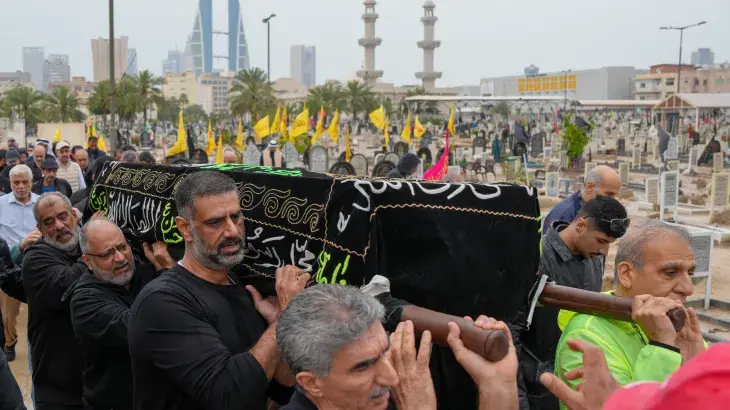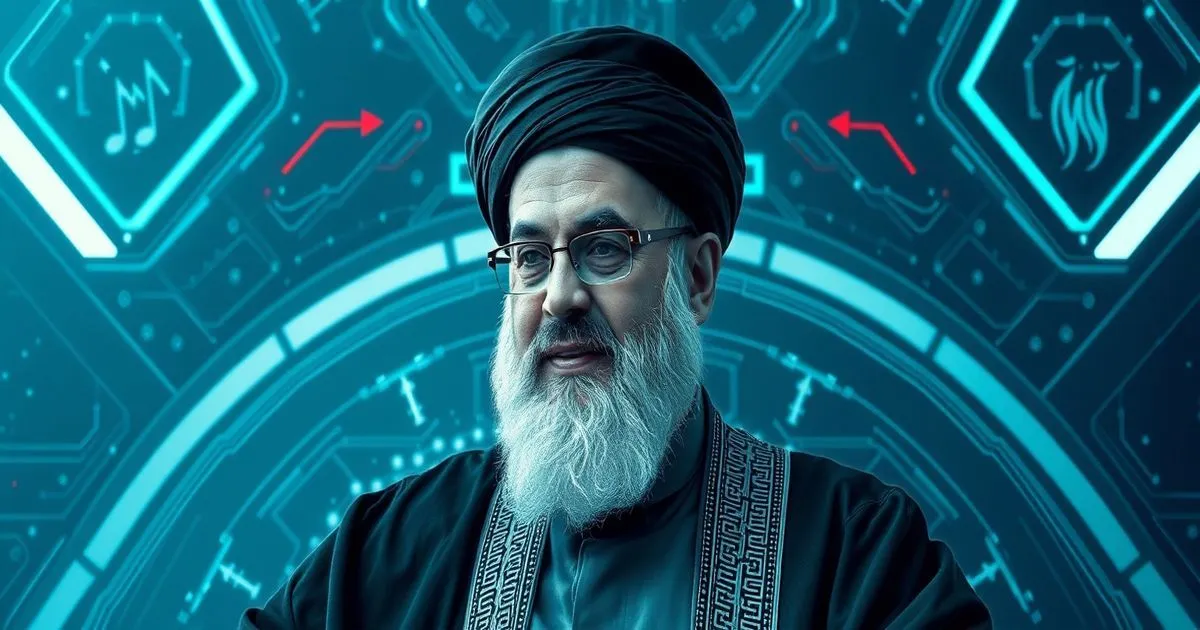
The Islamic Republic of Iran is navigating a monumental shift following the reported death of its Supreme Leader, Ayatollah Ali Khamenei. News outlets confirmed his passing on February 28, 2026, amidst reports of a joint US-Israeli military operation. This event, which concludes the nearly 37-year rule of Iran's Supreme Leader Ayatollah Ali Khamenei, immediately triggers a constitutionally mandated, yet historically complex, succession process. The transition ushers in an era of profound uncertainty for Iran's domestic landscape and its intricate role in global affairs.
- The End of Iran's Supreme Leader Ayatollah Ali Khamenei's Rule: A Legacy Defined
- Iran's Constitutional Path to a New Supreme Leader
- Leading Contenders for the Supreme Leadership
- Profound Implications of the Leadership Transition
- A Nation at a Crossroads
- Frequently Asked Questions
- Further Reading & Resources
The End of Iran's Supreme Leader Ayatollah Ali Khamenei's Rule: A Legacy Defined
Ayatollah Ali Khamenei, born in 1939, ascended to the position of Supreme Leader in 1989 after the death of Ayatollah Ruhollah Khomeini, the founder of the Islamic Republic. His tenure as Supreme Leader, a role he held for almost 37 years, established him as the Middle East's longest-serving head of state. Khamenei's leadership was characterized by a consolidation of power, ensuring the preservation of the regime and a significant expansion of Iran's influence across the region. He was the ultimate authority in Iran, overseeing virtually all governmental functions, directly or indirectly.
The Supreme Leader's office, established by Iran's constitution in 1979 based on Khomeini's concept of velayat-e faqih (Guardianship of the Islamic Jurist), vests final religious and political authority in a single learned Islamic jurist. This position grants immense power, including control over the armed forces, security services, and key institutions, and shapes both foreign and domestic policies. Khamenei's directives guided the nation's economy, environment, foreign policy, education, and national planning. He served as the commander-in-chief of the armed forces, including the powerful Islamic Revolutionary Guard Corps (IRGC), and had the sole power to declare war or peace. His influence extended to appointing and dismissing leaders of the judiciary, state media, and six of the twelve members of the Guardian Council, which vets candidates for public office. Under his rule, internal dissent was often met with violent suppression, as seen during the "Woman, Life, and Freedom" uprisings. The end of Iran's Supreme Leader Ayatollah Ali Khamenei's rule marks only the second such leadership transition since the 1979 Islamic Revolution.
Iran's Constitutional Path to a New Supreme Leader
The process of selecting a new Supreme Leader is explicitly outlined in Iran's constitution, yet it is far from straightforward. This mechanism is designed to ensure continuity within the Islamic Republic's theocratic structure. The primary body responsible for this momentous decision is the Assembly of Experts (AE).
The Assembly of Experts: Choosing the Next Leader
The Assembly of Experts is an 88-member clerical body composed of senior Islamic scholars. Its paramount responsibility is to select the future Supreme Leader in the event of the incumbent's death, resignation, or incapacitation. This same assembly also possesses the theoretical power to dismiss a Supreme Leader, though this has never occurred in the history of the Islamic Republic.
Members of the Assembly of Experts are elected through national elections held every eight years. However, the democratic aspect of these elections is heavily curtailed. All candidates for the Assembly must be qualified clerics, and their eligibility is stringently vetted and approved by the Guardian Council. The Guardian Council itself is a powerful oversight body whose members are directly or indirectly appointed with the Supreme Leader's influence, creating a tightly controlled electoral process. For instance, in March 2024, the Guardian Council barred former President Hassan Rouhani, a moderate figure, from running for the Assembly of Experts. This pre-approval mechanism ensures that only clerics aligned with the ruling establishment are permitted to stand for election, thereby consolidating conservative power within the Assembly.
The Interim Leadership Council
According to Article 111 of the Iranian constitution, in the immediate aftermath of the Supreme Leader's death, a temporary three-member council assumes leadership duties until a new permanent leader is appointed. This interim council consists of the sitting President, the Chief Justice, and one senior cleric from the 12-member Guardian Council, who is selected by the Expediency Discernment Council. The Expediency Council is a top arbitration body whose members are also chosen by the Supreme Leader. Currently, Iran's reformist President Masoud Pezeshkian and hard-line Judiciary Chief Gholam-Hossein Mohseni Ejei are part of this transitional body. While the Assembly of Experts is mandated to appoint a new leader "as swiftly as possible," the law does not stipulate a specific deadline, meaning the interim council could theoretically govern indefinitely if a consensus is not reached.
Secrecy and Influence
Historically, succession planning in Iran has been a closely guarded secret within the regime's inner circle. While the clerical body holds formal authority, the selection of a successor requires significant coordination with and approval from powerful entities such as the Islamic Revolution Guards Corps (IRGC) and the Supreme Leader's inner circle. These entrenched power structures ensure that any chosen successor must be acceptable to them, profoundly influencing the Assembly of Experts' decision. The secrecy surrounding these deliberations has only fueled speculation over the years.
Leading Contenders for the Supreme Leadership
The sudden vacuum left by the passing of Ayatollah Ali Khamenei has immediately turned international attention to the potential successors. While no individual is guaranteed the position, several key figures are consistently mentioned in discussions about Iran's next Supreme Leader. These individuals represent different factions and bring varying levels of religious, political, and institutional experience to the forefront.
One prominent name frequently cited is Mojtaba Khamenei, the second-eldest son of the late Supreme Leader. A mid-ranking cleric with strong ties to the Revolutionary Guard, his potential ascension raises concerns about hereditary rule, which could spark controversy and opposition even among system supporters who might view it as un-Islamic. Despite his father's reported past opposition to a dynastic succession, Mojtaba's influence within security forces and the IRGC is considerable.
Another significant contender is Ayatollah Alireza Arafi, a senior cleric who holds leadership roles in both the Assembly of Experts and the Guardian Council, and currently heads Iran's seminary system. His extensive experience within key clerical institutions makes him a strong candidate, symbolizing continuity and deep establishment ties.
Hojjatoleslam Mohsen Qomi is recognized as a close adviser to the late Khamenei himself. As a trusted insider with deep access to the Supreme Leader's network, he is seen as a figure who could help maintain the clerical establishment's existing agenda and ensure a smooth transition.
Ayatollah Gholam Hossein Mohseni Ejei, currently Iran's Chief Justice, is a powerful and controversial figure within the judiciary. His hard-line stance and significant institutional role place him as a serious prospect, particularly among conservative circles.
Also frequently mentioned are Ayatollah Mohsen Araki, a long-time member of the Assembly of Experts known for his theological influence and institutional experience, and Ayatollah Hashem Hosseini Bushehri, who serves as Friday prayer leader in Qom and is a member of the Assembly of Experts. Their religious standing and visibility within the clerical hierarchy make them viable, albeit less frequently speculated, successors.
From a more moderate perspective, Hassan Khomeini, the grandson of Ayatollah Ruhollah Khomeini, is a name favored by reformist and moderate circles. His family heritage and religious credentials carry weight, but his limited political experience and previous disqualification from standing in the Assembly of Experts election in 2016 reduce his chances significantly. Additionally, Muhammad Mehdi Mirbagheri, a conservative cleric within the Assembly of Experts known for his anti-Western views, is also considered.
Prior to his death in a helicopter crash in May 2024, former President Ebrahim Raisi was widely considered a frontrunner for the Supreme Leadership, largely due to his familial ties to Khamenei, his hard-line ideology, and administrative experience. His unexpected demise has undoubtedly altered the dynamics of the succession race. The Assembly of Experts has reportedly been working on a confidential list of potential candidates, underscoring the secretive nature of this critical process.
Profound Implications of the Leadership Transition
The death of Ayatollah Ali Khamenei and the ensuing succession process carry profound implications, both domestically for Iran and internationally for regional stability and global power dynamics. This transition represents a critical juncture that could redefine Iran's trajectory for decades to come.
Domestic Repercussions
Internally, Iran faces a period of heightened uncertainty and potential instability. A political leadership vacuum could embolden long-standing dissident and protest movements that have challenged Khamenei's rule for years. The "Woman, Life, and Freedom" uprisings, in particular, demonstrated significant anti-regime sentiment. The reported death could intensify such sentiment, sparking hopes among protesters for the unraveling of old power structures. However, it could also trigger intensified crackdowns by security forces, particularly the IRGC, which would be keen to maintain order and control amidst any perceived instability.
The economic challenges facing Iran, exacerbated by international sanctions, could worsen during a leadership transition, leading to increased hardship for Iranian citizens. There is also the potential for increased nationalistic rhetoric from hardliners seeking to consolidate power and deflect internal dissent. Expert opinions suggest several trajectories for leadership change: managed continuity with a new leader from Khamenei's orbit, a military takeover leading to an "IRGCistan" (a military-controlled state), or even regime collapse. While regime collapse might seem favorable to some external actors, it could lead to prolonged instability, widespread violence, and economic chaos, with significant spillover effects for neighboring regions.
International and Regional Impact
On the international stage, a change in Iran's Supreme Leadership will undoubtedly have far-reaching consequences. Iran's position in global politics, particularly in the Middle East, means its internal transition will affect regional security across Iraq, Lebanon, Syria, Yemen, and the Gulf states. For a broader understanding of the geopolitical landscape and war concerns in the Middle East, including the roles of the US and Israel, this transition is pivotal. The new leadership's stance on Iran's network of proxy militias, collectively known as the "Axis of Resistance," will be closely watched.
The future of Iran's nuclear program will also be a critical concern. Under Khamenei, Iran steadfastly pursued its nuclear ambitions, leading to significant confrontations with the United States and Israel. Any new leader will face pressure to either maintain or alter this course, impacting international diplomacy and the prospect of renewed nuclear negotiations.
Relations with the United States and Israel are particularly sensitive. The US and Israel reportedly launched the strikes that led to Khamenei's death, an event that significantly escalates regional dynamics. Readers can delve deeper into the complexities of these interactions and escalating tensions between Iran and the USA to understand the broader context. Global oil markets could also experience fluctuations depending on the stability of Iran's internal situation and its foreign policy orientation.
Analysts note that a new Supreme Leader, especially one drawn from Khamenei's inner circle or emerging from an IRGC alliance, would likely perpetuate the existing balance of power and maintain the regime's most destabilizing policies, including support for proxies and the nuclear program. The United States, having few reliable relationships within Iran after decades of absence, faces the challenge of influencing developments in its favor without exacerbating instability. The coming weeks and months will be pivotal in determining whether this leadership change opens a new chapter for Iranian society or deepens hardline control and regional friction.
A Nation at a Crossroads
The reported death of Iran's Supreme Leader Ayatollah Ali Khamenei marks a watershed moment in the history of the Islamic Republic. As Iran embarks on the complex process of selecting its third Supreme Leader, the world watches with bated breath. The mechanisms for succession are established in the constitution, with the Assembly of Experts holding the formal responsibility, but the influence of powerful clerical and military factions, particularly the IRGC, will be undeniable.
The choice of the next Supreme Leader will send a clear signal about Iran's future direction. Will it be a path of managed continuity, maintaining the foundational principles and foreign policy stances of the past four decades? Or will this transition precipitate a more significant shift, potentially leading to increased internal unrest, a greater role for the military, or even unforeseen challenges to the regime's very structure? The domestic impact on a populace yearning for change, coupled with the profound regional and international ramifications for peace, security, and energy markets, underscores the immense significance of this leadership transition. The coming period will undoubtedly be one of intense political maneuvering and critical decision-making that will shape Iran's destiny and reverberate across the globe.
Frequently Asked Questions
Q: Who is responsible for selecting Iran's next Supreme Leader?
A: The Assembly of Experts, an 88-member clerical body, is constitutionally mandated to select the new Supreme Leader. However, this process is heavily influenced by the Guardian Council, which vets candidates for the Assembly, and powerful entities like the Islamic Revolutionary Guard Corps (IRGC).
Q: What powers does the Supreme Leader of Iran possess?
A: The Supreme Leader holds ultimate religious and political authority, serving as commander-in-chief of the armed forces and overseeing all major governmental functions. They appoint leaders of the judiciary, state media, and key members of the Guardian Council, shaping both domestic and foreign policy.
Q: What are the immediate implications of this leadership transition for Iran?
A: Domestically, Iran faces potential instability, heightened internal dissent, and economic challenges. Internationally, the transition could impact regional security, the future of Iran's nuclear program, and its relations with global powers, particularly the United States and Israel.