Howie Mandel & Kelly Ripa's Viral On-Air Exchange Sparks Age Debate
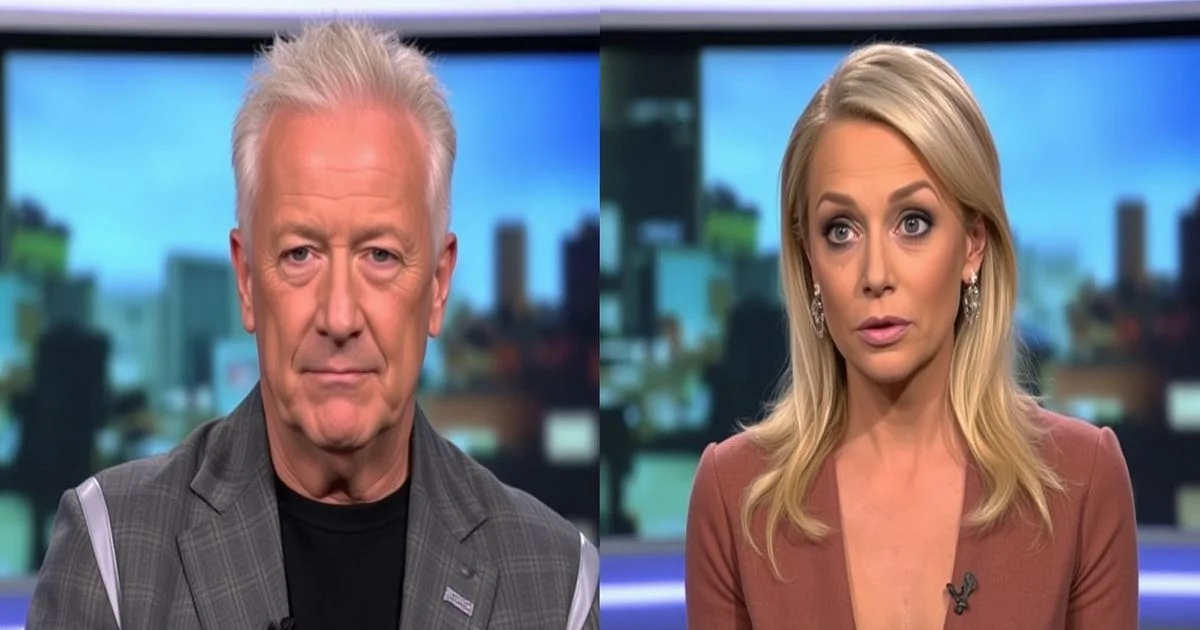
A seemingly innocuous compliment quickly escalated into a widespread media discussion when television personality Howie Mandel appeared on Live with Kelly and Mark on March 23, 2026. What began as a routine interview segment featuring the esteemed hosts, Kelly Ripa and Mark Consuelos, transformed into Howie Mandel & Kelly Ripa's Viral On-Air Exchange, sparking significant debate across social media platforms and news outlets about ageism, comedic timing, and the dynamics of live television. This captivating exchange between Mandel and Ripa, along with Consuelos, has resonated with a general audience interested in current events and celebrity interactions, prompting conversations about public figures, communication, and the underlying messages in seemingly casual remarks.
The Unforgettable On-Air Exchange: Howie Mandel & Kelly Ripa's Viral Moment
The catalyst for the now-viral moment occurred during Howie Mandel's guest appearance on Live with Kelly and Mark on Monday, March 23, 2026. The interview started congenially, with co-host Mark Consuelos congratulating Mandel on his 70th birthday, which he had celebrated in November 2025. Kelly Ripa then chimed in, remarking that Mandel's age "doesn't make any sense," seemingly intending to compliment his youthful appearance.
However, Mandel did not perceive the comment as purely complimentary. He immediately retorted, "What do you mean it doesn't make any sense? That I look great?". The comedian interpreted the hosts' remarks as a "caveat" or a "backhanded compliment," suggesting that any praise for his appearance was implicitly qualified by his age. He articulated his discomfort by stating, "I don't like that, 'cause that's a caveat. It's like saying you're smart for a stupid person".
Kelly Ripa, attempting to clarify her intent and diffuse the growing tension, insisted, "We're not saying you look great for 70. You look great. We're saying you look great, and I don't believe you're 70". Despite her clarification, Mandel remained steadfast in his perspective, arguing that the underlying sentiment still implied an age-related qualifier. Mark Consuelos, while initially trying to support Ripa, eventually acknowledged Mandel's point to some extent, admitting, "I am saying that" in reference to the age-qualified compliment. The segment concluded with Mandel jokingly asserting, "I'm gorgeous!" in an effort to lighten the mood and reset the room.
The Genesis of the Tension: Compliments and Caveats
The core of the viral tension lay in the subtle yet significant distinction between a direct compliment and one that, in Mandel's view, carried an implicit condition. When Mark Consuelos highlighted Mandel's recent 70th birthday, it set the stage for Ripa's comment that his age "doesn't make any sense" given his appearance. For many, this might seem like a harmless, even flattering, observation. However, Mandel immediately bristled at the phrasing.
He articulated his perspective clearly: to say someone "looks great for their age" implies that, by default, people of that age are expected not to look great. This framing, he argued, turns a compliment into a conditional remark, diminishing its sincerity and subtly reinforcing ageist stereotypes. His analogy comparing it to "saying you're smart for a stupid person" powerfully conveyed his feeling that the compliment, despite its intention, inadvertently highlighted a perceived deficit rather than genuine admiration. This perspective underscores a broader societal discussion about how language shapes perceptions of aging and often places undue emphasis on youthful appearance as the primary metric of looking "good." Mandel's firm stance brought this often-unspoken implication to the forefront of the conversation.
Public Outcry and Social Media Frenzy
Immediately following the live broadcast, clips of the exchange featuring Howie Mandel & Kelly Ripa's Viral On-Air Exchange rapidly circulated across social media platforms, igniting a fervent debate among viewers and quickly turning the segment into a viral sensation. The internet, a powerful amplifier of live television moments, allowed the nuanced interaction to be replayed, analyzed, and discussed from countless angles. This phenomenon is further explored in analyses of how platforms impact audiences, such as the Psychological Impact of Social Media on Gen Z.
Audience reactions were sharply divided. Many viewers rallied behind Mandel, praising his candidness and his willingness to call out what they perceived as an ageist remark. Comments flooded social media, with some users stating, "Bravo Howie! True dat!" and "Good for you Howie!! Love how you handled this!!". These supporters felt Mandel articulated a frustration that many experience when receiving backhanded compliments related to age, appreciating his direct challenge to the hosts. They saw his reaction as a bold, authentic moment that resonated with anyone who feels the pressure to look "good for their age."
Conversely, a significant portion of the audience criticized Mandel's reaction, branding him as "insufferable" or "rude" for his perceived sharpness towards Kelly Ripa and Mark Consuelos. Some viewers felt he overreacted to a well-intentioned compliment, while others suggested that his behavior was merely a calculated move to generate viral content, consistent with his known comedic style of being an "instigator". This segment of public opinion highlighted the inherent challenge of live television, where spontaneous interactions can be easily misinterpreted or amplified beyond their original context. The contrasting reactions underscored the subjective nature of humor and social etiquette, particularly when navigating sensitive topics like age in the public eye.
The Immediate Aftermath: Media Scrutiny and Viewer Opinion
The ripple effects of the on-air interaction were immediate and far-reaching. News outlets and entertainment publications quickly picked up on the story, detailing the "awkward," "tense," and "fiery" exchange between the celebrities. The incident became a prime topic for discussion on other talk shows and podcasts, further dissecting every aspect of Mandel's reaction and Ripa's subsequent attempts at clarification.
Viewer opinion remained largely polarized in the days following the broadcast. On one side, those who supported Mandel argued that his outburst was a necessary confrontation of subtle ageism, prompting a valuable conversation about how society frames aging. They contended that even seemingly innocent compliments can carry implicit biases that diminish an individual's self-worth by setting an arbitrary standard based on age. On the other side, many viewers felt Mandel had been unduly harsh on Ripa and Consuelos, believing their intentions were purely complimentary. They saw his response as an overreaction, creating unnecessary discomfort on a show typically known for its lighthearted banter. This divergence in opinion highlighted how deeply ingrained societal perceptions of age are, and how even well-meaning remarks can touch upon sensitive nerves, particularly for public figures constantly under scrutiny. The incident underscored that what one person considers a compliment, another might perceive as a slight, especially when age is involved.
Howie Mandel's Apology and Explanation
Days after the intense on-air exchange, Howie Mandel took to Instagram on March 28, 2026, to address the viral incident and offer an apology to Kelly Ripa. In a candid video message, Mandel revealed that he had deliberated for 48 hours whether to make a public statement, acknowledging the personal struggle involved in retracting a comedic moment.
Philosophically, Mandel explained that he generally believes comedians should not have to apologize for their jokes, as humor is inherently subjective and open to interpretation. However, he recognized that in this particular instance, his humor "didn't land the way you mean them to land" and had caused unintended offense. He explicitly apologized to Kelly Ripa, highlighting their long-standing friendship and her consistent support throughout his career, including his past co-hosting stints on her show.
Mandel emphasized that his primary goal on television is always to be entertaining and funny. He concluded his apology with a characteristic blend of self-reflection and humor, stating, "Not only do I want to say I'm sorry to Kelly, and this is the hardest part, you're right. You're absolutely right, and I'm sorry I didn't see it that way." He then added, "After a lot of thought and self-reflection, I look great for my age. I really do. I look fantastic and I just have to embrace the fact that I look this good," ultimately turning the apology into a moment of self-acceptance and a final comedic touch. This apology, while maintaining his comedic essence, provided a resolution to the public fallout and demonstrated a willingness to acknowledge the impact of his words.
Behind-the-Scenes Repercussions: Kelly Ripa's Reported Discomfort
While Howie Mandel's public apology offered a measure of closure, reports soon emerged suggesting that the viral on-air exchange had left Kelly Ripa "unsettled". Insiders close to the production indicated that Mandel's firm pushback disrupted the established tone and flow of Live with Kelly and Mark, a show known for its polished and congenial atmosphere.
One source reportedly stated that Mandel "disrespected her in her house. That's her show, her audience, her tone — and he bulldozed right through it". This perspective highlights the unique challenges of live daytime television, where hosts like Ripa work to cultivate a specific vibe and rapport with their guests and audience. When a guest deviates significantly from this unwritten code, it can be perceived as more than just a momentary awkwardness. Another insider noted that "Kelly runs a tight, polished ship. She expects guests to play along, keep it light, and protect the vibe. That interview did the opposite".
These reports led to speculation about the potential long-term consequences for Mandel's relationship with the show. According to some insiders, while Ripa would "never say 'you're banned'," it is likely that "bookings get tricky, schedules don't align, and invites… vanish" for Mandel in the future. The sentiment expressed by these sources suggests that making a host uncomfortable on their own set can lead to an unspoken but effective blacklisting, impacting future appearances. In the world of daytime talk, where "chemistry is everything," a perceived breach of trust can be difficult to mend, emphasizing the delicate balance required in celebrity interviews.
The Broader Conversation: Ageism and Live Television Dynamics
The viral exchange between Howie Mandel and Kelly Ripa transcended a simple celebrity squabble, evolving into a broader "lens for how we talk about age, aging, and media culture". Mandel's assertive rejection of the "great for 70" compliment ignited a significant public dialogue about ageist language and the subtle ways it manifests in everyday conversation. His powerful analogy, "It's like saying you're smart for a stupid person," underscored how such seemingly benign phrases can carry "underhanded jabs," implicitly diminishing an individual's achievements or appearance by framing them within the context of their age. This incident brought to light the pervasive cultural pressure to "stay young" and the often-unspoken biases that exist against aging. For decades, media portrayals have often reinforced these biases, disproportionately featuring younger individuals in leading roles and commercial campaigns, leading to an insidious societal expectation that older age must be defied or compensated for. Society frequently celebrates youthfulness while subtly (or overtly) devaluing the natural process of growing older. Compliments that include qualifiers like "for your age" inadvertently perpetuate this by implying that looking good, being active, or achieving success is exceptional despite one's age, rather than simply being a quality in itself. The public's robust response, both in support and criticism of Mandel, demonstrated the deep-seated anxieties and perceptions surrounding aging in a youth-obsessed culture. It revealed that what might be intended as a casual compliment can, in fact, tap into a sensitive vein of self-perception and societal judgment, challenging individuals to confront their own biases and the nuances of their language when discussing age.
The Enduring Appeal of Unfiltered Celebrity Interactions
The virality of the Howie Mandel and Kelly Ripa exchange underscores the enduring appeal of unfiltered, unscripted moments in live television. In an era where much of celebrity interaction is carefully curated and presented, genuine, unexpected reactions — often dubbed "meltdowns" or "tense moments" — captivate audiences. These instances break through the polished facade of Hollywood, offering a glimpse into the authentic personalities, emotions, and interpersonal dynamics that lie beneath.
Viewers are drawn to these raw interactions because they feel real. They provide a sense of authenticity that is often missing from heavily edited content or planned promotional appearances. When a celebrity deviates from their expected persona or challenges a host on their own turf, it creates compelling television, fostering discussion and engagement that extends far beyond the initial broadcast. This desire for "real human interaction" is a powerful driver of viral content, as audiences seek to witness genuine emotion and unvarnished exchanges, even when they result in awkwardness or controversy. Similar trends can be observed in other viral celebrity occurrences, for example, the widespread attention garnered by Druski's Erika Kirk Skit Goes Viral. The unpredictable nature of live television, combined with the immediacy of social media, means that a single candid moment can quickly become a global talking point, demonstrating the enduring power of the unscripted in an increasingly controlled media landscape.
Navigating Celebrity Interviews in the Digital Age
The Howie Mandel & Kelly Ripa's Viral On-Air Exchange also serves as a poignant case study in the evolving challenges of celebrity interviews in the digital age. For hosts like Kelly Ripa and Mark Consuelos, the pressure to maintain a welcoming yet engaging environment while also navigating the potential for unexpected twists is immense. Every word, gesture, and reaction is immediately scrutinized and preserved online, with short clips often stripped of their broader context.
For guests like Howie Mandel, the landscape is equally fraught. While some might argue his reaction was genuine, others speculate that it was a deliberate attempt to generate "clips" and maximize viral engagement, recognizing that controversy often draws more attention than polite banter. This phenomenon puts immense pressure on public figures to constantly perform, to be "on" at all times, and to understand how their words will be dissected and re-shared by millions. The broader implications of online content dissemination and accountability are also discussed in articles like Social Media Giants Liable: Addiction Trial Verdict Reshapes Tech Accountability. The incident highlights the delicate balance between authentic interaction, entertainment value, and the ever-present risk of misinterpretation in a media environment hungry for viral content. Both celebrities and interviewers are forced to consider not just the immediate impact of their words, but also their potential to be amplified and reshaped by the instantaneous, insatiable nature of online discourse.
Conclusion
The on-air exchange between Howie Mandel and Kelly Ripa on Live with Kelly and Mark transcended a typical celebrity interview, becoming a significant cultural moment that sparked widespread discussion. What began as a seemingly innocent compliment about Mandel's youthful appearance quickly escalated into a tense debate about ageism, the nuances of language, and the dynamics of live television. Mandel's firm stance against what he perceived as a "backhanded compliment" resonated with many, while others criticized his perceived abruptness.
The subsequent viral explosion across social media, Howie Mandel's thoughtful apology, and the reported discomfort experienced by Kelly Ripa underscore the powerful and often unpredictable nature of public discourse in the digital age. This Howie Mandel & Kelly Ripa's Viral On-Air Exchange has not only provided a memorable piece of television but has also ignited important conversations about how we perceive and discuss aging, the challenges faced by public figures, and the enduring appeal of unfiltered moments in an increasingly curated world. The incident serves as a potent reminder that words carry weight, and even casual remarks can ignite profound societal reflections.
Frequently Asked Questions
Q: What caused the viral on-air exchange between Howie Mandel and Kelly Ripa?
A: The exchange occurred when Kelly Ripa complimented Howie Mandel on his youthful appearance by saying his age "doesn't make any sense." Mandel interpreted this as a backhanded or age-qualified compliment, leading to a candid, tense discussion about ageism.
Q: How did the public react to Howie Mandel's comments?
A: Public reaction was divided. Many viewers supported Mandel, praising his honesty in addressing ageist language. Others criticized him for being rude or overreacting to what they perceived as a well-intentioned compliment from Kelly Ripa.
Q: Did Howie Mandel apologize for his remarks?
A: Yes, Howie Mandel later issued a public apology to Kelly Ripa via Instagram. He explained that while he believes in comedic freedom, his humor "didn't land" as intended and he regretted causing any discomfort.