How do black holes function in deep space physics: A Deep Dive
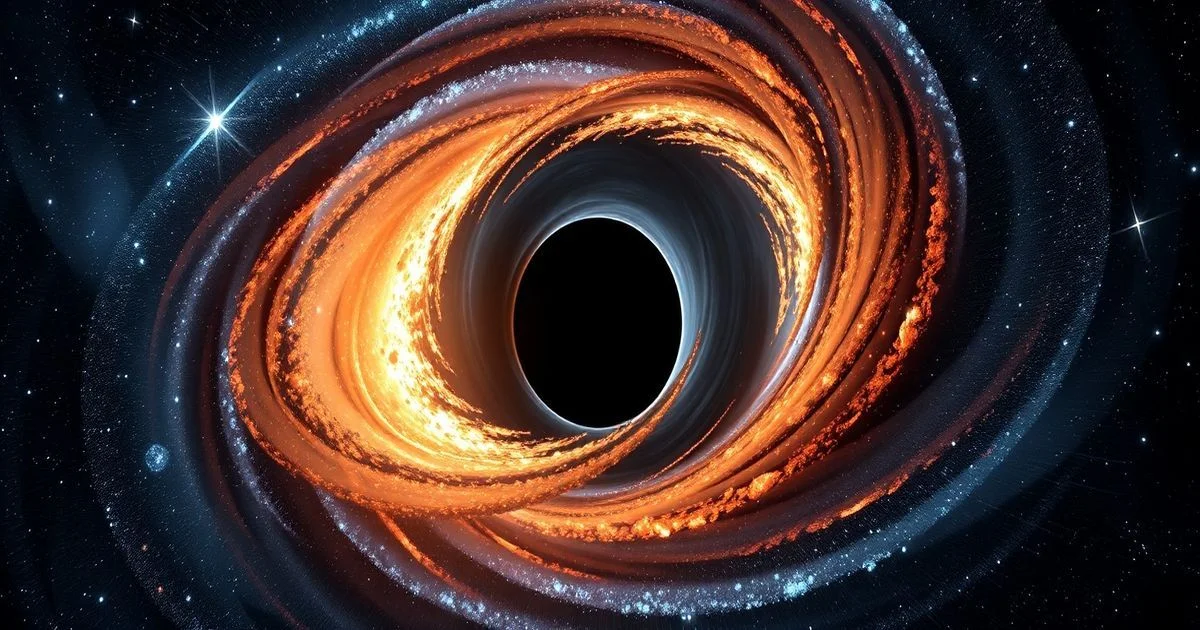
Black holes represent some of the most profound and enigmatic phenomena in the cosmos, challenging our understanding of gravity, time, and the very fabric of existence. These cosmic behemoths are far more than just "holes" in space; they are regions where gravity's pull is so intense that nothing, not even light, can escape. To truly grasp the universe's grand narrative, we must comprehend how do black holes function in deep space physics. This comprehensive exploration will delve into their formation, fundamental characteristics, and the intricate ways they interact with their surroundings, shaping galaxies and pushing the boundaries of theoretical physics. From the event horizon's point of no return to the spacetime distortions they induce, black holes are pivotal to deep space physics, offering a unique laboratory for extreme gravitational conditions.
- What Exactly Are Black Holes? Unraveling the Cosmic Enigma
- The Genesis of a Black Hole: Stellar Collapse and Beyond
- How Do Black Holes Function in Deep Space Physics?
- Key Properties and Classification of Black Holes
- Observing the Invisible: Methods for Detecting Black Holes
- The Role of Black Holes in Galactic Evolution
- Theoretical Frontiers and Unanswered Questions
- The Future of Black Hole Research
- Conclusion: Black Holes – Cosmic Architects and Laboratories
- Frequently Asked Questions
- Further Reading & Resources
What Exactly Are Black Holes? Unraveling the Cosmic Enigma
At its core, a black hole is a region of spacetime exhibiting such strong gravitational effects that anything—particles, electromagnetic radiation (like light), and even gravity itself—entering its boundary cannot escape. The theory of general relativity predicts that a sufficiently compact mass can deform spacetime to form a black hole. Imagine placing a bowling ball on a stretched rubber sheet; the ball creates a dip. A black hole is like an infinitely heavy pinprick, creating an infinitely deep well that spacetime falls into. This profound gravitational influence arises from the immense compression of matter into an incredibly small volume.
The concept of a body so massive that even light could not escape was first considered in the 18th century by John Michell and Pierre-Simon Laplace. However, it was Albert Einstein's theory of general relativity, published in 1915, that provided the mathematical framework for understanding these bizarre objects. Karl Schwarzschild, just a year later, found the first exact solution to Einstein's field equations that described a non-rotating, uncharged black hole, defining what we now call the Schwarzschild radius – the critical boundary beyond which escape is impossible. This theoretical groundwork, alongside advances in understanding the history of space exploration, laid the foundation for modern astrophysics to investigate these fascinating cosmic entities.
The Defining Characteristics: Event Horizon and Singularity
Two features are paramount to defining a black hole: the event horizon and the singularity. The event horizon is not a physical surface, but rather a boundary in spacetime. It's the point of no return, where the escape velocity exceeds the speed of light. Once an object crosses this threshold, it is inexorably pulled towards the center, regardless of its speed or trajectory. For an observer outside the black hole, anything falling in appears to slow down, redden, and eventually freeze at the event horizon, never truly crossing it from their perspective due to extreme time dilation.
The singularity lies at the very heart of a black hole. This is where all the mass of the black hole is theorized to be concentrated, compressed into an infinitely dense, zero-volume point. At the singularity, the laws of physics as we currently understand them break down. General relativity predicts infinite spacetime curvature, and our equations cease to provide meaningful answers. This breakdown suggests that a more complete theory, one that unifies general relativity with quantum mechanics (a theory of quantum gravity), is needed to fully describe the conditions at the singularity. It remains one of the most significant unsolved problems in theoretical physics, challenging our fundamental understanding of matter and space.
The Genesis of a Black Hole: Stellar Collapse and Beyond
Black holes aren't uniform; they come in a range of sizes, each with a distinct origin story. The formation mechanism is fundamentally tied to the immense gravitational forces at play, often involving the dramatic end-stages of stars or the accumulation of vast amounts of matter in galactic cores. Understanding their birth helps us categorize and predict their behavior in the vast expanse of deep space.
Stellar-Mass Black Holes: The Remnants of Giant Stars
The most common type of black hole we observe are stellar-mass black holes, typically ranging from a few times to several tens of solar masses. These are the cosmic leftovers of truly massive stars – those with initial masses at least 20-30 times greater than our Sun. Throughout their lives, these stars fuse lighter elements into heavier ones in their cores, generating immense outward pressure that counteracts the inward pull of gravity. However, once the nuclear fuel in their core is exhausted, usually after forming an iron core, the fusion process ceases. Iron cannot release energy through fusion; instead, it consumes it.
Without the outward pressure to support it, the stellar core rapidly collapses under its own immense gravity. This collapse triggers a catastrophic event known as a supernova, an explosion so powerful it can briefly outshine an entire galaxy. During this collapse, if the remnant core is heavy enough (typically more than 2-3 solar masses, known as the Tolman-Oppenheimer-Volkoff limit), even the degeneracy pressure of neutrons cannot halt the gravitational infall. The core compresses further and further, until it passes its event horizon, forming a black hole. The outer layers of the star are violently expelled into space, seeding the cosmos with heavier elements essential for future star and planet formation.
Intermediate and Supermassive Black Holes: Growing Giants
Beyond stellar-mass black holes, the cosmos harbors far more massive entities. Intermediate-mass black holes (IMBHs) are a theoretical class, with masses between 100 and 100,000 solar masses. Their existence is still debated, but evidence is mounting, often found in globular clusters or as ultra-luminous X-ray sources. Their formation mechanisms are less clear, possibly involving the merger of multiple stellar-mass black holes or the runaway collision of stars in dense clusters.
The true titans of the black hole family are supermassive black holes (SMBHs). These colossal objects, with masses ranging from millions to billions of times that of the Sun, reside at the centers of nearly all large galaxies, including our own Milky Way, which hosts Sagittarius A (Sgr A) with a mass of about 4 million solar masses. The formation of SMBHs is a subject of intense research. Leading theories suggest they might have formed rapidly in the early universe, possibly from the direct collapse of massive gas clouds or the merger of smaller black holes. Over billions of years, they grow by continually accreting vast quantities of gas, dust, and even entire stars, as well as merging with other black holes during galaxy collisions. Their immense gravitational pull dictates the dynamics of entire galaxies, influencing star formation and galactic structure, much like planetary orbital mechanics govern smaller celestial bodies.
How Do Black Holes Function in Deep Space Physics?
Understanding how do black holes function in deep space physics requires exploring their interactions with the surrounding cosmic environment and the fundamental laws that govern them. These interactions are far from passive; black holes are dynamic entities that profoundly reshape spacetime and radiate immense energy through various mechanisms.
Event Horizon: The Point of No Return
The event horizon is the conceptual boundary around a black hole beyond which events cannot affect an outside observer. It's defined by the escape velocity, which at this boundary, equals the speed of light. For a non-rotating, uncharged black hole, this radius is known as the Schwarzschild radius, calculated by the formula $R_s = 2GM/c^2$, where G is the gravitational constant, M is the mass of the black hole, and c is the speed of light. This isn't a physical surface you'd bump into; rather, it's a boundary where spacetime itself flows inward faster than light can travel outward.
The implications of crossing the event horizon are profound. From the perspective of an infalling object, there's no dramatic sensation of crossing a boundary; the physics are locally normal. However, once inside, all future paths lead inevitably towards the singularity. For an external observer, time appears to slow down for the infalling object, its light becoming redshifted until it fades from view. This phenomenon, known as gravitational time dilation, means that information about anything crossing the event horizon is essentially lost to the outside universe, leading to the famous "information paradox" in black hole physics.
Singularity: The Heart of Infinite Density
At the very center of a black hole lies the singularity, a point of infinite density and zero volume. Here, all the mass of the black hole is concentrated. According to general relativity, spacetime curvature becomes infinite at the singularity, and the predictive power of the theory breaks down. This implies that general relativity is incomplete and must eventually be superseded by a more comprehensive theory of quantum gravity that can describe physics at such extreme conditions.
For non-rotating black holes (Schwarzschild black holes), the singularity is a point. However, for rotating black holes (Kerr black holes), the singularity is predicted to be a ring-shaped structure. The nature of the singularity remains one of the most mysterious and actively researched areas in theoretical physics. It represents a frontier where our current understanding of the universe reaches its limits, hinting at deeper, more fundamental laws waiting to be discovered. The concept of "cosmic censorship" hypothesizes that all singularities are hidden behind event horizons, preventing naked singularities from forming, which would expose their breakdown of physics to the wider universe.
Accretion Disks: Fueling the Cosmic Engine
Not all matter that approaches a black hole crosses the event horizon. Much of it spirals inward, forming a spectacular and intensely hot structure called an accretion disk. This disk consists of gas, dust, and debris drawn in by the black hole's gravity. As this matter orbits the black hole, particles rub against each other due to friction and viscosity, heating the disk to extreme temperatures – often millions of degrees Celsius.
This superheated plasma emits vast amounts of electromagnetic radiation, particularly in the X-ray and gamma-ray parts of the spectrum, sometimes even in visible light. These emissions are incredibly powerful, often outshining entire galaxies. Quasars, for example, are the super-luminous centers of active galaxies, powered by the accretion disks around supermassive black holes. The energy released by accretion can also drive powerful relativistic jets of plasma away from the black hole's poles, extending thousands or even millions of light-years into space. These jets play a significant role in galaxy evolution, influencing star formation and distributing energy throughout the intergalactic medium.
Gravitational Lensing: Bending Light and Spacetime
One of the most striking predictions of general relativity, beautifully demonstrated by black holes, is gravitational lensing. Black holes, with their immense gravity, severely warp the fabric of spacetime around them. Light rays passing near a black hole follow these curved paths, appearing to bend or be "lensed" from an observer's perspective. This effect can magnify, distort, or even create multiple images of background objects like stars or galaxies.
Astronomers use gravitational lensing as a powerful tool. By observing how light from distant objects is distorted around a black hole, they can infer the black hole's mass and even map the distribution of dark matter in galaxy clusters. A famous example is the "Einstein Ring," where light from a distant source is perfectly aligned and symmetrically lensed around a massive object, forming a complete ring. While difficult to observe directly due to atmospheric interference, space telescopes provide clearer views, enabling us to witness the dramatic effects of spacetime curvature on light.
Spacetime Distortion: The Fabric of the Cosmos
The very essence of how black holes function is their dramatic distortion of spacetime. According to Einstein's general relativity, gravity isn't a force in the traditional sense, but rather a manifestation of the curvature of spacetime caused by mass and energy. A black hole represents the most extreme form of this curvature. Imagine spacetime as a rubber sheet. A star causes a slight dip, like a marble. A black hole, however, creates an infinitely deep, funnel-like depression that pulls everything into its center.
This warping affects not only the paths of light and matter but also the flow of time. Closer to a black hole, time passes more slowly relative to a distant observer – a phenomenon known as gravitational time dilation. This is not merely an optical illusion but a real physical effect that has been experimentally verified (albeit in much weaker gravitational fields). The extreme spacetime distortion near a black hole means that within the event horizon, the future direction of spacetime literally points towards the singularity, making escape impossible. This radical warping fundamentally alters our perception of space and time in its vicinity.
Key Properties and Classification of Black Holes
Despite their immense complexity, black holes are remarkably simple objects in terms of their observable properties. According to the "No-Hair Theorem," a black hole is fully characterized by just three fundamental properties, once it has settled down after formation or accretion events.
The No-Hair Theorem: Mass, Spin, and Charge
The No-Hair Theorem, a profound concept in general relativity, states that an isolated black hole, once it reaches a stable state, can be completely described by only three externally observable classical parameters:
-
Mass (M): This is the most fundamental property, determining the size of the event horizon (Schwarzschild radius) and the strength of the gravitational field. Black holes range from stellar masses (a few solar masses) to supermassive (millions to billions of solar masses).
-
Angular Momentum (J) or Spin: Many black holes rotate, inheriting angular momentum from the collapsing star or accreting matter. This rotation significantly affects the geometry of spacetime around the black hole, particularly modifying the event horizon and creating an "ergosphere" – a region where spacetime itself is dragged along with the black hole's rotation.
-
Electric Charge (Q): While theoretically possible, astrophysical black holes are expected to have negligible electric charge. Any charged matter falling into a black hole would quickly neutralize its charge, making highly charged black holes unlikely in the universe.
Any other information about the matter that formed the black hole or fell into it (its "hair," like its composition, shape, or magnetic field) is irretrievably lost once it crosses the event horizon. This implies a startling simplicity: all black holes of the same mass, spin, and charge are identical.
Types of Black Holes: Schwarzschild, Kerr, and Reissner-Nordström
Based on these three properties, theoretical physics classifies black holes into several types, each described by a specific solution to Einstein's field equations:
-
Schwarzschild Black Hole: This is the simplest type, describing a non-rotating, uncharged black hole. It has only mass (M). The event horizon is a perfect sphere, and the singularity is a point at the center. This solution was discovered by Karl Schwarzschild in 1916.
-
Kerr Black Hole: This type describes a rotating, uncharged black hole, possessing both mass (M) and angular momentum (J). The event horizon for a Kerr black hole is typically oblate (flattened at the poles due to rotation). Crucially, a Kerr black hole also features an ergosphere, an outer region where spacetime is dragged around so powerfully that nothing can remain stationary, even light. Inside the ergosphere, it is still possible to escape, but one gains energy by interacting with its rotational energy, a process known as Penrose process. The singularity of a Kerr black hole is a ring, not a point.
-
Reissner-Nordström Black Hole: This theoretical type describes a charged, non-rotating black hole, characterized by mass (M) and electric charge (Q). It possesses two event horizons and an inner Cauchy horizon, but is considered unstable and unlikely to form naturally in the universe due to the rapid neutralization of charge.
-
Kerr-Newman Black Hole: The most general solution, describing a black hole with mass (M), angular momentum (J), and electric charge (Q). This is the most physically realistic theoretical model for a black hole, although, as mentioned, astrophysical black holes are expected to have negligible charge.
Observing the Invisible: Methods for Detecting Black Holes
Given that black holes absorb all light, detecting them directly is impossible. Instead, astronomers rely on indirect evidence, observing their profound gravitational effects on nearby matter and the spacetime fabric itself. These observational methods have revolutionized our understanding of these cosmic leviathans.
Gravitational Effects on Nearby Stars and Gas
One of the oldest and most reliable methods for detecting black holes involves observing their gravitational influence on visible matter. If a black hole is part of a binary star system, for instance, its gravity will cause its companion star to orbit around an invisible center of mass. By measuring the orbital period and velocity of the visible star, astronomers can infer the mass of the unseen companion. If this mass exceeds the maximum possible for a neutron star (around 3 solar masses), it is a strong candidate for a stellar-mass black hole.
Similarly, supermassive black holes at galactic centers are detected by observing the extreme velocities of stars and gas clouds orbiting incredibly close to the galactic core. For example, observations of stars orbiting Sagittarius A (Sgr A) at the center of the Milky Way reveal speeds of thousands of kilometers per second. Applying Kepler's laws of planetary motion to these orbits allows scientists to accurately determine the mass of the central, unseen object, confirming it as a supermassive black hole.
X-ray Emissions from Accretion Disks
As discussed, matter spiraling into a black hole forms an extremely hot accretion disk. The intense friction and compression within this disk heat the gas to millions of degrees, causing it to emit copious amounts of X-rays. These characteristic X-ray signatures are a powerful indicator of an active black hole.
Astronomers use X-ray telescopes, like NASA's Chandra X-ray Observatory and ESA's XMM-Newton, to detect these emissions. Many X-ray binary systems, where a stellar-mass black hole accretes matter from a companion star, have been discovered this way. Similarly, the brilliant X-ray emissions from active galactic nuclei (AGN) and quasars are direct evidence of supermassive black holes rapidly consuming matter at the heart of distant galaxies. The variability and energy spectrum of these X-rays provide crucial information about the black hole's environment and feeding habits.
Gravitational Waves: Ripples in Spacetime
Perhaps the most groundbreaking method for black hole detection came with the direct observation of gravitational waves. Predicted by Einstein over a century ago, these are ripples in the fabric of spacetime, generated by extremely energetic cosmic events, such as the merger of two black holes, two neutron stars, or a black hole and a neutron star.
The Laser Interferometer Gravitational-Wave Observatory (LIGO) and its European counterpart, Virgo, made the first direct detection of gravitational waves in 2015, originating from the merger of two stellar-mass black holes about 1.3 billion light-years away. This monumental discovery opened a completely new window to the universe, allowing us to "hear" the spacetime distortions caused by these violent events. Gravitational wave astronomy provides unique insights into the dynamics of black hole systems, their masses, spins, and how they coalesce, offering a new way to study the most extreme gravitational phenomena in the cosmos.
Event Horizon Telescope (EHT) Imaging
In a monumental achievement, the Event Horizon Telescope (EHT) collaboration captured the first-ever image of a black hole's silhouette and its immediate environment in 2019. This international array of radio telescopes, spread across the globe, effectively forms an Earth-sized virtual telescope capable of incredibly high angular resolution.
The EHT imaged the supermassive black hole at the center of the galaxy Messier 87 (M87) and later, in 2022, Sagittarius A (Sgr A*) in the Milky Way. The images show a bright ring of emission, which is the superheated plasma in the accretion disk glowing just before it crosses the event horizon. The dark central region is the black hole's "shadow," caused by the capture of light by the event horizon. These images provide direct visual evidence of the predictions of general relativity in the extreme gravity regime, confirming the existence of event horizons and offering unprecedented details about how matter behaves in the immediate vicinity of a black hole.
The Role of Black Holes in Galactic Evolution
Black holes are not merely passive entities in the cosmic tapestry; they are active agents that profoundly influence the evolution and structure of galaxies. Supermassive black holes, in particular, play a crucial role in shaping their host galaxies through a complex interplay of accretion, energy feedback, and gravitational influence.
Supermassive Black Holes and Galaxy Formation
The prevalence of supermassive black holes (SMBHs) at the centers of nearly all massive galaxies suggests a fundamental connection between their growth and the formation of their host galaxies. There's a strong correlation between the mass of an SMBH and the stellar velocity dispersion (a measure of random stellar motions) of its host galaxy's bulge, known as the M-sigma relation. This implies that the SMBH and its galaxy grow in tandem, influencing each other's development over billions of years.
While the exact causal relationship is still under investigation, it's thought that the initial seeds of SMBHs formed very early in the universe, possibly from the collapse of massive primordial gas clouds. As these seeds grew, they attracted more matter, contributing to the formation of the nascent galaxy around them. Conversely, the processes of galaxy formation, such as mergers and gas infall, provided the fuel for SMBH growth. This co-evolutionary scenario highlights black holes as integral components, not just passengers, in the cosmic journey of galaxies.
Feedback Mechanisms: Jets, Winds, and Star Formation
The energy released by accretion disks around active supermassive black holes is enormous, and this energy isn't just emitted as radiation. It also manifests as powerful feedback mechanisms that can dramatically impact the galaxy. These include:
-
Relativistic Jets: As mentioned earlier, some SMBHs launch collimated jets of plasma traveling at nearly the speed of light from their poles. These jets can extend millions of light-years, carving out vast bubbles in the intergalactic medium.
-
Winds: Intense outflows of gas and particles, often driven by the radiation pressure from the accretion disk, can sweep through the galaxy.
Both jets and winds can have a dual effect on star formation. In the early universe or in dense regions, these outflows can compress gas, triggering bursts of star formation. However, more often, these powerful outflows heat and push gas out of the galaxy, effectively "quenching" star formation by removing the necessary raw material. This process is thought to be crucial for explaining why some galaxies stop forming stars and become "red and dead" ellipticals, while others continue to produce new stars. The intricate balance of accretion, emission, and feedback thus connects the minuscule region around a black hole to the macroscopic evolution of entire galactic systems.
Theoretical Frontiers and Unanswered Questions
Despite tremendous progress, black holes remain a fertile ground for theoretical physics, presenting profound questions that challenge our most fundamental theories. They represent a unique intersection where general relativity, quantum mechanics, and cosmology collide, often with paradoxical results.
The Information Paradox: What Happens to What Falls In?
One of the most vexing theoretical problems is the Information Paradox. Quantum mechanics dictates that information about the quantum state of particles must always be conserved. However, if a particle falls into a black hole, its quantum information appears to be irretrievably lost behind the event horizon, seemingly violating this fundamental principle. Stephen Hawking's discovery of Hawking Radiation (which we'll discuss next) further exacerbates the paradox: if black holes slowly evaporate by emitting thermal radiation, and this radiation is generic (not dependent on what fell in), then the original information is still lost, even after the black hole is gone.
This paradox has led to decades of debate and research, with various proposed solutions, none fully accepted. Some suggest that information is indeed lost, requiring a revision of quantum mechanics. Others propose that information is somehow encoded in the Hawking radiation, perhaps through subtle quantum correlations or stored on the event horizon itself. The "holographic principle" suggests that information about a volume of space can be encoded on its boundary, a concept that could potentially offer a path to resolution. The information paradox remains a critical challenge to our understanding of the universe's most fundamental laws.
Hawking Radiation: Black Holes Are Not Truly Black
In a revolutionary discovery in 1974, Stephen Hawking theorized that black holes are not entirely "black" but instead slowly emit radiation, now known as Hawking Radiation. This isn't due to particles escaping the black hole directly, but rather a quantum mechanical effect occurring near the event horizon. According to quantum field theory, particle-antiparticle pairs are constantly popping into existence and annihilating each other in empty space. Near the event horizon, if one particle of a pair falls into the black hole and the other escapes, the escaping particle carries away energy, effectively reducing the black hole's mass.
This emission means that black holes have a temperature and, over incredibly vast timescales, can slowly "evaporate." The smaller the black hole, the higher its temperature and the faster it evaporates. For stellar-mass black holes, this process is negligible compared to the age of the universe. However, for theoretical primordial black holes (which might be very small), Hawking radiation could be a significant factor, potentially leading to explosive final evaporation. Hawking radiation is a cornerstone of quantum gravity research, representing a bridge between general relativity and quantum mechanics, yet it still awaits observational confirmation.
Wormholes and Exotic Physics
Beyond the standard black hole solutions, general relativity also permits more exotic spacetime geometries, such as wormholes. A wormhole, theoretically, is a "shortcut" through spacetime, connecting two distinct regions of spacetime or even two different universes. While mathematically possible, traversable wormholes would require the existence of "exotic matter" with negative energy density – a concept that violates classical energy conditions but might be allowed by quantum mechanics under specific conditions.
Wormholes remain firmly in the realm of theoretical speculation and science fiction, as their creation and stability pose immense challenges to known physics. However, their existence, even theoretical, highlights the extraordinary flexibility of general relativity and the possibility of spacetime structures far more complex than we can currently observe or create. They also touch upon concepts like faster-than-light travel and time travel, pushing the boundaries of what might be possible in the cosmos.
The Challenge of Quantum Gravity
The ultimate unanswered question concerning black holes lies in the quest for a theory of quantum gravity. Both general relativity (which describes gravity and large-scale structures) and quantum mechanics (which describes the very small) are incredibly successful in their respective domains. However, they are fundamentally incompatible at the extreme scales found within a black hole's singularity, or during the Big Bang.
A theory of quantum gravity aims to unify these two pillars of modern physics, providing a consistent description of gravity at the quantum level. Leading candidates include string theory and loop quantum gravity, both of which attempt to reconcile the conflicting frameworks. Black holes, particularly their singularities and the information paradox, serve as critical testbeds and motivators for developing such a theory. Until we achieve a unified theory, the deepest mysteries of black holes, including the true nature of their singularities and the fate of information, will likely remain elusive.
The Future of Black Hole Research
The study of black holes is a vibrant and rapidly evolving field, propelled by advancements in observational technology and theoretical insights. The coming decades promise even more profound discoveries that will further illuminate these cosmic titans and their role in the universe.
Next-Generation Telescopes
Future observatories will push the boundaries of resolution and sensitivity, offering unprecedented views of black holes. Projects like the Next-Generation Event Horizon Telescope (ngEHT) aim to expand the current EHT array, adding more dishes and observing at new frequencies. This will significantly improve the resolution and sensitivity, allowing for even sharper "movies" of black hole accretion disks, potentially revealing magnetic fields, jet launch mechanisms, and even testing general relativity with higher precision.
Other advanced optical and X-ray telescopes, both ground-based and space-based, will continue to identify new black hole candidates, characterize their accretion properties, and study their host galaxies with greater detail. These instruments will enable scientists to probe black hole populations across cosmic time, shedding light on their growth and evolution from the early universe to the present day.
Gravitational Wave Observatories
The era of gravitational wave astronomy is still in its infancy, yet it has already revolutionized our understanding of black hole mergers. Future gravitational wave observatories promise even more exciting discoveries:
-
LIGO and Virgo Upgrades: Continued upgrades to these ground-based detectors will increase their sensitivity and range, enabling the detection of more distant and weaker merger events.
-
LISA (Laser Interferometer Space Antenna): A planned space-based observatory, LISA will be sensitive to much lower-frequency gravitational waves, originating from the mergers of supermassive black holes in the early universe, as well as the inspirals of stellar-mass black holes into SMBHs. This will offer a completely new window into the dynamics of galactic centers.
-
Pulsar Timing Arrays (PTAs): Networks of precisely timed pulsars across the galaxy act as natural gravitational wave detectors, sensitive to ultra-low frequency waves that could be generated by the mergers of the most massive SMBHs.
These multi-frequency gravitational wave observations will provide a comprehensive picture of black hole demographics, formation pathways, and their role in shaping the universe's large-scale structure.
Unifying General Relativity and Quantum Mechanics
The most ambitious goal in black hole research remains the development of a theory of quantum gravity. Advances in observational data, particularly from the EHT and gravitational wave detectors, will provide crucial empirical constraints for theoretical models. By probing the extreme environments near black holes, scientists hope to find clues that guide the development of a unified theory.
Theoretical work on string theory, loop quantum gravity, and other approaches continues, with black holes serving as a primary theoretical laboratory. The resolution of the information paradox and a deeper understanding of the singularity are key milestones on this path. The future of black hole research is not just about observing more, but about fundamentally reimagining the very laws that govern our universe, with black holes at the forefront of this intellectual quest.
Conclusion: Black Holes – Cosmic Architects and Laboratories
Black holes stand as profound testaments to the extreme power of gravity and the intricate workings of spacetime predicted by Einstein's general relativity. From their violent birth as stellar remnants to their titanic presence as supermassive entities at galactic cores, these cosmic objects are far more than just gravitational voids; they are dynamic architects of galaxies and crucial laboratories for understanding the most fundamental laws of the universe. The journey to comprehend how do black holes function in deep space physics has led us from the mind-bending concept of the event horizon and the enigmatic singularity to the radiant spectacle of accretion disks and the ripples of gravitational waves.
Our exploration has revealed that black holes are not merely cosmic curiosities but indispensable components in the grand narrative of galactic evolution, influencing star formation and shaping the distribution of matter across vast cosmic scales. Furthermore, they are the crucibles of theoretical physics, pushing the boundaries of our understanding with paradoxes like the information loss problem and the challenge of quantum gravity. As we continue to develop next-generation telescopes and gravitational wave observatories, the future promises even deeper insights into these mysterious objects. Black holes beckon us to unravel the deepest secrets of gravity, spacetime, and the very nature of reality itself, cementing their role as one of the most compelling frontiers in scientific discovery.
Frequently Asked Questions
Q: What is the event horizon of a black hole?
A: The event horizon is the boundary around a black hole where the gravitational pull is so strong that nothing, not even light, can escape. It's a point of no return beyond which all paths lead towards the singularity, and information is lost to the outside universe.
Q: How do astronomers detect black holes since they are invisible?
A: Astronomers detect black holes indirectly by observing their strong gravitational effects on nearby matter, such as stellar orbits or gas clouds. They also look for characteristic X-ray emissions from accretion disks and can detect gravitational waves from merging black holes.
Q: What is the "No-Hair Theorem" for black holes?
A: The No-Hair Theorem states that, once stable, a black hole is fully described by only three external properties: its mass, angular momentum (spin), and electric charge. Any other information about the matter that formed it is considered lost.