Historical impact of Silk Road trade on modern economics
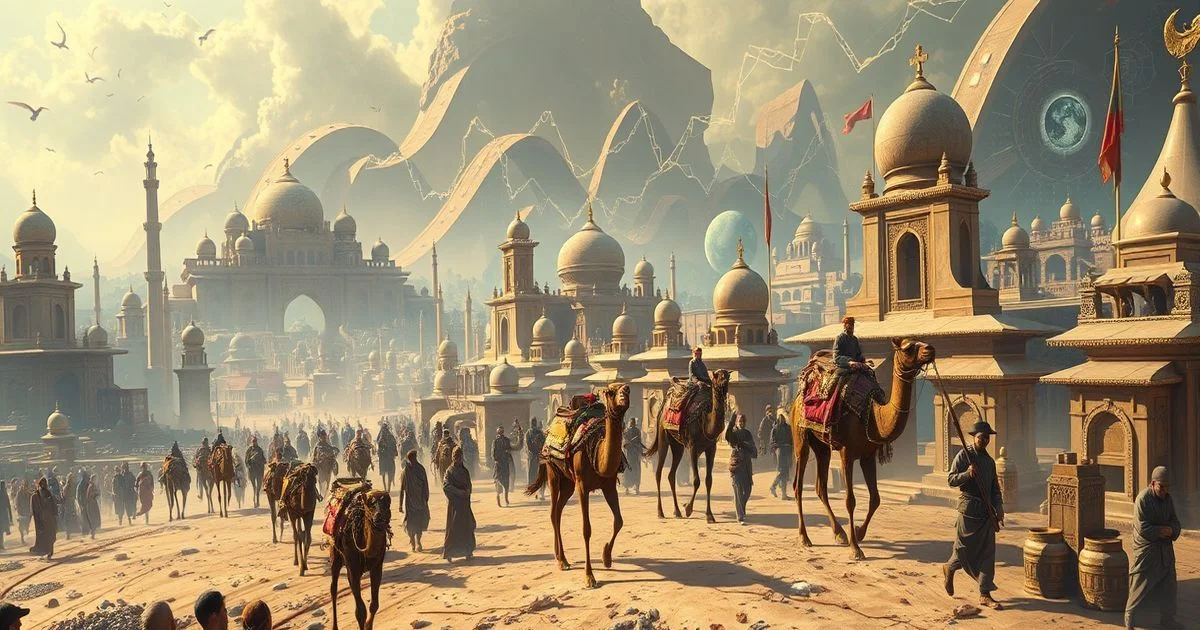
The Silk Road, a network of trade routes spanning continents for over a millennium, represents far more than just a historical footnote; it was a foundational epoch in the shaping of global commerce, culture, and technological exchange. Its intricate web of connections facilitated the movement of goods, ideas, and people, forging the initial blueprint for what we now recognize as a globalized economy. Understanding the historical impact of Silk Road trade on modern economics requires a deep dive into how ancient practices laid the groundwork for contemporary financial systems, supply chains, and even geopolitical dynamics, offering invaluable lessons for today's interconnected world. This ancient network, despite its rudimentary infrastructure by today's standards, cultivated an unprecedented level of interaction between diverse civilizations, proving that economic integration and its myriad consequences are not recent phenomena.
- The Genesis of Global Interconnectedness
- Evolution of the Silk Road: More Than Just Silk
- Enduring Economic Principles: Lessons from Ancient Trade
- The Legacy of the Silk Road on Modern Economics
- The Silk Road's Shadow in Modern Globalized Markets
- Conclusion
- Frequently Asked Questions
- Further Reading & Resources
The Genesis of Global Interconnectedness
The concept of a truly globalized world often seems like a modern invention, a product of the internet age and instantaneous communication. Yet, the seeds of this interconnectedness were sown millennia ago along the fabled Silk Road. Stretching from East Asia to Europe and North Africa, this intricate network of land and maritime routes was not a single path but a dynamic, ever-evolving system that facilitated the flow of commodities, technologies, and ideologies. From roughly 200 BCE to 1450 CE, the Silk Road served as the primary artery for cultural and economic exchange, connecting empires as disparate as the Han Dynasty in China, the Roman Empire in the West, and various Persian, Indian, and Central Asian kingdoms in between. Its influence extended beyond mere transactions, fostering a complex interdependency that profoundly altered the trajectory of human civilization.
Before the age of exploration and the subsequent establishment of permanent maritime routes, the Silk Road was the cutting edge of international trade. It demonstrated, on an unparalleled scale, the economic benefits of specialization and comparative advantage. Empires and regions traded what they had in abundance for what they lacked or desired, creating demand-driven markets across vast distances. China offered silk, ceramics, and later, gunpowder and paper; India provided spices, textiles, and precious stones; Central Asia contributed horses and jade; while the West supplied gold, silver, glass, and wine. This exchange not only enriched the participating societies but also stimulated local industries, encouraging innovation in production techniques and logistical solutions. The sheer volume and diversity of goods moving along these routes necessitated the development of sophisticated organizational structures, financial instruments, and diplomatic relations, all of which foreshadowed the complexities of modern international trade. The Silk Road thus stands as a testament to humanity's enduring drive for connection and commerce, an ancient internet of goods and ideas that sculpted the early contours of our global economic landscape.
Evolution of the Silk Road: More Than Just Silk
While renowned for its namesake commodity, the Silk Road’s true significance lies in its capacity to facilitate a kaleidoscopic exchange that went far beyond mere luxury goods. It was a conduit for technology, religion, philosophy, art, and even disease, transforming societies at every point along its vast expanse. The evolution of the Silk Road was a continuous process, adapting to changing political landscapes, technological advancements in transport, and shifts in global demand. Initially, fragmented routes served local needs, but over centuries, they coalesced into a comprehensive network. The Pax Romana and the stability of the Han Dynasty provided crucial periods of peace that allowed trade to flourish, demonstrating how political stability is a prerequisite for robust economic activity, a lesson still relevant in today's volatile geopolitical environment.
As empires rose and fell, the dominant trade routes shifted. The rise of Islam, for instance, unified vast swathes of land from the Middle East to North Africa and parts of Spain, creating a new economic and cultural superhighway that integrated new markets and innovations into the existing Silk Road framework. Later, the Mongol Empire, through its unprecedented control over much of Eurasia, briefly revitalized and secured the land routes, fostering a period of intense exchange, famously documented by travelers like Marco Polo. This adaptability and resilience in the face of political upheaval and geographic challenges underline a key characteristic of global trade: its inherent drive to find paths of least resistance and maximum profit, regardless of political boundaries. The Silk Road, therefore, was not static but a dynamic organism, reflecting the fluid nature of human interaction and economic endeavor across millennia.
The Multifaceted Goods and Ideas Transferred
The tangible goods moved along the Silk Road were incredibly diverse, each telling a story of distinct craftsmanship, resource availability, and cultural preferences. Beyond the legendary Chinese silk, which was coveted by Roman emperors and Persian nobles alike, a vast array of commodities traversed these routes. Spices from India and Southeast Asia (pepper, cinnamon, cloves, nutmeg) were crucial for food preservation and flavoring, driving immense demand in the West. Precious metals and gemstones from various regions were exchanged for textiles, furs, and glass. Ceramics, perfumes, tea, and even exotic animals found their way to distant markets.
However, the transfer of intangible goods arguably had a more profound and lasting impact. Technologies like papermaking and printing, originating in China, revolutionized communication and education in the Islamic world and eventually in Europe. Gunpowder, another Chinese invention, fundamentally reshaped warfare. The compass, crucial for maritime navigation, also spread westward, facilitating future explorations. Agricultural innovations, such as new crop varieties and irrigation techniques, improved food security. Furthermore, the Silk Road was a major channel for the diffusion of religions, most notably Buddhism from India to China, and later Islam across Central Asia. Philosophical ideas, artistic styles, and scientific knowledge (e.g., Arabic numerals, astronomical observations) were also exchanged, enriching intellectual traditions across Eurasia. This comprehensive transfer of both material and intellectual capital highlights how trade routes act as arteries for global advancement, far exceeding mere commercial transactions. The economic value derived from intellectual property and technological diffusion, a cornerstone of modern economies, has deep historical roots in these ancient exchanges.
Early Forms of Financial Instruments and Trade Practices
To manage the complexities of trade across such vast distances and diverse cultures, innovative financial instruments and sophisticated trade practices emerged along the Silk Road. The absence of a universal currency necessitated the development of methods for valuing goods, exchanging currencies, and deferring payments. Bartering was common, but as trade expanded, more advanced systems evolved. Merchants often relied on networks of trust, family ties, and communal laws to enforce agreements.
One of the earliest forms of credit and paper money emerged in China, known as "flying money" (feiqian) during the Tang Dynasty (7th-10th centuries CE). This system allowed merchants to deposit cash in one location and withdraw it in another, greatly reducing the risks associated with transporting large quantities of coinage over dangerous routes. This can be seen as a precursor to modern bills of exchange and bank transfers. In the Islamic world, the hawala system (meaning "transfer" or "trust") provided a robust informal value transfer system, allowing funds to be moved across vast distances without physical currency, based entirely on trust between brokers. This system, incredibly resilient and still in use today, demonstrates the ingenuity in creating decentralized financial networks long before blockchain.
Furthermore, partnerships and caravanserais (roadside inns that supported the flow of commerce and information by providing lodging for travelers, merchants, and their animals) became essential. Caravanserais were not just rest stops; they were hubs of economic activity, information exchange, and cultural melting pots. They facilitated the organization of large caravans, which reduced risks from banditry and natural disasters through collective security and shared resources. The development of sophisticated accounting practices and legal frameworks for trade disputes also laid the groundwork for modern commercial law. These ancient mechanisms underscore the fundamental human need to innovate in finance and logistics to overcome geographical and transactional barriers, a drive that continues to power advancements in fintech today.
Enduring Economic Principles: Lessons from Ancient Trade
The operational mechanics of the Silk Road, though ancient, embody fundamental economic principles that remain highly relevant in contemporary global markets. Far from being a relic of the past, the lessons learned from this intricate network of exchange continue to inform our understanding of supply chains, technological diffusion, monetary systems, and geopolitical strategies. The challenges faced by ancient merchants – security risks, currency fluctuations, logistics, and communication barriers – are merely magnified and abstracted in today's digital age, not fundamentally altered. By examining the enduring patterns of trade along the Silk Road, we can gain insights into the deep structural forces that drive global economics.
Supply Chain Resilience and Vulnerability
The Silk Road epitomized early global supply chains, demonstrating both their incredible capacity for wealth generation and their inherent vulnerabilities. The success of a Silk Road merchant depended entirely on the smooth functioning of a multi-stage, multi-ethnic, and multi-linguistic network. A bolt of silk from Chang'an might pass through dozens of hands, travel thousands of miles, and be subject to various taxes, tariffs, and risks before reaching Rome. This intricate chain required coordinated effort, specialized labor (camel drivers, caravanserai operators, translators, local merchants), and a degree of trust across vast cultural divides.
However, this extended chain was also highly susceptible to disruptions. Political instability in Central Asia could halt trade, diverting routes or making them too dangerous. Epidemics, like the Black Death which notoriously traveled along these routes, devastated populations and severely impacted economic activity. Natural disasters, such as droughts or floods, could also cripple caravan movements. The reliance on specific chokepoints, such as mountain passes or desert oases, meant that control over these strategic locations conferred immense economic and political power. In a modern context, this translates directly to concerns about single points of failure in global manufacturing (e.g., a factory fire in a specific region impacting worldwide automotive production), geopolitical tensions disrupting maritime shipping lanes (e.g., Suez Canal blockages or Red Sea attacks), or pandemics interrupting global logistics. The Silk Road teaches us that while extended supply chains offer efficiency and access to diverse markets, their complexity mandates robust risk management strategies and diversification to ensure resilience.
The Diffusion of Technology and Innovation
The Silk Road was arguably the most significant accelerator of technological and innovative diffusion prior to the Industrial Revolution. It acted as a two-way street, transmitting groundbreaking inventions from East to West and vice versa, reshaping societies and economies across Eurasia. Chinese innovations like papermaking, printing, gunpowder, and the compass, for instance, flowed westward, significantly impacting the development of knowledge, warfare, and navigation in the Islamic world and Europe. Papermaking, by making written communication cheaper and more accessible, played a crucial role in the spread of literacy and the archiving of knowledge, enabling the Renaissance and the Scientific Revolution centuries later.
Conversely, technologies and ideas also moved eastward. Roman glassmaking techniques, superior grape cultivation methods, and certain agricultural practices found their way into various parts of Asia. The stirrup, possibly invented in Central Asia, revolutionized cavalry warfare globally. This constant cross-pollination of ideas and technologies fostered a dynamic environment of innovation. It demonstrated that economic growth is not merely about trading finished goods but also about the exchange of methods of production and new ideas that can spur indigenous development. In modern terms, this parallels the global spread of software, intellectual property, and R&D collaborations. Nations that embrace the free flow of ideas tend to innovate faster and achieve greater economic prosperity, echoing the ancient lessons of the Silk Road where closed-off societies inevitably lagged. The transfer of knowledge via trade routes was a pre-internet form of "open-source collaboration" on a civilizational scale.
Monetary Systems and the Flow of Capital
The Silk Road necessitated the development of early, albeit informal, international monetary systems and facilitated significant capital flows. Lacking a single global currency, merchants and financiers relied on a complex interplay of precious metals (gold, silver, copper), various local coinages, and the emerging credit instruments mentioned earlier. The relative value of different currencies fluctuated based on supply, demand, political stability, and the perceived purity of metals. This constant need for currency exchange fostered specialized professions: money changers who understood the intricacies of different coinages and could facilitate transactions.
The flow of capital wasn't just about commodity exchange; it also involved investments. Merchants pooled resources for large caravans, essentially forming ancient joint-stock companies to mitigate risk and increase capacity. Wealth accumulated in trading hubs like Samarkand, Kashgar, and Antioch often financed infrastructure (caravanserais, irrigation systems) or further trade expeditions. The demand for specific goods, like silk or spices, created persistent trade imbalances, leading to significant transfers of wealth between regions. For example, the Roman Empire's insatiable appetite for Chinese silk led to a continuous drain of Roman gold and silver eastward, a phenomenon that prompted Roman authors like Pliny the Elder to lament the outflow of precious metals. This historical precedent highlights how international trade imbalances can lead to shifts in global economic power and influence monetary policy debates even in the ancient world, mirroring contemporary discussions about the fundamentals of inflation and macroeconomics and trade deficits and capital account flows.
Geopolitical Implications and Trade Wars
The economic importance of the Silk Road inevitably intertwined with geopolitical power struggles. Control over key segments of the routes, access to critical resources, and the imposition of tariffs were constant sources of conflict and diplomacy. Empires vied for dominance over fertile oases, strategic mountain passes, and prosperous trading cities. The Parthians and later the Sassanids in Persia, for example, frequently engaged in conflicts with Rome over control of the trade routes that passed through their territories, leveraging their geographic position for economic gain.
China's early engagement with the Silk Road also had significant geopolitical dimensions. The Han Dynasty's military campaigns into Central Asia were partly driven by the desire to secure stable trade routes and control access to valuable resources like horses, essential for its own military. Similarly, nomadic groups like the Xiongnu posed a constant threat to these routes, leading to elaborate defensive strategies, including the Great Wall. The closure of routes due to political instability, or the deliberate rerouting of trade by powerful states to exert leverage, were early forms of economic warfare. These historical dynamics underscore how trade routes have always been geopolitical assets, influencing foreign policy, military strategy, and diplomatic relations. The modern "Belt and Road Initiative" from China, designed to revive and expand these ancient connections, is a clear contemporary example of how economic corridors continue to be central to statecraft and the projection of power, illustrating the enduring lessons from the original Silk Road's geopolitical intricacies. This is echoed in modern geopolitical flashpoints, such as discussions around strategic locations like Iran's Kharg Island, highlighting ongoing contests for economic influence.
The Legacy of the Silk Road on Modern Economics
The profound and multifaceted historical impact of Silk Road trade on modern economics cannot be overstated. It laid down the fundamental principles of globalized commerce, demonstrating the power of interconnectedness long before the advent of the steam engine or the internet. Its legacy is observable in myriad aspects of our contemporary economic landscape, from the structure of supply chains to the dynamics of international finance and the ongoing interplay between trade and geopolitics. The Silk Road’s enduring lessons continue to guide policy-makers, entrepreneurs, and economists navigating the complexities of a world still striving for efficient, equitable, and stable global exchange.
One of the most significant legacies is the concept of a truly global market, where demand and supply in one region can profoundly influence economies thousands of miles away. The Romans' craving for Chinese silk, which drove the flow of precious metals eastward, is an ancient example of globalized consumer demand shaping international trade balances. Today, a factory closure in Asia can ripple through automotive industries in Europe and America, or a shift in consumer preference in the West can impact agricultural producers in developing nations. This interconnectedness, which the Silk Road pioneered, is now an inescapable feature of our world economy. The infrastructure for this global market, whether physical (ports, railways) or digital (internet, payment systems), is a modern manifestation of the ancient desire to facilitate the movement of goods and capital across vast distances. The very idea of an interdependent global economy, where prosperity is linked to the health of distant markets, began to take concrete shape along these ancient routes.
Furthermore, the Silk Road demonstrated the power of trade in facilitating cultural and technological diffusion. The spread of religions, philosophies, scientific knowledge, and critical innovations like papermaking and gunpowder fundamentally reshaped civilizations. This phenomenon continues today, albeit at an accelerated pace, with the internet acting as the ultimate Silk Road for information and ideas. The global exchange of intellectual property, scientific research, and technological blueprints through trade and collaboration is a direct descendant of the ancient routes that carried the knowledge of printing presses and compasses across continents. The economic value embedded in intellectual capital and its transnational flow finds its historical precedent in these ancient pathways. Without the Silk Road, the development timelines for many critical technologies in Europe and the Islamic world would have been significantly extended, altering the course of global economic and scientific advancement.
The Silk Road's Shadow in Modern Globalized Markets
The historical shadow of the Silk Road extends deeply into the operational frameworks and strategic considerations of modern globalized markets. While the modes of transport have evolved from camel caravans to container ships and fiber-optic cables, the underlying principles of connecting disparate economies, mitigating risks, and leveraging geographic advantages remain strikingly similar. Today's global economy grapples with issues of supply chain security, digital infrastructure, and geopolitical competition over trade routes, all of which bear a striking resemblance to challenges faced by ancient merchants and empires.
The Digital Silk Road: A New Frontier
In the 21st century, the concept of the Silk Road has found a powerful new manifestation in the "Digital Silk Road." This initiative, often associated with China's broader Belt and Road Initiative, aims to build digital infrastructure connecting countries across Asia, Africa, and Europe. It involves investments in fiber-optic networks, 5G technology, smart cities, e-commerce platforms, and satellite systems. Just as the ancient Silk Road facilitated the flow of physical goods and knowledge, the Digital Silk Road is designed to enable the rapid flow of data, digital services, and e-commerce, creating a seamless digital economy across continents.
The economic implications are enormous. By connecting underserved regions with high-speed internet and digital services, the Digital Silk Road promises to unlock new markets, foster innovation, and integrate economies more deeply into the global digital ecosystem. For instance, e-commerce platforms can connect artisans in Central Asia directly to consumers in Europe, bypassing traditional intermediaries. Cloud computing and data centers built along these digital routes can support local businesses and enable cross-border data transfer, crucial for modern enterprises. However, like its ancient predecessor, the Digital Silk Road also brings complex geopolitical considerations, including concerns over data privacy, cybersecurity, and the potential for technological dependencies. The control over digital infrastructure can translate into significant economic and political leverage, reminiscent of ancient empires controlling strategic trade chokepoints.
Geopolitical Rivalries and Economic Corridors
The historical pattern of great powers vying for control and influence over trade routes continues unabated. The ancient conflicts between the Roman and Persian empires over Silk Road control find their modern echoes in contemporary geopolitical rivalries centered around economic corridors. China's Belt and Road Initiative (BRI), for example, is a massive infrastructure development and investment strategy that explicitly aims to create new "Silk Roads" – both land-based and maritime – to enhance connectivity and trade across Eurasia and Africa. This initiative, while framed in economic terms, has profound geopolitical implications, reshaping global trade patterns and potentially altering the balance of power.
Other nations and blocs are responding with their own strategies. The European Union has its "Global Gateway" strategy, and the United States, alongside allies, is promoting initiatives like the "Partnership for Global Infrastructure and Investment." These modern endeavors reflect the ancient understanding that controlling or influencing trade routes translates into economic power, diplomatic leverage, and strategic advantage. Investments in ports, railways, and energy pipelines are not merely economic decisions; they are strategic plays to secure supply chains, open new markets, and project influence. The competition for these economic corridors underscores the enduring lesson from the Silk Road: trade is rarely just about commerce; it is an intrinsic part of grand strategy.
Cultural Exchange and Soft Power
Beyond economics and geopolitics, the Silk Road was a powerful engine of cultural exchange, leading to a vibrant blending of traditions, arts, and ideas. Buddhism, Islam, Christianity, and Zoroastrianism all spread along its routes, demonstrating the fluidity of belief systems when exposed to new populations. Artistic motifs, architectural styles, musical instruments, and culinary traditions also diffused, enriching the cultural tapestry of countless societies. The transmission of knowledge about medicine, astronomy, and mathematics across different civilizations laid the groundwork for future scientific advancements.
In the modern era, economic trade continues to be a primary vector for cultural exchange and the exercise of soft power. The global spread of media, fashion, food, and technological products through trade influences preferences and lifestyles worldwide. Economic ties can foster greater understanding and cooperation between nations, building bridges where political differences might otherwise create divides. The history of major international alliances often shows how economic cooperation precedes or underpins broader diplomatic efforts. Conversely, trade disputes or sanctions can also be used as tools of cultural isolation or pressure. The ongoing debate about cultural appropriation, the global appeal of certain brands, and the role of international tourism all reflect the persistent link between economic interaction and cultural diffusion, a link forged irrevocably by the ancient Silk Road. The idea that trade can not only enrich a nation economically but also culturally and intellectually is a direct legacy of those early interactions.
Conclusion
The Silk Road, a historical tapestry woven from countless journeys and transactions, left an indelible mark on the course of human history, shaping the very foundations of modern economic thought and practice. From its early facilitation of long-distance trade to its role in diffusing critical technologies and financial innovations, its legacy permeates every aspect of our globalized world. The historical impact of Silk Road trade on modern economics is a testament to the enduring human drive for connection, commerce, and curiosity, demonstrating that the pursuit of economic opportunity inevitably leads to broader cultural and technological exchange. As we navigate the complexities of 21st-century global trade, from the digital corridors of the internet to geopolitical competition over physical supply chains, the echoes of ancient caravans still resonate. Understanding this rich history provides crucial context for appreciating the intricate interdependencies that define our global economy, reminding us that many of today's challenges and opportunities have roots stretching back to those fabled routes that linked East and West. The Silk Road was not just a historical phenomenon; it was a blueprint for globalization itself.
Frequently Asked Questions
Q: What was the primary economic significance of the Silk Road?
A: The Silk Road was crucial for establishing the first globalized trade networks, enabling the exchange of goods like silk, spices, and technologies across Asia, Africa, and Europe. It fostered economic interdependence and laid the groundwork for modern supply chains and international commerce.
Q: How did the Silk Road impact technological diffusion?
A: It served as a vital conduit for the transfer of groundbreaking technologies such as papermaking, printing, gunpowder, and the compass from East to West. This accelerated innovation, improved communication, and fundamentally reshaped societies across Eurasia, influencing global development.
Q: What modern parallels exist for the Silk Road's geopolitical influence?
A: Today's geopolitical rivalries over economic corridors, like the Belt and Road Initiative and competing infrastructure projects, mirror ancient struggles for control over strategic trade routes. Nations continue to leverage economic influence to project power and secure supply chains, reflecting the Silk Road's enduring lessons in statecraft.