In an increasingly interconnected yet physically distant world, traditional video conferencing has become a staple, but it often falls short of replicating the intimacy and nuance of face-to-face interaction. Google has long recognized this gap, culminating in the ambitious Project Starline research initiative. This groundbreaking endeavor has since evolved into Google's "Beam" (formerly Project Starline), an AI-first 3D video communication platform poised to redefine the very future of immersive telepresence. This innovation transcends flat screens, aiming to create a vivid sense of shared physical space, making remote interactions feel remarkably real without the need for cumbersome headsets or glasses.
- What Is Google's "Beam" (formerly Project Starline)?
- How Google Beam Works: A Deep Dive into the Technology
- Key Components and Features of the Google Beam System
- Real-World Applications and Use Cases for Beam
- The Promise and Challenges of Immersive Communication
- The Future Outlook for Google's "Beam"
- Conclusion: Google's "Beam" Redefines Remote Presence
- Frequently Asked Questions
- Further Reading & Resources
What Is Google's "Beam" (formerly Project Starline)?
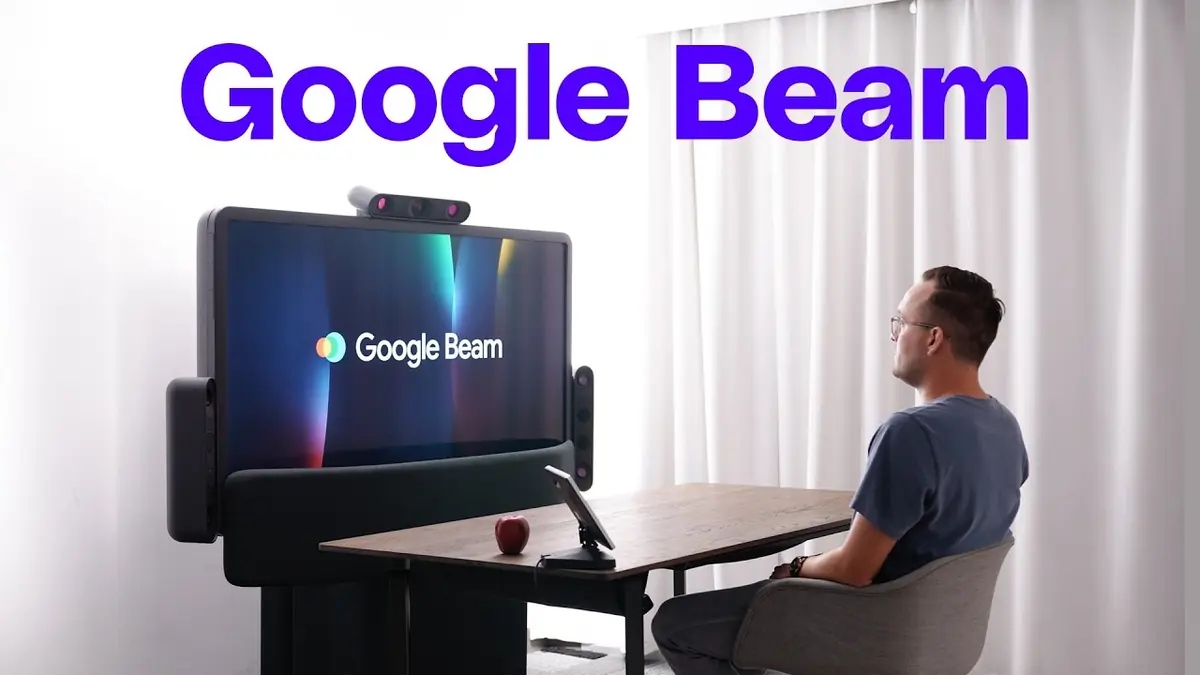
Google Beam, an evolution of the research project initially known as Project Starline, represents Google's ambitious leap into a new era of video communication. Introduced at Google I/O 2021 as Project Starline, the concept aimed to create life-sized, 3D images of people in real-time, making remote conversations feel remarkably like being in the same room. The initial setup was considerable, resembling a "restaurant booth" filled with advanced hardware, including infrared light emitters and specialized cameras. Over four years of intensive development, Google refined the software and streamlined the hardware, transforming Project Starline into the more compact and user-friendly Google Beam.
At its core, Google Beam is an AI-powered platform that converts traditional 2D video streams into realistic 3D experiences, giving participants a profound sense of depth and dimensionality. This innovative approach is designed to restore the subtle human cues – like natural eye contact, body language, and gestures – that are often lost in conventional video calls. The result is often described as a "magic window" effect, where it genuinely feels as though the person you are communicating with is sitting directly across from you, rather than appearing on a flat screen. This transformation from a research project to a practical, AI-first platform marks a significant advancement in how people connect remotely, promising a more natural and engaging virtual interaction.
How Google Beam Works: A Deep Dive into the Technology
The illusion of presence created by Google Beam is a marvel of integrated advanced technologies, combining sophisticated hardware with cutting-edge artificial intelligence. Unlike typical video conferencing, Beam constructs a dynamic, real-time 3D model of the participant, rendering them with astonishing realism.
Real-Time 3D Capture and Volumetric Video
The journey of creating an immersive 3D presence begins with a sophisticated capture system. Google Beam utilizes an array of high-resolution cameras, typically six, strategically positioned to capture the subject from multiple angles simultaneously. These cameras work in tandem to track facial features, body language, and subtle movements in real-time, down to millimeter accuracy.
This multi-camera input feeds into Google's proprietary AI volumetric video model. This is where the magic truly happens: the AI combines these multiple 2D camera feeds to generate a comprehensive 3D model of the person in view. Instead of merely layering 2D images, the AI reconstructs crucial elements like depth, shadows, and spatial relationships to create a full 3D digital representation. The AI model continuously updates this 3D representation at a smooth 60 frames per second (FPS), ensuring movements are fluid and lifelike and making real-time adjustments to reflect the person's precise movements. This process leverages AI and computer vision techniques such as depth estimation and motion tracking to accurately map facial features and body parts in 3D space. The entire volumetric rendering process, which converts these camera inputs into a real-time 3D mesh, is primarily processed on Google Cloud, powered by Tensor Processing Units (TPUs), significantly reducing the need for heavy local hardware and enabling millisecond frame-rate processing latency. For more on how AI is transforming various fields, see our article on Latest AI Technologies: Shaping Our Future & Beyond.
Light Field Display Technology
Central to the immersive experience of Google Beam is its breakthrough light field display. Unlike conventional screens that present the same image to both eyes, a light field display emits slightly different images to each eye, accurately simulating the way we naturally perceive depth in the real world. This technological feat creates a truly three-dimensional visual experience without requiring users to wear any special glasses or headsets, a significant advantage over many other immersive technologies.
The light field display is designed to project the 3D model with realistic depth, color, and eye contact, creating the impression that the person is physically present. It delivers both vergence (the ability of the eyes to rotate inward or outward to focus on objects at different distances) and accommodation (the eye's ability to change focus on objects at varying depths) cues, which are vital for a natural 3D perception. The system also incorporates real-time, millimeter-accurate head tracking. As the user moves their head, the AI engine continuously tracks their position and makes subtle, real-time adjustments to the displayed image. This ensures the 3D image shifts accordingly, maintaining the illusion of a physically present individual and allowing for natural motion parallax, just like in a real, face-to-face conversation.
Spatial Audio Integration
Completing the immersive sensory experience is Google Beam's advanced spatial audio system. This technology simulates how humans naturally perceive sound in the real world, where sound direction and how it reaches each ear provide crucial spatial cues. Beam uses a multi-microphone array and multiple speakers, enabling directional audio that matches the person's on-screen appearance.
If a person is displayed on the left side of the screen, their voice will distinctly sound like it's coming from the left. As they shift positions on the display, the audio adjusts dynamically with them, making conversations feel profoundly more natural. This advanced audio processing, combined with real-time tracking, helps the brain effortlessly follow who is speaking, enhancing the overall sense of copresence. The system also features automatic calibration, adjusting itself to the room's acoustics to optimize the sound experience. This intricate blend of visual and auditory cues ensures that the remote interaction feels as authentic as a shared physical space.
Key Components and Features of the Google Beam System
Google Beam's capacity for hyper-realistic virtual meetings stems from a synergy of meticulously engineered hardware and intelligent software features, all designed to make technology fade into the background.
Integrated Hardware and Custom Silicon
The physical manifestation of Google Beam, exemplified by devices like the HP Dimension, integrates a suite of advanced components into a discreet and elegant solution. The core hardware includes:
- Large Light-Field Display: The HP Dimension, for instance, features a massive 65-inch 8K light-field display. This display is large enough to create the sensation of sitting together in the same conference room, showcasing natural depth and dimensionality. Its narrow bezels and discreet design aim to minimize the visible technology, allowing the user to focus on the interaction.
- Multi-Camera Array: At least six high-resolution cameras are strategically embedded within the system. These cameras are depth-enabled and capture multi-perspective inputs, crucial for the real-time 3D reconstruction of the participant.
- Adaptive Lighting: To ensure optimal image capture and realistic rendering, Beam systems incorporate adaptive lighting, which adjusts to the ambient environment to illuminate the subject effectively.
- Spatial Audio System: Advanced Poly microphones and multiple speakers are integrated to deliver crystal-clear communication with precise spatial sound. The HP Dimension, for example, includes four high-definition speakers and 12 microphones optimized for beamforming.
- Custom Compute "Puck" & Cloud Processing: While much of the heavy lifting for volumetric rendering is offloaded to Google Cloud, powered by Tensor Processing Units (TPUs), the Beam unit itself includes a compact "compute puck" for essential local processing. This hybrid approach allows for a more streamlined local hardware footprint while ensuring robust, scalable, and reliable enterprise-grade performance.
AI-Driven Realism and Interactive Features
Beyond the hardware, Google Beam's software leverages advanced AI to imbue virtual interactions with unprecedented realism and functionality.
- Volumetric 3D Video: As discussed, AI transforms standard 2D video streams into immersive, perspective-rich 3D experiences using sophisticated depth modeling. This AI-powered realism preserves subtle cues like eye contact, facial expressions, and emotional nuance, which are critical for effective communication.
- Natural Eye Contact and Gesture Recognition: The combination of the light field display and precise head tracking ensures that genuine eye contact is maintained, a foundational element of human connection often lost in traditional video calls. The system also captures and renders gestures and body language with such fidelity that it enhances non-verbal communication significantly. Studies have shown Beam can lead to a 39% increase in non-verbal behaviors displayed during meetings.
- Real-Time Speech Translation: A standout feature, powered by Google's Gemini AI models, is the real-time speech translation capability. This allows users to converse in different languages while maintaining natural voice tones, expressions, and timing, effectively breaking down language barriers in global collaboration. This feature is initially available in Google Meet and will extend to Beam devices.
- Seamless Integration: Google Beam is designed for seamless integration into existing enterprise workflows and popular video conferencing platforms like Zoom Rooms and Google Meet. This ensures that organizations can adopt Beam without completely overhauling their communication infrastructure, supporting both 3D one-to-one meetings and traditional 2D group calls.
These key components and features collectively create an environment where the technology recedes, allowing participants to focus entirely on the human connection and collaborative experience.
Real-World Applications and Use Cases for Beam
Google Beam's ability to create a profound sense of presence has significant implications across various sectors, promising to transform how we connect and collaborate remotely. While initially targeting enterprise use cases, its potential extends to personal and public domains.
Enhancing Business and Remote Collaboration
For businesses, Beam offers a compelling solution to the challenges of distributed workforces and global teams.
- Remote Collaboration and Meetings: Google Beam can make virtual meetings, especially high-stakes negotiations or leadership discussions, feel more personal and effective. By capturing subtle factors like body language and eye contact, it helps individuals feel more present, fostering better understanding and trust even when geographically dispersed. Studies have shown an improvement in participant focus (14%) and enhanced memory recall of meeting content and decisions (28%) when using Beam technology compared to traditional conferencing.
- Global Teams and Partnerships: The integrated real-time speech translation feature is a game-changer for international businesses, allowing seamless communication across language barriers while preserving vocal tone and expressions. This fosters more authentic and productive conversations among diverse teams.
- Product Design Reviews: For industries involving physical products, Beam could enable true-to-scale evaluations of models during remote design reviews, providing spatial reference often missing in 2D interactions.
- Executive Interviews: Building stronger rapport and providing an improved candidate experience for executive interviews conducted remotely is another valuable application.
Google is actively partnering with industry leaders to bring Beam to the enterprise market. Partners like Zoom and HP are launching the first Google Beam devices, with HP unveiling its "HP Dimension" system. Prominent companies such as Deloitte, Salesforce, Citadel, NEC, Hackensack Meridian Health, and Duolingo have already committed to integrating the platform into their operations, demonstrating early enterprise adoption.
Transformative Potential in Other Sectors
Beyond the corporate boardroom, Google Beam holds immense promise for other critical areas:
- Education and Training: Beam has the potential to make virtual learning more engaging and accessible. Imagine a scientist delivering a live lecture to students across the globe, with the immersive experience making it feel as if they are in the same room. This could lead to more interactive remote education and training programs.
- Healthcare: In telemedicine, Beam could make remote consultations feel significantly more personal. When doctors and patients can see each other clearly, make natural eye contact, and perceive nuanced expressions, it builds trust and makes the interaction feel more human, potentially leading to more accurate diagnoses and empathetic care.
- Creative Industries: For animators, artists, and producers, Beam can facilitate remote teamwork, making collaborative creative processes feel more natural and intuitive.
- Personal Connections: Google is also exploring applications for personal connections, such as enabling military families to connect more realistically with loved ones during long deployments. Google is partnering with the United Service Organizations (USO) to bring Beam to military communities, with pilot programs starting in 2026 at USO centers. This initiative aims to bridge the emotional distance for service members and their families.
These diverse applications underscore Google Beam's potential to revolutionize not just professional collaboration but also how we maintain social and emotional connections across distances, making virtual interactions feel genuinely human.
The Promise and Challenges of Immersive Communication
While Google Beam offers a compelling vision for the future of remote interaction, it also presents a unique set of advantages and hurdles that will dictate its widespread adoption and long-term impact.
Advantages of Google Beam
The core promise of Google Beam lies in its ability to transcend the limitations of traditional 2D video conferencing:
- Unparalleled Realism and Presence: Beam creates a hyper-realistic 3D experience that closely mimics in-person interactions, fostering a deeper sense of presence and connection. Users report feeling like the other person is "right there in front of you".
- No Headsets Required: Unlike many immersive technologies that demand AR or VR headsets, Beam operates without specialized wearables, making the experience more natural, comfortable, and accessible. This significantly reduces potential barriers to adoption and eliminates "headset fatigue".
- Enhanced Non-Verbal Communication: The technology restores crucial subtle human cues, such as eye contact, natural gestures, and nuanced facial expressions, which are vital for building rapport, understanding intent, and effective collaboration. This leads to a substantial increase in observed non-verbal behaviors.
- Reduced Screen Fatigue: The 3D light-field display offers a more natural and comfortable viewing experience, which can help reduce eye strain and mental fatigue compared to staring at flat screens for extended periods. Your brain processes the interaction more like an in-person meeting, reducing the cognitive load of interpreting 2D feeds.
- Real-Time Language Translation: With integrated AI-powered real-time translation, Beam breaks down language barriers, enabling seamless and authentic conversations across different languages while preserving vocal tone and expressions.
- Improved Engagement and Productivity: Early studies and trials suggest that Beam can lead to better attentiveness, improved memory recall of meeting content, and increased engagement compared to traditional video conferencing. This can translate to faster decision-making and more effective remote collaboration.
- Potential for Reduced Travel: By making remote interactions so lifelike, Beam could potentially reduce the need for some business travel, leading to cost savings and environmental benefits.
Challenges and Considerations
Despite its groundbreaking capabilities, Google Beam faces several significant challenges that could impact its broad adoption:
- High Initial Cost: The hardware for Google Beam, exemplified by the HP Dimension, is expensive. The HP Dimension is priced at approximately $25,000 per unit, which does not include the separate Google Beam license. This high cost makes it primarily suitable for large enterprises and specialized industries, potentially putting it out of reach for small businesses, startups, or individual consumers.
- Hardware Dependency and Space Requirements: Beam requires a dedicated hardware setup, including a specialized light field display and multi-camera array. This makes it less flexible than software-only solutions like Zoom or Google Meet, which run on standard devices. The initial Project Starline required a full room-sized booth, although Beam has significantly miniaturized it to the size of a digital whiteboard or a 65-inch display system. Still, it demands a dedicated space, limiting its practicality for home offices.
- Limited Availability: Currently, Beam is rolling out in select regions and primarily through enterprise partnerships. Its widespread commercial availability for general consumers is still some time away.
- Technical Complexity and Integration: While designed for seamless integration with platforms like Google Meet and Zoom, deploying and managing such advanced technology within existing IT infrastructures might pose integration challenges for some organizations.
- Potential for Glitches and Eye-Box Limitations: Early demonstrations of Project Starline, and presumably Beam, have shown some minor visual anomalies, such as shimmering around hands or artifacts when reaching too far outside the optimal viewing area. The light-field display also has a relatively small "eye-box," meaning the immersive 3D effect is best experienced when the user's eyes are within a specific viewing zone. Moving too far off-center can cause the illusion of volume to diminish.
- Network Connectivity Requirements: Streaming gigabits of data per second (even after 100x compression) for real-time 3D volumetric video requires robust, low-latency internet connectivity, which could be a bottleneck in some regions.
- Competition and Market Adoption: While Beam offers a unique proposition, it enters a mature video conferencing market dominated by established players like Zoom and Microsoft Teams, which offer affordability and broad ecosystems. Google Beam will need to demonstrate significant, sustained value to justify its premium cost and drive widespread adoption, particularly beyond specialized enterprise applications.
Navigating these challenges will be crucial for Google Beam to realize its full potential and truly redefine the landscape of digital communication.
The Future Outlook for Google's "Beam"
The journey of Google Beam, from a visionary research project to a commercially available platform, is merely the beginning. Google has ambitious plans for its evolution, aiming to make this immersive technology more accessible and versatile. Much like the developments in other advanced fields such as quantum computing, the progress of Beam signifies a new era of technological innovation.
One significant area of development is the expansion beyond one-on-one interactions. While current deployments largely focus on single-person immersive calls, Google is targeting multi-user sessions by mid-2026. This will enable larger virtual meetings within the Beam environment, moving beyond simple 2D group calls to truly immersive collaborative experiences for multiple participants simultaneously. The ability to see and interact with several colleagues in a lifelike 3D space would be a transformative step for large team meetings and distributed workforces.
Further enhancing its global reach, Google plans to significantly expand real-time speech translation capabilities, adding more languages beyond its initial offerings. By 2026, the goal is to include major languages like Mandarin, French, and German, with a particular focus on Asia and Europe. This will further break down communication barriers, making international collaboration smoother and more inclusive by maintaining natural voice tones and expressions during translated conversations.
While the initial rollout is primarily focused on enterprise customers, Google is also exploring consumer versions of Beam around 2027. This could open up a plethora of personal applications, from more engaging remote education and telemedicine to profoundly connecting with family members who live far away. Imagine grandparents having a seemingly in-person conversation with their grandchildren, transcending geographical distance with a tangible sense of presence.
Technological advancements will continue to drive miniaturization and cost reduction. Google aims to make the hardware even smaller and more user-friendly, potentially bringing it to everyday users in more compact forms. This ongoing refinement includes leveraging more generative AI to improve avatar realism, ensuring that the digital representations become even more indistinguishable from reality.
Integration with Google's broader ecosystem will also play a crucial role. Already built on Google Cloud infrastructure and powered by Gemini AI models, Beam is poised for deeper integration with other Google services. This could include seamless connections with productivity tools, enhanced accessibility features, and potentially new applications that leverage Google's vast AI capabilities.
The partnership strategy will also evolve. After launching with HP as a key hardware partner, Google will likely continue to expand its network of hardware manufacturers and channel partners to ensure wider distribution and accessibility. The collaboration with organizations like the USO demonstrates a commitment to making this technology impactful across diverse communities.
Ultimately, the future outlook for Google Beam is one of continuous innovation aimed at making virtual communication as natural, engaging, and personal as possible. As the technology matures, it stands to fundamentally alter our expectations of remote interaction, blurring the lines between physical and virtual presence.
Conclusion: Google's "Beam" Redefines Remote Presence
In an era defined by global connectivity and distributed teams, Google's "Beam" (formerly Project Starline) represents a monumental leap forward in how we perceive and engage in remote communication. By meticulously blending advanced AI, sophisticated light-field displays, real-time volumetric video, and immersive spatial audio, Google has engineered a system that transcends the limitations of traditional video calls, fostering a profound sense of true presence without the need for cumbersome headsets.
From enhancing critical business collaborations and enriching remote learning experiences to providing more empathetic telemedicine consultations and deeply connecting distant families, Beam's applications are vast and transformative. While challenges such as high initial costs and hardware dependency remain, Google's strategic partnerships and ambitious roadmap for multi-user capabilities, expanded language support, and eventual consumer availability paint a compelling picture for the future. As Google continues to refine and democratize this groundbreaking technology, Beam is poised not just to improve virtual interactions, but to redefine what it means to truly "be there" from anywhere, setting a new standard for human connection in the digital age.
Frequently Asked Questions
Q: What is Google Beam?
A: Google Beam is an AI-first 3D video communication platform that evolved from Project Starline. It uses volumetric video and light-field displays to create a hyper-realistic sense of presence, making remote interactions feel like in-person meetings without requiring headsets.
Q: How is Google Beam different from regular video calls?
A: Unlike 2D video calls, Beam renders participants in lifelike 3D, allowing for natural eye contact, body language, and spatial audio. It creates an immersive experience that significantly enhances non-verbal communication and engagement, making virtual interactions feel profoundly more authentic.
Q: Is Google Beam available to everyone?
A: Currently, Google Beam is primarily available for enterprise customers through partnerships with companies like HP and Zoom. Google plans to expand its availability and explore consumer versions in the future as the technology matures and becomes more accessible.