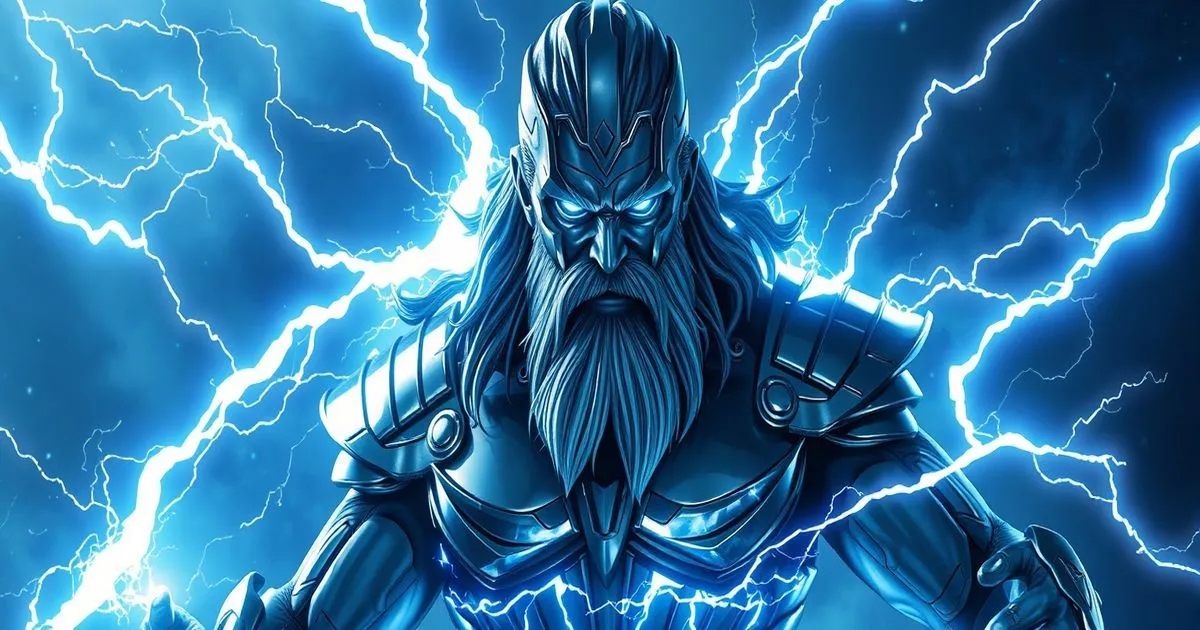
The clash of thunder, the flash of lightning – for millennia, these powerful natural phenomena have inspired awe, fear, and wonder. It's no surprise that many cultures attributed these forces to a mighty deity. Among the most enduring and widely recognized of these storm gods is Thor, the formidable God of Thunder. From the frosty sagas of ancient Scandinavia to the blockbuster screens of modern Hollywood, Thor's hammer has never ceased to strike, captivating generations with tales of strength, heroism, and the eternal struggle between good and evil.
The Original Storm-Bringer: Thor in Norse Mythology
Before he wielded the mighty Mjolnir on cinema screens, Thor was a central figure in the vibrant tapestry of Norse mythology. Son of Odin, the Allfather, and Jörð (Earth), Thor was revered as the protector of Asgard and Midgard (the human world) alike. He was the embodiment of strength, courage, and fertility, and the patron god of farmers, warriors, and everyday folk seeking protection and good harvests.
Attributes and Legend
Thor's most iconic possession, even in the myths, was Mjolnir, a magical hammer forged by the dwarven brothers Sindri and Brokkr. It was said that Mjolnir would always return to his hand after being thrown and could level mountains. He also wore a belt of strength, Megingjörð, and iron gauntlets, Járngreipr, which further amplified his already immense power.
His adventures were legendary:
- Battles with Jörmungandr: The World Serpent, destined to be Thor's nemesis at Ragnarök, the Twilight of the Gods. Their encounters were epic, often shaking the very foundations of the cosmos.
- Travels to Jötunheimr: Thor frequently journeyed to the realm of the frost giants, often disguised, where he outwitted and outfought many of Asgard's greatest foes.
- Protecting humanity: Unlike some more aloof gods, Thor was deeply concerned with the welfare of mortals, often intervening directly to protect them from giants and other monstrous threats.
Thor's thunderous presence was deeply woven into Viking culture, influencing everything from naming conventions (Thursday, or "Thor's day") to the symbols used in their art and rituals. He was a god of action, reliability, and fierce loyalty.
From Myth to Marvel: The Modern Incarnation
The enduring appeal of the God of Thunder proved irresistible to comic book creators Stan Lee, Larry Lieber, and Jack Kirby, who introduced their version of Thor to the world in Journey into Mystery #83 in August 1962. This marked a monumental shift, transforming an ancient deity into a contemporary superhero.
Marvel's Mighty Thor
Marvel's Thor maintained many core elements of his mythological counterpart:
- Mjolnir: Still his signature weapon, with the iconic "worthiness" enchantment.
- Asgard: Reimagined as a celestial realm, a city of advanced technology and magic.
- Family Ties: Odin as his father, and the complicated, often adversarial relationship with his adopted brother, Loki.
However, the Marvel iteration also introduced new dynamics, notably the human alter-ego of Dr. Donald Blake, a disabled physician who discovered Mjolnir. This allowed for exploration of themes of humility, responsibility, and what truly makes a hero.
The Cinematic Universe Impact
The launch of the Marvel Cinematic Universe (MCU) catapulted Thor, brilliantly portrayed by Chris Hemsworth, into global superstardom. The films introduced the character to a new generation, blending his mythical grandeur with modern storytelling, humor, and spectacular special effects.
The MCU's Thor has evolved significantly, from a hot-headed, arrogant prince to a more complex, self-sacrificing leader who grapples with immense loss and the burden of heroism. His journey, replete with epic battles, personal growth, and memorable one-liners, has cemented his status as one of pop culture's most beloved figures.
Why We're Still Thunderstruck
What is it about the God of Thunder that continues to resonate so profoundly, centuries after his earliest tales were told?
Perhaps it's his sheer power – the raw force of a storm embodied in a divine being. Or maybe it's his role as a protector, a beacon of strength and justice in a chaotic world. In both his mythological and modern forms, Thor represents an ideal: someone who stands up to bullies, defends the innocent, and embodies a fierce, if sometimes flawed, nobility.
His evolution from a stoic warrior god to a relatable, often humorous, and deeply empathetic hero in modern narratives demonstrates the timeless adaptability of powerful archetypes. The core essence of Thor – a mighty force dedicated to safeguarding others – remains as potent and inspiring today as it was in the Viking age.
Conclusion
The God of Thunder is more than just a character; he is a phenomenon. From the ancient Norse sagas that spoke of his hammer striking fear into giants, to the comic books and movies that portray him as a complex, evolving hero, Thor has proven his enduring power. He bridges the gap between ancient myths and modern storytelling, reminding us that the qualities of strength, courage, and a commitment to protecting the innocent are truly timeless. And as long as there are storms to weather and threats to face, the thunder of Thor's hammer will continue to echo through our collective imagination.