Geopolitical Tensions Reshape Global Landscape: A Global Analysis
The world is currently navigating a period of profound transformation, where Geopolitical Tensions Reshape Global Landscape, significantly impacting international relations, economies, and societal stability. A global analysis reveals that 2026 is defined by a complex interplay of conflicts, shifting alliances, and renewed economic nationalism, creating an unpredictable environment for nations and businesses alike. This current climate sees long-standing assumptions weaken and power dynamics shift, challenging traditional approaches to international strategy. From regional skirmishes to the intricate dance of major powers, the implications are far-reaching, demanding constant vigilance and adaptive strategies from all global actors.
- The Shifting Sands of Global Power: How Geopolitical Tensions Reshape Global Landscape
- Global Economic and Supply Chain Resilience
- Regional Dynamics and Emerging Challenges
- The Impact of Technology: AI as a Geopolitical Force
- Conclusion: Navigating a New Era of Geopolitical Tensions Reshape Global Landscape
- Frequently Asked Questions
- Further Reading & Resources
The Shifting Sands of Global Power: How Geopolitical Tensions Reshape Global Landscape
The year 2026 marks a decisive era where Geopolitical Tensions Reshape Global Landscape, leading to a more fragmented and volatile global order. This overarching trend is characterized by an increasing multipolarity, with more geopolitical actors vying to influence the global environment. The relationship between the United States and China, for instance, remains a critical determinant of these tensions, reverberating throughout the global economy. Europe and emerging nations of the Global South are also asserting greater influence, leading to a complex web of colliding interests, rising competition, and new collaborations. The Global Risks Report 2026 highlights geoeconomic confrontation as the top global risk for the year, underscoring the severity of these challenges.
The Middle East: A Crucible of Conflict and Energy Volatility
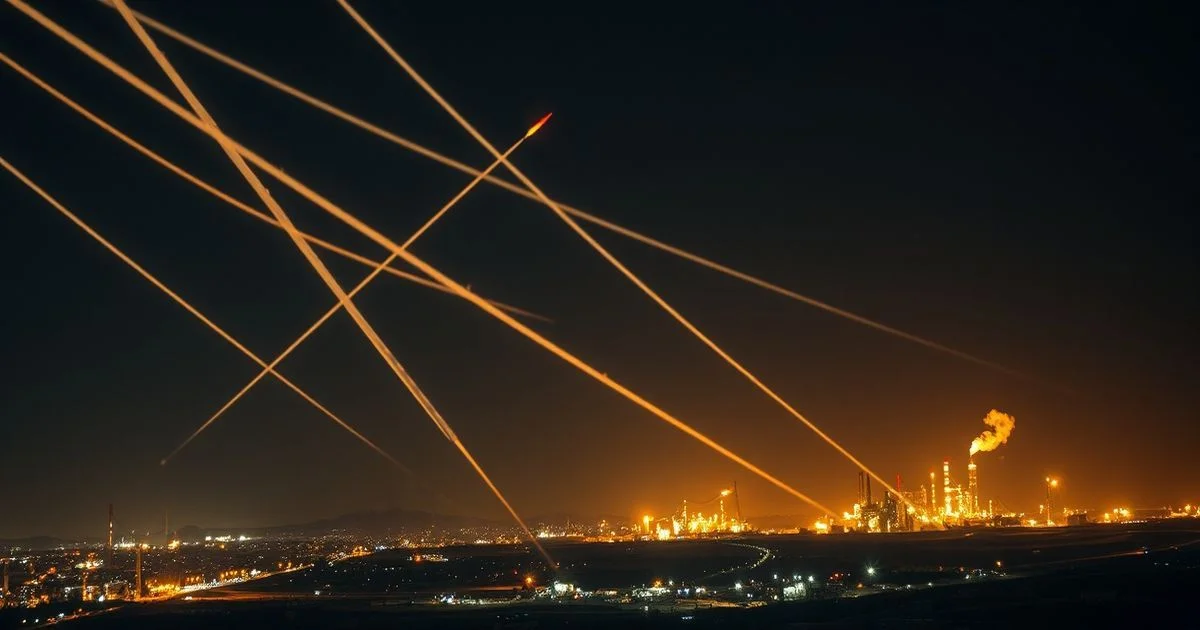
The Middle East remains a critical hotspot, with an escalating US-Israel-Iran conflict fundamentally altering regional security dynamics. This conflict, which intensified in early 2026, has seen joint US-Israeli strikes against Iran, leading to Iranian retaliations against both countries and their neighbors, including Saudi Arabia, the United Arab Emirates, Kuwait, and Qatar. For background on the initial escalations, read our report on Middle East Tensions Soar: Israel Strikes, Iran Retaliates. A significant consequence has been the effective closure of the Strait of Hormuz, a vital chokepoint for global oil and gas supply, causing oil prices to soar above $100 per barrel, with some analysts predicting a rise to $120 per barrel if the crisis escalates further.
The broader economic fallout from a prolonged war in Iran could drag down global economic growth, with Barclays estimating a 0.2 percentage point reduction in global growth and a 0.7 percentage point increase in inflation if oil prices average $100 in 2026. Energy security has thus emerged as a primary driver of the energy transition, strengthening the case for renewable energy and localized systems to reduce exposure to volatile fossil fuel markets. The conflict also presents a significant challenge to the region's stability, with pre-war conditions already marked by pervasive distrust and proxy conflicts.
The Enduring Struggle in Ukraine and European Security Shifts
The Russia-Ukraine war continues to be a defining geopolitical tension, demanding ongoing international attention and resources. As of March 2026, Russian forces have made some territorial gains, though Ukrainian forces have also shown resilience and conducted long-range drone strikes against Russian targets. Civilian casualties have risen significantly, with UN reporting for 2025 indicating a 31% increase compared to the previous year, highlighting the brutal human cost of the conflict. Russia's relentless bombardment, including a major missile strike in mid-March, continues to target Ukrainian cities and infrastructure.
Europe, in response to the invasion, is undergoing a profound transformation, shifting from a "peace project" to a "war project". The focus is now on security and defense integration, with increased defense spending globally and a renewed emphasis on building industrial scale-up for defense delivery. This shift also entails moving from liberalization to "de-risking," with a focus on diversifying away from reliance on certain nations and deepening the single market.
US-China Relations: Competition, Cooperation, and Trade Wars
The bilateral relationship between the United States and China remains a pivotal indicator of global geopolitical tensions. While both nations emphasize the benefits of open communication, their relationship is characterized by ongoing strategic rivalry, technological competition, and economic friction. Despite a pragmatic recognition of the need for managed competition, a fundamental reset is unlikely.
Trade tensions persist, with the US maintaining historically high tariffs and potentially introducing new ones on critical minerals and strategic components. China, in turn, is tightening export controls on sensitive technologies. These measures are pushing a shift from cost-driven globalization towards "friendshoring" and regionalization, as countries prioritize national and economic security. Efforts to secure critical mineral alliances are taking center stage, driven by China's expansion of export controls on rare earth elements.
High-level meetings between US President Donald Trump and Chinese President Xi Jinping are anticipated throughout 2026, with a focus on managing trade imbalances and broader economic issues. China views a stable relationship with the US as important, especially given its export-dependent economy. However, the prospect of a "G2" dynamic, where the international order becomes increasingly centered around these great powers, raises concerns among smaller states about marginalization and the weakening of multilateral norms.
Global Economic and Supply Chain Resilience
Geopolitical instability is now widely regarded as the single greatest threat to global supply chains. A 2025 Reuters Events survey indicated that 74% of logistics managers believe geopolitical factors generate the most serious risks, a significant increase from the previous year. The era of relative geopolitical calm in Europe has ended, forcing a redefinition of resilience in the transport and logistics sector.
Supply Chain Disruptions and Diversification Strategies
Conflicts, trade wars, sanctions, and export controls continue to disrupt global supply chains, leading to estimated annual losses of US$184 billion for businesses. The closure of the border with Belarus in September 2025, for example, caused an economic loss of at least €450 million for the EU, prompting China to accelerate development of alternative trade routes like the Middle Corridor and Arctic Sea routes.
Companies are increasingly adopting strategies of diversification and regionalization, moving away from a "China Plus One" approach to a broader imperative for new sourcing destinations. This involves shifting to intra-regional networks and local warehousing to regain control and build "anti-fragility," the ability to grow from disruptions. Agility in supply chain management is paramount, allowing businesses to quickly adapt to geopolitical events. The critical role of waterways like the Strait of Hormuz has been a recurring point of international concern, particularly concerning the Hormuz Crisis Deepens, Oil Prices Surge Amid Deployments.
Energy Security and the Green Transition
The interplay of geopolitical tensions and energy markets is a dominant theme in 2026. The Iran crisis has significantly highlighted the geopolitical risk premium of fossil fuels, pushing for an accelerated energy transition. Energy security is becoming a primary driver for investment in renewable energy, electrification, and localized energy systems. Shell's 2026 Energy Security Scenarios explore how nations can navigate these tensions, with a focus on increasing electrification and the critical role of carbon and land-use management.
The demand for critical minerals, essential for renewable energy technologies and AI infrastructure, is surging, leading to a fierce global race to secure traceable and resilient supply chains. This has spurred innovation in alternative battery chemistries, mineral recycling, and resource efficiency to counter tightening supply chains.
Regional Dynamics and Emerging Challenges
Beyond the major power struggles, regional dynamics present their own complex challenges.
Indo-Pacific Security Concerns
The Indo-Pacific region, a crucial economic hub with 80% of worldwide trade passing through it, is experiencing intensified geopolitical tensions. China's military modernization and coercive activities, particularly around Taiwan and in the South and East China Seas, pose significant security challenges. The US and its allies, including Japan and the Philippines, are strengthening trilateral cooperation to enhance deterrence in these areas. The region remains a high-stakes arena where regional tensions are tightly intertwined with global strategic competition.
African Conflicts and Geopolitical Entanglement
Africa is grappling with a convergence of armed conflict, state fragmentation, humanitarian crises, economic distress, and climate shocks. Conflicts in Sudan, Ethiopia, Eritrea, Mali, and Burkina Faso remain unresolved, stretching global attention and mediation efforts. The war in Sudan continues to fragment the state and deepen the humanitarian crisis, with competing regional interests hindering progress towards mediation.
The continent also faces the challenge of "geopolitical entanglement," with fierce competition among middle and major powers deliberately fragmenting the continent into rival spheres of influence. This undermines Africa's capacity to articulate common positions and pursue collective action, often leading to transactional, bilateral, and short-term calculations rather than a unified Pan-African vision.
Latin American Shifts
Latin America is experiencing significant political and diplomatic shifts in 2026, marked by renewed US assertiveness and a crowded electoral calendar. Disappointing economic results under left-leaning incumbents are creating momentum for right-wing candidates, likely bringing more market-friendly policies. The geopolitical tensions in Venezuela, particularly the ongoing US military actions, have also garnered international attention and scrutiny.
The Impact of Technology: AI as a Geopolitical Force
Artificial intelligence (AI) has emerged as a defining attribute of geopolitical competition, with implications for both economic and national security. The US and China are leading the race in AI development, with substantial advantages in large-scale commercialization. To understand more about the underlying technologies, consider our article What is Generative AI? Models, Concepts, & The Future Ahead. AI is also serving as a "force multiplier" in cyber conflicts, further complicating the geopolitical landscape.
Governments are increasingly treating AI assets, including foundation models, training data, and computing power, as critical national security priorities, contributing to a more fragmented digital ecosystem. The adverse outcomes of AI are a growing anxiety, climbing significantly in the 10-year risk horizon due to implications for labor markets, societies, and security. Furthermore, surging demand from AI expansion is straining regional power grids and putting pressure on energy markets.
Conclusion: Navigating a New Era of Geopolitical Tensions Reshape Global Landscape
The intricate tapestry of global affairs in 2026 clearly demonstrates that Geopolitical Tensions Reshape Global Landscape in fundamental ways. From the heightened conflicts in the Middle East and Ukraine to the strategic rivalry between the US and China, the world is experiencing a period of unprecedented volatility and fragmentation. These dynamics are not only impacting traditional security concerns but are also profoundly influencing global economies, energy markets, supply chains, and technological development. Nations are recalibrating their foreign policies, economic strategies, and defense postures to navigate this complex environment. Building resilience, fostering diversified partnerships, and adapting to rapid changes are paramount for states and businesses aiming to thrive in this new, unpredictable global order. The ongoing shifts underscore the urgent need for international cooperation and innovative diplomatic solutions to address the interconnected challenges of our time.
Frequently Asked Questions
Q: What are the main drivers of geopolitical tensions in 2026?
A: Key drivers include the ongoing US-China strategic rivalry, intensified conflicts in the Middle East and Ukraine, and a global shift towards economic nationalism and security-focused alliances. These factors contribute to a more fragmented and volatile international order.
Q: How have global supply chains been impacted by recent geopolitical shifts?
A: Geopolitical tensions, trade wars, and conflicts have led to significant disruptions, causing estimated annual losses of billions. Companies are responding by diversifying sourcing, regionalizing networks, and building "anti-fragility" to mitigate risks.
Q: What role does AI play in the current geopolitical landscape?
A: AI is a critical force multiplier in geopolitical competition, influencing national security, economic power, and cyber warfare. Governments are prioritizing AI assets, leading to a fragmented digital ecosystem and raising concerns about its societal and security implications.
Further Reading & Resources
- Lazard: Top Geopolitical Trends in 2026
- World Economic Forum: A world in tension: 6 experts on the economic and geopolitical paradoxes to watch in 2026
- Marsh: Supply chain trends in 2026: A continuation of complexity and risk
- Lux Research: Energy Security in 2026: How the Iran Crisis Highlights the Geopolitical Risk Premium of Oil & Gas
- EY: Geopolitical outlook for 2026: A World rewired for Risk and Resilience
- IMF: World Economic Outlook Update, January 2026: Global Economy: Steady amid Divergent Forces
- Brookings Institution: Indo-Pacific perspectives on the prospect of a US-China G2
- Chatham House: Africa in 2026: Global uncertainty demands regional leadership
- ACLED: Middle East Special Issue: March 2026
- Futura Doctrina: Should America Put Boots on the Ground in Iran, Ukraine Disrupts Russia's Spring Offensive, and China's Coercion: Three Theatres, One Week.