Fundamentals of Amateur Astronomical Observation: A Deep Dive
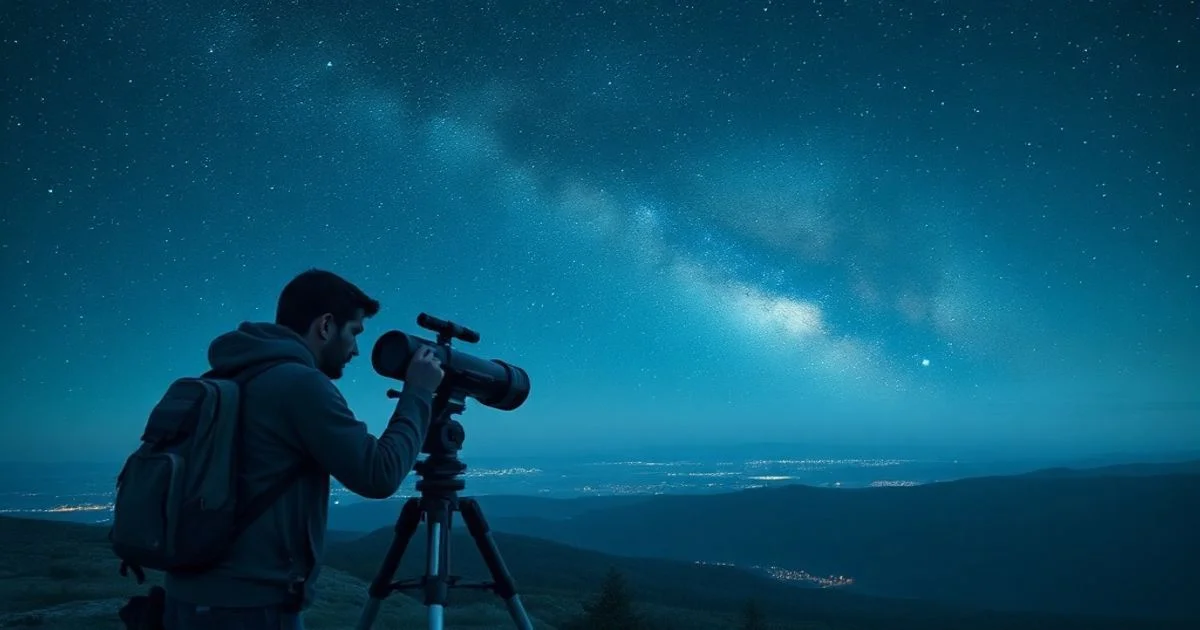
The universe, in its boundless expanse, has captivated humanity for millennia. From ancient cultures tracking celestial movements to modern astrophysics unraveling cosmic mysteries, the desire to understand our place among the stars remains a fundamental human impulse. For the tech-savvy individual seeking a profound connection with the cosmos, delving into the fundamentals of amateur astronomical observation offers an incredibly rewarding and accessible pathway. This deep dive will equip you with the knowledge to transform abstract interest into tangible stargazing experiences, fostering a greater appreciation for the astronomical wonders above.
- The Allure of the Cosmos: Why Observe?
- Essential Gear for Stargazers: Beyond the Naked Eye
- Preparing for Observation: Site Selection and Environmental Factors
- Mastering Observation Techniques for the Fundamentals of Amateur Astronomical Observation
- The Digital Frontier: Astrophotography and Software
- Safety First: Protecting Yourself and Your Equipment
- Common Challenges and Troubleshooting
- Future Trends in Amateur Astronomy
- Conclusion: Embracing the Cosmic Journey
- Frequently Asked Questions
- Further Reading & Resources
The Allure of the Cosmos: Why Observe?
The motivation to look skyward is as diverse as the stars themselves. For many, it's a primal curiosity—a desire to witness phenomena that unfold on scales far beyond our terrestrial experience. Observing the cosmos firsthand offers a unique blend of scientific inquiry, personal contemplation, and profound aesthetic appreciation. It's a journey into deep time and vast distances, where every photon arriving at your eye tells a story billions of years in the making. For those fascinated by the life and death of cosmic bodies, our deep dive into Understanding the lifecycle of a star in stellar physics offers further insights.
Amateur astronomy is remarkably accessible, democratizing the scientific endeavor. Unlike many scientific fields requiring specialized labs or multi-million dollar instruments, anyone with a pair of binoculars or even just their naked eyes can begin a journey of cosmic discovery. This accessibility fosters a direct engagement with the scientific method, encouraging observation, data collection (even if just mental notes or sketches), and critical thinking about the natural world. It moves beyond abstract equations and theoretical models, grounding the wonders of the universe in concrete, observable reality.
Beyond the intellectual stimulation, astronomical observation offers significant educational benefits and opportunities for personal growth. It can improve pattern recognition, spatial reasoning, and patience. The act of patiently locating a faint galaxy or tracking a planet across the sky demands focus and perseverance, qualities that translate positively into other areas of life. Moreover, it encourages a lifelong learning habit, as the universe constantly presents new phenomena and deeper scientific understanding evolves. The night sky is an endless textbook, continually updating its chapters with comets, meteor showers, supernovae, and the intricate dance of planets and moons.
Perhaps one of the most compelling reasons for amateurs to observe is the potential to contribute to citizen science. Many professional observatories and research institutions rely on the vast network of amateur astronomers for data collection, especially concerning transient events or objects that require continuous monitoring over long periods. For instance, amateur astronomers routinely contribute valuable data on variable stars, which change in brightness over time, helping scientists understand stellar evolution. They are also instrumental in tracking comets, discovering supernovae in distant galaxies, and monitoring the atmospheres of planets. This direct involvement allows individuals to contribute meaningfully to scientific progress, transforming a hobby into a genuine scientific pursuit. This active participation creates a strong sense of community and shared purpose among enthusiasts worldwide, often facilitated by online platforms and local astronomy clubs.
Essential Gear for Stargazers: Beyond the Naked Eye
While the universe is spectacularly grand, the tools for observing it range from the simplest to the highly sophisticated. Understanding the capabilities and limitations of each piece of equipment is fundamental to a rewarding experience.
Naked Eye Observation: The First Step
Before investing in any equipment, the naked eye remains your most fundamental and versatile tool. A dark, clear night sky can reveal thousands of stars, the sprawling band of the Milky Way, planets like Venus, Mars, Jupiter, and Saturn, and even meteor showers. Learning to identify constellations, locate the North Star, and differentiate between planets and stars are crucial initial steps. Resources like planispheres or smartphone apps (e.g., SkyView Lite, Stellarium Mobile) are invaluable for navigating the night sky without any optical aid. Moreover, understanding light pollution and its impact on visible objects becomes immediately apparent when observing with just your eyes, prompting the search for darker skies.
Binoculars: The Gateway to Deeper Views
Binoculars are arguably the best first optical instrument for an amateur astronomer. They offer a wider field of view than most telescopes, are highly portable, and significantly magnify fainter objects not visible to the naked eye. They bridge the gap between naked-eye viewing and telescope observation, revealing star clusters, nebulae, lunar craters, and even the moons of Jupiter.
Key Specifications: Binoculars are typically described by two numbers, such as 7x50 or 10x50.
- The first number (e.g., 7x or 10x) indicates the magnification. A 7x binocular makes objects appear seven times closer.
- The second number (e.g., 50) represents the diameter of the objective lens in millimeters. A larger objective lens gathers more light, allowing fainter objects to be seen and providing brighter images.
For astronomy, 7x50 or 10x50 models are highly recommended. A 7x50 pair provides a wider, steadier view, excellent for scanning the Milky Way. A 10x50 pair offers more magnification but can be harder to hold steady, sometimes benefiting from a tripod adapter. Binoculars are cost-effective, typically ranging from $50-$200 for good quality models, making them an excellent entry point into the hobby without a significant financial commitment.
Recommended Uses: Binoculars excel at observing large celestial objects that are too expansive for the narrow field of view of most telescopes. This includes open star clusters like the Pleiades (M45) and the Beehive Cluster (M44), portions of the Orion Nebula (M42), and the Andromeda Galaxy (M31). They are also fantastic for sweeping along the Milky Way, revealing countless individual stars, and for detailed views of the Moon's rugged terrain. Comets, when bright enough, are often best viewed through binoculars due to their wide field and relatively bright, diffuse nature.
Telescopes: A Deep Dive into Optical Instruments
Telescopes represent a significant leap in light-gathering capability and magnification, unlocking details impossible with binoculars. There are three primary types of telescopes, each with distinct advantages and disadvantages.
Refractors: The Lens-Based Optic
Refractor telescopes use a system of lenses to collect and focus light. They are often what people picture when they think of a telescope, with a long, slender tube.
- How They Work: Light enters through a large objective lens at the front, which bends the light to a focal point at the back of the tube, where the eyepiece magnifies the image.
- Pros:
- Sharp Images: Refractors produce very crisp, high-contrast images, making them excellent for observing the Moon, planets, and double stars.
- Minimal Maintenance: Their sealed tubes mean optics are less exposed to dust and moisture, requiring less cleaning and virtually no collimation (optical alignment).
- Durability: Generally robust and hold their alignment well.
- Cons:
- Chromatic Aberration: Basic (achromatic) refractors can suffer from color fringing around bright objects due to different wavelengths of light focusing at slightly different points. Apochromatic (APO) refractors mitigate this with specialized glass but are significantly more expensive.
- Cost per Aperture: They become very expensive as aperture (objective lens diameter) increases, making large refractors rare for amateurs.
Reflectors (Newtonian): The Mirror-Based Powerhouses
Reflector telescopes, particularly the Newtonian design, use mirrors to gather and focus light. They are often the most cost-effective way to achieve large apertures.
- How They Work: Light enters the open tube and strikes a large concave primary mirror at the back. This mirror reflects the light to a smaller, flat secondary mirror near the front of the tube, which then redirects the light out to the side of the tube where the eyepiece is located.
- Pros:
- Excellent Light Gathering for Cost: Large aperture Newtonian reflectors, often called Dobsonian telescopes (named after John Dobson for their simple, robust mount), offer the most light-gathering power per dollar, making them superb for viewing faint deep-sky objects like galaxies and nebulae.
- No Chromatic Aberration: Since mirrors focus all colors of light equally, reflectors are inherently free from chromatic aberration.
- Cons:
- Collimation: Mirrors can occasionally go out of alignment (collimation), requiring periodic adjustment, though this is a straightforward process once learned.
- Open Tube: The open design means the primary mirror is susceptible to dust and requires occasional cleaning. It can also be affected by air currents inside the tube.
- Bulkier: Often larger and heavier than refractors or catadioptrics of comparable aperture.
Catadioptrics (SCTs, Maksutovs): The Hybrid Approach
Catadioptric telescopes combine both lenses and mirrors to create a compact, versatile optical design. The most common types are Schmidt-Cassegrains (SCTs) and Maksutov-Cassegrains (Maks).
- How They Work: Light enters through a corrector plate (a thin lens) at the front of the tube, then hits a primary mirror at the back. This light is reflected to a secondary mirror (often a spot on the inside of the corrector plate or a separate small mirror attached to it), which then sends the light back through a hole in the primary mirror to the eyepiece at the rear. This folded optical path allows for long focal lengths in very short tubes.
- Pros:
- Compact and Portable: Their folded optical design results in very short, sturdy tubes, making them highly portable for their aperture.
- Versatile: Good for both planetary and deep-sky observation, and very popular for astrophotography due to their sturdy build and often integrated Go-To mounts.
- Sealed Tube: Like refractors, the tube is sealed by the corrector plate, protecting the optics from dust and moisture.
- Cons:
- Longer Cool-Down: The enclosed tube and thick corrector plate mean they take longer to equilibrate to ambient temperature (cool down), which is crucial for sharp views.
- Higher Cost: Generally more expensive than Newtonian reflectors of similar aperture.
- Slight Obstruction: The secondary mirror partially obstructs the incoming light, which can slightly reduce contrast compared to a perfectly aligned refractor of the same aperture.
Mounts: The Foundation of Stability
A telescope is only as good as its mount. A stable mount is crucial for steady views and accurate tracking of celestial objects.
- Alt-Azimuth Mounts: These are the simplest mounts, allowing movement along two axes: altitude (up and down) and azimuth (left and right).
- Pros: Intuitive to use, often lighter and less expensive. Dobsonian mounts are a type of alt-azimuth mount, prized for their simplicity and stability for visual observation.
- Cons: Cannot easily track objects as they move across the sky due to Earth's rotation, making high-magnification viewing and astrophotography challenging.
- Equatorial Mounts: These mounts are aligned with the Earth's rotational axis. Once properly polar aligned, they allow you to track celestial objects by rotating along a single axis (the right ascension axis).
- Pros: Essential for long-exposure astrophotography, as they counteract Earth's rotation. Great for prolonged high-magnification visual observations.
- Cons: More complex to set up (requiring polar alignment), heavier, and generally more expensive.
- Go-To/Computerized Mounts: Available in both alt-azimuth and equatorial designs, these mounts contain motors and a computer database of celestial objects.
- Pros: Once aligned, they can automatically slew (move) the telescope to hundreds or thousands of objects at the touch of a button. Excellent for beginners who struggle with star hopping or for quickly finding faint objects.
- Cons: Higher cost, reliance on batteries or external power, and still require accurate setup for precise tracking. Learning to star hop can be bypassed, which some argue detracts from the learning experience.
Eyepieces: Magnifying the View
Eyepieces are interchangeable lenses inserted into the focuser of a telescope to magnify the image. The focal length of the eyepiece, combined with the focal length of the telescope, determines the magnification.
Magnification Calculation: Telescope Focal Length (mm) / Eyepiece Focal Length (mm) = Magnification. For example, a telescope with a 1000mm focal length used with a 10mm eyepiece provides 100x magnification.
- Apparent Field of View (AFOV): This is the angle of the sky that you can see through the eyepiece without moving your head. Eyepieces come in various designs, each offering different AFOVs and optical characteristics.
- Common Types:
- Plössl: A popular, cost-effective design offering good sharpness and a moderate AFOV (around 50 degrees).
- Orthoscopic: Known for excellent planetary views due to high contrast and sharpness, but a narrower AFOV.
- Wide-Field (e.g., Erfle, Panoptic, Nagler): Offer significantly wider AFOVs (60-82+ degrees), providing immersive views and making it easier to locate objects. These are generally more expensive.
Investing in a good set of 2-4 eyepieces with varying focal lengths (e.g., a low-power for wide views, a medium-power for general observation, and a high-power for planetary/lunar details) is crucial.
Finderscopes and Telrads: Essential Navigation Tools
Even with Go-To mounts, a good finder is indispensable.
- Finderscope: A small, low-power telescope mounted parallel to the main telescope. It provides a wide, upright, and often magnified view of the sky, making it easier to "star hop" to faint objects. They typically have crosshairs to center targets.
- Telrad: A non-magnifying "red dot" finder that projects three concentric red rings (4, 2, and 0.5 degrees) onto the night sky, allowing you to easily aim your telescope by matching the rings to stars on a chart. They are very intuitive for star hopping.
Preparing for Observation: Site Selection and Environmental Factors
Successful astronomical observation isn't just about the gear; it's also about the environment and careful preparation.
Light Pollution: The Urban Scourge
Light pollution is artificial light scattered into the atmosphere, obscuring the fainter celestial objects. It is the single biggest impediment to amateur astronomical observation in developed areas.
- Bortle Scale: This 9-level scale quantifies sky darkness, from Class 1 (excellent dark-sky sites, visible Milky Way details) to Class 9 (inner-city skies, only brightest objects visible). Understanding your local Bortle rating helps manage expectations for what you can see.
- Impact: Light pollution severely hinders the visibility of diffuse, faint deep-sky objects like nebulae and galaxies, which rely on maximum contrast. Brighter objects like the Moon, planets, and brighter star clusters are less affected, though high-contrast views still benefit from darker skies.
- Tools: Online resources like the Light Pollution Map allow you to find dark-sky locations near you. Planning trips to rural areas, state parks, or dedicated dark-sky preserves is often necessary for truly breathtaking views.
Weather Considerations: The Stargazer's Nemesis
Clear skies are obvious, but "good seeing" is equally critical.
- Cloud Cover: Directly blocks views. Check multiple weather forecasts, particularly those for aviators, which provide detailed cloud coverage data.
- Seeing (Atmospheric Stability): Refers to the steadiness of the atmosphere. Turbulent air (e.g., from heat rising off buildings, jet streams) causes stars to "twinkle" excessively and blurs high-magnification views of planets and the Moon. Excellent seeing provides rock-steady, crisp images.
- Transparency: Refers to the clarity of the air (lack of dust, haze, or water vapor). High transparency allows fainter objects to be seen.
- Astronomical Forecasts: Specialized apps and websites (e.g., Clear Sky Charts) combine cloud cover, seeing, and transparency predictions, invaluable for planning observing sessions.
Acclimatization: Cooling Down Your Optics
Telescopes, especially larger reflectors and catadioptrics, need time to cool down to ambient outdoor temperatures. If the telescope's mirrors or lenses are warmer than the surrounding air, heat currents within the tube will degrade the image, leading to blurry or wavy views. For larger scopes, this can take 30-60 minutes or even longer. Setting up your equipment shortly after sunset allows it to acclimate while you enjoy the twilight.
Red Light: Preserving Night Vision
Your eyes adapt to darkness over 20-30 minutes, a process called dark adaptation. Using white light during an observing session will instantly destroy your night vision, requiring you to start the adaptation process over. A red-light flashlight or headlamp is essential because red light affects the rod cells in your eyes (responsible for low-light vision) far less than other colors. This allows you to read charts, adjust equipment, and move around without compromising your dark adaptation. Many modern astronomy apps also feature a "red light mode" for this reason.
Mastering Observation Techniques for the Fundamentals of Amateur Astronomical Observation
Effective observation goes beyond simply pointing a telescope. It involves specific techniques to maximize your views and deepen your understanding. This is where the core fundamentals of amateur astronomical observation truly come into play.
Star Hopping: Navigating the Cosmic Sea
Star hopping is a fundamental skill for manually locating celestial objects, especially faint deep-sky objects, without a Go-To system. It involves using easily recognizable bright stars as "signposts" to navigate to less obvious targets.
- Using Star Charts: Start with a good star chart (printed or digital). Plan your route by identifying a bright, easily visible star near your target.
- Navigating: Center the bright star in your telescope's low-power eyepiece (or finder scope). Identify another slightly fainter star visible in that field of view that moves you closer to your target. "Hop" from star to star, using the patterns and relative distances on your chart, until you reach your desired object. This process takes practice but is incredibly rewarding. Digital planetarium software like Stellarium (desktop) or SkySafari (mobile) can generate customized star charts with target overlays, making this process easier.
Filters: Enhancing the View
Optical filters screw onto the eyepiece or directly into the telescope's visual back, selectively blocking certain wavelengths of light to enhance specific features.
- Light Pollution Filters (UHC, OIII): These narrow-band filters block much of the artificial light emitted by streetlights (e.g., sodium and mercury vapor lamps) while allowing specific wavelengths emitted by nebulae to pass through.
- UHC (Ultra High Contrast) filters: Good for a wide range of emission nebulae (e.g., Orion, Lagoon).
- OIII (Oxygen III) filters: More selective, excellent for planetary nebulae and some supernova remnants (e.g., Ring Nebula, Veil Nebula). They make the background sky much darker, making faint nebulae "pop" out.
- Planetary Filters (Color Filters): These are colored glass filters that enhance contrast on planetary surfaces by absorbing certain colors of light and allowing others to pass.
- Red/Orange: Enhances features on Mars, Jupiter's Great Red Spot.
- Blue: Improves contrast on Jupiter's cloud bands, Saturn's rings, lunar features.
- Green: Good for Mars' polar caps, Jupiter's belts.
- Solar Filters: CRITICAL SAFETY WARNING: Observing the Sun without a certified, purpose-built solar filter that covers the entire front aperture of your telescope or binoculars will result in instant, permanent blindness and can damage your equipment. Never use makeshift filters or look through a telescope at the Sun without proper protection. Only use "white light" filters (e.g., Baader solar film) or specialized Hydrogen-alpha (H-alpha) filters.
Understanding Magnification and Field of View
Achieving optimal views requires a nuanced understanding of magnification and field of view.
- Calculating Actual Magnification: As discussed under eyepieces, this is straightforward. The usable magnification depends on the telescope's aperture and the seeing conditions. A general rule of thumb for maximum useful magnification is 50x per inch of aperture (or 2x per millimeter). Exceeding this often results in a dim, blurry image.
- Impact of Field of View: A wide field of view (achieved with low-power eyepieces) is ideal for locating objects, viewing large clusters, or sweeping the Milky Way. A narrow field of view (high-power eyepieces) is necessary for resolving fine details on planets or lunar craters. Balancing these is key to a versatile observing setup. Start with low magnification to locate and frame an object, then switch to higher powers to examine details.
Sketching Observations: Enhancing Focus and Memory
Sketching what you see through the eyepiece is an age-old and highly effective observation technique. It forces you to slow down, pay meticulous attention to detail, and actively engage with the object. This process significantly improves your observational skills, helping you notice subtle features you might otherwise overlook. Sketches also serve as valuable records of your observing sessions, documenting sky conditions and equipment performance. Many renowned amateur astronomers maintain detailed observing logs filled with their sketches.
Observing the Moon and Planets: Our Celestial Neighbors
The Moon and planets offer some of the most rewarding and accessible targets for amateur astronomers.
- Best Times: The Moon is best observed a few days before or after its first or last quarter phases, when shadows are longest, revealing dramatic crater walls and mountain ranges. Full Moon is often too bright and lacks shadow detail. Planets are best observed when they are high in the sky and away from the horizon, minimizing the amount of turbulent atmosphere you're looking through. Look for periods of good seeing.
- Detailed Features:
- Moon: Craters, rilles (collapsed lava tubes), mountain ranges, maria (dark plains). The terminator (the line between light and shadow) is where features are most apparent.
- Jupiter: Its four largest moons (Io, Europa, Ganymede, Callisto) are visible even in binoculars. Through a telescope, its prominent cloud bands, the Great Red Spot, and shadow transits of its moons can be observed.
- Saturn: Its majestic rings are a breathtaking sight, even in small telescopes. You can also spot its largest moon, Titan, and subtle cloud features.
- Mars: Its polar ice caps, dark surface features, and atmospheric phenomena can be seen when it is closest to Earth (opposition), though it requires patience and excellent seeing.
- Phase Changes: Observing the phases of the Moon, Venus, and Mercury provides a direct demonstration of orbital mechanics, a critical aspect of Understanding the History of Planetary Exploration.
Observing Deep-Sky Objects: Galaxies, Nebulae, and Star Clusters
Deep-sky objects (DSOs) are typically much fainter and more distant than objects within our solar system. They present a different set of observational challenges and rewards.
- Galaxies: From the sweeping spiral arms of the Andromeda Galaxy (M31) to the faint smudges of distant galactic clusters, galaxies offer a glimpse into the vastness of the universe. They often require the darkest skies and largest apertures.
- Nebulae: These are clouds of gas and dust. Emission nebulae (like M42 in Orion) glow from ionized gas, while reflection nebulae (like M78) reflect light from nearby stars. Dark nebulae (like the Horsehead Nebula) are dense clouds that block background light.
- Star Clusters:
- Open Clusters: Loosely bound groups of young stars (e.g., Pleiades, Beehive).
- Globular Clusters: Densely packed, spherical collections of hundreds of thousands of ancient stars, often found in the halos of galaxies (e.g., M13 in Hercules). These are stunning targets.
- Averted Vision: This crucial technique for observing faint DSOs involves not looking directly at the object but slightly to its side (about 10-20 degrees off-center). This uses the more light-sensitive rod cells in your peripheral vision, allowing fainter details to become apparent. Practice this technique; it makes a huge difference.
- Challenge of Light Pollution: DSOs are highly susceptible to light pollution. Even a modest amount of sky glow can render all but the brightest objects invisible. This underscores the importance of seeking out dark-sky sites.
The Digital Frontier: Astrophotography and Software
Modern amateur astronomy has been profoundly transformed by digital technology, integrating photography and powerful software into the observing experience.
Basic Astrophotography: Capturing the Cosmos
Astrophotography allows you to capture and share the beauty of the cosmos, often revealing details invisible to the naked eye through long exposures and image stacking.
- Smartphone Adapters: The simplest entry point. These inexpensive adapters allow you to attach your smartphone to an eyepiece, primarily for snapping quick photos of the Moon and brighter planets. Results are typically modest but can be impressive for lunar landscapes.
- DSLRs on Tracking Mounts: For wide-field astrophotography of constellations or the Milky Way, a DSLR camera on a star tracker (a small, portable equatorial mount) can produce stunning images with relatively short exposures. For deep-sky objects through a telescope, a sturdy equatorial mount with accurate tracking is essential.
- Dedicated Astro-Cameras: These specialized cameras are designed for low-light sensitivity, low noise, and often have cooling systems to minimize thermal noise during long exposures. They connect directly to the telescope's focuser.
- Stacking and Processing Software: Astrophotography images often consist of many short exposures ("lights") combined with calibration frames ("darks," "flats," "bias") to reduce noise and enhance signal. Software like DeepSkyStacker (free), PixInsight (paid, professional-grade), or Adobe Photoshop/Lightroom are used for this processing, allowing you to bring out faint details and vibrant colors. While processing is a deep topic, understanding its existence is part of the modern amateur astronomical observation landscape.
Essential Software and Apps
Digital tools are indispensable for planning, navigating, and enhancing astronomical observations.
- Planetarium Software:
- Stellarium (Desktop & Mobile): A free, open-source planetarium that shows a realistic sky view for any time and location. Excellent for planning, star hopping, and familiarizing yourself with constellations.
- SkySafari (Mobile): A powerful, highly detailed mobile planetarium app (paid) with extensive databases of celestial objects, real-time telescope control capabilities, and excellent sky simulation.
- Light Pollution Maps: Websites like Light Pollution Map or dedicated apps help locate dark-sky sites by overlaying light pollution data on geographic maps.
- Weather Forecasting for Astronomers: Apps like Clear Outside, Astrospheric, or the aforementioned Clear Sky Charts provide specialized forecasts for cloud cover, seeing, and transparency, crucial for determining if an observing session will be productive.
- Ephemeris Generators: Websites and apps that calculate the precise positions of planets, moons, comets, and asteroids at any given time, aiding in their location and observation.
Safety First: Protecting Yourself and Your Equipment
While amateur astronomy is generally safe, certain precautions are paramount to protect yourself and your valuable equipment.
Solar Observation: An Absolute Necessity for Safety
As previously emphasized, direct solar observation through any optical instrument without a certified, full-aperture solar filter will cause instant, irreversible blindness. Never use sunglasses, smoked glass, multiple layers of Mylar balloons, or any other unapproved material as a solar filter. Purchase filters only from reputable astronomy vendors. Even a tiny pinhole leak in an unfiltered telescope pointed at the sun can cause severe eye damage. When observing the sun, always double-check your filter's integrity and secure it firmly to prevent accidental dislodging.
Trip Hazards: Navigating in the Dark
Observing usually takes place in the dark, often in unfamiliar terrain. Ensure your observing area is clear of obstacles like uneven ground, cables, or discarded equipment. Use your red-light flashlight sparingly to navigate and verify your footing. Observing with a buddy or informing someone of your location and expected return time is always a good practice.
Equipment Care: Longevity for Your Gear
Proper care extends the life and performance of your astronomical equipment.
- Cleaning Optics: Use specialized optical cleaning solutions and microfiber cloths designed for lenses. Avoid harsh chemicals or abrasive materials. Dust off large particles with a blower first.
- Storing in Dry Conditions: Store telescopes and eyepieces in a clean, dry environment to prevent mold or mildew growth on optical surfaces. Desiccants can be used in sealed cases to absorb moisture.
- Temperature Extremes: Avoid storing equipment in extreme hot or cold conditions, which can degrade lubricants, electronic components, and optical coatings over time.
Personal Safety: Common Sense Precautions
Beyond equipment, consider your personal safety:
- Dress Appropriately: Nights can get surprisingly cold, even after a warm day. Dress in layers.
- Stay Hydrated: Especially during long sessions.
- Observe in Groups: If going to a remote dark-sky site, never go alone.
- Inform Others: Let family or friends know where you're going and when you expect to return.
Common Challenges and Troubleshooting
Even experienced observers encounter challenges. Knowing how to troubleshoot common issues can save a night of frustration.
- Collimation (for Newtonian/SCTs): If stars appear asymmetrical or cometary, especially at high magnification, your telescope's mirrors might be out of alignment. Collimation involves precisely adjusting the mirrors. Tools like a collimation cap, laser collimator, or Cheshire eyepiece make this relatively easy to do at the start of an observing session. Regular checks are good practice.
- Dew Formation: When the telescope's optics cool below the dew point, moisture from the air condenses on the surfaces, fogging up your views.
- Solutions: Use dew shields (tubes extending from the front of the telescope) to delay dew. For more persistent issues, invest in dew heaters (heating bands that wrap around optics or corrector plates, powered by a battery) to keep surfaces just above the dew point.
- Light Pollution Mitigation: While dark sites are ideal, if observing from a light-polluted area, employ strategies:
- Focus on bright targets: Moon, planets, double stars, and brighter open clusters.
- Use light pollution filters: UHC or OIII filters can help for some nebulae.
- Consider EAA (Electronically Assisted Astronomy): Digital cameras can accumulate light over short exposures, then stack them in near real-time to overcome light pollution.
- Choosing the Right First Telescope: Many beginners make the mistake of buying a cheap "department store" telescope. These often have poor optics, flimsy mounts, and frustrating performance, leading to early abandonment of the hobby.
- Advice: Start with good binoculars, then consider a quality 6-inch or 8-inch Dobsonian reflector for deep-sky, or a 4-inch achromatic/apochromatic refractor or a 5-inch/6-inch Maksutov-Cassegrain for planetary/lunar if budget allows. Prioritize aperture and mount stability over high magnification claims. Seek advice from local astronomy clubs or reputable online forums.
Future Trends in Amateur Astronomy
The field of amateur astronomy is constantly evolving, driven by technological advancements and a growing community.
- Automated Go-To Systems: The precision and affordability of computerized Go-To mounts continue to improve. Future systems will likely integrate even more seamlessly with smartphone apps and AI-driven alignment routines, making setup faster and tracking more accurate for all users. The "push-to" systems, where a digital setting circle guides you without motors, also offer an intuitive middle ground.
- Electronically Assisted Astronomy (EAA): EAA is becoming increasingly popular. It involves using highly sensitive digital cameras (often astronomical video cameras) attached to telescopes to take short exposures that are then stacked in real-time on a laptop or dedicated EAA display. This allows observers to see much fainter objects than visually possible, even from light-polluted locations, and view them in color. As cameras become more sensitive and processing faster, EAA could become a dominant form of visual observation.
- Advances in Optical Technology: Researchers are continually developing better optical coatings for lenses and mirrors, which reduce light loss and improve contrast. Lighter, more rigid materials are also being explored for telescope tubes and mounts, making large apertures more portable. Adaptive optics, while currently professional-grade, might one day trickle down to amateur systems, correcting for atmospheric turbulence in real-time.
- Citizen Science Integration: The role of amateur astronomers in scientific discovery is expanding. Platforms for contributing data on exoplanet transits, asteroid occultations, and gravitational lensing events are becoming more sophisticated. Future trends point towards even greater collaboration between amateur and professional scientists, with amateurs providing crucial data from a wider geographical distribution and with more consistent monitoring than larger, more specialized observatories can manage. This collaborative approach enhances scientific output significantly.
- AI in Image Processing: Artificial intelligence algorithms are beginning to revolutionize astrophotography processing. AI-powered tools can automatically de-noise images, enhance details, and even suggest optimal processing workflows, significantly lowering the barrier to entry for producing high-quality astrophotographs and improving the output for experienced users. This trend promises to make astrophotography more accessible and efficient.
Conclusion: Embracing the Cosmic Journey
Embarking on the journey of amateur astronomical observation offers a profound connection to the universe, blending scientific curiosity with personal awe. From understanding the basics of light pollution to mastering the intricacies of telescope operation and observation techniques, the fundamentals of amateur astronomical observation lay the groundwork for a lifetime of cosmic exploration. The night sky is a boundless classroom, constantly presenting new lessons and breathtaking vistas.
Whether you choose to gaze through the simplicity of binoculars or the power of a large reflector, the rewards are immense. You'll not only witness the universe's grand spectacle but also gain a deeper appreciation for the laws of physics, the scale of space, and humanity's enduring quest for knowledge. The universe is waiting; all you need to do is look up and begin your cosmic journey.
Frequently Asked Questions
Q: What is the most important factor for good astronomical observation?
A: The most important factor is dark skies, free from light pollution. While equipment certainly helps, a truly dark sky dramatically enhances the visibility of faint celestial objects, offering the best possible views of galaxies and nebulae.
Q: What is the best first telescope for a beginner?
A: Many experts recommend starting with a good pair of binoculars (like 7x50 or 10x50) before investing in a telescope. For telescopes, a 6-inch or 8-inch Dobsonian reflector offers excellent light-gathering power for its price and is relatively easy to use, making it ideal for deep-sky observation.
Q: Is it safe to look at the Sun through a telescope?
A: Absolutely not, without proper precautions. Looking directly at the Sun through an unfiltered telescope or binoculars will cause instant, permanent blindness and can also damage your equipment. You must use a certified, purpose-built, full-aperture solar filter specifically designed for solar observation to ensure safety.