The Fundamentals of Aerodynamics in Flight: Principles & Future
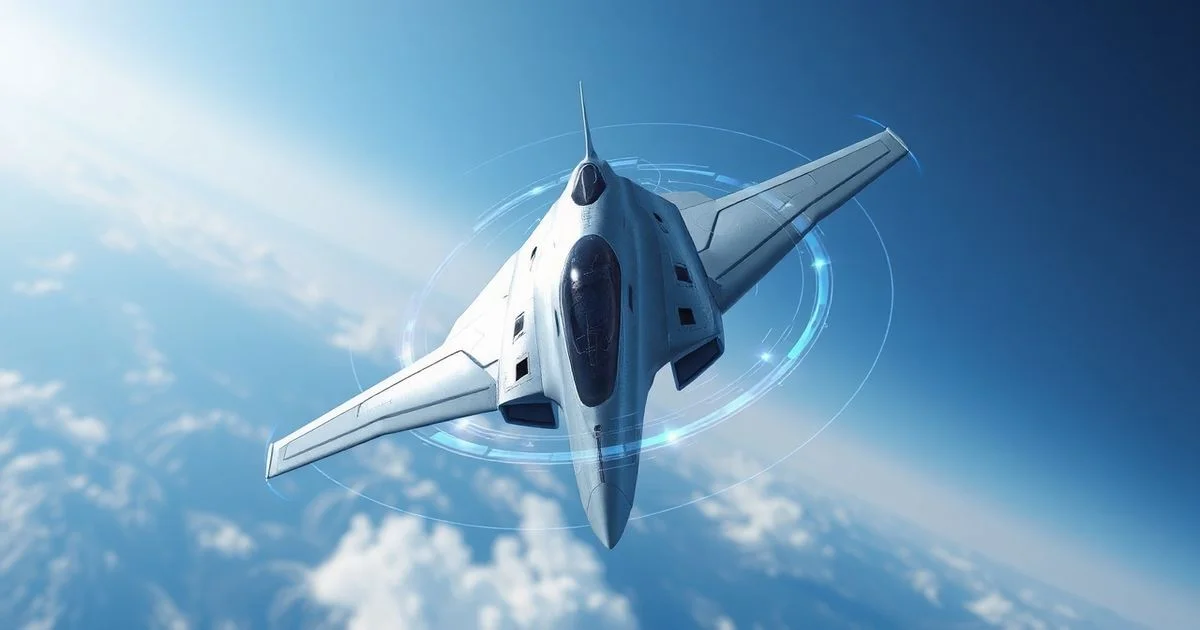
From the first whispered dreams of human flight to the supersonic jets piercing the stratosphere today, the principles of aerodynamics have remained the silent architects of our airborne ambitions. Understanding The Fundamentals of Aerodynamics in Flight is not merely an academic exercise; it's an essential journey into the science that governs everything from a paper airplane's glide to the complex maneuvers of an F-35 fighter. This comprehensive exploration delves deep into the core concepts, historical milestones, and future innovations that allow massive machines to conquer gravity and navigate the skies with incredible precision and power, shaping the very future of aerial travel.
- What Exactly Is Aerodynamics?
- How The Fundamentals of Aerodynamics in Flight Work: The Four Forces
- Key Components & Principles in Aerodynamic Design
- Real-World Applications Beyond Aviation
- Aerodynamics: A Balance of Pros & Cons (Design Trade-offs)
- The Future of Aerodynamics: Pushing the Boundaries of Flight
- Frequently Asked Questions
- Further Reading & Resources
What Exactly Is Aerodynamics?
Aerodynamics, at its core, is the study of how air interacts with moving objects. It's a specialized branch of fluid dynamics that focuses specifically on gases, particularly air, and the forces that air exerts on objects moving through it. Imagine a swimmer pushing through water; the water resists their movement, creates drag, and provides buoyancy. Air behaves similarly, though its lower density makes these interactions less immediately obvious without advanced study.
The history of aerodynamics is a fascinating narrative of human curiosity and ingenuity, stretching back centuries before powered flight was even conceivable. Early pioneers like Leonardo da Vinci meticulously sketched designs for flying machines and observed bird flight, attempting to decipher the natural world's secrets. His detailed studies of wing structures and airflow, though lacking modern scientific rigor, laid foundational thoughts about lift and drag.
Fast forward to the late 19th and early 20th centuries, and we see the true dawn of aerodynamic science. Figures like George Cayley, often considered the "father of aeronautics," systematically identified the four forces of flight – lift, drag, thrust, and weight – providing the analytical framework still used today. His glider experiments and designs demonstrated an understanding far ahead of his time, emphasizing fixed-wing aircraft over flapping-wing ornithopters. Otto Lilienthal's daring glides further validated these principles through practical application, tragically losing his life in the pursuit of flight but paving the way for those who followed.
It was the Wright brothers, however, who synthesized these nascent theories with meticulous experimentation. They didn't just build a motor; they designed and tested their wings and propellers in their own wind tunnel, systematically measuring lift and drag on various airfoil shapes. Their success at Kitty Hawk in 1903 was not just a triumph of engineering but a testament to their deep, empirical understanding of aerodynamic forces. They mastered the control of their aircraft in three axes (roll, pitch, and yaw), a critical innovation that others had overlooked.
Today, aerodynamics is a sophisticated field employing computational fluid dynamics (CFD) simulations, advanced wind tunnel testing, and highly specialized materials science. It underpins not only aircraft design but also the efficiency of cars, the performance of sports equipment, the effectiveness of wind turbines, and even the re-entry of spacecraft into Earth's atmosphere. For those interested in the larger celestial mechanics at play, understanding Basics of Orbital Mechanics for Mars Missions provides a complementary perspective on how objects move through the cosmos. It’s an interdisciplinary science that continues to evolve, pushing the boundaries of what's possible in the air and beyond.
How The Fundamentals of Aerodynamics in Flight Work: The Four Forces
For any object to fly, it must contend with four fundamental aerodynamic forces: lift, weight, thrust, and drag. Understanding how these forces interact and are manipulated is key to comprehending how aircraft stay aloft, move forward, and maintain control. These forces are in a dynamic equilibrium or imbalance, dictating an aircraft's state of flight.
Lift: Conquering Gravity
Lift is the force that directly opposes the weight of an aircraft and holds the aircraft in the air. It is primarily generated by the wings, which are specially shaped airfoils. The magic behind lift is a combination of two main principles:
-
Bernoulli's Principle: This principle states that an increase in the speed of a fluid occurs simultaneously with a decrease in static pressure. Aircraft wings are designed with a specific curvature – usually more curved on the top (cambered) and flatter on the bottom. As air flows over the wing, the air traveling over the curved upper surface has a longer path and must travel faster than the air flowing along the flatter underside to reach the trailing edge at the same time. This faster-moving air above the wing results in lower pressure, while the slower-moving air beneath creates higher pressure. This pressure differential creates an upward force, which is lift.
-
Newton's Third Law (Action-Reaction): As the wing moves through the air, its angle of attack (the angle between the wing's chord line and the direction of the oncoming air) causes the air to be deflected downwards. For every action, there is an equal and opposite reaction. The wing pushes air down, and in response, the air pushes the wing up, contributing significantly to lift.
While Bernoulli's principle often gets primary credit, the downward deflection of air (Newton's Third Law) is equally, if not more, crucial in generating lift, especially at higher angles of attack. The overall lift generated depends on several factors:
-
Airspeed: Faster air generates more lift.
-
Wing Shape (Airfoil Design): The curvature and profile of the wing.
-
Angle of Attack: Increasing the angle of attack increases lift up to a critical point (the stall angle).
-
Wing Area: Larger wings generate more lift.
-
Air Density: Denser air (at lower altitudes or colder temperatures) generates more lift.
Weight: The Pull of Gravity
Weight is the force generated by the gravitational attraction of the Earth on the aircraft. It acts vertically downwards through the aircraft's center of gravity. For an aircraft to take off and climb, lift must exceed weight. For level flight, lift must equal weight. The weight of an aircraft is not constant; it changes as fuel is consumed or cargo is dropped. Pilots must continuously adjust lift to compensate for these changes.
Thrust: The Forward Motion
Thrust is the force that propels the aircraft forward, opposing drag. It is generated by the aircraft's propulsion system, which can be propellers, jet engines, or rockets.
-
Propellers: These rotate to pull air from in front of the aircraft and accelerate it backward, creating thrust based on Newton's Third Law. The blades are essentially rotating airfoils, generating lift (or thrust) in the direction of flight.
-
Jet Engines: These engines work by taking in air, compressing it, mixing it with fuel and igniting it, and then expelling the hot, high-velocity exhaust gases backward. The force of the expelled gases pushes the aircraft forward (again, Newton's Third Law).
-
Rocket Engines: Unlike jet engines, rockets carry both their fuel and oxidizer. They generate thrust by expelling high-velocity exhaust gases, making them capable of operating in a vacuum where there's no air to ingest.
For an aircraft to accelerate, thrust must exceed drag. For level flight at a constant speed, thrust must equal drag.
Drag: The Resistance of Air
Drag is the aerodynamic force that opposes an aircraft's motion through the air. It's the resistance the air exerts on the moving object. Minimizing drag is crucial for fuel efficiency and achieving high speeds. Drag can be broadly categorized into two main types:
-
Parasitic Drag: This type of drag does not contribute to lift and is generally considered "wasteful." It increases with the square of airspeed.
-
Form Drag (Pressure Drag): Caused by the shape of the object. A blunt object (like a brick) has high form drag, while a streamlined object (like an airplane wing) has low form drag.
-
Skin Friction Drag: Caused by the friction between the air and the aircraft's surface. Even seemingly smooth surfaces have microscopic irregularities that create turbulence in the boundary layer of air flowing over them.
-
Interference Drag: Occurs where different parts of the aircraft meet, such as the wing root joining the fuselage. Airflows interfere with each other, creating turbulence and increasing drag.
-
-
Induced Drag: This is a consequence of lift generation. When a wing generates lift, the higher pressure air below the wing tends to flow around the wingtips to the lower pressure area above. This creates swirling vortices at the wingtips, known as wingtip vortices. These vortices induce a downward component to the relative airflow over the wing, effectively tilting the lift vector slightly backward, creating a drag component. Induced drag is highest at low airspeeds and high angles of attack because that's when the most lift is being generated (and thus the strongest wingtip vortices are formed).
The interplay between these four forces is dynamic and constantly managed by pilots and flight control systems. At takeoff, thrust is maximized to overcome drag and accelerate, while lift builds to exceed weight. In cruise, all four forces are generally balanced for stable, level flight. During descent, lift and thrust are reduced to allow weight and drag to pull the aircraft down.
Key Components & Principles in Aerodynamic Design
The efficient manipulation of the four forces of flight relies heavily on the intricate design of an aircraft's components and a deep understanding of several core aerodynamic principles.
Airfoil Design and Function
The wing, or airfoil, is the primary component for generating lift. Its cross-sectional shape is critical.
-
Camber: The curvature of the airfoil's upper and lower surfaces. A highly cambered upper surface enhances lift.
-
Chord Line: An imaginary straight line connecting the leading edge (front) to the trailing edge (back) of the airfoil.
-
Angle of Attack (AoA): The angle between the chord line and the direction of the relative wind (oncoming airflow). Increasing the AoA generally increases lift up to a critical point, beyond which the airflow separates from the upper surface, leading to a stall.
-
Thickness and Planform: The overall thickness affects structural integrity and internal volume, while the planform (shape when viewed from above) influences efficiency and maneuverability. Different wing planforms (e.g., rectangular, elliptical, tapered, swept, delta) are chosen based on the aircraft's intended speed and purpose. For instance, swept wings reduce drag at high speeds, while high-aspect-ratio (long, slender) wings are efficient for gliders and long-range aircraft.
Control Surfaces: Directing Flight
Aircraft are equipped with various movable surfaces that allow pilots to control their orientation and trajectory in three dimensions.
-
Ailerons: Located on the outer trailing edge of the wings, they control roll (movement around the longitudinal axis). Moving one aileron up and the other down increases lift on one wing and decreases it on the other, causing the aircraft to bank.
-
Elevators: Located on the trailing edge of the horizontal stabilizer (tail), they control pitch (movement around the lateral axis). Moving the elevators up or down changes the angle of attack of the entire aircraft, causing the nose to pitch up or down.
-
Rudder: Located on the trailing edge of the vertical stabilizer (tail fin), it controls yaw (movement around the vertical axis). Moving the rudder left or right pushes the tail in the opposite direction, causing the nose to swing left or right.
-
Flaps: Hinged sections on the inner trailing edge of the wings. When extended, they increase wing camber and surface area, increasing both lift and drag. This allows the aircraft to fly slower without stalling, crucial for takeoff and landing.
-
Slats: Extendable surfaces on the leading edge of the wing. Like flaps, they increase lift and allow for slower flight speeds by increasing the effective camber and providing a slot for high-energy air to flow over the upper surface, delaying flow separation.
-
Spoilers: Panels on the upper surface of the wings that can be raised to disrupt airflow, significantly increasing drag and reducing lift. Used for slowing down, descending rapidly, and assisting ailerons in banking.
-
Trim Tabs: Small, adjustable surfaces on the trailing edge of control surfaces, used to reduce the manual force required to hold a control surface in a desired position, thereby reducing pilot workload.
Stability and Control
An aircraft's design also dictates its inherent stability – its tendency to return to a state of equilibrium after being disturbed.
-
Static Stability: The initial tendency of an aircraft to return to its original flight condition after a disturbance.
-
Positive Static Stability: The aircraft returns to its original state.
-
Neutral Static Stability: The aircraft remains in its new disturbed state.
-
Negative Static Stability: The aircraft continues to move away from its original state (inherently unstable, often found in highly maneuverable military jets, which require constant computer correction).
-
-
Dynamic Stability: Describes how an aircraft responds over time after a disturbance. A dynamically stable aircraft will dampen oscillations and eventually return to its original state.
Design elements like the placement of the horizontal and vertical stabilizers, wing dihedral (upward angle of wings), and sweep angle contribute significantly to an aircraft's inherent stability characteristics, balancing stability with maneuverability for its intended role.
Key design parameters influencing flight characteristics:
- Airfoil shape: Lift coefficient, drag coefficient
- Wing aspect ratio: Induced drag, efficiency
- Sweep angle: Mach number critical, stall characteristics
- Tail size/configuration: Static stability, control authority
These foundational components and principles are meticulously engineered and optimized through iterative design processes, combining theoretical calculations with empirical testing, ensuring that an aircraft can perform safely and efficiently within its operational envelope.
Real-World Applications Beyond Aviation
While aircraft are the most obvious beneficiaries of aerodynamic principles, the science of airflow optimization extends its influence into numerous other domains, impacting everything from high-speed trains to urban architecture. Understanding these applications highlights the pervasive nature and critical importance of aerodynamics in modern engineering.
Automotive Industry: Speed, Efficiency, and Safety
Aerodynamics plays a pivotal role in automotive design, particularly in high-performance vehicles and those focused on fuel efficiency.
-
Fuel Efficiency: A significant portion of a vehicle's energy consumption, especially at highway speeds, goes into overcoming air resistance (drag). Automakers invest heavily in streamlining vehicle shapes, using wind tunnels and computational fluid dynamics (CFD) to reduce drag coefficients. Features like smoothly contoured bodies, underbody panels, and aerodynamic mirrors can collectively reduce drag by 10-15%, leading to substantial fuel savings. For example, the Mercedes-Benz EQS achieved a drag coefficient of 0.20 Cd, setting a new benchmark for production cars.
-
Performance and Stability: In sports cars and racing vehicles, aerodynamic elements are crucial for stability and downforce. Spoilers, diffusers, and wings are designed to generate downforce, which pushes the car onto the road, increasing grip and allowing higher cornering speeds. Formula 1 cars are extreme examples, where every surface is sculpted to manage airflow, generate downforce, and cool components.
-
Noise Reduction: Aerodynamic design also helps reduce wind noise inside the cabin, improving passenger comfort.
-
Cooling and Ventilation: Airflow is managed to direct cooling air to the engine, brakes, and other components, as well as to optimize cabin ventilation.
High-Speed Rail: Sleekness for Speed
For trains operating at speeds exceeding 200 km/h, air resistance becomes a dominant factor.
-
Bullet Trains (Shinkansen): The distinctive "bullet" nose of Japan's Shinkansen trains and similar designs in European high-speed rail (e.g., TGV, ICE) are not just aesthetic; they are aerodynamically optimized to cut through the air with minimal drag and reduce sonic boom effects when entering tunnels.
-
Energy Consumption: Minimizing aerodynamic drag is critical for reducing the energy required to propel these massive vehicles at high speeds, contributing to efficiency and sustainability.
Architecture and Civil Engineering: Wind Loads and Comfort
Buildings, especially skyscrapers and long-span bridges, are significantly affected by wind.
-
Wind Loads: Aerodynamic analysis is used to predict wind loads on structures, ensuring their stability and safety. Architects often design buildings with tapered tops, rounded corners, or even open sections to reduce wind pressure and prevent uncomfortable swirling winds at ground level. The Burj Khalifa, for instance, uses a Y-shaped plan and stepping setbacks to "confuse" the wind, preventing strong vortices.
-
Pedestrian Comfort: Understanding localized airflow around buildings helps mitigate strong wind channels at street level, improving pedestrian comfort and safety.
-
Bridge Design: Suspension bridges and cable-stayed bridges require sophisticated aerodynamic design to prevent dangerous oscillations (like the Tacoma Narrows Bridge collapse) caused by wind-induced aeroelastic flutter.
Sports Equipment: Marginal Gains
Even in sports, aerodynamics can provide a competitive edge.
-
Cycling: Cyclists spend fortunes on aerodynamic helmets, bikes, and skin suits to reduce drag and gain precious seconds. The "aero position" adopted by time trialists is designed to minimize the rider's frontal area.
-
Swimming: Swimsuits are designed with textures and materials to reduce drag in water.
-
Golf: The dimples on a golf ball are a classic example of applied aerodynamics. They trip the boundary layer of air, creating a turbulent flow that delays flow separation, reducing drag and increasing lift, allowing the ball to fly further.
-
Ski Jumping: The V-style technique in ski jumping, where the skis are spread in a 'V' shape, increases the lift-to-drag ratio, allowing jumpers to stay airborne longer.
Wind Energy: Harnessing Airflow
Wind turbines are essentially giant airfoils designed to extract energy from moving air.
-
Blade Design: The aerodynamic design of wind turbine blades is critical for maximizing energy capture. Blades are shaped like airfoils, optimized for various wind speeds to generate lift and torque.
-
Efficiency: Advanced aerodynamic analysis helps engineers design more efficient and quieter blades, improving the overall output and environmental impact of wind farms.
These diverse applications demonstrate that the principles of aerodynamics are not confined to the skies but are fundamental to designing more efficient, safer, and higher-performing systems across a vast spectrum of human endeavors.
Aerodynamics: A Balance of Pros & Cons (Design Trade-offs)
In the realm of aerodynamic design, perfection is an elusive goal. Every design choice involves trade-offs, a delicate balancing act between conflicting requirements. What benefits one aspect of performance might detrimentally impact another. Understanding these pros and cons is crucial for appreciating the complexities faced by aerospace engineers.
High-Aspect-Ratio Wings: Efficiency vs. Maneuverability
-
Pros:
-
High Aerodynamic Efficiency: Long, slender wings (high aspect ratio, like those on gliders or commercial airliners) significantly reduce induced drag, especially at higher angles of attack. This means less fuel is needed to maintain lift, leading to better fuel economy and longer range.
-
Increased Lift: For a given wing area, a higher aspect ratio typically results in a higher lift-to-drag ratio, making the aircraft more efficient in producing lift.
-
Glide Performance: Excellent for sustained flight and gliding, ideal for transport aircraft and sailplanes.
-
-
Cons:
-
Reduced Maneuverability: Long wings have higher inertia, making them slower to roll and less agile. This is a significant disadvantage for fighter jets that require rapid changes in direction.
-
Structural Weight and Strength: Longer wings require more robust internal structures to withstand bending loads, adding weight to the aircraft.
-
Ground Handling and Storage: Large wingspans can make ground operations, hangar storage, and navigating tight spaces more challenging.
-
Flutter Risk: More susceptible to aeroelastic flutter, a dangerous self-exciting vibration, at higher speeds, requiring careful structural design.
-
Swept Wings: High Speed vs. Low Speed Performance
-
Pros:
-
High-Speed Performance: Swept wings delay the onset of compressibility effects (like shock waves) at high subsonic and supersonic speeds. By sweeping the wing back, the airflow component perpendicular to the wing's leading edge is reduced, effectively making the wing "feel" a lower airspeed and delaying the formation of drag-inducing shockwaves. This allows aircraft to fly faster more efficiently.
-
Stability: Often contributes to lateral stability.
-
-
Cons:
-
Reduced Low-Speed Lift: At low speeds, swept wings generate less lift than straight wings of the same area, requiring higher angles of attack or more complex high-lift devices (flaps, slats) for takeoff and landing.
-
Tip Stall Tendency: Airflow tends to separate first at the wingtips on swept wings, leading to a loss of aileron effectiveness and potentially dangerous control issues during slow flight. Design solutions like wing fences or washout (twisting the wing) are used to mitigate this.
-
Structural Complexity: The structural design of swept wings is more complex to handle aerodynamic loads and accommodate landing gear.
-
Canard vs. Conventional Tail Configurations
-
Canard (Forward Horizontal Stabilizer):
-
Pros:
-
Improved Lift: Canards generate lift, adding to the total lift of the aircraft. They can also "pre-condition" the airflow over the main wing, potentially delaying stall.
-
Stall Characteristics: Aircraft with canards can sometimes have superior stall characteristics, with the canard stalling first, allowing the pilot to recover before the main wing stalls.
-
Reduced Trim Drag: Canards often produce positive lift for trim, rather than the download (negative lift) typically generated by conventional tails.
-
-
Cons:
-
Complex Flow Interaction: The wake from the canard can interfere with the main wing, potentially reducing its efficiency or affecting stability under certain conditions.
-
Visibility: Canards can obstruct the pilot's forward visibility.
-
Weight and Complexity: Adds structural weight and complexity to the forward fuselage.
-
-
-
Conventional Tail (Aft Horizontal Stabilizer):
-
Pros:
-
Proven Design: Well-understood and widely adopted, leading to mature design methodologies.
-
Simpler Aerodynamics: Generally cleaner airflow over the main wing without forward interference.
-
Good Stability: Provides good pitching stability.
-
-
Cons:
- Trim Drag: The horizontal stabilizer usually generates a downward force to balance the aircraft, which means it effectively subtracts from the total lift and increases drag.
-
Variable Geometry (Swing-Wing) Aircraft: Versatility at a Cost
-
Pros:
-
Optimized for Multiple Regimes: Allows the aircraft to sweep its wings back for high-speed flight (low drag) and extend them forward for low-speed flight (high lift), optimizing performance across a wide range of speeds. Examples include the F-14 Tomcat and B-1 Lancer.
-
Shorter Takeoff/Landing: Extended wings provide greater lift for shorter takeoff and landing distances.
-
-
Cons:
-
Increased Weight and Complexity: The movable wing mechanism adds significant weight, mechanical complexity, and maintenance requirements.
-
Cost: Variable geometry aircraft are expensive to design, build, and maintain.
-
Reduced Internal Volume: The mechanism takes up space that could otherwise be used for fuel or weapons.
-
These trade-offs are fundamental to aircraft design. Engineers constantly seek to optimize the balance of these factors, often employing advanced materials, computational modeling, and innovative control systems to achieve the best possible performance for a given mission profile.
The Future of Aerodynamics: Pushing the Boundaries of Flight
The foundational principles of aerodynamics, as we understand them today, are solid, but their application is continuously evolving. The future of flight is being shaped by groundbreaking research and technological advancements that promise more efficient, sustainable, and even revolutionary forms of air travel.
Sustainable Aviation: Electric, Hydrogen, and SAFs
The pressing need to decarbonize aviation is driving significant innovation in aerodynamic design.
-
Electric Aircraft: While batteries are heavy, electric propulsion allows for distributed propulsion systems. Numerous small electric fans or propellers distributed along the wing can lead to "boundary layer ingestion," where engines ingest slow-moving air from the wing's surface. This effectively re-energizes the boundary layer, reducing skin friction drag and increasing propulsive efficiency. Designs for urban air mobility (UAM) vehicles and regional electric planes are heavily optimized for efficiency at lower altitudes and speeds.
-
Hydrogen-Powered Aircraft: Hydrogen, either burned in modified jet engines or used in fuel cells to generate electricity for electric motors, offers zero-emission flight. However, hydrogen's low volumetric energy density means it requires large, often cryogenically cooled, tanks. This poses significant aerodynamic challenges in integrating these bulky tanks without dramatically increasing drag. New fuselage shapes, like "blended wing body" or "double-bubble" designs, are being explored to accommodate large hydrogen tanks while maintaining aerodynamic efficiency.
-
Sustainable Aviation Fuels (SAFs): While SAFs are a drop-in replacement for kerosene, their production and use influence the overall energy equation. The desire to further reduce fuel burn, even with SAFs, continues to push for aerodynamic optimization.
Hypersonic Flight: The Next Frontier of Speed
Hypersonic flight (Mach 5 and above) presents extreme aerodynamic challenges due to intense heat generation and the behavior of air at such speeds.
-
Wafer-Thin Wings: Hypersonic aircraft like the SR-71 Blackbird already employ highly swept, thin wings to minimize wave drag, a form of drag that becomes dominant at supersonic speeds. Future hypersonic vehicles will push this further, with integrated engine-airframe designs where the entire underside of the vehicle acts as a compression ramp for the scramjet engine.
-
Thermal Management: The air friction at hypersonic speeds can heat surfaces to thousands of degrees Celsius. Advanced materials like ceramic matrix composites and active cooling systems are crucial, but their integration must be done without disrupting the critical aerodynamic flow paths.
-
Shockwave Control: Controlling and mitigating shockwaves is paramount. Research into "aerospike" nozzles and adaptive leading edges aims to manage these high-energy phenomena efficiently.
Urban Air Mobility (UAM) and eVTOLs: Reimagining Local Air Travel
The emergence of electric Vertical Takeoff and Landing (eVTOL) aircraft for urban air mobility is a significant area of aerodynamic development.
-
Distributed Electric Propulsion (DEP): Many eVTOL designs use multiple small electric rotors. This allows for fine-tuned control and redundancy but also creates complex aerodynamic interactions between rotors and the airframe.
-
Transition Flight: A key challenge is the smooth and efficient transition from vertical lift (helicopter-like) to horizontal cruise (airplane-like) flight. This requires innovative wing and rotor designs that can optimize performance in both regimes, often involving tilting rotors or wings.
-
Noise Reduction: Aerodynamic shaping of propellers and airframes is critical for minimizing noise, which is a major concern for urban operations.
AI and Machine Learning in Aerodynamic Design
Artificial intelligence is revolutionizing the design process itself.
-
Generative Design: AI algorithms can rapidly explore millions of design variations for airfoils, wings, and entire aircraft configurations, identifying optimal shapes that human engineers might overlook. This can significantly accelerate the design cycle.
-
Predictive Modeling: Machine learning models can accurately predict aerodynamic performance from vast datasets of simulations and wind tunnel tests, reducing the need for costly physical prototypes.
-
Active Flow Control: AI could enable real-time, adaptive control surfaces or even "morphing wings" that change shape in flight to optimize performance for varying conditions, much like birds adjust their wings.
Morphing Wings and Active Flow Control
Beyond fixed or traditional movable surfaces, future aircraft might feature truly adaptive aerodynamics.
-
Morphing Wings: These wings can change their shape, camber, sweep, or even aspect ratio in flight, allowing a single aircraft to be optimally efficient across a wide range of speeds and altitudes. For example, the outer sections of a wing could adjust for improved low-speed lift during landing, then stiffen and sweep back for high-speed cruise.
-
Active Flow Control: This involves using jets of air, synthetic jets, or plasma actuators to manipulate the boundary layer and airflow over the wing. This can delay stall, reduce drag, or enhance control authority, allowing for smaller, lighter control surfaces and improved efficiency.
These future developments in The Fundamentals of Aerodynamics in Flight promise not only to make aviation more sustainable and efficient but also to unlock entirely new possibilities for how we travel and interact with the air around us, pushing the boundaries of what was once considered science fiction into tangible reality.
Frequently Asked Questions
Q: What are the four fundamental forces of flight?
A: The four fundamental forces of flight are lift, weight, thrust, and drag. Lift opposes weight, while thrust opposes drag, and these forces must be managed for an aircraft to achieve and maintain controlled flight.
Q: How do wings generate lift?
A: Wings, specifically designed as airfoils, generate lift primarily through a combination of Bernoulli's Principle (faster air over the curved top surface creates lower pressure) and Newton's Third Law (the wing deflects air downwards, and the air pushes the wing upwards in reaction).
Q: How does aerodynamics apply outside of aviation?
A: Aerodynamic principles are crucial in numerous fields beyond aircraft design. They are applied in the automotive industry for fuel efficiency and stability, in high-speed rail to reduce drag, in architecture for managing wind loads on structures, and in sports equipment like golf balls and cycling gear for performance optimization.