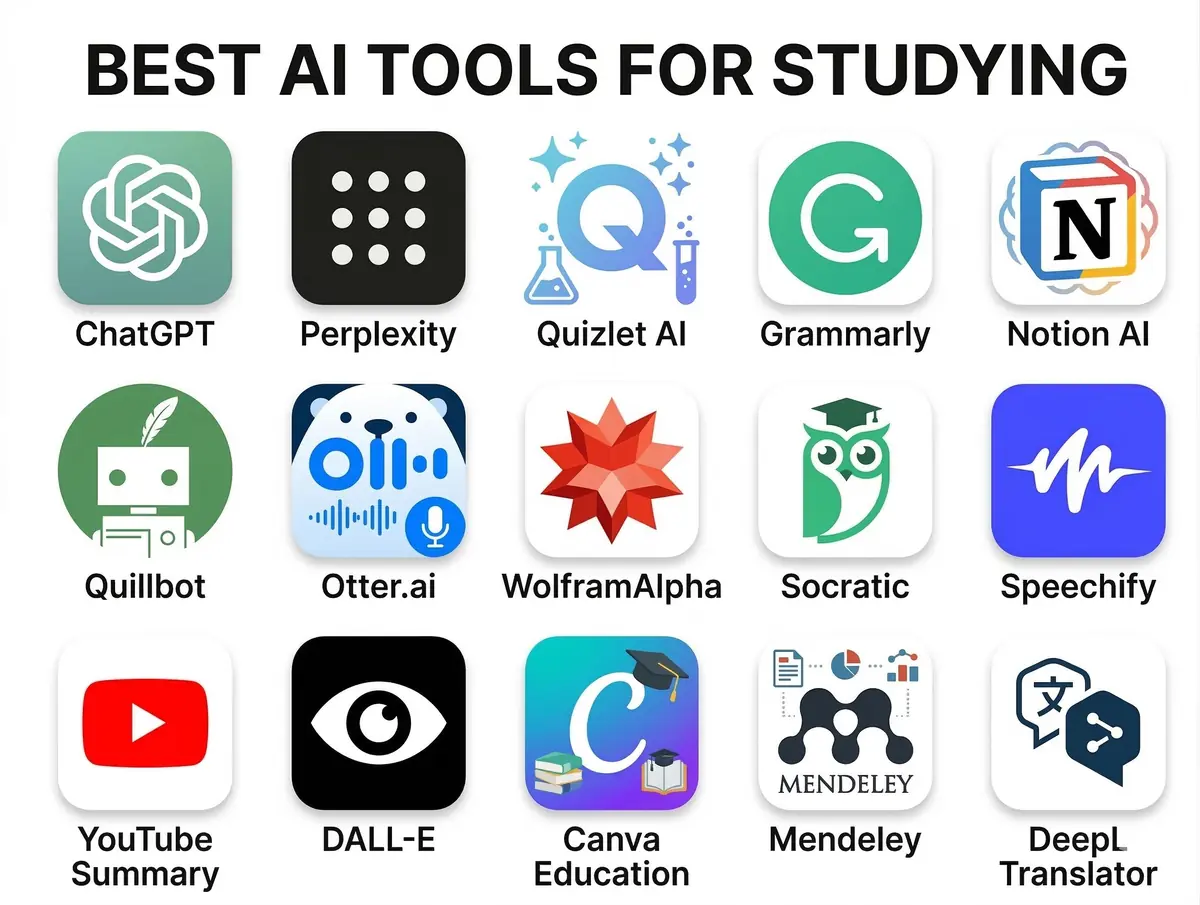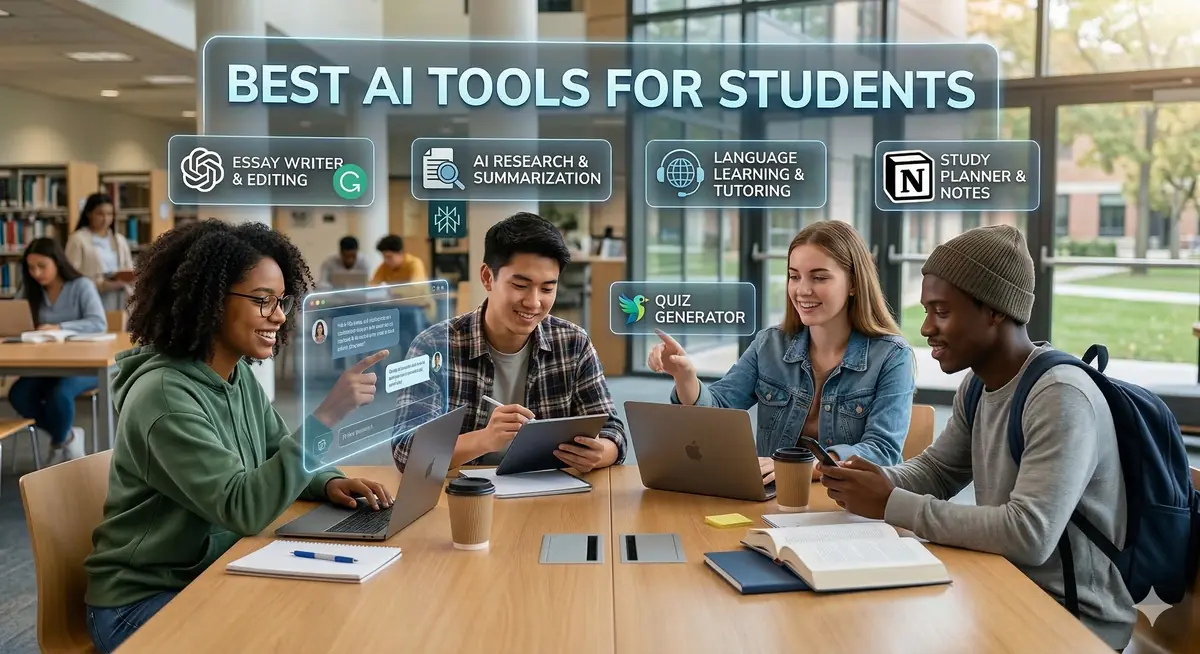
The academic landscape is undergoing a profound transformation, with artificial intelligence emerging as a pivotal force. For students seeking to optimize their study habits, streamline complex tasks, and gain a competitive edge, understanding and leveraging the right AI technologies is no longer a luxury but a necessity. This comprehensive guide explores an array of powerful and free AI tools for students designed to empower learning, enhance productivity, and support academic excellence across various disciplines. From cutting-edge research assistants to intuitive writing aids, these intelligent platforms are reshaping how students interact with knowledge, prepare for assessments, and tackle intricate assignments, ultimately empowering learning and transforming academia for the better.
- What Are Free AI Tools for Students?
- How AI Tools Revolutionize Student Learning
- Key Categories of Free AI Tools for Students
- Real-World Applications: Student Success Stories
- The Pros and Cons of Integrating AI into Student Life
- Future Outlook: The Evolving Landscape of AI in Education
- Conclusion: Empowering Education with Free AI Tools for Students
- Frequently Asked Questions
- Further Reading & Resources
What Are Free AI Tools for Students?
At its core, artificial intelligence (AI) refers to the simulation of human intelligence in machines that are programmed to think like humans and mimic their actions. In the context of education, free AI tools for students are software applications, platforms, or online services that utilize AI algorithms to assist learners with a wide range of academic tasks, without incurring any cost. These tools often employ machine learning, natural language processing (NLP), computer vision, and predictive analytics to provide intelligent support that augments traditional learning methods.
Think of AI tools as digital co-pilots that can help navigate the vast seas of information, refine written arguments, or even personalize study paths. They are designed to augment human capabilities, not replace them, by automating repetitive tasks, offering instant feedback, and providing insights that might otherwise be difficult to uncover. From generating summaries of lengthy articles to checking grammar and style, or even assisting with complex coding problems, these tools offer accessible avenues for students to enhance their academic output and understanding. The "free" aspect is particularly crucial, as it democratizes access to advanced technological assistance for students regardless of their financial background, fostering a more equitable educational environment.
How AI Tools Revolutionize Student Learning
The integration of AI into educational practices marks a significant paradigm shift, offering unprecedented opportunities for students to engage with their studies in more effective and efficient ways. These tools are not merely technological novelties; they are becoming indispensable components of a modern student's toolkit, reshaping every facet of the learning journey from initial research to final project submission.
Enhancing Research and Information Gathering
One of the most time-consuming aspects of academic life is research. Traditionally, students would spend hours sifting through libraries, databases, and websites, trying to identify relevant sources and extract key information. AI tools dramatically accelerate this process. They can quickly scan vast amounts of data, identify patterns, summarize complex texts, and even suggest related articles or studies that a human might overlook. For instance, an AI research assistant can read dozens of scientific papers in minutes, pulling out the most pertinent findings, methodologies, and conclusions, thus significantly reducing the initial information overload. This capability allows students to focus more on critical analysis and synthesis rather than just data collection, fostering deeper engagement with the subject matter.
Boosting Writing and Editing Efficiency
Writing is a cornerstone of academic success, yet it often presents significant challenges, from structuring arguments to perfecting grammar and style. AI-powered writing assistants act as intelligent editors, proofreaders, and even brainstorming partners. They can identify grammatical errors, suggest stylistic improvements, check for plagiarism, and even help students overcome writer's block by generating ideas or outlines. For students learning a new language, these tools can provide real-time feedback on sentence construction and vocabulary usage, making the writing process less daunting. The ability to receive instant, objective feedback on written work empowers students to produce higher-quality essays, reports, and dissertations with greater confidence and efficiency. For more insights on leveraging AI for academic success, explore our guide on unlocking academic success with AI tools for homework and assignments.
Personalizing Learning Experiences
Every student learns differently, at their own pace and with unique strengths and weaknesses. Traditional education systems, with their standardized curricula, often struggle to cater to these individual needs. AI tools, however, excel at personalization. Through adaptive learning platforms, AI can analyze a student's performance, identify areas where they struggle, and then tailor content, exercises, and explanations specifically to address those gaps. For example, an AI tutor can provide extra practice problems in algebra for a student who needs more help in that area, while allowing another student to move ahead to more advanced topics. This personalized approach fosters deeper understanding, maintains engagement, and optimizes learning outcomes for each individual, creating a more effective and enjoyable educational path.
Streamlining Organization and Productivity
Beyond direct learning, AI also offers powerful solutions for managing the organizational demands of student life. Students juggle multiple courses, assignments, deadlines, and extracurricular activities. AI-powered scheduling tools can help manage calendars, prioritize tasks, and send timely reminders. Note-taking applications enhanced with AI can automatically transcribe lectures, organize notes by topic, and even highlight key information. Furthermore, tools that help manage references and citations can save countless hours and prevent common academic pitfalls, ensuring academic integrity. By automating mundane administrative tasks, AI frees up valuable time and mental energy, allowing students to dedicate more focus to their core academic pursuits and personal well-being.
Key Categories of Free AI Tools for Students
The landscape of AI tools available to students is rapidly expanding, with new applications emerging constantly. These tools can be broadly categorized based on their primary function, offering specialized assistance across various academic domains.
AI-Powered Writing Assistants
Writing assistants are perhaps one of the most widely adopted categories of AI tools for students, given the universal requirement for strong writing skills in academia. These tools go beyond basic spell-checking to offer sophisticated analysis of syntax, style, tone, and coherence, acting as a personal editorial guide.
- Grammarly (Free Version): This widely popular tool offers real-time grammar, spelling, punctuation, and clarity suggestions across various platforms. While the premium version unlocks advanced features, the free version is robust enough to significantly improve the quality of student writing, catching common errors and suggesting more concise phrasing. It seamlessly integrates with browsers and applications, providing immediate feedback.
- QuillBot (Free Version): QuillBot specializes in paraphrasing and summarizing. Students can input text and have it rephrased in different styles (e.g., standard, fluency, creative), which is invaluable for avoiding plagiarism and understanding complex concepts from different angles. It also offers a grammar checker and summarizer in its free tier, making it a versatile tool for various writing needs.
- Hemingway Editor (Web Version): Hemingway Editor helps improve the readability and clarity of writing by highlighting complex sentences, instances of passive voice, and unnecessary adverbs. It doesn't use AI in the same generative way as others, but its algorithms for identifying readability issues are immensely helpful for students aiming for clear, concise prose, thereby enhancing the impact of their arguments.
Research and Summarization Tools
Navigating vast amounts of information is a challenge AI is uniquely suited to address. These tools help students quickly get to the essence of lengthy articles and find relevant data, accelerating the research phase of any project.
- Elicit: While primarily a research assistant for scientific papers, Elicit uses AI to find relevant papers, extract key information (like methodology or outcomes), and summarize findings. It can answer research questions using information from academic literature, making literature reviews significantly faster and more comprehensive.
- Semantic Scholar: This free, AI-powered academic search engine helps students discover and understand scientific literature. Semantic Scholar uses machine learning to identify the most impactful papers, extract key phrases, and offer succinct summaries, allowing for more efficient exploration of research topics and providing a higher-level overview.
- ChatGPT / Gemini (Free Tiers): General-purpose large language models like ChatGPT and Google Gemini can be used to summarize articles, explain complex topics, and even brainstorm research questions. Students can paste in text and ask for summaries in a specific length or format, or query them about specific concepts to gain a quick understanding, serving as an on-demand knowledge assistant.
Language Learning & Translation
For students studying foreign languages or those whose native language is not the language of instruction, AI offers powerful support, breaking down language barriers and enhancing linguistic proficiency.
- Duolingo (Free Version): While not a traditional "tool" in the academic sense, Duolingo's gamified approach to language learning uses AI to adapt lessons to a user's progress and learning style, making it an excellent supplementary resource for language students. It offers a structured and engaging way to build vocabulary and grammar skills.
- Google Translate: An indispensable tool for quick translations of words, phrases, and even entire documents. While Google Translate is not perfect, it provides quick understanding of foreign language texts and can aid in basic communication, making international sources more accessible.
- DeepL Translator (Free Version): Often praised for its nuanced and natural-sounding translations, DeepL Translator uses advanced neural networks to provide high-quality translations for various languages, surpassing many competitors for contextual accuracy in its free tier, which is crucial for academic work.
Math and Science Problem Solvers
Tackling complex equations and scientific concepts can be daunting. AI tools can provide step-by-step solutions and explanations, demystifying challenging subjects and fostering a deeper understanding.
- Photomath: By simply taking a picture of a math problem, Photomath provides step-by-step solutions and explanations for a wide range of mathematical concepts, from arithmetic to calculus. This visual input method makes it incredibly user-friendly for students struggling with homework, acting as a personal math tutor.
- Wolfram Alpha (Computational Knowledge Engine): While not exclusively AI, Wolfram Alpha uses its vast computational knowledge base to answer factual queries and solve mathematical problems across numerous scientific and engineering fields. It can show steps for many solutions, making it a powerful learning tool for understanding underlying principles.
- Symbolab (Free Features): Symbolab offers a suite of calculators for algebra, calculus, matrices, and more. It provides step-by-step solutions for a broad spectrum of mathematical problems, helping students understand the process rather than just getting the answer, thus reinforcing learning.
Presentation and Design Tools
Creating engaging presentations and visual aids is crucial for many academic projects. AI can assist in the design process, ensuring professional and impactful visual communication without requiring extensive design skills.
- Canva (Free Version): While primarily a graphic design tool, Canva incorporates AI features to suggest layouts, color palettes, and even generate design elements. Its drag-and-drop interface and vast library of templates, accessible in the free version, allow students to create professional-looking presentations, posters, and infographics with ease.
- Beautiful.ai (Free Trial/Limited Features): Beautiful.ai uses AI to automatically apply design best practices, ensuring presentations look polished and professional without manual effort. While the full features are paid, students can often access limited functionalities or trial periods that can be helpful for specific projects, significantly elevating the visual quality of their work.
Coding and Development Support
For computer science students or those in STEM fields requiring coding, AI tools can be invaluable debugging assistants and code generators, accelerating learning and development.
- GitHub Copilot (Free for Students): GitHub Copilot, powered by OpenAI Codex, offers real-time code suggestions and auto-completion as students write. It can generate entire functions based on comments or existing code, significantly speeding up the development process and helping students learn best practices. (Note: Requires verification of student status, but then it's free).
- Replit (Free Version): Replit is an online IDE that offers collaborative coding and integrates AI tools for code completion, debugging, and even generating project ideas. It provides a powerful environment for students to learn and practice programming in various languages, fostering a hands-on approach to software development.
Real-World Applications: Student Success Stories
The impact of free AI tools for students is not merely theoretical; it's tangible, with countless examples of students leveraging these technologies to achieve academic success and unlock their full potential.
Consider the case of Anya, a history major grappling with an extensive research paper on ancient Roman economic systems. Instead of spending weeks manually sifting through digitized texts, Anya utilized an AI research assistant. Within days, the tool had identified and summarized dozens of relevant academic articles, highlighting key arguments and data points. This allowed Anya to dedicate more time to critical analysis and developing her unique thesis, ultimately leading to a well-structured and deeply insightful paper that earned her top marks and positive recognition from her professors.
Similarly, Ben, an international student whose native language was not English, faced constant anxiety about his written assignments. He relied heavily on the free version of a popular AI writing assistant. The tool not only corrected his grammatical errors but also provided suggestions for clearer sentence structures and more appropriate vocabulary, significantly improving the fluency and professionalism of his essays. "It was like having a personal English tutor available 24/7," Ben remarked, attributing his improved grades and increased confidence to the AI's assistance, which helped him articulate his ideas more effectively.
In the realm of STEM, Maria, a computer science student struggling with a complex programming assignment, found her solution in an AI-powered coding tool. When faced with persistent bugs that stumped her, the AI suggested potential fixes and even provided alternative implementations, helping her not only debug her code faster but also understand the underlying principles better. This hands-on, guided problem-solving experience solidified her understanding of advanced algorithms and improved her coding efficiency.
These anecdotes underscore a common theme: free AI tools are democratizing access to high-level academic support, enabling students from diverse backgrounds and with varying needs to excel. They are transforming academic bottlenecks into opportunities for deeper learning and greater achievement, fostering an environment where innovation and accessibility go hand-in-hand.
The Pros and Cons of Integrating AI into Student Life
While the benefits of free AI tools for students are considerable, a balanced perspective requires acknowledging both their advantages and potential drawbacks. Understanding these aspects is crucial for students to use AI responsibly and effectively.
Advantages
- Enhanced Efficiency and Productivity: AI automates repetitive tasks like summarization, grammar checks, and data extraction, freeing up students' time to focus on higher-order thinking and critical analysis. Students can complete assignments faster and more accurately, optimizing their study schedules.
- Personalized Learning: AI adapts to individual learning styles and paces, offering customized content and feedback that can address specific weaknesses and reinforce strengths, leading to more effective learning outcomes. This is particularly beneficial for diverse student populations, including those with unique learning requirements.
- Improved Quality of Work: Writing assistants can elevate the quality of essays and reports by identifying errors and suggesting improvements in style, clarity, and coherence. Research tools provide access to broader and more relevant information, leading to better-informed arguments and more robust academic contributions.
- Accessibility and Inclusivity: Many free AI tools help students with learning disabilities (e.g., text-to-speech, speech-to-text) or those who are non-native speakers, by providing accessible ways to engage with academic content and express their ideas. The "free" aspect ensures these benefits are available to all, regardless of economic status, promoting educational equity.
- Skill Development: Using AI tools can also help students develop valuable digital literacy skills, understanding how to interact with and leverage advanced technologies, which is crucial in today's increasingly AI-driven world. This prepares them for future careers where AI proficiency will be highly valued.
Disadvantages
- Over-reliance and Reduced Critical Thinking: There's a risk that students may become overly dependent on AI for tasks like writing or problem-solving, potentially stifling the development of their own critical thinking, analytical, and problem-solving skills. If an AI always summarizes, a student might lose the skill of effective reading comprehension and critical analysis.
- Accuracy and Bias Concerns: AI models, especially those trained on vast datasets, can sometimes generate inaccurate or biased information. Students must remain vigilant and critically evaluate the output of these tools, cross-referencing information to ensure reliability. The "hallucination" phenomenon in LLMs, where AI invents facts, is a known issue.
- Ethical Considerations and Plagiarism: The ease with which AI can generate text raises serious ethical questions regarding academic integrity and plagiarism. While tools like QuillBot are for paraphrasing, using AI to generate entire essays without proper citation or original thought constitutes academic dishonesty. Educators face the challenge of distinguishing AI-generated content from original student work.
- Data Privacy and Security: Using online AI tools often involves submitting personal data or academic work to third-party servers. Students need to be aware of the privacy policies and security measures of these platforms to protect their sensitive information from potential breaches or misuse.
- Digital Divide: While many tools are free, access to reliable internet and appropriate devices (laptops, smartphones) is still required. This can exacerbate existing inequalities for students in underserved regions or communities who lack these essential resources, limiting their access to AI benefits.
- Lack of Human Nuance: While impressive, AI still lacks true human understanding, empathy, and contextual nuance. It cannot fully replicate the benefits of personalized feedback from a human instructor or the creative spark of human-to-human collaboration, which are vital for holistic development.
Future Outlook: The Evolving Landscape of AI in Education
The rapid advancement of artificial intelligence ensures that its role in education will continue to grow and evolve dramatically. We are likely just at the cusp of understanding AI's full potential to reshape learning, making it more dynamic, personalized, and engaging.
One significant trend will be the development of more sophisticated and specialized AI tutors. Imagine an AI that not only identifies your weak points but proactively provides engaging, interactive lessons tailored precisely to your cognitive style, adapting in real-time based on your emotional state and focus levels, much like a highly perceptive human tutor. These tutors will move beyond simple problem-solving to fostering deeper conceptual understanding and critical thinking through Socratic methods, encouraging students to ask probing questions and explore complex ideas.
Furthermore, AI is expected to become even more deeply integrated into existing learning management systems (LMS) like Canvas or Moodle. This integration will allow AI to track student progress across multiple courses, predict potential academic difficulties, and recommend interventions or resources before problems escalate. It could also automate grading for certain types of assignments, providing instant, consistent feedback to students and freeing up instructors' time for more meaningful interactions and individualized mentorship.
The democratization of AI will also continue, with more powerful and open-source models becoming accessible to students and educators. This will empower students not just to use AI, but also to understand and build their own AI applications, fostering a new generation of innovators and problem-solvers. Educational institutions may also adopt AI at an administrative level to optimize resource allocation, student advising, and curriculum development, creating a more efficient and responsive learning environment. For a broader perspective on how AI is transforming various sectors, read about the latest AI technologies shaping our future.
However, this future also necessitates ongoing dialogue about ethical AI development, data governance, and the evolving definition of academic integrity. As AI becomes more capable, the emphasis will shift from rote memorization and procedural tasks to fostering creativity, critical thinking, complex problem-solving, and emotional intelligence—skills that AI currently struggles to replicate. The future of education with AI is one of collaboration, where human intellect is augmented and elevated by intelligent machines, preparing students for a world where interacting with AI is a fundamental skill.
Conclusion: Empowering Education with Free AI Tools for Students
The advent of AI has ushered in an exciting era for education, offering unprecedented opportunities for students to enhance their learning experience. From sophisticated writing assistants and powerful research tools to personalized language tutors and advanced problem solvers, free AI tools for students are democratizing access to cutting-edge technology. These intelligent platforms empower students to manage their workload more efficiently, improve the quality of their academic output, and engage with complex subjects in new, more intuitive ways.
While the integration of AI into student life comes with its own set of challenges, including concerns about over-reliance, ethical considerations, and data privacy, the benefits of these tools far outweigh the drawbacks when used judiciously and with critical awareness. The future of education will undoubtedly see even greater synergy between human intellect and artificial intelligence, transforming learning into a more personalized, efficient, and ultimately, more enriching journey. By embracing these free AI tools, students can unlock their full academic potential and prepare themselves for an increasingly intelligent world, equipped with the skills and knowledge to thrive.
Frequently Asked Questions
Q: How do free AI tools help students with research?
A: Free AI tools like Elicit and Semantic Scholar can accelerate research by summarizing lengthy articles, identifying key patterns, and suggesting relevant academic sources. This allows students to spend less time on information gathering and more time on critical analysis and synthesis of ideas.
Q: Can free AI writing assistants detect plagiarism?
A: Some free AI writing assistants, like QuillBot, offer basic plagiarism checking features or paraphrasing tools designed to help students rephrase content. However, these should be used as supplementary aids, and students must always ensure their work is original and properly cited to maintain academic integrity.
Q: Are there ethical concerns when using AI tools for academic work?
A: Yes, ethical concerns include the risk of over-reliance on AI, which could stifle a student's critical thinking skills, and the potential for academic dishonesty if AI-generated content is submitted as original work without proper attribution. Data privacy and the accuracy of AI outputs are also important considerations for responsible use.