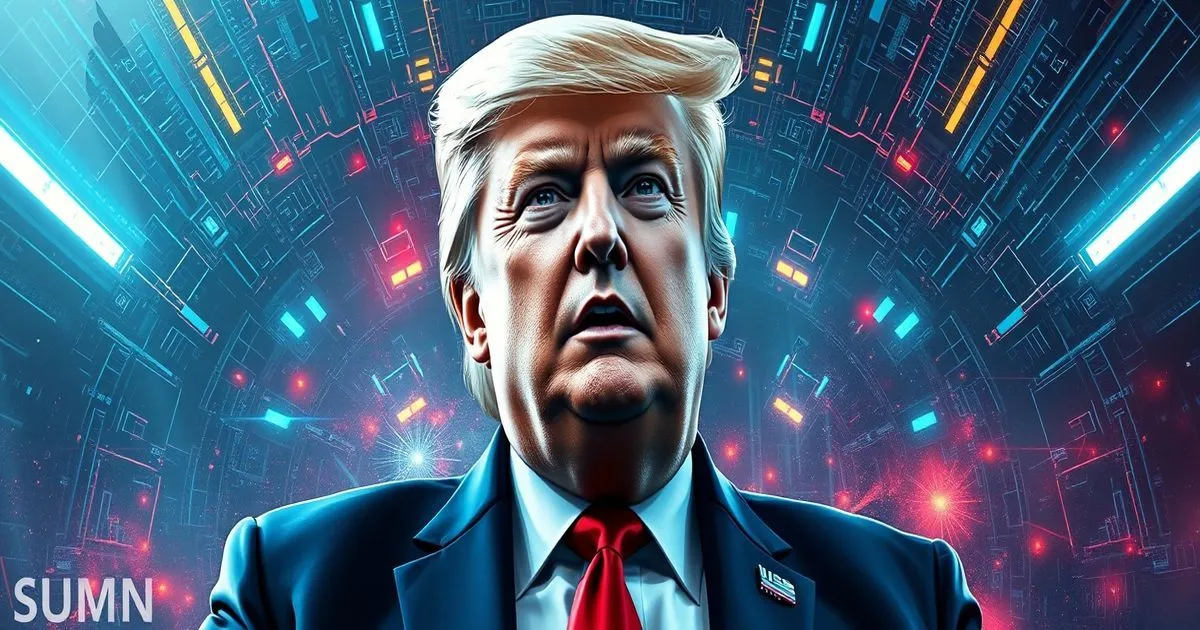
Donald Trump: A Force Reshaping American Politics
Donald John Trump, a figure synonymous with real estate, media, and an undeniable political phenomenon, has once again ascended to the highest office in the United States. His journey from a prominent New York businessman and television personality to the 45th and now 47th President has been marked by a distinctive style and a profound impact on the nation's political landscape.
Born in Queens, New York, Trump initially forged a career as a real estate developer, following in his father's footsteps. His brand grew through ambitious projects and later, through his role as host and producer of the popular reality television show, The Apprentice, which significantly bolstered his public fame. This extensive background in business and media, rather than traditional politics or military service, set the stage for his unconventional entry into the political arena.
The Path to the Presidency: First Term and Key Policies
Trump's political aspirations became tangible with his successful 2016 presidential campaign, where he ran as a political outsider and secured the presidency against Hillary Clinton. His first term, from January 20, 2017, to January 20, 2021, was characterized by bold policy shifts and a commitment to his "America First" agenda.
Among his administration's significant domestic actions were the passage of the Tax Cuts and Jobs Act of 2017, which brought substantial income and corporate tax reductions, and efforts towards deregulation across various sectors. He appointed three conservative justices to the Supreme Court: Neil Gorsuch, Brett Kavanaugh, and Amy Coney Barrett, fundamentally reshaping the judiciary. Immigration remained a signature issue, leading to policies like the expansion of the Mexico-United States border wall, a travel ban on several Muslim-majority countries, and a family separation policy.
In foreign policy, Trump pursued an "America First" approach, characterized by unilateral actions and a re-evaluation of traditional alliances. His administration withdrew from the Paris Agreement on climate change and the Iran nuclear deal, imposed tariffs that triggered retaliatory measures, and brokered the Abraham Accords, normalizing relations between Israel and several Arab nations.
The Historic Return: 2024 Election and Second Term
Following his defeat in the 2020 election to Joe Biden, Donald Trump launched another presidential campaign, formally announcing his candidacy on November 15, 2022. His campaign in 2024 reiterated a focus on his "America First" agenda, emphasizing sharply curtailed immigration through mass deportations, an isolationist foreign policy, and critiques of the economy under the previous administration.
In a truly unprecedented turn of events, Donald Trump successfully secured the Republican nomination and, on November 5, 2024, was elected the 47th President of the United States, alongside his running mate, Senator J.D. Vance of Ohio. This victory made him only the second U.S. president in history, after Grover Cleveland, to serve non-consecutive terms. Notably, he won all seven swing states and, for the first time in his presidential campaigns, also won the national popular vote with a plurality of 49.8%. Analysis of the 2024 electorate showed a more racially and ethnically diverse voter coalition supporting Trump, including gains among Hispanic, Black, and Asian voters.
President Trump began his second term on January 20, 2025. His early actions and stated priorities reflect a continuation and intensification of his previous administration's themes. As of February 2026, he has signed numerous executive orders aimed at reducing government bureaucracy, enhancing border security, and pursuing "America First" policies in trade and defense. For example, in February 2026, he signed documents imposing a 10% tariff on all countries, following a Supreme Court ruling that struck down some of his previous tariff implementations. His administration has also focused on issues like promoting critical mineral reserves and strengthening national defense.
Enduring Impact on American Politics
Donald Trump's political career has undeniably left an indelible mark on American politics and the Republican Party. Through his campaigns and presidencies, he has profoundly influenced the party's direction, leading to a shift in focus towards populist and nationalist sentiments. His emphasis on personal loyalty and his challenges to established political norms have sparked extensive debate about the nature of democratic governance and the importance of traditions that, while uncodified, are crucial to the system's functioning.
His outspoken nature and willingness to challenge conventional political behavior have made him a constant subject of public attention and a source of deep partisan divisions. The "Trump era" has seen a further widening of the ideological gulf between Republicans and Democrats, reshaping public discourse and engagement.
Conclusion
Donald Trump's political narrative is one of remarkable resilience and continued influence. His return to the White House for a non-consecutive second term underscores his enduring appeal to a significant portion of the American electorate and signals a continued emphasis on the policies and approaches that defined his first presidency. As the 47th President, his second act promises to be as impactful and closely watched as his first, continuing to shape the trajectory of both domestic and international affairs.
Further Reading & Resources
- Donald Trump Biography: https://en.wikipedia.org/wiki/Donald_Trump
- Tax Cuts and Jobs Act of 2017: https://www.congress.gov/bill/115th-congress/house-bill/1
- Abraham Accords: https://www.state.gov/abraham-accords/
- 2024 United States Presidential Election: https://en.wikipedia.org/wiki/2024_United_States_presidential_election
- Grover Cleveland (Non-Consecutive Terms): https://en.wikipedia.org/wiki/Grover_Cleveland