What is Directed Acyclic Graph (DAG)?
A Directed Acyclic Graph (DAG) is a finite directed graph characterized by the total absence of directed cycles, ensuring that every path through the structure follows a unidirectional flow that cannot return to a previously visited node.
In the realm of computer science and discrete mathematics, the DAG serves as a fundamental data structure for representing hierarchical relationships and processing dependencies. Unlike general graphs, where circularity can lead to infinite loops or state-space traps, the DAG enforces a strict topological ordering. This property is mathematically guaranteed if and only if the graph can be topologically sorted—a linear ordering of vertices such that for every directed edge from node $u$ to node $v$, $u$ comes before $v$ in the sequence. By precluding cycles, DAGs provide a robust framework for modeling processes where the outcome of one stage is strictly contingent upon the completion of its predecessors.
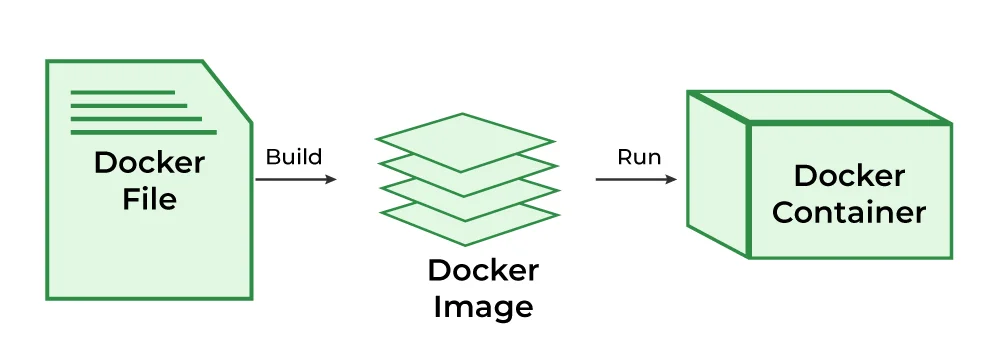
The implementation of DAGs has become ubiquitous in modern computational systems, ranging from build automation tools to advanced distributed ledger technologies. In software engineering, task scheduling and build systems utilize DAGs to resolve dependency chains, ensuring that compiled binaries or containerized services are initialized in the precise order required by their architectural stack. Furthermore, in the field of machine learning, deep learning frameworks construct computational graphs as DAGs to facilitate backpropagation, allowing the system to efficiently calculate gradients across complex, multi-layered neural network architectures.
Key Characteristics
- Acyclicity: The fundamental constraint that prevents any path from forming a closed loop, thereby ensuring the termination of path-traversal algorithms.
- Topological Ordering: The ability to arrange nodes in a linear sequence such that all directed edges point from earlier nodes to later ones.
- Reachability: A directed path exists between two nodes $u$ and $v$ if and only if $v$ is functionally dependent on $u$ within the system’s logic.
- Connectivity: Unlike trees, DAGs allow for "fan-out" and "fan-in" topologies, where a single node may have multiple parent nodes.
Why It Matters
The DAG is the architectural bedrock of modern parallel processing and high-availability systems. By enabling the identification of independent operations that can run concurrently, DAGs significantly accelerate the performance of massive-scale data pipelines. Beyond infrastructure, the structure has geopolitical implications in the governance of decentralized finance (DeFi), where DAG-based distributed ledgers offer an alternative to traditional linear blockchains. This shift allows for asynchronous transaction validation, reducing latency and increasing network throughput, which is essential for sovereign states and private actors looking to deploy resilient, scalable, and censorship-resistant digital ledgers in an increasingly volatile global landscape.