The potential death of Iran's Supreme Leader Ali Khamenei would undeniably mark a pivotal moment for the Islamic Republic, fundamentally reshaping its political landscape and sending ripples across the globe. As the second and longest-serving Supreme Leader, his departure would initiate a complex succession process, testing the resilience of Iran’s unique clerical governance structure. This anticipated event, therefore, represents a crucial crossroads for the nation, with profound implications for its domestic trajectory, regional posture, and international relations. This analysis delves into the intricate mechanisms of succession, the key players involved, and the far-reaching impact such a transition would entail.
- Understanding the Supreme Leader's Pivotal Role and Khamenei's Legacy
- The Intricate Process of Succession: Who Decides and How?
- Domestic Impact: Stability, Reform, or Further Repression?
- Regional Ramifications: Reshaping the Middle East's Geopolitical Landscape
- International Repercussions: Nuclear Deal, Sanctions, and Global Relations
- Conclusion: A Defining Moment for Iran and Beyond
- Frequently Asked Questions
- Further Reading & Resources
Understanding the Supreme Leader's Pivotal Role and Khamenei's Legacy
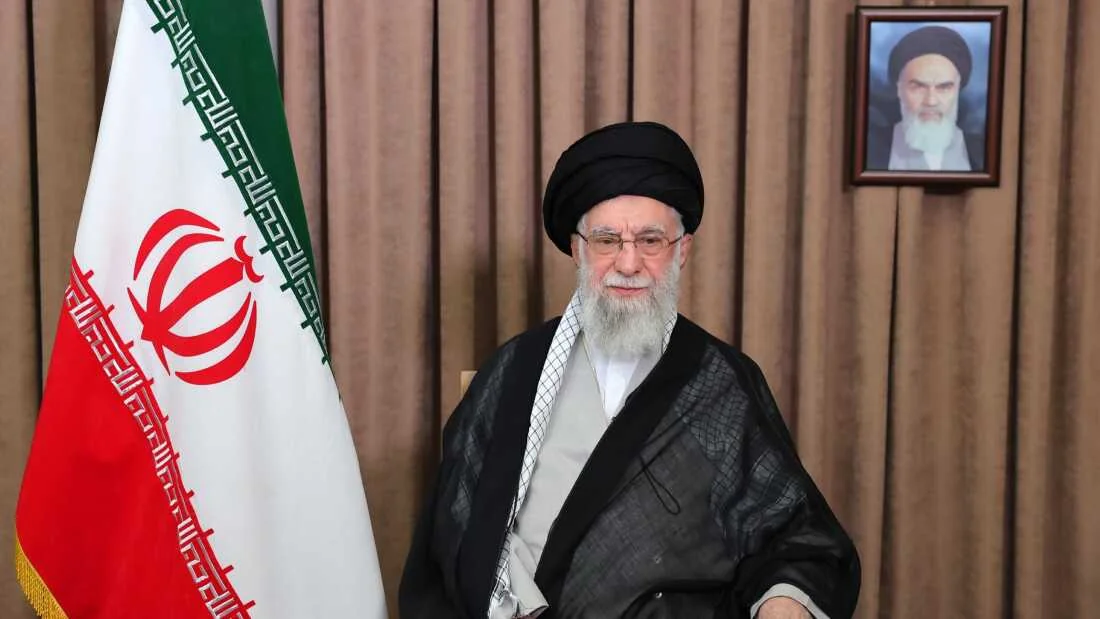
The position of Supreme Leader in Iran, officially known as the "Vali-e Faghih" or Guardian Jurist, is the ultimate religious and political authority in the country. This role was established by the 1979 Iranian Revolution, with Ayatollah Ruhollah Khomeini as the inaugural leader. The Supreme Leader holds immense power, overseeing all major state institutions, setting the overall direction of domestic and foreign policy, and serving as commander-in-chief of the armed forces, including the Islamic Revolutionary Guard Corps (IRGC). Their authority extends to approving presidential candidates and judicial appointments, making their influence pervasive across all aspects of Iranian life.
Ali Khamenei ascended to this powerful position in 1989 following the death of Ayatollah Khomeini. Initially considered a pragmatic choice, Khamenei consolidated his authority over decades, navigating internal political factions and external pressures. His tenure has been marked by a strong emphasis on revolutionary principles, resistance to Western influence, and the development of Iran's nuclear program. He has overseen periods of significant social change, economic challenges, and persistent geopolitical tensions, particularly with the United States and Israel. These tensions are part of a broader regional dynamic, with ongoing war concerns and regional stability challenges frequently debated. Understanding the depth of his legacy is crucial to comprehending the magnitude of the transition that would follow the death of Iran's Supreme Leader Ali Khamenei.
The Architect of Modern Iran's Direction
Khamenei's leadership has been characterized by a dual approach: maintaining the foundational principles of the Islamic Revolution while adapting to contemporary challenges. He has skillfully balanced various power centers within Iran, including the presidential office, the parliament, the judiciary, and crucially, the IRGC. His decrees and pronouncements have shaped Iran's stance on human rights, economic policy, and its regional proxy networks. The very structure of Iran's foreign policy, often described as an "Axis of Resistance," is largely a product of his strategic vision and enduring leadership. He is considered to have made Iran's nuclear capabilities central to its strategy for national security and deterrence.
The Intricate Process of Succession: Who Decides and How?
The succession of the Supreme Leader is not a simple electoral process but a meticulously designed system involving a powerful clerical body: the Assembly of Experts. This 88-member assembly, composed of senior clerics, is constitutionally tasked with selecting the next Supreme Leader. Their duties include monitoring the current Supreme Leader to ensure they maintain the necessary qualifications and, in the event of their death, resignation, or incapacitation, electing a successor. The constitution stipulates that the chosen leader must possess specific qualifications, including religious scholarship (ijtihad), political acumen, and administrative competence.
The Role of the Assembly of Experts
The Assembly of Experts itself is elected by popular vote every eight years, though candidates are vetted by the Guardian Council, another powerful body that ensures compliance with Islamic and revolutionary criteria. This vetting process significantly narrows the field, typically ensuring that only candidates aligned with the ruling establishment can run. When a vacancy for the Supreme Leader arises, the Assembly convenes behind closed doors to deliberate. The process involves identifying candidates who meet the stringent religious and political qualifications, followed by a vote. While the proceedings are secret, the outcome carries immense weight and is considered binding. The Assembly has only overseen one transition prior to this, in 1989 after Khomeini's death, when Ali Khamenei was chosen. A comprehensive overview of such historical and future transitions can be found in our article on Iran's Supreme Leader Ayatollah Ali Khamenei's Death and Succession.
Potential Successors: Names in the Discussion
While it is impossible to predict the future with certainty, several prominent figures are frequently mentioned in discussions about potential successors. These individuals typically hold significant positions within the clerical establishment or key state institutions, possessing a track record of loyalty to the Supreme Leader and the revolutionary ideals. Speculation often centers on individuals with strong religious credentials, a history of political engagement, and demonstrable support from powerful factions within the Iranian establishment, including the IRGC and influential seminaries in Qom. Among those frequently cited are figures like Mojtaba Khamenei (the Supreme Leader's son), Ayatollah Alireza Arafi, Ayatollah Mohsen Araki, Ayatollah Gholam Hossein Mohseni Ejei, and Ayatollah Hashem Hosseini Bushehri. The selection is a complex interplay of religious authority, political maneuvering, and institutional backing.
Domestic Impact: Stability, Reform, or Further Repression?
The death of Iran's Supreme Leader Ali Khamenei would undoubtedly unleash a period of intense internal political maneuvering. The initial phase would likely prioritize stability, with the Assembly of Experts moving swiftly to select a new leader to prevent any power vacuum. However, the long-term domestic impact is a subject of much debate among analysts. One perspective suggests that a new leader, particularly one with strong ties to the IRGC or conservative factions, might further entrench hardline policies, potentially leading to increased social repression and restrictions on civil liberties.
Conversely, some argue that a new leader, even a hardliner, might seek to consolidate their authority by making certain concessions or pursuing different domestic policies to gain broader popular support. The possibility of internal divisions and challenges to the authority of the new Supreme Leader, particularly from reformist elements or a disgruntled populace, also exists. Iran has a history of popular protests, and any perception of an illegitimate or highly unpopular succession could ignite widespread discontent, further exacerbating internal tensions. The successor’s approach to economic challenges, youth unemployment, and social freedoms will be critical in shaping domestic stability.
Economic and Social Implications
Economically, the transition could introduce a period of uncertainty, potentially affecting foreign investment and domestic market stability. The new leader's economic philosophy, particularly regarding state control versus liberalization, would significantly influence Iran's future economic trajectory. Socially, the post-Khamenei era might see renewed debates over personal freedoms, women's rights, and the role of religion in daily life. Depending on the successor's outlook, there could be either a tightening or a slight relaxation of existing social strictures, although radical shifts are unlikely given the institutionalized nature of the current system. The regime has faced mass anti-government demonstrations and a severe erosion of legitimacy due to economic hardship and repression.
Regional Ramifications: Reshaping the Middle East's Geopolitical Landscape
Iran's role in the Middle East is central to the region's geopolitical dynamics, and the Supreme Leader's foreign policy vision is paramount. The passing of Ali Khamenei would inevitably raise questions about the continuity of Iran's regional strategy, particularly its support for various non-state actors and its confrontation with rivals like Saudi Arabia and Israel. A new Supreme Leader might either intensify these policies, seeking to project strength during a transition, or subtly alter them based on their own strategic priorities and perceived national interests.
Iran maintains a complex network of alliances and proxy groups across the Middle East, including Hezbollah in Lebanon, various Iraqi Shiite militias, and the Houthi movement in Yemen. These groups are vital instruments of Iranian foreign policy and key components of its regional influence. Any change in leadership could affect the level of support, coordination, and strategic direction provided to these proxies, potentially altering the balance of power in ongoing conflicts and disputes. Neighboring countries, particularly those with significant Shiite populations or those directly engaged in proxy conflicts with Iran, would closely monitor the succession for any signs of policy shifts. Iran's use of proxies dates back to the 1980s.
Stability and Conflict in a Post-Khamenei Middle East
The future of regional stability could hinge on whether the new leader maintains Khamenei's doctrine of "resistance" or seeks a more conciliatory approach. Increased assertiveness could escalate existing tensions and conflicts, while a more pragmatic stance might open avenues for de-escalation or even dialogue. However, given the deep ideological roots of Iran's foreign policy and the influence of institutions like the IRGC, a dramatic departure from established regional strategy is unlikely in the short term. Instead, subtle adjustments in emphasis or tactics are more probable as the new leader consolidates their position.
International Repercussions: Nuclear Deal, Sanctions, and Global Relations
Internationally, the death of Iran's Supreme Leader Ali Khamenei would place renewed scrutiny on Iran's nuclear program and its relations with global powers, especially the P5+1 nations (China, France, Russia, the United Kingdom, the United States, plus Germany). The Joint Comprehensive Plan of Action (JCPOA), or Iran nuclear deal, was a landmark agreement, and its future has been a contentious issue. A new Supreme Leader would inherit the ongoing challenges of U.S. sanctions, European attempts at engagement, and the persistent question of Iran's nuclear ambitions.
The successor's stance on the nuclear program will be critical. They could choose to maintain the current trajectory of incremental expansion, push for a revival of the JCPOA under new terms, or even pursue a more aggressive nuclear posture, depending on their strategic calculus. Global powers would closely watch for signals regarding Iran's willingness to negotiate, its adherence to international commitments, and its overall foreign policy orientation. The United Nations, the International Atomic Energy Agency (IAEA), and various regional organizations would all be affected by the shift in Iranian leadership.
U.S. and European Policy Adjustments
For the United States and European nations, the transition period would necessitate careful policy re-evaluation. A new leader could present opportunities for renewed diplomatic engagement or, conversely, lead to heightened confrontation. The U.S. policy of "maximum pressure" or attempts at dialogue would need to be recalibrated to account for the new leadership and their ideological leanings. This re-evaluation comes at a time when figures like Donald Trump are considering unprecedented second acts on the global stage, potentially adding another layer of complexity to future negotiations. European efforts to preserve the nuclear deal and maintain channels of communication would also face new hurdles and opportunities. The stability of global energy markets, given Iran's oil reserves, could also be a concern during any period of uncertainty.
Conclusion: A Defining Moment for Iran and Beyond
The potential death of Iran's Supreme Leader Ali Khamenei represents a monumental event, poised to usher in an unpredictable and potentially transformative era for Iran and the broader Middle East. The intricate process of selecting a new Guardian Jurist through the Assembly of Experts will be closely watched for clues about the nation's future direction. Domestically, the transition could either reinforce existing power structures or unleash forces demanding greater change. Regionally, the balance of power and the trajectory of ongoing conflicts could be significantly altered by the new leader's foreign policy choices. Internationally, the world will grapple with the implications for global security, particularly concerning Iran's nuclear program and its relations with major powers. While the precise outcomes remain uncertain, what is clear is that the passing of Iran's long-serving Supreme Leader will be a defining moment, setting the course for the Islamic Republic for decades to come.
Frequently Asked Questions
Q: Who is responsible for selecting Iran's next Supreme Leader?
A: The Assembly of Experts, an 88-member body of senior clerics, is constitutionally tasked with selecting the next Supreme Leader. They are also responsible for monitoring the current leader to ensure they retain the necessary qualifications as outlined in the Iranian constitution.
Q: What qualifications must the next Supreme Leader possess?
A: According to the Iranian constitution, the chosen leader must demonstrate religious scholarship (ijtihad), political acumen, administrative competence, and a commitment to the principles of the Islamic Revolution. Candidates for the Assembly of Experts, which then elects the leader, are vetted by the Guardian Council.
Q: How might the new Supreme Leader impact Iran's nuclear program?
A: The successor's stance on the nuclear program will be crucial. They could choose to maintain the current trajectory of incremental expansion, push for a revival of the JCPOA under new terms, or pursue a more aggressive nuclear posture. Global powers will closely monitor for signals regarding Iran's willingness to negotiate and adhere to international commitments.