China's AI Boom: Viral Models & Global Power Shift Reshaping Tech
The rapid advancement of artificial intelligence (AI) in China, characterized by the emergence of viral models and ambitious national strategies, signifies a profound China's AI Boom: Viral Models & Global Power Shift Reshaping Tech. This burgeoning landscape is not merely a domestic phenomenon; it is actively reconfiguring global technological dominance, economic structures, and geopolitical influence. With substantial government backing and a vibrant private sector, China is strategically positioning itself as a leader in the AI revolution, challenging established Western technological hegemony and promising a future where AI innovations drive significant societal and economic change.
The Dawn of China's AI Powerhouse
China's journey to becoming an AI powerhouse has been swift and strategic, marked by massive investments in research and development, a vast talent pool, and a unique approach to data utilization. The nation's "New Generation Artificial Intelligence Development Plan," unveiled in 2017, articulated a clear vision to make China the world's primary AI innovation center by 2030. This plan has catalyzed an ecosystem ripe for AI innovation, fostering both state-led initiatives and a competitive private sector. The integration of AI into various sectors, from finance and healthcare to urban management and national defense, underscores the breadth of this transformation.
Strategic Investment and Government Support
Beijing's commitment to AI is evident in its substantial financial allocations and policy frameworks. The government has poured billions into AI research, setting up national AI laboratories and incubators, and offering incentives for companies and researchers. This top-down approach ensures a coordinated effort across academic institutions, state-owned enterprises, and private companies. Furthermore, regulatory frameworks, while sometimes viewed as restrictive, also provide a degree of stability and direction for AI development, particularly in areas like data governance and ethical guidelines, though these often align with state interests. The synergy between state planning and market forces creates a formidable engine for AI growth.
A Data-Rich Environment
One of China's significant advantages in the AI race is its immense and accessible data reservoirs. With a vast population and widespread digital adoption across various facets of daily life—from mobile payments and e-commerce to social media and smart cities—Chinese AI companies have access to an unparalleled volume and variety of data. This data serves as the lifeblood for training sophisticated machine learning models, allowing for rapid iteration and improvement of AI algorithms. The sheer scale of data collection and processing capabilities contributes significantly to the accelerated development of advanced AI applications within the country.
China's AI Boom: Viral Models and Breakthrough Innovations
The term "viral models" in the context of China's AI boom refers to both the rapid proliferation and widespread adoption of innovative AI applications, as well as the advanced large language models (LLMs) and generative AI systems that are quickly gaining traction. These models are not only pushing the boundaries of what AI can achieve but are also reshaping user interactions and business operations across the globe.
Leading Chinese Large Language Models (LLMs)
Chinese tech giants are at the forefront of developing powerful LLMs, rivaling those from Western counterparts. Baidu's Ernie Bot, Alibaba's Tongyi Qianwen, and Tencent's Hunyuan are prominent examples, showcasing impressive capabilities in natural language understanding, generation, and complex problem-solving. These models are being integrated into a wide array of products and services, from search engines and cloud computing platforms to enterprise software and consumer applications. The fierce competition among these domestic players drives continuous innovation, leading to rapid advancements in model performance and applicability. For a deeper understanding of the foundational technologies powering these models, readers might explore articles on Transformer Architecture Explained: Self-Attention & More.
Generative AI and Creative Applications
Beyond LLMs, China's generative AI landscape is flourishing. Developers are creating AI tools that can generate high-quality images, videos, music, and even code, democratizing content creation and opening new avenues for creativity and efficiency. These applications are finding homes in industries like entertainment, advertising, and product design, allowing businesses to rapidly prototype ideas and consumers to express themselves in novel ways. The rapid rise and subsequent strategic shifts around such platforms are exemplified by recent events, such as when OpenAI Shuts Down Viral Sora AI Video App Amid Strategic Shift. The widespread adoption of these generative AI tools indicates a paradigm shift in how digital content is produced and consumed, with China playing an increasingly central role in this evolution.
Real-World Impact and Adoption
The practical implementation of these viral models is visible across various sectors. In e-commerce, AI-powered recommendation engines personalize shopping experiences and optimize logistics. In healthcare, AI assists in diagnostics, drug discovery, and personalized treatment plans. Smart city initiatives leverage AI for traffic management, public safety, and environmental monitoring. The rapid integration of AI into these everyday scenarios highlights the practical utility and pervasive influence of China's AI innovations, making them "viral" in their widespread societal and economic impact.
Geopolitical Implications and Global Power Shift
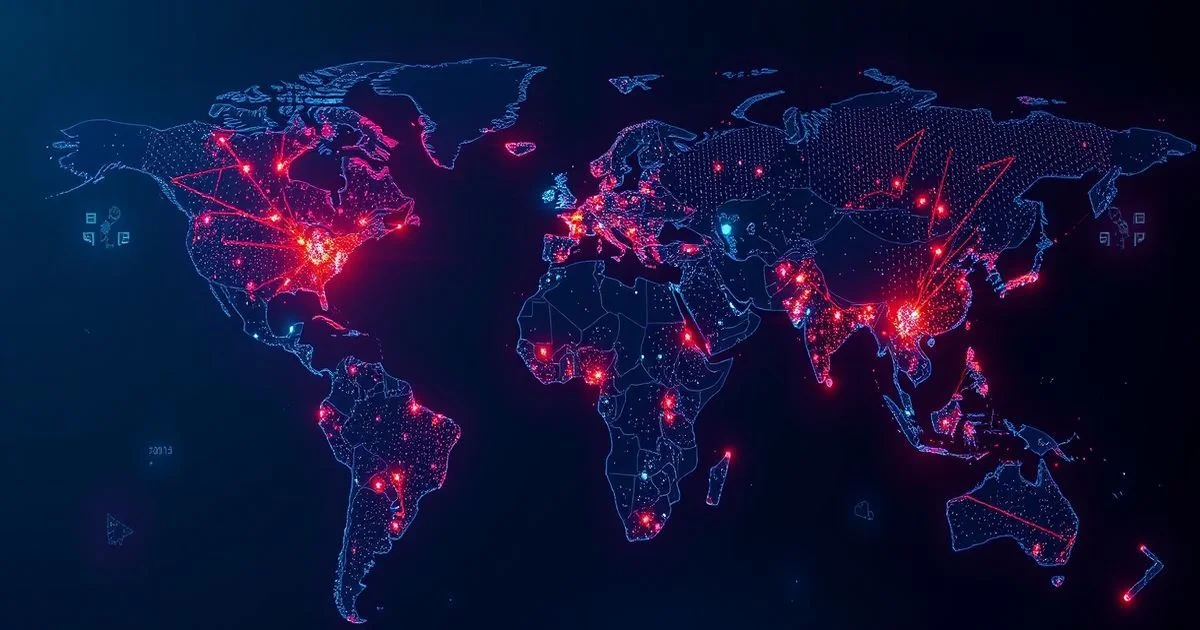
The rise of China's AI capabilities has profound geopolitical implications, signaling a significant global power shift. The competition for AI dominance is increasingly viewed as a new frontier for international rivalry, with economic, military, and diplomatic ramifications.
The AI Race: US vs. China
The rivalry between the United States and China in AI is a defining feature of 21st-century geopolitics. While the U.S. traditionally held a lead in foundational AI research and startup ecosystems, China's rapid advancements in application, data availability, and government-backed scale-up are narrowing the gap. This competition extends beyond technological prowess, encompassing talent acquisition, intellectual property, ethical standards, and global influence. Both nations are investing heavily, aiming to secure strategic advantages in what many consider the most critical technology of the era.
Reshaping Global Technology Supply Chains
China's ambition to achieve self-sufficiency in critical technologies, including semiconductors and advanced AI chips, is directly impacting global supply chains. This drive for indigenous innovation, fueled by concerns over technological dependence and national security, aims to reduce reliance on foreign components and software. This dynamic is part of a larger global trend, as seen in the intense AI Hardware Race: Nvidia, Apple, AMD Push New Frontiers in Innovation. Should China succeed in building robust domestic supply chains for AI hardware and software, it could fundamentally alter the global technology landscape, potentially leading to a more fragmented and regionalized tech ecosystem.
Ethical AI and Governance Frameworks
As China's AI influence grows, so too does the discussion around its approach to AI ethics and governance. Unlike Western democracies, where ethical AI often emphasizes individual privacy and algorithmic transparency, China's framework tends to prioritize national security, social stability, and state control. This divergence in ethical principles and regulatory approaches could lead to different standards for AI development and deployment globally, potentially creating challenges for international cooperation and the establishment of universal norms for AI.
Military Applications and Future Conflicts
The strategic implications of AI extend deeply into military applications. Both the U.S. and China are exploring AI for autonomous weapons systems, intelligence analysis, logistics, and cyber warfare. China's military-civil fusion strategy further blur the lines between commercial AI innovation and defense applications, potentially giving its military a technological edge. This arms race in AI capabilities raises concerns about future conflict scenarios, international stability, and the need for new arms control frameworks.
Economic and Societal Transformation
The China's AI Boom: Viral Models & Global Power Shift is not just about technology; it's a catalyst for profound economic and societal transformation within China and beyond its borders. The integration of AI is driving productivity gains, creating new industries, and altering the nature of work.
Driving Economic Growth and Productivity
AI is a significant driver of China's economic growth, contributing to increased productivity across various sectors. Automation, predictive analytics, and optimized resource allocation powered by AI are enhancing efficiency in manufacturing, agriculture, and services. This technological leap is helping China transition from a manufacturing-heavy economy to one driven by innovation and high-tech industries, moving up the global value chain. The economic benefits are substantial, attracting further investment and talent into the AI sector.
The Future of Work and Skill Development
The pervasive adoption of AI is inevitably reshaping the job market. While some routine tasks are being automated, new roles are emerging in AI development, data science, and AI-powered service industries. China is investing heavily in AI education and talent development, from primary schools to universities, to prepare its workforce for this future. The emphasis is on fostering skills that complement AI, such as creativity, critical thinking, and complex problem-solving, ensuring that the human workforce remains relevant and productive in an AI-driven economy.
Social Impact and Surveillance Concerns
While AI offers numerous benefits for public services and urban management, its widespread application in areas like facial recognition and social credit systems also raises significant social and ethical concerns. The ability of AI to monitor and analyze vast amounts of citizen data has sparked debates about privacy, civil liberties, and the potential for increased state surveillance. These applications highlight the dual-use nature of AI and the critical need for balanced governance that harnesses AI's potential while safeguarding individual rights.
Conclusion
The emergence of China as a dominant force in artificial intelligence, marked by its rapidly developing viral models and strategic national initiatives, is undeniably creating a China's AI Boom: Viral Models & Global Power Shift. This transformation is redefining global technological leadership, influencing international relations, and spurring unprecedented economic and societal change. As China continues to push the boundaries of AI innovation, its trajectory will have lasting implications for the future of technology, geopolitics, and humanity itself. The world watches closely as this AI giant reshapes the contours of the 21st century.
Frequently Asked Questions
Q: What is driving China's AI boom?
A: China's AI boom is primarily driven by substantial government investment and strategic national plans, a vast and accessible data reservoir, and a highly competitive private sector fostering rapid innovation in AI models.
Q: How is China's AI development impacting global power dynamics?
A: China's AI advancements are challenging Western technological hegemony, reshaping global technology supply chains, influencing military capabilities, and creating new ethical and governance discussions on an international scale, signaling a significant global power shift.
Q: What are some examples of viral AI models emerging from China?
A: Key viral AI models from China include powerful Large Language Models (LLMs) like Baidu's Ernie Bot, Alibaba's Tongyi Qianwen, and Tencent's Hunyuan, alongside a flourishing landscape of generative AI tools for media creation.