Buc-ee's Pump Policy Sparks Viral Customer Fury
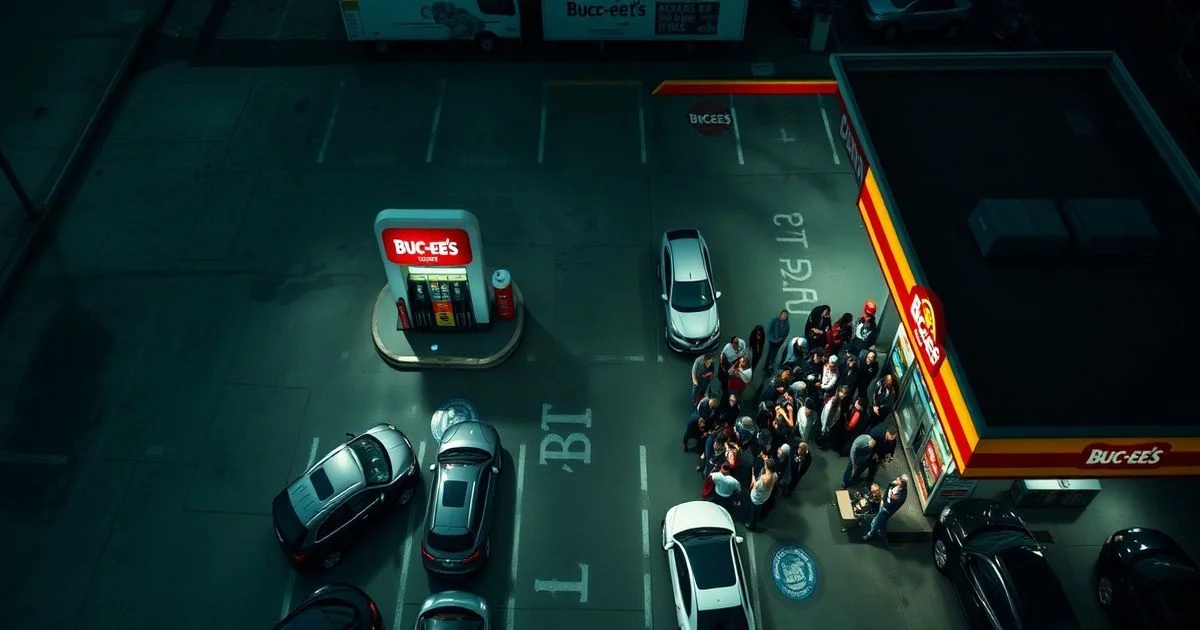
Buc-ee's, the beloved Texas-based travel center chain renowned for its massive stores and cult following, is currently facing a wave of viral customer fury following a significant alteration to its fuel payment policy. The recent changes, implemented on March 1, 2026, restrict the use of gift cards for fuel purchases and mandate that credit or debit card payments for gas be made directly at the pump, rather than inside the store. This new Buc-ee's Pump Policy Sparks Viral Customer Fury across social media platforms, leaving many loyal patrons feeling frustrated and, in some reported cases, even stranded. The controversial decision has ignited a widespread debate among travelers and industry observers, raising questions about customer experience, operational efficiency, and the power of public outcry in the digital age.
- Background: The Buc-ee's Phenomenon
- The Policy in Question: Why Buc-ee's Pump Policy Sparks Viral Customer Fury
- The Customer Perspective: Convenience vs. Congestion
- Buc-ee's Official Stance and Rationale
- Broader Implications for Retail and Customer Service
- Frequently Asked Questions
- Conclusion: Navigating Customer Expectations and Operational Realities
- Further Reading & Resources
Background: The Buc-ee's Phenomenon
Buc-ee's has transcended the traditional gas station model to become a roadside icon, famous for its exceptionally clean bathrooms, vast array of snacks and merchandise, and numerous fuel pumps. Founded in 1982 in Lake Jackson, Texas, by Arch "Beaver" Aplin III and Don Wasek, the chain has expanded significantly across the southern United States, with plans for further growth. Its sprawling travel centers, some exceeding 70,000 square feet, often feature 80 to 120 fuel pumps, designed to handle high volumes of traffic and reduce congestion. This unique blend of convenience, novelty, and consistent quality has fostered an almost unparalleled brand loyalty, making Buc-ee's a destination in itself for many road-trippers.
The company's success is often attributed to its meticulous focus on customer experience, employee satisfaction, and efficient operations. Buc-ee's has made headlines for its commitment to competitive wages and benefits for its staff, contributing to a friendly and joyful atmosphere that customers appreciate. However, even a brand with such a dedicated following is not immune to criticism, as recent events have demonstrated. Past customer satisfaction studies have shown Buc-ee's trailing some competitors, and the chain has faced scrutiny over its customer service accessibility, receiving an "F" rating from the Better Business Bureau due to difficulties in reaching representatives. These challenges highlight the delicate balance between maintaining a distinctive brand identity and responding to evolving customer needs. Effective management of high-traffic environments, similar to strategies explored in articles on designing scalable systems for high traffic apps, is crucial for brands like Buc-ee's to maintain their operational integrity.
The Policy in Question: Why Buc-ee's Pump Policy Sparks Viral Customer Fury
The core of the recent uproar stems from policy changes that took effect on March 1, 2026. Prior to this date, customers could often pay for their fuel inside the store using various payment methods, including gift cards, alongside purchasing other items. This allowed for a combined shopping and fueling experience, a convenience many patrons valued. The new directive explicitly states that customers using credit or debit cards must pay for fuel directly at the pump. Furthermore, and perhaps most controversially, Buc-ee's gift cards can no longer be used for fuel purchases at all, although they remain valid for in-store merchandise and food. Only cash payments for fuel can still be processed inside the store.
The "Two-Pump" Rule Explained
While not an explicit "two-pump rule" in the traditional sense, the new policy effectively creates a two-tiered payment system. Drivers using electronic payment methods are now redirected to the pumps for transactions, while cash customers retain the option of prepaying inside. This change is being viewed by some as an attempt to streamline operations at the notoriously busy travel centers. However, it has inadvertently highlighted a conflict with the prior flexibility that many customers had come to expect and rely upon.
Initial Reactions and Social Media Outcry
The immediate aftermath of the policy change saw a rapid escalation of customer dissatisfaction, particularly on social media. One viral TikTok video, in particular, captured widespread attention. A customer, Griffin McCarty, shared his frustration after driving 30 miles to a Buc-ee's location in St. Augustine, Florida, only to find his gift card could not be used for gas, leaving him with only $4 in his account and limited fuel to get home. His video, showing him ripping off Buc-ee's merchandise and kicking a stuffed beaver plushie, garnered tens of thousands of likes and nearly a million views, epitomizing the viral customer fury. This kind of rapid online spread, often seen in phenomena like Spring Breakers' viral geopolitics gaffe, demonstrates the immense power of social media to amplify individual grievances.
This incident resonated with many others who shared similar predicaments or expressed general annoyance with the new rules. Online discussions erupted on platforms like Reddit and Facebook, with users debating the rationale behind the policy and its impact on their travel plans. Many comments reflected a sense of betrayal, as gift cards, previously advertised as usable for all Buc-ee's purchases including fuel, were suddenly rendered useless for gas. This abrupt shift, without clear and widespread advance communication, caught many off guard and fueled the outrage.
The Customer Perspective: Convenience vs. Congestion
For many Buc-ee's patrons, the ability to pay for gas inside offered a layer of convenience. It meant they could combine their fuel purchase with their shopping trip for Beaver Nuggets, brisket sandwiches, or other unique merchandise, settling all transactions at one point. This integrated approach was part of the "Buc-ee's experience" that fostered loyalty. The new policy disrupts this established routine, forcing customers to make separate transactions at the pump for fuel and inside for other items.
Accounts from Frustrated Patrons
Beyond the viral incident, numerous customers have shared their frustrations. Some have cited concerns about the security of paying at the pump, particularly regarding card skimmers. Others found the policy inconvenient when they intended to purchase other items and fuel simultaneously, questioning why they couldn't simply pay for everything inside as before. The shift also poses potential challenges for those who might prefer not to use pay-at-the-pump options for various reasons, including accessibility for elderly or disabled individuals, or those who manage their budgets by prepaying cash inside. The feeling of being "stranded" due to an unexpected payment restriction has become a recurring theme in customer complaints.
Safety Concerns and Traffic Flow
While the stated reasons for the policy have not been officially confirmed by Buc-ee's, speculation suggests it aims to alleviate congestion at the pumps and improve overall traffic flow. Buc-ee's locations are known for their immense popularity, which often leads to packed parking lots and queues at the pumps. Some customers, particularly those who frequent the stores, have long expressed annoyance at drivers who linger at the pumps while shopping inside for extended periods. The idea is that by mandating pay-at-the-pump for card users, customers will fuel up and then move their vehicles to designated parking spots before heading into the store, thus freeing up pumps more quickly.
However, some argue that this efficiency gain comes at the cost of customer satisfaction. The perceived benefit of faster pump turnover might be overshadowed by the inconvenience for those who previously valued the ability to manage all their purchases, including fuel, in one go. Furthermore, the abrupt nature of the change and the lack of clarity, especially regarding gift cards, amplified negative reactions.
Buc-ee's Official Stance and Rationale
As of the current date, Buc-ee's has not issued a comprehensive official statement specifically addressing the public outcry or the rationale behind the changes to its fuel payment policy. This silence has further fueled speculation and frustration among customers seeking clarification. When gift cards were initially introduced in 2024, Buc-ee's general counsel Jeff Nadalo explicitly confirmed they could be used for anything the company sells, including fuel purchased inside the store. The current policy directly contradicts this prior assurance, leaving many feeling misled.
Company Statement and Reasoning
Despite the absence of a direct public statement from Buc-ee's clarifying the full scope and reasoning of the new policy, signs have been placed at pumps informing customers of the "pay at the pump" requirement for card users. Industry observers and customer discussions suggest that the policy is likely an operational decision aimed at improving efficiency and reducing in-store transactions, particularly at busy locations. The massive scale of Buc-ee's operations, with hundreds of pumps and vast interior spaces, inherently creates complex logistical challenges related to customer flow and transaction processing. This scale means that even minor inefficiencies, when multiplied across dozens of locations and millions of transactions, can accumulate into significant operational overheads. By shifting card payments to the pump, Buc-ee's potentially reduces the workload on in-store cashiers, streamlines queues for merchandise and food, and minimizes the overall time customers spend inside the store solely for fuel transactions. This could lead to a better experience for those primarily shopping indoors, by reducing bottlenecks at checkouts.
Prioritizing Efficiency and Space
One of the theories circulating online is that the policy change is a direct response to the issue of "pump squatters" – customers who park their cars at the fuel pumps and then proceed into the store for extended periods, effectively blocking pumps for other drivers. Buc-ee's is known for having an extensive number of pumps, some locations boasting over 100, a design choice that some speculate was intended to allow customers to linger and spend more inside. However, if too many pumps are occupied by non-fueling vehicles, it can still lead to frustration and reduced throughput for gas sales. By requiring card payments at the pump, Buc-ee's may be attempting to encourage faster fueling times and a quicker rotation of vehicles through its fuel stations, thus optimizing the use of its substantial fuel infrastructure. The investment in such a vast fueling setup only yields returns if pumps are actively used for fueling. Any strategy that ensures a higher turnover rate for the pumps can justify this massive infrastructure. This includes minimizing the time vehicles spend idle at the pumps, which frees up space for other customers to fuel up and then ideally, park in designated areas before entering the store to shop.
This strategy aligns with Buc-ee's overall business model, which prioritizes high foot traffic and maximizing sales within its massive retail spaces. The potential benefit of increased pump availability could lead to more overall fuel sales, even if it slightly alters the customer journey for those who previously preferred paying inside. However, the lack of clear communication about this rationale has left customers to interpret the changes on their own, often leading to negative conclusions. The challenge lies in communicating these operational benefits without alienating a loyal customer base accustomed to a certain level of convenience and flexibility.
Broader Implications for Retail and Customer Service
The controversy surrounding Buc-ee's new pump policy extends beyond the immediate impact on its customers; it offers broader lessons for the retail and customer service industries. In an era where customer feedback is amplified by social media, policy changes that disrupt established expectations can quickly ignite widespread public reaction.
Balancing Customer Experience and Operational Needs
Buc-ee's faces a common dilemma for large-scale retailers: how to balance the desire for efficient operations with the need to maintain a positive customer experience. While operational streamlining, such as reducing congestion at fuel pumps, can be beneficial for the business in the long run, the implementation of such changes can be fraught with peril if not handled carefully. The core challenge for Buc-ee's, in this instance, appears to be the perceived abruptness of the change and the lack of a clear, public explanation from the company.
Customer loyalty, particularly the kind Buc-ee's enjoys, is built on trust and consistent positive experiences. When a policy unexpectedly removes a convenience that customers have come to rely on, it can erode that trust. The case of the gift cards, specifically, highlights this. Customers purchased or received these cards with the understanding they could be used for fuel, only to find that functionality revoked without apparent direct notification, leading to feelings of being "stranded" and frustrated. This scenario underscores the importance of clear communication and, where possible, phased implementation or grandfathering clauses for existing commitments, such as gift card usage.
The Power of Viral Feedback
The rapid and widespread nature of the customer backlash, exemplified by viral videos and extensive online discussions, demonstrates the immense power of social media in shaping public perception and pressuring businesses. In today's interconnected world, a single negative customer experience can quickly escalate into a viral phenomenon, potentially damaging a brand's reputation faster than traditional word-of-mouth. For brands like Buc-ee's, which thrive on a strong, almost cult-like following, such negative sentiment can be particularly impactful. The incidents serve as a potent reminder for all businesses to closely monitor social media channels, engage with customer feedback, and be prepared to respond transparently and proactively to concerns arising from policy adjustments. The lack of an immediate, official response from Buc-ee's regarding the specific changes and the subsequent viral complaints has likely exacerbated the situation, leaving a void that customers are filling with their own interpretations and frustrations. This phenomenon of digital accountability is also explored in discussions around social media giants' liability for user content.
Frequently Asked Questions
Q: What is the new Buc-ee's pump policy?
A: As of March 1, 2026, Buc-ee's requires customers paying with credit or debit cards to do so directly at the pump for fuel purchases. Additionally, Buc-ee's gift cards can no longer be used to buy fuel, only for in-store merchandise and food.
Q: Why did Buc-ee's change its fuel payment policy?
A: While Buc-ee's has not issued a detailed official statement, the changes are speculated to be an operational decision to improve efficiency and reduce congestion at their busy fuel pumps. The aim might be to encourage faster fueling and vehicle turnover.
Q: How has the public reacted to the new Buc-ee's policy?
A: The policy has sparked significant viral customer fury, particularly on social media, with many patrons expressing frustration over the unexpected restrictions on gift card use for fuel and the inconvenience of separate transactions. Some customers have reported feeling stranded.
Conclusion: Navigating Customer Expectations and Operational Realities
The recent changes to Buc-ee's fuel payment policy have undoubtedly created a significant stir, transforming what was once a routine stop into a point of contention for many travelers. The viral customer fury highlights a critical juncture for the beloved travel center chain, as it navigates the complex interplay between optimizing vast operations and preserving the exceptional customer experience it is famous for. While the company's presumed intent may be to enhance efficiency and manage traffic flow at its bustling locations, the execution of the new "pay at the pump" requirement for card users and the restriction on gift card usage for fuel have clearly missed the mark for a segment of its devoted customer base.
As Buc-ee's continues to expand its footprint across the nation, these developments serve as a potent reminder of the delicate balance businesses must strike. The power of social media to amplify individual grievances into collective outrage means that clear communication, transparency, and responsiveness are more crucial than ever in maintaining customer loyalty. Moving forward, how Buc-ee's addresses this wave of dissatisfaction and potentially adapts its policies, or at least its communication strategy, will be closely watched by both its loyal patrons and the broader retail industry. The story of Buc-ee's Pump Policy Sparks Viral Customer Fury underscores the enduring importance of understanding and responding to customer expectations, even for the most iconic of brands.