Beyond the Surface: Unveiling the Enigmatic World of the Ocean Bed
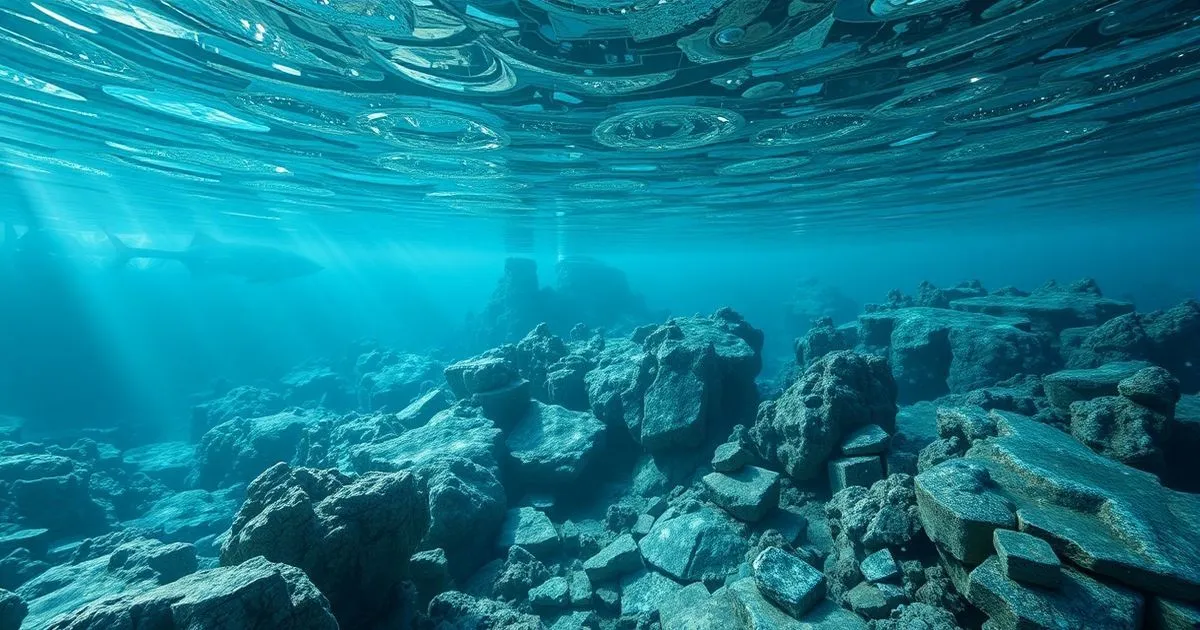
The Earth is often called the "Blue Planet," a testament to the vast expanse of water that covers over 70% of its surface. While we're captivated by the waves, the vibrant life near the surface, and the distant horizons, beneath it all lies a world far more mysterious, more alien, and arguably more influential than the terrestrial landscapes we inhabit: the ocean bed. This colossal, submerged terrain holds secrets to Earth's geological past, harbors unique ecosystems, and plays a crucial role in regulating our planet's climate.
Join us on a journey to explore the "seabed" or "ocean floor"—a world of incredible diversity, extreme conditions, and ongoing discovery.
The Ocean Bed: A World of Diverse Landscapes
Imagine mapping a continent, but upside down, under unimaginable pressure, and in perpetual darkness. That's essentially what oceanographers do when studying the ocean bed. Far from a flat, featureless plain, the ocean floor boasts a topography as varied and dramatic as any landmass, shaped by millennia of geological forces. This study of underwater terrain is known as bathymetry.
The Continental Margins: From Land to Sea
As the land slopes into the ocean, we encounter the continental shelf, a relatively shallow, gently sloping area rich in marine life and resources. Beyond the shelf, the seabed plunges dramatically down the continental slope, a steep incline that leads to the deep ocean. At its base, the slope often transitions into the continental rise, a more gradual incline formed by sediment accumulation.
Abyssal Plains: The Deep, Flat Expanse
Vast, flat, and remarkably featureless, abyssal plains cover more than 50% of the Earth's surface at depths often between 3,000 and 6,000 meters. These expansive regions are primarily formed by the gradual settling of fine sediment, such as clay and tiny marine organism remains, over millions of years, blanketing any underlying rugged topography.
Mid-Ocean Ridges: Earth's Largest Mountain Range
Running through all the major oceans, the mid-ocean ridge system is the longest mountain range on Earth, stretching over 65,000 kilometers. This colossal geological feature is where new oceanic crust is generated as tectonic plates pull apart in a process called seafloor spreading. Volcanic activity is common here, with magma rising from the Earth's mantle to form new crust. The Mid-Atlantic Ridge is a prime example, visible even from space if you consider Iceland, which is part of it.
Oceanic Trenches: The Deepest Chasms
In stark contrast to the ridges are the oceanic trenches, the deepest parts of the ocean floor. These narrow, steep-sided depressions occur where one tectonic plate is forced beneath another in a process called subduction. The Mariana Trench in the western Pacific Ocean is the deepest known point on Earth, plunging to nearly 11,000 meters. These extreme environments are often associated with intense seismic activity and volcanism.
Seamounts and Guyots: Underwater Mountains
Dotting the abyssal plains are seamounts—underwater mountains that do not reach the surface. Many are extinct volcanoes. If a seamount has a flattened top, often due to wave erosion when it was once above sea level, it's called a guyot. These features provide unique habitats and create localized currents, attracting diverse marine life.
Hydrothermal Vents: Oases of Life
Perhaps one of the most astonishing discoveries on the ocean bed are hydrothermal vents. Found predominantly along mid-ocean ridges, these geological features spew superheated, mineral-rich water from beneath the Earth's crust. Despite the extreme conditions—scalding temperatures and toxic chemicals—these vents support vibrant, unique ecosystems. Life here thrives not on sunlight (photosynthesis), but on chemical energy (chemosynthesis), forming the base of a food web that includes giant tube worms, vent crabs, and strange fish.
Life in the Abyss: Adapting to Extremes
The deep ocean bed presents some of the most challenging conditions for life on Earth: crushing pressure (up to 1,000 times that at the surface), perpetual darkness, near-freezing temperatures, and limited food resources. Yet, life persists and even flourishes in specialized ways. Organisms have evolved incredible adaptations, from bioluminescence for attracting prey or mates in the dark, to slow metabolisms to conserve energy, and specialized proteins that function under extreme pressure.
Peering into the Deep: The Science of Exploration
For much of history, the ocean bed remained largely unexplored, an impenetrable mystery. Advances in technology, however, have allowed us to gradually unveil its secrets.
Key Technologies:
- SONAR (Sound Navigation And Ranging): The bedrock of ocean floor mapping, SONAR uses sound waves to measure depths and create detailed maps of the seabed. By emitting sound pulses and measuring the time it takes for the echo to return, scientists can determine the distance to the bottom. Multi-beam SONAR systems can map wide swaths of the seafloor simultaneously.
- ROVs and AUVs: Remotely Operated Vehicles (ROVs) are tethered to surface ships and controlled by operators, providing real-time video, samples, and measurements. Autonomous Underwater Vehicles (AUVs) operate independently, following pre-programmed paths to collect data over vast areas, offering greater range and endurance.
- Deep-Sea Submersibles: Manned submersibles like the famous Alvin or the newer Limiting Factor allow human explorers to witness the deep-sea environment firsthand, conducting experiments and making groundbreaking observations.
Simulating and Analyzing Ocean Bed Data
The data collected by these technologies is immense and requires sophisticated analysis. From mapping bathymetry to tracking deep-sea currents or identifying potential mineral deposits, computational tools are indispensable. Below is a simplified Python example illustrating how one might conceptually process and visualize depth data collected by an AUV.
import pandas as pd
import matplotlib.pyplot as plt

# Simulate hypothetical depth data from an AUV transect
# In reality, this data would be derived from SONAR readings,
# processed for precise position and depth measurements.
data = {
    'Distance_km': [0, 0.5, 1, 1.5, 2, 2.5, 3, 3.5, 4, 4.5, 5],
    'Depth_m': [4500, 4600, 4750, 4800, 4780, 4700, 4650, 4600, 4550, 4520, 4500]
}
df = pd.DataFrame(data)

# Visualize the simulated bathymetry profile
plt.figure(figsize=(10, 6))
plt.plot(df['Distance_km'], df['Depth_m'], marker='o', linestyle='-', color='deepskyblue')
plt.xlabel('Distance Along Transect (km)')
plt.ylabel('Depth (m)')
plt.title('Simulated Ocean Bed Depth Profile from AUV Data')
plt.gca().invert_yaxis() # Conventionally, ocean depths are plotted with deeper values downwards
plt.grid(True, linestyle='--', alpha=0.7)
plt.show()

# A very basic "processing" example: finding the deepest point in this transect
deepest_point_depth = df['Depth_m'].max()
deepest_point_distance = df.loc[df['Depth_m'].idxmax(), 'Distance_km']

print(f"Deepest point found in this transect: {deepest_point_depth} meters at {deepest_point_distance} km.")
This simple visualization demonstrates how raw depth readings are transformed into meaningful profiles, helping scientists understand the hidden topography of the ocean floor. More complex analyses might involve 3D modeling, geological interpretation, or correlation with biological samples.
Why the Ocean Bed Matters
Understanding the ocean bed is not merely an academic exercise; it has profound implications for our planet and humanity:
- Climate Regulation: The deep ocean plays a critical role in global climate, acting as a massive carbon sink and influencing ocean currents that distribute heat around the globe.
- Geological Processes: Studying the seabed helps us understand plate tectonics, seismic activity, volcanic eruptions, and the formation of continents, providing insights into natural hazards like earthquakes and tsunamis.
- Resources: The ocean floor holds vast mineral resources (e.g., polymetallic nodules, sulfides, cobalt crusts) and potentially new sources of energy. It also harbors unique organisms that could yield novel pharmaceuticals or biotechnological compounds.
- Biodiversity and Ecosystem Services: The unique ecosystems of the deep sea contribute to global biodiversity and provide essential ecosystem services, many of which we are only beginning to comprehend.
Challenges and the Future of Exploration
Despite remarkable progress, the majority of the ocean bed remains unexplored. The challenges are immense: the extreme pressure, perpetual darkness, vast distances, and the sheer cost of deep-sea operations. However, the future of ocean bed exploration is bright, driven by:
- New Technologies: Smaller, more intelligent AUVs; advanced robotic manipulators; and integrated sensor platforms promise to expand our reach and data collection capabilities.
- International Collaboration: Global initiatives are crucial for mapping, researching, and conserving this shared heritage.
- Ethical Resource Management and Conservation: As we discover more about the deep sea's resources, developing sustainable and ethical frameworks for their management and ensuring the protection of vulnerable ecosystems becomes paramount.
Conclusion
The ocean bed is truly Earth's last frontier, a majestic and mysterious realm that continues to challenge our understanding and ignite our imagination. From its towering underwater mountain ranges and abyssal plains to its deepest trenches and life-sustaining hydrothermal vents, it is a testament to the planet's dynamic geological forces and the incredible adaptability of life.
Our journey to uncover its secrets is far from over. With every dive, every sonar ping, and every sample retrieved, we gain invaluable insights into our planet's past, present, and future. Protecting this wondrous, hidden world is not just an endeavor for scientists, but a shared responsibility for all of humanity. The deep ocean bed calls to us, urging us to explore, understand, and ultimately, safeguard its enigmatic beauty for generations to come.