The landscape of conversational AI is rapidly evolving, with a growing array of powerful models challenging the dominance of early pioneers. For those seeking advanced computational assistance, exploring the myriad options is crucial. This comprehensive guide delves into Best Free ChatGPT Alternatives, ChatGPT Alternatives for Coding, ChatGPT Alternatives for Students, ChatGPT vs Claude vs Gemini, providing a detailed analysis for discerning tech-savvy readers. We'll navigate the diverse capabilities of these platforms, scrutinizing their strengths and specific applications to help you make informed choices in this dynamic field of artificial intelligence.
- The Rise of Conversational AI: Beyond ChatGPT
- Best Free ChatGPT Alternatives for General Use
- ChatGPT Alternatives for Coding and Development
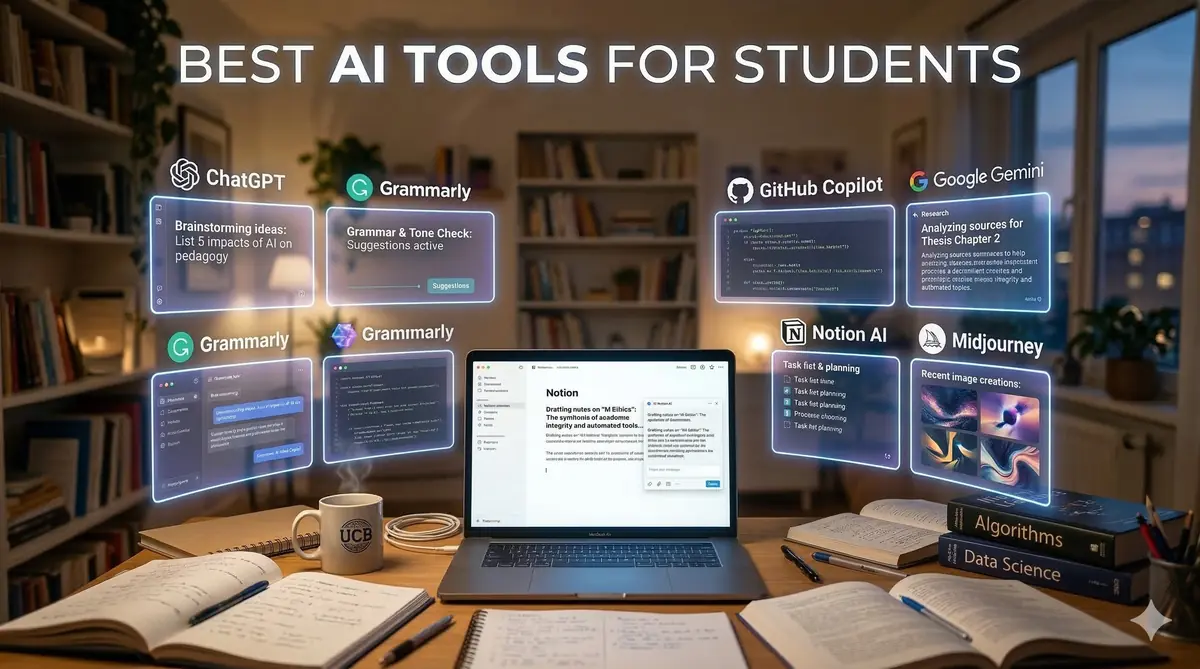
- ChatGPT Alternatives for Students and Academia
- Head-to-Head: ChatGPT vs Claude vs Gemini
- Choosing the Right AI: Factors to Consider
- The Future Landscape of Generative AI
- Conclusion: Navigating the AI Ecosystem
- Frequently Asked Questions
- Further Reading & Resources
The Rise of Conversational AI: Beyond ChatGPT
The advent of large language models (LLMs) has profoundly reshaped how we interact with technology, particularly in tasks ranging from content creation to complex problem-solving. ChatGPT, powered initially by OpenAI's GPT-3.5 and later GPT-4, captured global attention with its impressive ability to generate human-like text, answer questions, and even engage in creative writing. However, the rapid pace of AI development means that numerous formidable competitors have emerged, each bringing unique strengths and specialized functionalities to the forefront. This competitive landscape offers users an unprecedented choice, making it essential to look beyond the most well-known names. The need for diverse AI tools stems from varying user requirements, whether it's specific pricing models, integration capabilities, or performance in niche areas like coding or academic support. For more on the broader impact, consider exploring latest AI technologies.
What Defines a "Good" AI Alternative?
When evaluating a "good" alternative to established AI models like ChatGPT, several critical factors come into play. It's not merely about replicating existing functionalities but often about excelling in particular domains or offering a more accessible entry point. A strong alternative should demonstrate robust language understanding and generation capabilities, be able to handle complex queries, and ideally offer unique features that differentiate it from the competition. Performance benchmarks, such as accuracy in factual recall, coherence in long-form content generation, and efficiency in code debugging, are paramount. Furthermore, considerations like the availability of free tiers, privacy policies, ease of integration with other platforms, and the responsiveness of the model itself contribute significantly to an AI tool's overall value proposition. For instance, an AI designed for students might prioritize summarization and research assistance, while a coding-focused AI would excel at generating accurate, efficient code snippets and identifying errors.
Best Free ChatGPT Alternatives for General Use
While premium versions of leading AI models offer advanced capabilities, a wealth of robust free alternatives are available that can handle a vast array of general tasks effectively. These platforms provide an excellent starting point for users who need AI assistance without a financial commitment, or those who wish to explore different AI paradigms.
Google Gemini (Free Tier)
Google Gemini represents a significant advancement in conversational AI, developed by Google AI. Its free tier, often accessible through tools like Google Bard, leverages the power of the Gemini Pro model, offering impressive multi-modal capabilities. Gemini is designed to be highly versatile, excelling in tasks like brainstorming, content generation, summarization, and complex reasoning. Its integration with Google's ecosystem can provide an advantage for users already embedded in Google services, allowing for more contextual responses based on real-time information. A key strength of Gemini is its strong performance across various benchmarks, often demonstrating superior reasoning and coding abilities compared to its peers.
Microsoft Copilot (formerly Bing Chat)
Microsoft Copilot, integrated directly into the Bing search engine and Microsoft Edge browser, offers a powerful, free AI experience. Running on OpenAI's GPT-4 model, Copilot provides conversational search capabilities, allowing users to ask questions, summarize web pages, generate content, and even create images through DALL-E 3 integration. Its primary advantage lies in its direct access to real-time internet information via Bing Search, which helps mitigate the issue of outdated knowledge bases often found in other LLMs. This makes it particularly useful for research and staying updated on current events. Copilot also integrates into other Microsoft products, extending its utility to productivity tasks within Windows and Microsoft 365.
Perplexity AI
Perplexity AI stands out as a unique free alternative focused on providing accurate, cited answers. Unlike purely conversational models, Perplexity emphasizes factual accuracy by citing its sources directly within its responses. This makes it an invaluable tool for research, academic work, and any task requiring verifiable information. It functions more like a sophisticated answer engine than a chatbot, synthesizing information from multiple web sources and presenting it in a coherent, summarized format. Users can ask questions on any topic and receive not just an answer, but also the links to the web pages from which the information was drawn, fostering transparency and trust.
Llama 2 (Open-Source)
Developed by Meta, Llama 2 is a powerful open-source large language model available in various sizes (from 7 billion to 70 billion parameters). Its open-source nature means that developers and researchers can access, modify, and deploy it for free, making it highly customizable. While not a direct "chatbot" in the same way as ChatGPT or Gemini out-of-the-box, its availability allows for the creation of custom AI applications and specialized chatbots. Llama 2 exhibits strong performance across many benchmarks and is suitable for a wide range of tasks, including text generation, summarization, and translation. Its community-driven development also means constant improvements and a wealth of resources for those looking to implement it.
Claude (Free Tier)
Anthropic's Claude is another strong contender, known for its focus on helpful, harmless, and honest AI. The free tier of Claude, typically accessible via a web interface, offers a highly capable conversational AI that excels in understanding nuanced prompts and generating detailed, coherent responses. Claude is particularly adept at handling longer contexts, making it suitable for summarizing lengthy documents, writing extended pieces of content, or engaging in prolonged conversations without losing track of the discussion. Its constitutional AI training emphasizes safety and ethical considerations, aiming to reduce harmful outputs. The latest iteration, Claude 3, boasts impressive reasoning and multi-modal capabilities, with a free tier available for its "Sonnet" model.
ChatGPT Alternatives for Coding and Development
The application of AI in software development has become indispensable, with models now capable of assisting in everything from code generation and debugging to documentation and explanation. Several powerful alternatives to ChatGPT are specifically tailored for coding tasks, offering features that enhance developer productivity and efficiency.
Specialized AI for Code Generation and Debugging
Dedicated coding AI tools are trained on vast datasets of code, documentation, and programming languages, allowing them to understand context, identify patterns, and generate syntactically correct and semantically appropriate code. They can suggest code completions, refactor existing code, translate code between languages, and even explain complex algorithms. Debugging assistance is another critical feature, where these AIs can analyze error messages, pinpoint potential issues, and suggest solutions, significantly reducing the time developers spend troubleshooting.
GitHub Copilot (with free tiers/student plans)
GitHub Copilot, powered by OpenAI's Codex (a descendant of GPT-3), is arguably the most popular AI pair programmer. While typically a subscription service, it often offers free trials and is available for free to verified students and open-source maintainers. Copilot integrates directly into popular IDEs like VS Code, providing real-time code suggestions as developers type. It can generate entire functions, complete repetitive code patterns, and translate comments into executable code. Its deep integration into the developer workflow makes it an incredibly powerful tool for accelerating coding speed and reducing boilerplate.
Google Gemini for Developers
Google Gemini, particularly its Pro and Ultra models, offers robust capabilities for developers. Through the Google AI Studio and Vertex AI platforms, developers can access Gemini's APIs to build custom applications that leverage its advanced coding abilities. Gemini excels in generating code across multiple programming languages, explaining complex code, identifying vulnerabilities, and assisting with debugging. Its multi-modal nature also allows for more sophisticated development workflows, such as understanding design specifications from images and translating them into code. The free tier access to Gemini Pro can be a valuable resource for individual developers and small teams experimenting with AI-driven development.
Code Llama
Built upon Meta's Llama 2, Code Llama is an open-source large language model specifically designed for coding tasks. Available in various parameter sizes, it can generate code, answer questions about code, and even debug. Code Llama supports a wide array of programming languages, including Python, C++, Java, PHP, Typescript (JavaScript), C#, and Bash. Its open-source nature allows for significant customization and fine-tuning, making it an excellent choice for developers who require a high degree of control over their AI tools. Variants like Code Llama - Python and Code Llama - Instruct further optimize its performance for specific coding scenarios and instruction-following, respectively.
Tabnine
Tabnine is another AI code completion tool that works across numerous programming languages and IDEs. Unlike some broader AI models, Tabnine is highly focused on providing intelligent, context-aware code suggestions. It learns from publicly available code and potentially your team's codebase (if configured), offering personalized recommendations. Tabnine's strength lies in its ability to predict the next piece of code with high accuracy, often completing entire lines or blocks of code. It offers both free and paid tiers, with the free tier providing basic but effective code completion features that can significantly speed up development.
ChatGPT Alternatives for Students and Academia
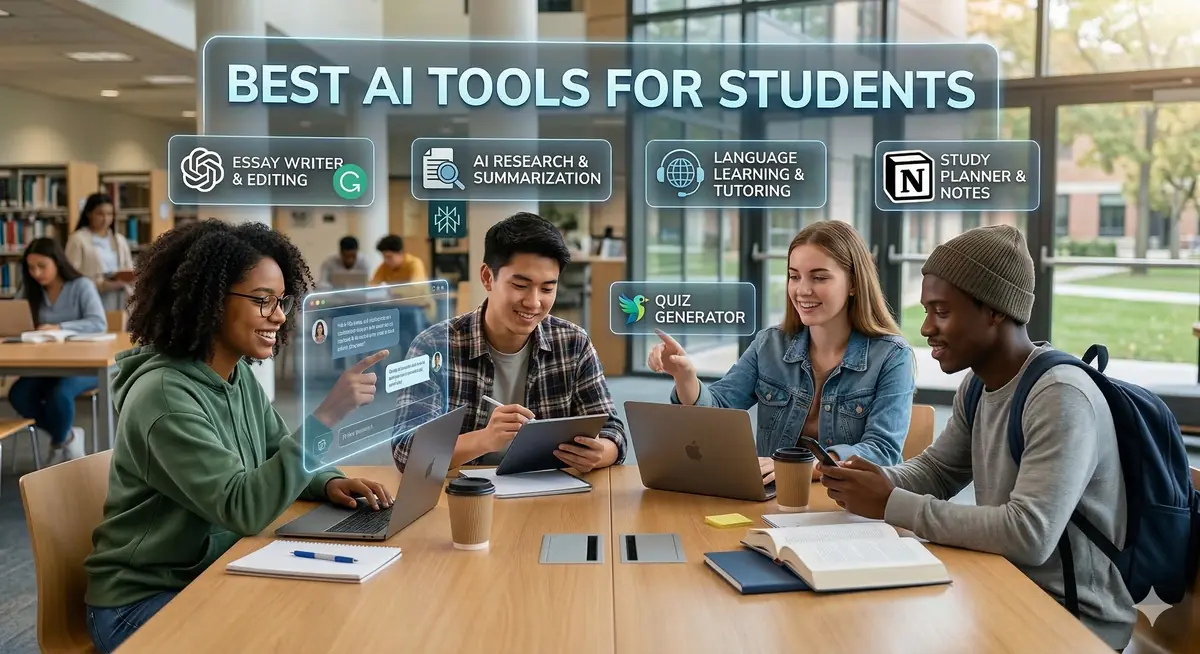
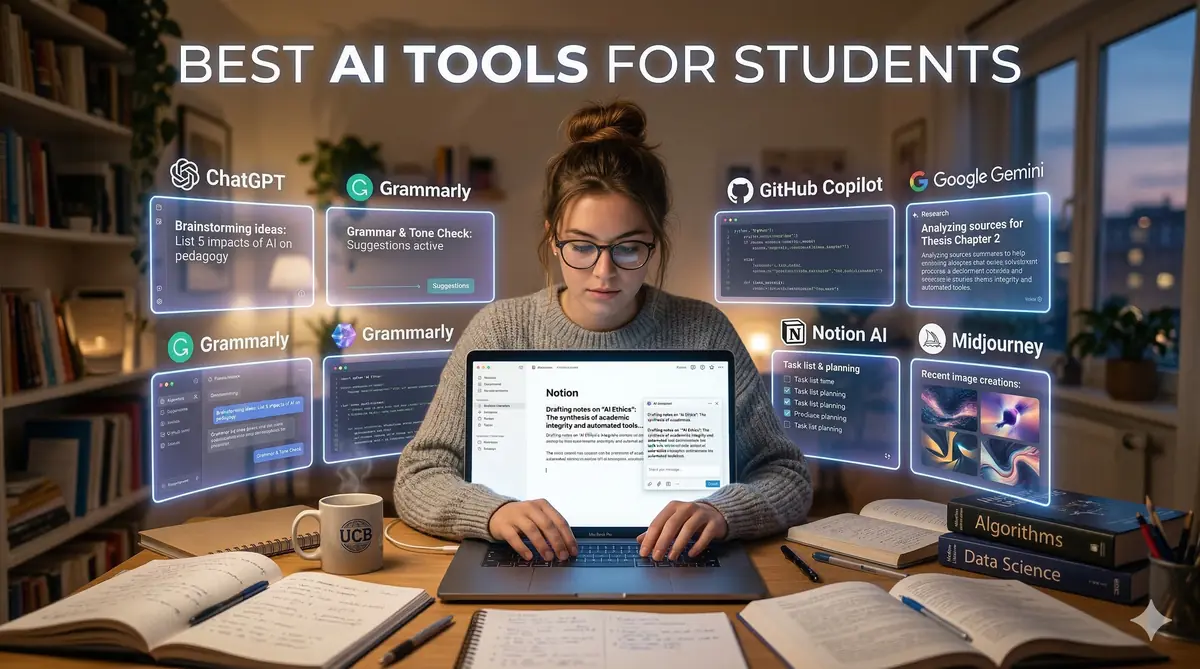
For students navigating the complexities of academic life, AI tools can be powerful allies, assisting with research, writing, summarization, and understanding difficult concepts. Beyond general-purpose chatbots, several alternatives to ChatGPT cater specifically to the needs of students and academics.
Research and Writing Assistance
AI can revolutionize how students approach research papers and essays. Tools can help by:
- Generating outlines: Structuring essays and research papers effectively.
- Brainstorming ideas: Overcoming writer's block by suggesting angles and arguments.
- Summarizing articles: Quickly grasping the main points of lengthy academic papers, saving valuable time.
- Grammar and style checks: Enhancing the clarity and correctness of written assignments.
- Citation formatting: Some tools can even assist with generating citations in various academic styles, though verification is always crucial.
For a deeper dive into specific applications, check out these AI tools for research papers and free AI tools for students.
AI for Learning and Summarization
Many AI tools now act as personalized tutors or study aids. They can:
- Explain complex topics: Breaking down difficult scientific theories, historical events, or mathematical concepts into understandable language.
- Generate practice questions: Helping students test their knowledge and prepare for exams.
- Create flashcards: Automating the creation of study materials from lecture notes or textbooks.
- Translate academic texts: Assisting international students or those working with foreign language sources.
- Personalized learning paths: Some advanced platforms can adapt to a student's learning style and pace, offering tailored content and exercises.
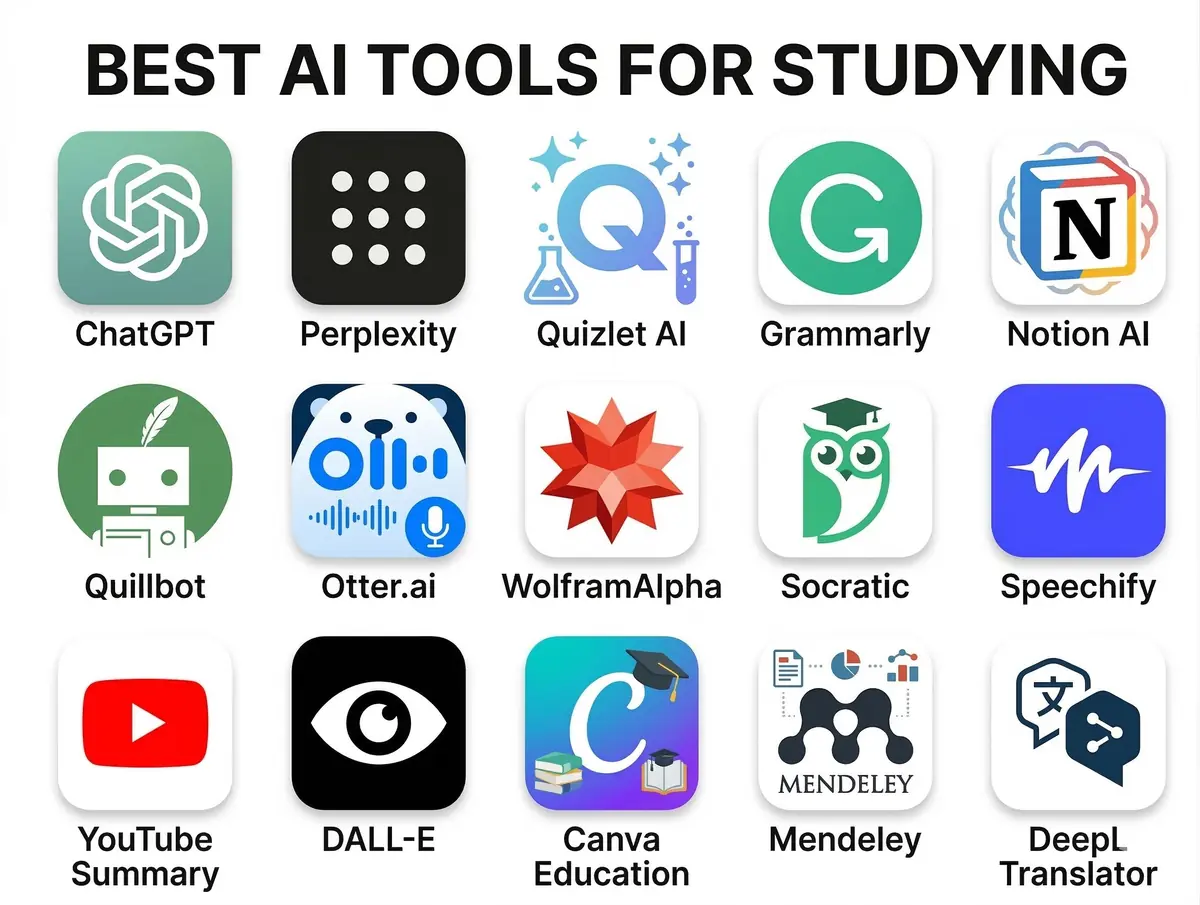
For a comprehensive guide to maximizing your learning, explore the best AI tools for studying in 2026.
Specific Tools for Academic Integrity
While AI can be a powerful learning aid, maintaining academic integrity is paramount. Students must use these tools responsibly. Some platforms incorporate features or guidelines to promote ethical use, for example:
- Plagiarism checkers: Many institutions use AI-powered tools to detect plagiarism, and students should understand how to properly cite sources and paraphrase.
- AI content detection: While not foolproof, some tools claim to identify AI-generated content. Students should focus on using AI as an assistant for brainstorming and drafting, rather than simply submitting AI-generated text as their own.
- Ethical guidelines: Reputable AI providers often publish guidelines on responsible AI use, encouraging users, particularly students, to understand the limitations and ethical implications of the technology.
Tools like Perplexity AI, with its citation-focused approach, are particularly valuable for academic research as they encourage verifying information. Furthermore, general-purpose AI models like Google Gemini and Microsoft Copilot (Bing Chat) can be immensely helpful for students due to their ability to access and summarize real-time web information, aiding in comprehensive research and up-to-date knowledge acquisition.
Head-to-Head: ChatGPT vs Claude vs Gemini
The triumvirate of ChatGPT, Claude, and Gemini currently dominates the advanced conversational AI landscape. While all are highly capable, they each possess distinct architectures, training philosophies, and performance profiles that make them suitable for different use cases.
Architectural Differences and Training Data
- ChatGPT (OpenAI): Primarily built on the GPT series of transformer models (GPT-3.5, GPT-4). OpenAI's models are trained on vast datasets encompassing a significant portion of the internet's text and code. The training often focuses on predicting the next word in a sequence, leading to highly coherent and contextually relevant text generation. GPT-4, in particular, is noted for its advanced reasoning and multimodal capabilities.
- Claude (Anthropic): Developed with a focus on "Constitutional AI," which involves training AI systems to align with a set of principles derived from human feedback and constitutional documents. This unique approach aims to make Claude more helpful, harmless, and honest. Claude models (e.g., Claude 2, Claude 3) are also transformer-based and trained on extensive text and code datasets, with an emphasis on safe and ethical responses.
- Gemini (Google AI): Google's latest multimodal AI model, designed from the ground up to understand and operate across different types of information, including text, code, audio, image, and video. Gemini comes in different sizes (Ultra, Pro, Nano) tailored for various tasks and devices. Its architecture is likely a novel transformer variant optimized for multimodal input and output, trained on Google's unparalleled access to diverse data across the web and its own services.
Performance Benchmarks and Capabilities
Benchmarks from various sources indicate that all three models are at the forefront of AI capabilities, often trading places for top performance depending on the specific task.
- Reasoning and Problem Solving: Gemini Ultra often shows strong performance in complex reasoning, mathematics, and physics, occasionally outperforming GPT-4 in certain benchmarks. Claude 3, particularly its Opus model, also demonstrates near-human levels of comprehension and fluency in complex tasks. ChatGPT (GPT-4) remains exceptionally strong in these areas, setting a high bar for others.
- Coding: All three are highly capable. Gemini has shown impressive abilities in code generation and explanation, often scoring highly in coding benchmarks. GitHub Copilot, based on OpenAI's Codex, excels in real-time code completion. Code Llama is specifically optimized for coding. Claude is also proficient in generating and understanding code, with its "Sonnet" model performing well in coding-related tasks.
- Multimodality: Gemini was explicitly designed as a multimodal AI, excelling at processing and understanding different data types simultaneously. Claude 3 also features strong multimodal capabilities, including vision processing. GPT-4 has demonstrated impressive multimodal capabilities, particularly with image understanding, though its public interfaces for this might vary.
- Context Window: Claude models are known for their exceptionally large context windows, allowing them to process and remember significantly more information in a single conversation or document compared to many competitors, making them ideal for long-form content analysis.
Strengths and Weaknesses of Each
ChatGPT (GPT-4):
- Strengths: Highly versatile, excellent for creative writing, strong general knowledge, robust API ecosystem, good at coding and reasoning. Extensive third-party integrations.
- Weaknesses: Free version (GPT-3.5) can be less accurate or up-to-date. Premium (GPT-4) requires subscription. Knowledge cutoff for training data (though often mitigated with plugins/browsing).
Claude (Claude 3):
- Strengths: Exceptional at long-form text processing and summarization, strong emphasis on safety and ethical AI, highly articulate and coherent responses, large context window.
- Weaknesses: Less widely integrated than ChatGPT, still catching up in certain multimodal applications (though Claude 3 made big strides). Free tier may have usage limits.
Gemini (Gemini Pro/Ultra):
- Strengths: Native multimodal capabilities, strong reasoning and coding prowess, deep integration with Google services, access to real-time information via Google Search, optimized for various device sizes.
- Weaknesses: Ultra model might be behind a paywall. Its ethical guardrails can sometimes lead to overly cautious responses in certain creative or controversial contexts. Still relatively newer compared to GPT, so ecosystem might be less mature.
Use Cases and Target Audiences
- ChatGPT: Ideal for general users, content creators, marketers, developers, and anyone needing a versatile AI assistant for a wide range of tasks from brainstorming to coding.
- Claude: Best suited for researchers, legal professionals, writers, and anyone dealing with extensive documentation, complex textual analysis, or requiring a highly safety-conscious AI.
- Gemini: Perfect for users deeply integrated into the Google ecosystem, developers building multimodal applications, researchers, and anyone who benefits from real-time information access and strong coding capabilities.
Ethical Considerations and Safety Features
All three AI leaders place a significant emphasis on ethical AI development, though their approaches vary. OpenAI (ChatGPT) invests heavily in alignment research, aiming to ensure AI benefits humanity. Anthropic (Claude) employs its "Constitutional AI" approach, using a set of principles to guide AI behavior and minimize harmful outputs. Google (Gemini) incorporates Responsible AI principles throughout its development lifecycle, focusing on fairness, safety, privacy, and transparency. Despite these efforts, challenges remain, particularly concerning bias in training data, the potential for misinformation, and the responsible deployment of increasingly powerful AI systems. Users are encouraged to critically evaluate AI outputs and be aware of these inherent limitations.
Choosing the Right AI: Factors to Consider
With a multitude of powerful AI models available, selecting the best tool for your needs requires a careful evaluation of several key factors. The "best" AI is not universal; rather, it's the one that most effectively aligns with your specific requirements, workflow, and values.
Task Specificity
The nature of the task is perhaps the most crucial determinant.
- For coding: If your primary need is code generation, debugging, or explanation, specialized tools like GitHub Copilot or Code Llama, or the coding-optimized versions of Gemini, might outperform general-purpose models.
- For long-form writing/summarization: Claude, with its large context window and focus on coherence, is often an excellent choice.
- For real-time research: Microsoft Copilot (Bing Chat) or Google Gemini offer advantages due to their direct integration with up-to-date search results.
- For creative brainstorming: ChatGPT (GPT-4) and Gemini can excel with their broad knowledge and imaginative capabilities.
- For academic assistance with citations: Perplexity AI's focus on sourced answers is invaluable.
Cost and Accessibility
While this article focuses on free alternatives, understanding the different tiers is essential.
- Free Tiers: Many leading AIs (Gemini, Claude, Copilot) offer compelling free versions, albeit often with usage limits or based on less powerful underlying models. These are perfect for casual use, testing, or less demanding tasks.
- Paid Subscriptions: For professional use, higher usage, or access to the most advanced models (e.g., GPT-4, Gemini Ultra, Claude Opus), a paid subscription is often necessary. Evaluate whether the enhanced capabilities justify the recurring cost.
- Open-Source Options: Models like Llama 2 and Code Llama provide a completely free and customizable alternative for those with the technical expertise to deploy and manage them.
Privacy and Data Handling
The data you input into an AI model is a significant consideration, particularly for sensitive information.
- Data Usage Policies: Always review the privacy policy of any AI service. Understand how your data is used – whether it's stored, used for further training, or anonymized.
- Enterprise Solutions: Many AI providers offer enterprise-grade solutions with stricter data governance and privacy agreements, suitable for businesses or institutions handling confidential information.
- On-Premise/Self-Hosted: Open-source models like Llama 2 can be hosted on private infrastructure, offering the highest degree of control over data privacy, though this requires significant technical resources.
Integration with Existing Workflows
Seamless integration into your current tools and processes can dramatically boost productivity.
- IDE Integration: For developers, tools that integrate directly into their Integrated Development Environment (IDE), like GitHub Copilot with VS Code, are highly advantageous.
- Browser Integration: Microsoft Copilot's presence in Bing and Edge makes it easily accessible for web-based research and content creation.
- API Access: For custom applications, the availability and ease of use of an AI's API (e.g., OpenAI API, Google AI Studio, Anthropic API) are critical for developers.
- Ecosystem Compatibility: If you're heavily invested in a particular tech ecosystem (e.g., Google Workspace, Microsoft 365), an AI that integrates well with those services (Gemini, Copilot) can provide a more unified experience.
The Future Landscape of Generative AI
The field of generative AI is still in its infancy, yet it's evolving at an astonishing pace. The current advancements in models like ChatGPT, Claude, and Gemini are merely precursors to what promises to be an even more transformative future. Several key trends are already shaping the next generation of AI capabilities.
Multimodality and Beyond Text
While current LLMs excel at text, the future is undeniably multimodal. Gemini has led this charge, demonstrating the ability to seamlessly integrate and understand information from text, images, audio, and video. Future AI systems will not just process these different data types individually but will be able to reason across them, generating insights and content that bridge modalities. Imagine an AI that can watch a video, understand the spoken dialogue and visual cues, and then generate a summary, write code based on a diagram, or even compose music inspired by a scene. This will unlock entirely new applications in fields like education, entertainment, and scientific research.
Personalization and Customization
Generic AI models, while powerful, will increasingly give way to highly personalized and customized agents. Users will be able to fine-tune models with their own data, preferences, and even their unique communication style. This could mean an AI assistant that truly understands your specific professional jargon, your creative voice, or your learning patterns. We'll see more emphasis on smaller, more efficient models that can be specifically tailored for niche tasks or individual users, allowing for greater control and relevance without the overhead of massive general-purpose models.
Ethical AI Development
As AI becomes more pervasive, the ethical implications will continue to be a central focus. The development of "Constitutional AI" by Anthropic is one example of a proactive approach to instilling ethical guidelines directly into AI training. Future AI will likely incorporate more sophisticated mechanisms for safety, fairness, and transparency. This includes better methods for detecting and mitigating bias, ensuring accountability for AI-generated content, and developing clear frameworks for human oversight. The ongoing dialogue between developers, policymakers, and the public will be crucial in shaping a future where AI is not only powerful but also responsibly and ethically deployed for the benefit of all.
Conclusion: Navigating the AI Ecosystem
The rapid evolution of conversational AI has presented us with a vibrant and competitive ecosystem, moving far beyond the initial groundbreaking capabilities of ChatGPT. We've explored some of the Best Free ChatGPT Alternatives, ChatGPT Alternatives for Coding, ChatGPT Alternatives for Students, ChatGPT vs Claude vs Gemini, highlighting their unique strengths and applications. Whether you're a developer seeking advanced coding assistance, a student requiring research and writing support, or a general user looking for a powerful, free AI, there's a compelling alternative available. From the real-time search capabilities of Microsoft Copilot and Google Gemini, to the ethical focus and extensive context window of Claude, and the open-source flexibility of Llama 2 and Code Llama, the choices are abundant. The key lies in understanding your specific needs and evaluating which AI model's features, cost-effectiveness, and ethical considerations align best with your objectives. As AI continues its relentless march forward, staying informed about these powerful tools will be crucial for leveraging their full potential in an increasingly AI-driven world.
Frequently Asked Questions
Q: What are the best free ChatGPT alternatives for general use?
A: Top free alternatives include Google Gemini's free tier (often via Google Bard), Microsoft Copilot (powered by GPT-4 and Bing Search), Perplexity AI (for cited answers), and the open-source Llama 2. Claude also offers a capable free tier for general conversational tasks.
Q: Which AI tools are best for coding assistance?
A: GitHub Copilot, which offers free access for students and open-source maintainers, is highly popular. Google Gemini for Developers provides free API access to Gemini Pro, while Code Llama is an open-source option. Tabnine also offers excellent AI-powered code completion.
Q: How do AI models like ChatGPT, Claude, and Gemini differ?
A: ChatGPT from OpenAI is known for its versatility and creative text generation. Claude by Anthropic emphasizes ethical AI and excels in handling extensive documents with its large context window. Google's Gemini stands out for its native multimodal capabilities, deep Google integration, and strong reasoning skills.