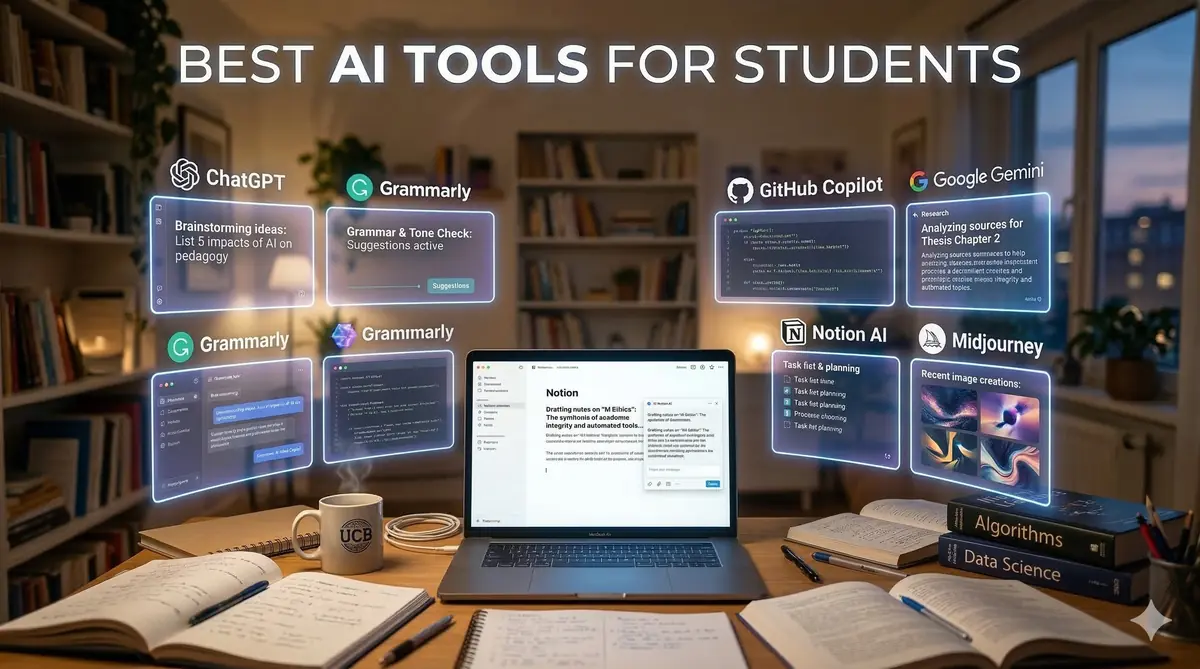
In today's fast-paced academic landscape, students are constantly seeking innovative methods to unlock academic success and streamline their learning processes, much like the comprehensive guide on Best AI Tools for Students in 2026. The advent of artificial intelligence (AI) has brought forth a powerful suite of applications, transforming how individuals approach complex tasks. This comprehensive guide explores the Best AI Tools for Homework and Assignments, designed to empower students with unprecedented efficiency, deeper understanding, and enhanced creativity in their educational journey. These tools are rapidly becoming indispensable for navigating the rigors of modern schooling, offering intelligent assistance across a spectrum of disciplines, from humanities to STEM fields.
- What Are AI Tools for Homework and Assignments?
- How Do AI Tools Enhance Academic Productivity?
- Key Components and Features of Top AI Tools for Homework and Assignments
- Real-World Applications: The Best AI Tools for Homework and Assignments
- Advantages and Disadvantages of Using AI in Academics
- The Future Outlook of AI in Education
- Conclusion: Navigating the AI Frontier in Education
- Frequently Asked Questions
- Further Reading & Resources
What Are AI Tools for Homework and Assignments?
At its core, artificial intelligence refers to the simulation of human intelligence in machines that are programmed to think like humans and mimic their actions. For academic purposes, AI tools are software applications that leverage machine learning, natural language processing (NLP), and other AI subfields to assist students with various aspects of their studies. They are designed to automate repetitive tasks, provide personalized learning experiences, offer instant feedback, and even generate content or solutions based on provided prompts and data.
These tools are not merely glorified search engines; they are intelligent agents capable of understanding context, processing complex information, and generating coherent, relevant outputs. Consider an AI tool that can not only identify the key arguments in a lengthy research paper but also summarize them concisely, or one that can guide you step-by-step through a calculus problem. Such capabilities transcend traditional study aids, offering a dynamic and interactive learning environment. The goal is to augment, not replace, human intellect, providing a powerful co-pilot for academic endeavors.
The Underlying Technology: A Brief Overview
The magic behind these AI tools lies in sophisticated algorithms and vast datasets. For a deeper dive into the broader landscape of latest AI technologies shaping our future, consider how large language models (LLMs) are central to many writing and research assistants. These models are trained on immense amounts of text data, allowing them to understand human language, generate creative text formats, and answer questions informatively. Machine learning algorithms enable tools to learn from user interactions, continuously improving their accuracy and relevance over time. Moreover, specialized AI, such as computer vision for interpreting diagrams or symbolic AI for mathematical reasoning, plays a crucial role in tools tailored for specific subjects. Understanding these foundational technologies helps to appreciate the power and limitations of the tools available.
How Do AI Tools Enhance Academic Productivity?
The integration of AI into academic routines offers a multifaceted approach to boosting productivity. Far from being a shortcut, these tools provide scaffolding for deeper learning and more efficient task management. They address common student pain points, such as time constraints, information overload, and the need for immediate assistance.
Streamlining Research and Information Gathering
One of the most time-consuming aspects of homework and assignments is research. Traditionally, students would spend hours sifting through libraries, databases, and websites. AI tools dramatically cut down this time by:
-
Intelligent Search: Going beyond keyword matching, AI search tools understand the intent behind a query, delivering more precise and relevant results from academic journals, books, and trusted sources.
-
Automated Summarization: For dense articles or lengthy reports, AI can condense key information, extracting main points and arguments, allowing students to grasp the essence quickly without reading every single word.
-
Citation Generation: Tools can automatically format citations in various styles (APA, MLA, Chicago), eliminating a common source of error and frustration.
Elevating Writing Quality and Efficiency
Writing is another area where AI offers significant support. From brainstorming ideas to proofreading, AI can refine the writing process:
-
Grammar and Style Correction: Advanced AI-powered grammar checkers catch subtle errors that traditional spell checkers miss, suggesting improvements in syntax, clarity, and conciseness.
-
Content Generation and Brainstorming: While ethical considerations are paramount, AI can assist in generating outlines, suggesting topics, or even drafting initial paragraphs to overcome writer's block. It's crucial to use these features responsibly, ensuring the output serves as a starting point for original thought rather than a final submission.
-
Plagiarism Detection: AI tools can identify potential instances of plagiarism, helping students ensure the originality of their work and correctly attribute sources.
Personalized Learning and Problem Solving
AI's ability to adapt and learn makes it an excellent tutor. It can provide tailored support that traditional classroom settings often cannot replicate:
-
Adaptive Learning Platforms: These platforms adjust the difficulty and type of content based on a student's performance, focusing on areas where they need the most improvement.
-
Step-by-Step Problem Solvers: For subjects like mathematics or programming, AI tools can break down complex problems into manageable steps, explaining the reasoning behind each solution. This fosters understanding rather than just providing answers. For instance, an AI could guide you through the intricacies of Dijkstra's Algorithm or a complex graph traversal problem.
-
Language Learning Assistance: AI-powered language tutors offer interactive exercises, pronunciation feedback, and conversational practice, making language acquisition more accessible and engaging.
Key Components and Features of Top AI Tools for Homework and Assignments
The landscape of AI tools for education is diverse, each offering a unique set of features tailored to specific academic needs. Understanding these components helps in selecting the most appropriate tool.
Natural Language Processing (NLP)
NLP is the backbone of most text-based AI tools. It enables machines to understand, interpret, and generate human language.
Key Features:
-
Semantic Analysis: Understanding the meaning and context of words and phrases.
-
Text Generation: Creating human-like text based on prompts.
-
Sentiment Analysis: Identifying the emotional tone of text.
-
Machine Translation: Translating text from one language to another.
Applications in Education: Tools for essay writing, summarization, grammar checking, and language learning heavily rely on NLP. For instance, an AI tool might use NLP to analyze a student's essay for coherence and flow, providing feedback on structural improvements.
Machine Learning (ML)
ML algorithms allow systems to learn from data without being explicitly programmed. This continuous learning improves the tool's performance over time.
Key Features:
-
Pattern Recognition: Identifying trends and relationships in data.
-
Predictive Analytics: Forecasting future outcomes based on historical data.
-
Clustering and Classification: Grouping similar data points or categorizing information.
Applications in Education: ML is used in adaptive learning platforms to personalize content, in recommendation engines for relevant study materials, and in problem-solving tools that learn from common student errors to offer better guidance.
Computer Vision (CV)
Computer vision enables computers to "see" and interpret visual information from the world, much like humans do.
Key Features:
-
Image Recognition: Identifying objects, people, and text within images.
-
Optical Character Recognition (OCR): Converting images of text into machine-readable text.
-
Object Detection: Locating specific objects within an image or video.
Applications in Education: CV is particularly useful for STEM subjects. Tools can solve math problems by scanning handwritten equations, interpret scientific diagrams, or convert lecture notes from images into editable text. For example, an app might use OCR to read a complex graph and extract data for analysis.
Speech Recognition and Synthesis
These technologies allow AI tools to understand spoken language (recognition) and generate human-like speech (synthesis).
Key Features:
-
Voice-to-Text Transcription: Converting spoken words into written text.
-
Text-to-Speech (TTS): Converting written text into spoken words.
Applications in Education: Useful for dictating notes, practicing presentations, or listening to textbooks and articles. Language learning apps often use speech recognition for pronunciation practice and speech synthesis for realistic conversational partners.
Real-World Applications: The Best AI Tools for Homework and Assignments
Let's dive into some specific categories and examples of AI tools that are making a significant impact on academic life. These tools exemplify the Best AI Tools for Homework and Assignments available today.
AI Writing Assistants
These tools are invaluable for crafting essays, reports, and research papers. They go beyond basic grammar checks, offering stylistic improvements and content generation support.
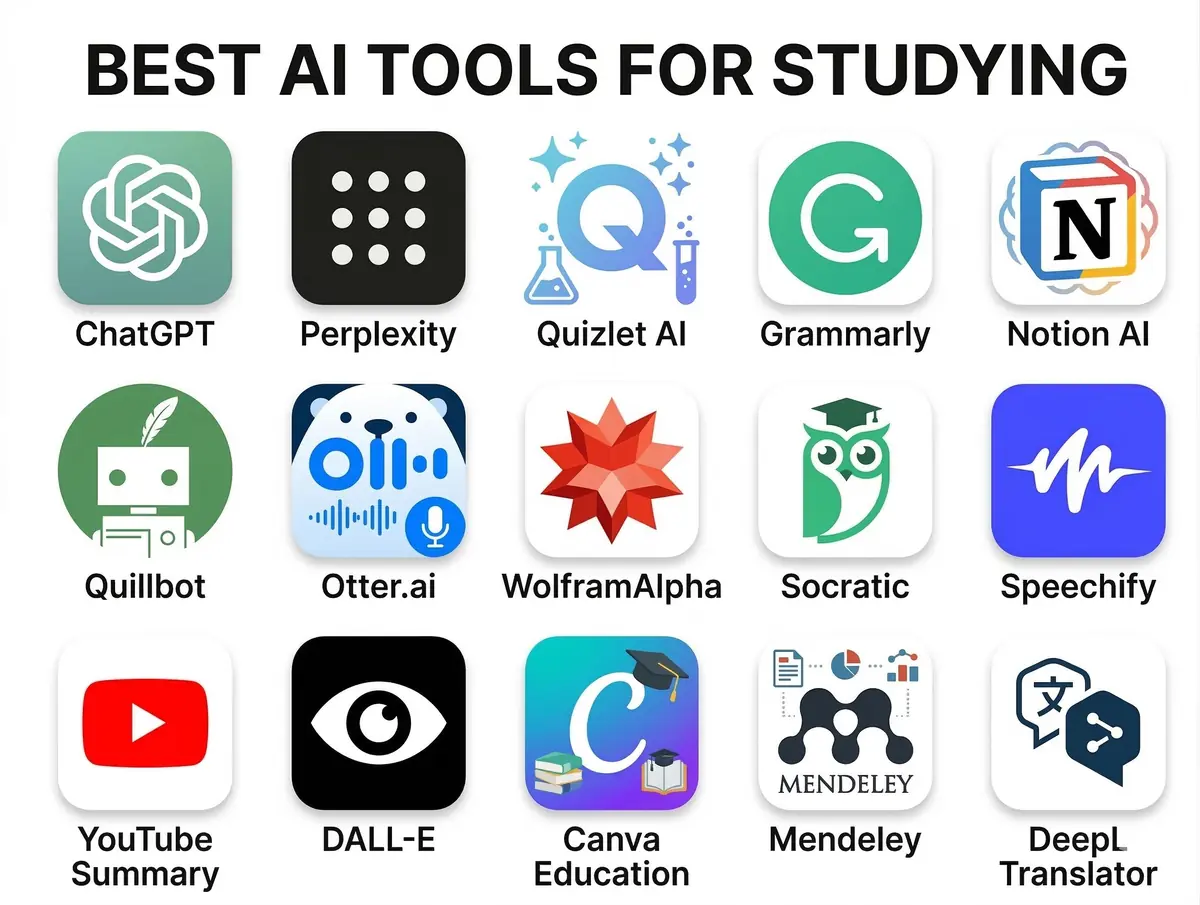
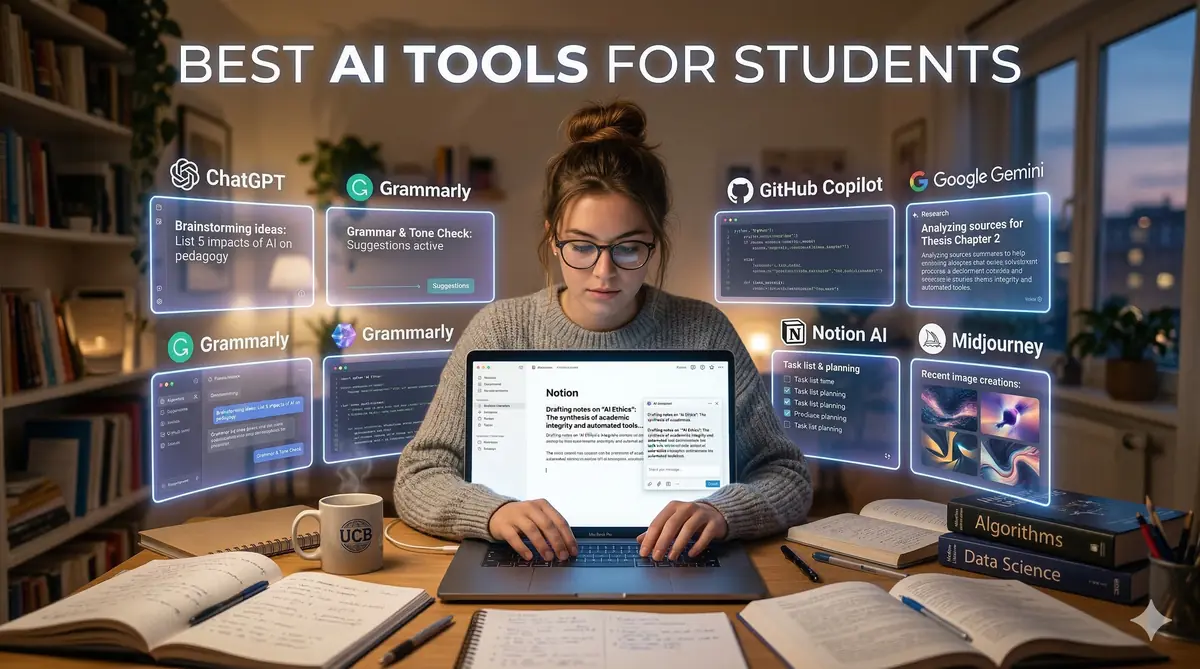
- Grammarly: While not strictly a generative AI, Grammarly uses advanced AI to check grammar, spelling, punctuation, clarity, engagement, and delivery. Its suggestions help refine writing style and make it more impactful. Premium versions offer more in-depth feedback and plagiarism detection.
- QuillBot: This paraphrasing tool leverages AI to rephrase sentences and paragraphs, helping students improve clarity, avoid repetition, and expand their vocabulary. It also offers summarization and grammar checking features, making it a versatile writing companion.
- Gemini (formerly Google Bard) and ChatGPT: These large language models are excellent for brainstorming, outlining, generating ideas, and even drafting initial sections of essays. They can answer complex questions, explain concepts, and provide different perspectives on a topic. Students can use them to generate creative writing prompts, summarize long articles, or even help structure arguments for a debate. Crucially, content generated by these tools should always be critically reviewed, verified, and heavily revised to ensure originality, accuracy, and adherence to academic integrity.
AI Research Tools
Navigating vast amounts of information can be daunting. AI research tools streamline the process, helping students find, understand, and synthesize information more efficiently.
- Elicit: This AI research assistant uses language models to help researchers automate parts of their literature review. It can find papers, summarize abstracts, extract key information, and even identify common themes across multiple studies, saving significant time in the early stages of research.
- Perplexity AI: Functioning as an "answer engine," Perplexity AI provides direct answers to questions with citations to its sources, making it easier to verify information and explore topics in depth. It acts like a conversational search engine, ideal for quick factual checks and starting points for research.
- Scite.ai: Focusing on scientific literature, Scite.ai analyzes how research papers are cited by others, indicating whether a claim has been supported or contradicted. This helps students understand the context and reliability of scientific findings.
AI Math and Science Solvers
For subjects requiring precise calculations and logical reasoning, AI tools offer instant help and detailed explanations.
- Photomath: By simply scanning a handwritten or printed math problem with a smartphone camera, Photomath provides step-by-step solutions and explanations across various math levels, from arithmetic to calculus. This makes it an excellent tool for understanding the "how" behind the answer.
- Wolfram Alpha: More than just a calculator, Wolfram Alpha is a computational knowledge engine that can answer factual questions, solve complex mathematical problems, plot functions, and provide detailed information across science, engineering, and more. It goes beyond simple calculations to explain concepts and derivations.
- ChatGPT/Gemini for Explanations: While not solving complex equations in the same way as Wolfram Alpha, these LLMs can explain mathematical concepts, clarify scientific principles, and even help debug code by walking through logic step-by-step. They can be particularly useful for understanding theoretical underpinnings.
AI Coding Assistants
For computer science students, coding assistants are transformative, speeding up development and aiding in debugging.
- GitHub Copilot: Co-developed by GitHub and OpenAI, Copilot is an AI pair programmer that suggests code snippets, completes lines, and even generates entire functions based on comments and context. Trained on billions of lines of code, it supports numerous programming languages, significantly boosting coding efficiency and helping students learn best practices.
- ChatGPT/Gemini for Code Debugging and Generation: These LLMs can generate code in various languages, explain complex algorithms, debug existing code by identifying errors, and offer suggestions for optimization. They act as intelligent tutors, guiding students through programming challenges.
AI Note-Taking and Organization Tools
Staying organized is key to academic success. AI can help manage information and prioritize tasks.
- Otter.ai: This AI-powered transcription service records and transcribes meetings, lectures, and discussions in real-time. It can identify different speakers, summarize key points, and even generate action items, making it an invaluable tool for reviewing lecture content and preparing for exams.
- Notion AI: Integrated into the popular Notion workspace, Notion AI can summarize notes, brainstorm ideas, help write content, and organize information more effectively within existing databases and pages. It streamlines content creation and information retrieval within a single productivity hub.
Advantages and Disadvantages of Using AI in Academics
While the benefits are significant, a balanced perspective requires acknowledging both the pros and cons of integrating AI into homework and assignments.
Advantages
-
Increased Efficiency: AI tools automate repetitive tasks like research, formatting, and proofreading, freeing up students' time to focus on critical thinking and deeper understanding.
-
Enhanced Learning: Personalized learning paths, step-by-step solutions, and immediate feedback cater to individual learning styles and paces, reinforcing concepts effectively.
-
Improved Quality of Work: Advanced grammar and style checkers, along with content generation for brainstorming, lead to more polished and articulate submissions.
-
Accessibility: AI tools can provide accommodations for students with learning disabilities, offering features like text-to-speech, speech-to-text, and simplified explanations.
-
Access to Comprehensive Information: AI research tools can sift through vast datasets quickly, providing students with relevant information that might otherwise be missed.
-
Skill Development: Using AI effectively requires developing critical thinking, prompt engineering, and information verification skills, which are valuable in future careers.
Disadvantages
-
Risk of Over-reliance and Plagiarism: Students might become overly dependent on AI to generate content, potentially hindering their own critical thinking and writing skills. Submitting AI-generated content as original work without proper attribution constitutes plagiarism.
-
Ethical Concerns and Academic Integrity: The use of AI in assignments raises questions about fairness, authenticity, and the true measure of a student's knowledge and abilities.
-
Accuracy and Bias: AI models can sometimes generate incorrect or biased information, especially if the training data was flawed or incomplete. Students must always verify information independently.
-
Lack of Nuance and Creativity: While AI can generate text, it often lacks genuine human creativity, emotional intelligence, and the nuanced understanding required for complex, subjective assignments.
-
Cost and Accessibility Gaps: Many advanced AI tools come with subscription fees, potentially creating a disparity between students who can afford them and those who cannot.
-
Security and Privacy Concerns: Sharing sensitive academic work or personal data with AI tools can pose privacy risks if not handled by reputable providers.
The Future Outlook of AI in Education
The rapid evolution of AI suggests an even more integrated and transformative role in education. The future of AI for homework and assignments is not just about smarter tools but about creating more dynamic, adaptive, and personalized learning ecosystems.
Hyper-Personalized Learning Paths
Expect AI to create truly individualized curricula, adapting not just to performance but also to a student's cognitive style, interests, and career aspirations. AI will identify strengths and weaknesses with unprecedented precision, recommending resources and learning activities tailored for optimal engagement and retention. This could move beyond traditional adaptive platforms to AI tutors that understand a student's emotional state and adjust their teaching approach accordingly.
Enhanced Collaborative AI
AI won't just be a solo assistant; it will become a facilitator for collaboration. Imagine AI tools that can intelligently group students for projects based on complementary skills, monitor group dynamics, and even offer suggestions to resolve conflicts or improve collective output. AI could also help manage and organize large-scale collaborative research projects, ensuring efficient information flow and task allocation.
Immersive and Experiential Learning
Virtual reality (VR) and augmented reality (AR) powered by AI will offer immersive learning experiences. Students could perform virtual lab experiments, go on historical field trips, or dissect complex biological structures in 3D, all within an AI-driven simulated environment. AI will personalize these experiences, adjusting simulations based on student interaction and learning objectives. For instance, medical students could practice complex surgeries on AI-driven virtual patients with realistic responses.
AI for Assessment and Feedback
While current AI can grade multiple-choice questions, future AI will offer sophisticated feedback on open-ended assignments, essays, and even creative projects. It will analyze not just factual accuracy but also reasoning, argumentation, and originality, providing constructive criticism that helps students develop higher-order thinking skills. AI could even identify patterns in student errors across an entire class, allowing educators to address common misconceptions more effectively.
Ethical AI and Guardrails
As AI becomes more ubiquitous, there will be an increased focus on developing ethical AI in education. This includes creating tools that promote academic integrity, are free from bias, ensure data privacy, and are transparent in their operations. Educational institutions will likely implement clearer guidelines and policies for AI use, fostering a culture of responsible AI adoption. AI itself might be used to monitor and detect misuse, creating a continuous feedback loop for ethical development and deployment.
Conclusion: Navigating the AI Frontier in Education
The advent of AI has undeniably ushered in a new era for education, offering a powerful arsenal of resources to tackle academic challenges. The Best AI Tools for Homework and Assignments are not just supplementary aids; they are transformative instruments that, when wielded responsibly, can significantly enhance learning outcomes, foster efficiency, and cultivate a deeper understanding of complex subjects. From sophisticated writing assistants and intelligent research platforms to personalized math solvers and invaluable coding companions, these tools empower students to navigate their academic journeys with greater confidence and capability.
However, the power of AI comes with the inherent responsibility of ethical use. It is crucial for students, educators, and institutions alike to engage with these technologies thoughtfully, ensuring that AI serves as a tool for augmentation and learning, rather than a substitute for original thought and critical engagement. As AI continues to evolve, its potential to revolutionize education further is immense, promising a future where learning is more personalized, accessible, and ultimately, more effective. The key lies in embracing these innovations while upholding the core values of academic integrity and intellectual growth.
Frequently Asked Questions
Q: Are AI tools considered cheating for homework and assignments?
A: Using AI tools for assistance like brainstorming, outlining, or grammar checking is generally acceptable if the final work is your own original thought and analysis. Submitting AI-generated content verbatim without critical review or attribution is considered plagiarism and unethical.
Q: How can students ensure academic integrity when using AI tools?
A: To maintain academic integrity, students should use AI tools as aids for learning and productivity, not as substitutes for their own work. Always critically review AI outputs, verify information, and ensure proper citation for any AI-generated ideas that inform your work. Most importantly, ensure the final submission reflects your understanding and effort.
Q: What are the best free AI tools for homework?
A: Many powerful AI tools offer free versions with core functionalities. Examples include the free tier of Grammarly for basic grammar checks, Google Gemini or ChatGPT for brainstorming and explanations, and Photomath for step-by-step math solutions. Browser extensions and many online summarizers also provide free access.